How to Appeal a Rejected German Visa
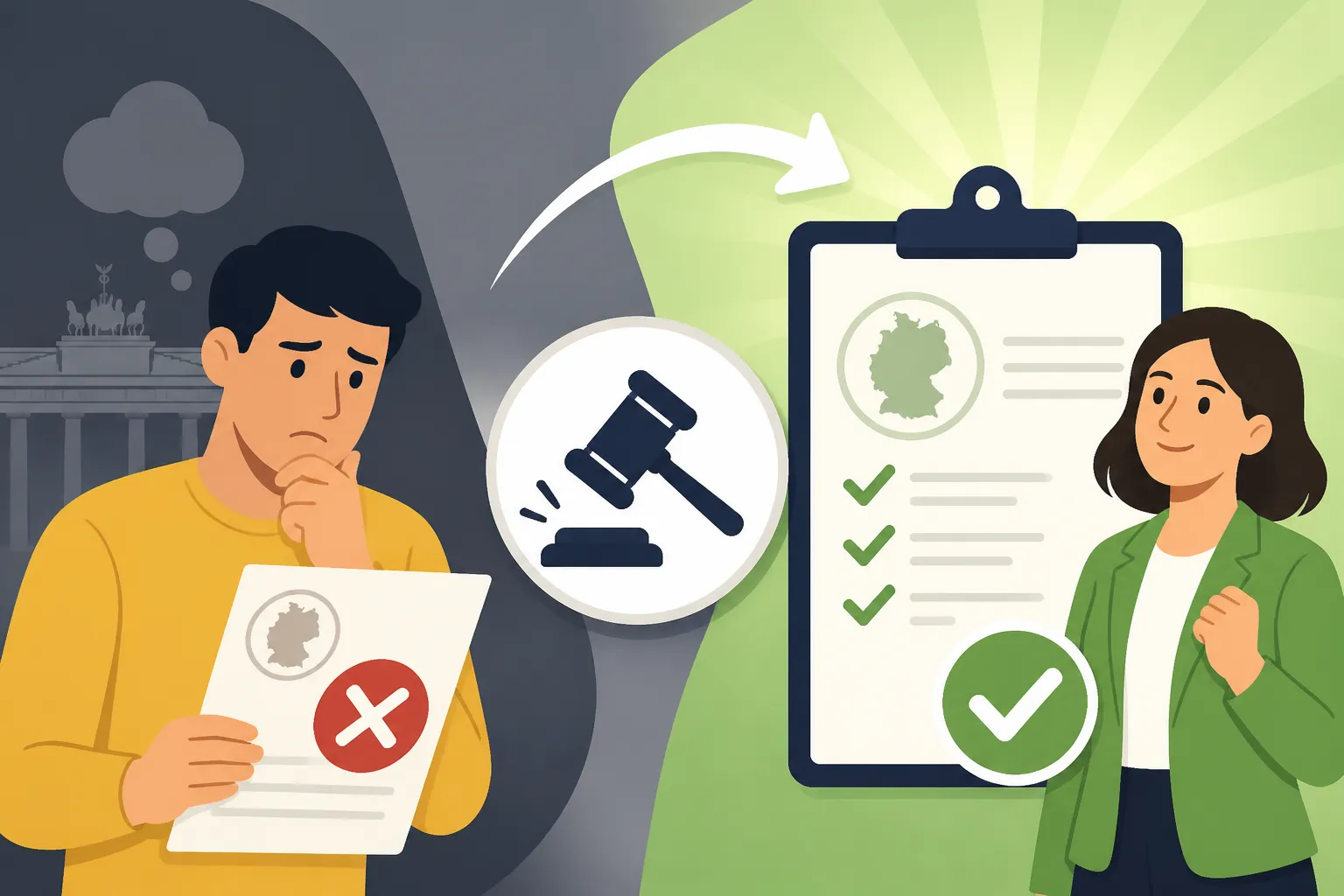
Opening that thin, white envelope from the German Embassy or the local Ausländerbehörde to find a visa rejection letter is a soul-crushing moment that makes your stomach do a somersault. I still remember the cold sweat I broke into when my first residency extension hit a snag; it felt like my entire life in Germany was being deleted by a single bureaucrat's pen. This guide explains exactly how to fight back using the Remonstration process and legal appeals to turn that "No" into a "Yes."
Disclosure: This post may contain affiliate links. We may earn a commission at no extra cost to you if you make a purchase through these links. Read full disclosure.
Understanding the Rejection Letter and Your Rights
When you receive a rejection, known in German as an "Ablehnungsbescheid," the first thing you need to do is breathe. It is not necessarily the end of the road, but rather the beginning of a very specific, paper-heavy chess match. German administrative law is rigid, but it also provides clear pathways for you to challenge decisions that you believe are incorrect or based on a misunderstanding of your situation.
The most important part of this letter isn't the "No" itself, but the "Rechtsbehelfsbelehrung" (Instructions on your right to appeal) usually found at the very end. This section tells you how long you have to act. If this section is present, you usually have one month from the date the letter was delivered to you to file an appeal. If the instructions are missing, the deadline can sometimes be extended to one year, but you should never count on that. In the world of German bureaucracy, time is your most precious resource.
You must meticulously read the reasons for the rejection. German authorities are legally required to state why they denied your application. Common reasons include "doubts about the purpose of stay," "insufficient financial means," or "incomplete documentation." Sometimes, the reason is a vague "§ 18 Abs. 2," which refers to specific sections of the Residence Act. Understanding these codes is vital. For instance, if the rejection is based on finances, you might need to look into Proof of Financial Means for Visas: Blocked Accounts and Sponsorship Letters to see where your original application fell short.
The Remonstration Process: Your First Line of Defense
A "Remonstration" is essentially an informal appeal where you ask the visa section to reconsider their decision. It is a cost-effective way to fix a rejection because it doesn't require a court or a judge—at least not yet. Think of it as a formal "Wait, you missed something" letter. This is where you address the specific reasons for rejection point-by-point with new evidence or clearer explanations.
When writing your Remonstration letter, tone is everything. While you are likely furious and exhausted, you must remain professional, factual, and extremely detailed. You should write the letter in German if possible. If your German isn't quite there yet, you can use services like Lingoking to ensure your arguments are translated with the precision that German officials expect. A poorly translated appeal can lead to even more confusion and a second rejection.
In your letter, start by referencing your application number and the date of the rejection. Then, systematically dismantle each reason for the refusal. For example, if the embassy claimed you didn't have enough money, this is the time to provide updated bank statements or a fresh blocked account confirmation. Many expats find that using a digital solution like Expatrio for their blocked account makes this part easier, as they provide the specific, embassy-approved documents that leave no room for interpretation. If your rejection was related to a job offer, you should revisit Germany Work Visa & Immigration Guide for Professionals to ensure your contract meets all the current statutory requirements.
Taking It to Court: The Administrative Lawsuit
If your Remonstration is rejected (resulting in a "Remonstrationsbescheid"), or if you decide to skip that step entirely, your next option is a "Klage"—a formal lawsuit in the Administrative Court (Verwaltungsgericht). For visa applications made at an embassy abroad, the competent court is always the Administrative Court in Berlin. This is a much more serious and time-consuming path, often taking several months or even over a year to reach a conclusion.
While you are technically allowed to represent yourself in an administrative court at the first level, I strongly advise against it. The legal language is dense, and the procedural rules are unforgiving. This is the stage where you hire a specialized immigration lawyer (Fachanwalt für Migrationsrecht). A lawyer will have access to your full file at the embassy (the "Beizug der Verwaltungsvorgänge"), allowing them to see internal notes that were never shared with you. This insight is often the key to winning a case.
The court will look at whether the authorities followed the law and if they exercised their "Ermessen" (discretion) correctly. In many visa categories, like family reunification, the authorities have very little discretion—if you meet the criteria, they must give you the visa. In others, like the Freelance Visa in Germany: How to Work as a Self-Employed Professional, they have more room to say no if they don't think your business plan is viable. A lawyer can help argue that the authority’s "no" was an "Ermessensfehler"—an error in judgment.
| Feature | Remonstration (Informal Appeal) | Administrative Lawsuit (Klage) |
|---|---|---|
| Cost | Usually free (excluding translations/lawyer) | Court fees and mandatory/recommended lawyer fees |
| Timeline | 1 to 3 months on average | 6 to 18 months on average |
| Authority | The same Embassy or Office | An independent Judge in Berlin |
| Complexity | High (requires detailed factual writing) | Very High (requires legal expertise) |
| New Evidence | Encouraged and easy to submit | Possible, but focused on the legal situation |
Addressing Financial and Health Insurance Gaps
A staggering number of German visa rejections come down to "Finanzierung" and "Krankenversicherung." Germany is obsessed with ensuring that you will not become a "burden on the state." If your rejection letter mentions these, you need to be aggressive in your response. Simply showing a high balance in a savings account back home often isn't enough; the authorities want to see that the money is accessible in Germany.
For students and job seekers, this usually means a blocked account. If you haven't set one up yet, using Expatrio can provide a fast, compliant way to show you have the required €11,904 (or the current adjusted amount) for the year. In your appeal, include the "Sperrkonto-Bestätigung" as a primary exhibit. Similarly, your health insurance must meet very specific "Minderstversicherungs-Anforderungen." A standard travel insurance policy from your home country is almost never sufficient for a long-term visa.
If you are a freelancer and were rejected because your insurance didn't cover "everything," you might need to switch to a German provider or a specialized expat plan that explicitly states it covers all costs with no limit. Mentioning that you have corrected these gaps in your appeal letter shows the officer that you are proactive. For more on how to structure your finances for the authorities, check out How to Prove Income for a German Residence Permit. It's also worth verifying if you need to provide a Police Clearance Certificate for German Visa as part of your updated evidence pack, especially if the rejection mentioned "public safety" concerns.
Preparing the Evidence Folder for Your Appeal
When you submit your appeal, you are essentially re-applying, but with a magnifying glass on the problem areas. Don't just send the same documents again. You need to provide "Glaubhaftmachung"—evidence that makes your claim credible. If they doubted your intention to return home (for a Schengen visa), provide a house deed, a letter from an employer, or family obligations. If they doubted your qualifications, use Lingoking to get your diplomas and transcripts officially certified and translated so there is no ambiguity about your skills.
I have seen people win appeals simply by providing a more detailed "Letter of Motivation." Sometimes the officer just didn't "get" what you wanted to do. In your Remonstration, expand on your goals. If you're coming to study, explain why this specific university is the only choice. If you're coming for work, explain why your specific niche is in demand. You can cross-reference In-Demand Jobs in Germany: Sectors Looking for Foreign Talent to show that your role aligns with German economic needs.
Lastly, ensure that every single document is organized. Use a cover sheet that lists every attachment. Use highlighter on bank statements to show the relevant income. If you make it easy for the bureaucrat to say "Yes," they are much more likely to do so. The goal is to leave them with no legal or factual reason to maintain the rejection. If you are applying from within the country and need to stay while the appeal is pending, make sure you understand the power of the Fiktionsbescheinigung: Bridging Your Permit in Germany.
Common Pitfalls and How to Avoid Them
The biggest mistake I see expats make is waiting too long. That one-month deadline is "Ausschlussfrist"—once it passes, the decision is legally binding (bestandskräftig), and you usually have to wait months to re-apply from scratch. Another mistake is being "emotional" in the appeal. While it feels personal, the officer is just following a checklist. If you attack their character, they will dig their heels in.
Another pitfall is failing to provide Legalizing and Translating Documents for German Visa Applications correctly. A document that isn't apostilled or translated by a "beeidigter Übersetzer" (sworn translator) in Germany is often discarded as if it doesn't exist. Using a professional service like Lingoking ensures that your documents carry the necessary legal weight.
Finally, don't forget to keep a "Copy for your records." Everything you send to the Embassy or the Ausländerbehörde should be scanned and saved. If the case goes to court, your lawyer will need the exact version of the documents the authorities saw. Navigating The Foreigners' Office (Ausländerbehörde): How to Deal With It can be a nightmare, but staying organized is your best defense against the bureaucracy. If you are looking at long-term options after a successful appeal, you might want to start planning for Permanent Residence in Germany: Paths and Timelines early on.
Disclaimer: Seeking Professional Legal Advice
The information provided in this guide is for informational and educational purposes only and does not constitute legal advice. Immigration laws and procedures in Germany are subject to frequent changes and can vary significantly based on individual circumstances and the specific region (Bundesland) you are dealing with. While we strive to keep the content accurate and up-to-date, we strongly recommend consulting with a qualified immigration lawyer (Rechtsanwalt für Migrationsrecht) before taking any formal legal action or filing an appeal. Following the steps in this guide does not guarantee a successful outcome for your visa application or appeal.