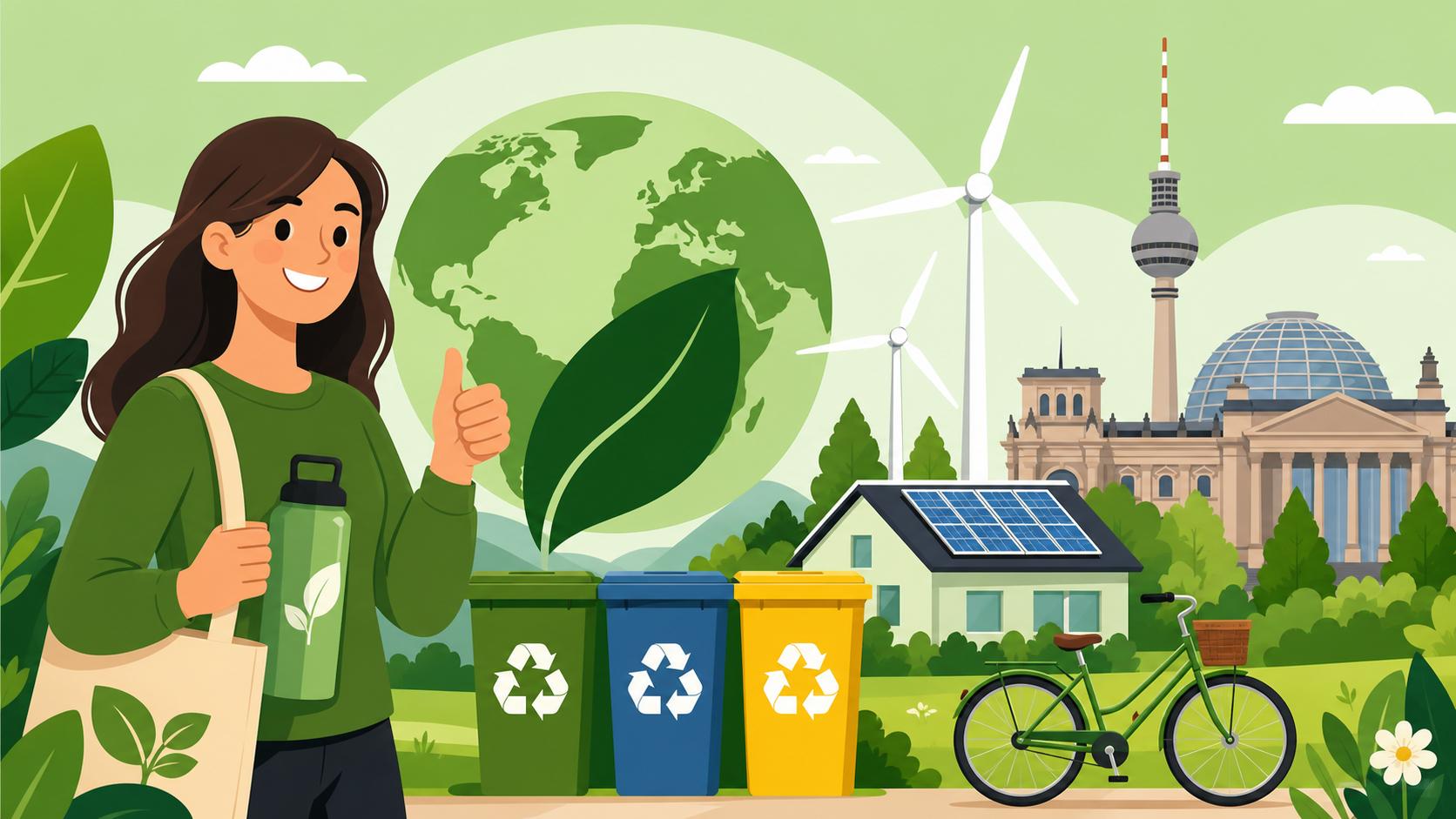
Living Green: Eco-Friendly Lifestyle Tips in Germany (Recycling, Green Energy)
Staring at a row of five different colored trash bins while holding a greasy pizza box is a rite of passage every newcomer to Germany faces with genuine anxiety. I remember my first week in Berlin, paralyzed by the fear that my elderly neighbor was watching from behind her lace curtains, ready to scold me for putting a glass jar in the plastic bin. This guide solves the confusion of German environmentalism, transforming you from a stressed-out recycler into a confident, eco-conscious resident.
Disclosure: This post may contain affiliate links. We may earn a commission at no extra cost to you if you make a purchase through these links. Read full disclosure.
Master the German Recycling System
The German commitment to waste management, known as Mülltrennung, is more than just a chore; it is a cultural pillar. If you are coming from a country where everything goes into one "landfill" bag, the adjustment is steep. The system is designed to maximize the reuse of raw materials, and the German government takes this very seriously. Local municipalities often employ "trash detectives" to inspect communal bins, and if a building repeatedly fails to sort correctly, the city can increase the waste collection fees for everyone in that block.
To avoid the wrath of both the authorities and your neighbors, you need to understand the color-coded ecosystem. Most residential courtyards feature at least four distinct bins. The Blue Bin (Papiermüll) is strictly for paper and cardboard. However, a common mistake is throwing in receipt paper or heavily soiled food packaging. Thermal paper from supermarket receipts actually belongs in the general waste because of its chemical coating. If you have moved into a new place found through Wunderflats, you will likely have many cardboard boxes to dispose of. Always flatten them completely; "air" in the blue bin is a major grievance for German property managers.
The Yellow Bin or Yellow Bag (Gelber Sack) is for "lightweight packaging." This includes plastics, composites like Tetra Paks, and metals like tin cans. A hyper-local tip: you do not need to wash your yogurt containers until they are sparkling—just "spoon-clean" is enough to satisfy the recycling facilities. The Brown or Green Bin (Biomüll) is for organic waste. While many expats think "compostable plastic bags" are a great solution, many German composting plants cannot process them fast enough, and they end up being picked out as contaminants. Stick to plain brown paper bags or old newspapers to wrap your potato peels.
The Pfand System: Turning Plastic into Euros
Beyond the bins at your house, Germany operates a highly successful deposit system for beverage containers called Pfand. When you buy a bottle of sparkling water or a can of soda, you pay a small deposit (usually between 0.08 and 0.25 Euro) on top of the price. This money is returned to you when you bring the empty container back to a automated machine (Pfandautomat) found in almost every supermarket like Rewe, Edeka, or Lidl.
Understanding the difference between "Einweg" (one-way) and "Mehrweg" (multi-way) bottles is key. Einweg bottles are crushed and recycled, carrying a 0.25 Euro deposit. Mehrweg bottles, often made of glass or thicker plastic, are washed and refilled up to 50 times, usually carrying a 0.08 or 0.15 Euro deposit. If you are hosting a housewarming party, those crates of beer can represent a significant amount of money. Instead of throwing them away, you stack the crates and return the whole set to the store.
Dealing with Glass and Bulky Waste
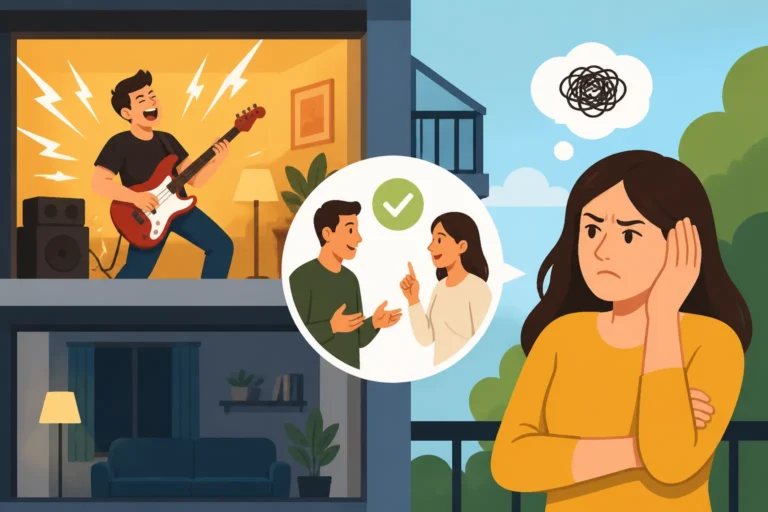
Glass disposal is its own specialized sub-category. You do not put glass in the bins at your apartment. Instead, you must find the neighborhood glass igloos. These are large containers usually located on street corners, separated by color: white (clear), green, and brown. If you have blue or red glass, it goes into the green container. A vital piece of social etiquette involves Neighborhood Noise Rules: Understanding Ruhezeit (Quiet Hours) in Germany. Never throw your glass bottles away on Sundays or between 8:00 PM and 7:00 AM, as the crashing sound is considered a major disturbance to the peace.
For items that do not fit in any bin, like a broken desk or an old mattress, you have the Sperrmüll (bulky waste) system. You cannot simply leave these on the sidewalk. You must book a collection through your local BSR or city waste management office. In many cities, you get one or two free collections per year. Alternatively, if your items are still functional, the "circular economy" in Germany is vibrant. Listing your items on local classifieds is a great way to participate in Second-Hand Shopping in Germany: How to Save Money with Used Goods (Flohmarkt, eBay Kleinanzeigen) and keep furniture out of the incinerator.
| Waste Category | Bin Color | Examples | Disposal Rule |
|---|---|---|---|
| Paper | Blue | Magazines, flat cardboard, letters | Flatten boxes; no oily pizza boxes |
| Packaging | Yellow | Plastic trays, foil, cans, Tetra Paks | Must be empty; no need to rinse thoroughly |
| Organic | Brown/Green | Coffee grounds, eggshells, fruit peels | No plastic bags; use paper or newspaper |
| General | Gray/Black | Diapers, ash, cigarette butts, pens | Only if it cannot be recycled elsewhere |
| Glass | Public Igloos | Wine bottles, jam jars | Sorted by color; respect quiet hours |
Powering Your Home with Green Energy
Germany is in the midst of the "Energiewende" (energy transition), moving away from nuclear and coal toward wind and solar. As an expat, you have a direct say in this by choosing your electricity provider. When you first move into an apartment, you are automatically placed on the "Grundversorgung" (basic supply) plan with the local utility (like Vattenfall in Berlin or SWM in Munich). These plans are almost always the most expensive and use a standard mix of energy sources.
To live greener, you should actively switch to an Ökostrom (green electricity) provider. Companies like LichtBlick, Polarstern, or EWS Schönau provide 100% renewable energy. Switching is surprisingly easy and can be done entirely online. You just need your meter number (Zählernummer) and your current meter reading. The new provider handles the cancellation of your old contract. This is a simple way to reduce your carbon footprint while often saving money, as Cost of Utilities in Germany: Average Prices for Electricity, Gas, Water can be high if you stay on the default tariff.
Heating Efficiency and the Energieausweis
Heating is the largest source of CO2 emissions for most German households. Most apartments use "Zentralheizung" (central heating) or "Gasetagenheizung" (gas heating per floor). To understand how efficient your potential new home is, always ask to see the Energieausweis (Energy Performance Certificate). This document, required for Housing in Germany: Renting, Buying, and Finding Your Home as an Expat, ranks the building from A+ to H. An "A" rated building will stay warm with minimal energy, while an "H" rated Altbau (old building) might result in a "Nachzahlung"—a painful extra payment at the end of the year when your actual usage is calculated.
To save energy during the winter, Germans practice "Stoßlüften" (shock ventilation). Instead of leaving a window tilted (auf Kipp) all day, which lets heat escape slowly and encourages mold, you open all windows wide for five minutes to completely swap the air, then shut them tight. This keeps the walls warm while providing fresh oxygen. If you need smart thermostats or weather stripping to help with efficiency, you can find a wide range of eco-tools on Amazon Germany that are easy to install and remove when you move out.
Solar Power for Renters: Balkonkraftwerk
A growing trend for eco-friendly expats is the "Balkonkraftwerk" or balcony power plant. Even if you don't own a house, you can install a small solar panel on your balcony railing and plug it directly into a standard wall outlet. These systems can generate enough power to cover your "base load," like your fridge and wifi router. Since 2024, the laws have been simplified, making it easier to register these devices with the "Marktstammdatenregister." It is a fantastic way to produce your own green energy even in a rented apartment found via Wunderflats.
Sustainable Daily Living and Shopping
Living green in Germany extends far beyond your utility bills. The way you shop and eat plays a massive role. Germany has one of the highest densities of "Bio" (organic) supermarkets in the world. Chains like Denn’s, Alnatura, and Bio-Company offer strictly organic produce and sustainable household goods. While Grocery Prices in Germany: How Much to Budget for Food might be higher at these stores, many residents find the quality and ethical standards worth the extra few Euros.
For those wanting to go even further, "Unverpackt" (unpackaged) stores are popping up in every major neighborhood. In these shops, you bring your own glass jars and weigh out grains, pasta, and even dish soap. It takes a bit of planning, but it completely eliminates the need for the yellow recycling bag. If you can't find a zero-waste shop nearby, even standard supermarkets like Edeka now offer reusable mesh bags for produce, ending the era of thin plastic "Knotenbeutel."
Eco-Friendly Transport and the Deutschland-Ticket
Transportation is another area where Germany makes green living easy. The "Deutschland-Ticket" (or 49-Euro Ticket) is a revolution in sustainable travel, allowing unlimited use of all local and regional public transport across the entire country. Relying on Transportation in Germany: Using Trains, Buses, and Trams Like a Local instead of owning a car is the norm for many expats in cities. Not only does this save you from the stress of finding parking, but it also significantly lowers your personal emissions.
For longer trips, the Deutsche Bahn Guide: Using Trains for City and Long-Distance Travel explains how to use the high-speed ICE trains, which run on 100% green electricity. If you are a cyclist, Germany's infrastructure is constantly improving. Most cities have "Fahrradstraßen" (bicycle streets) where cars are guests and bikes have priority. Investing in a good set of panniers and a waterproof jacket—both easily sourced on Amazon Germany—will make year-round green commuting much more comfortable.
Embracing the Sharing Economy
The most eco-friendly product is the one you never bought. Germany has a deeply ingrained culture of sharing and repairing. "Repair Cafés" are community events where volunteers help you fix your broken toaster or mend a torn jacket for free. Similarly, "Nebenan.de" is a popular social network where neighbors lend each other tools, ladders, or camping gear. This community-driven approach is a core part of Healthy Living in Germany: Wellness, Fitness, and Mental Health Guide, as it fosters social connections while reducing consumption.
If you have a green thumb but live in a fifth-floor apartment, look into "Schrebergärten" (allotment gardens). While there are long waiting lists, many community gardens (Gemeinschaftsgärten) allow you to rent a small plot or volunteer to grow vegetables. This local food production reduces "food miles" and provides a much-needed green escape from urban life. For those just starting out, getting a window-sill herb kit or a worm composter can be a great first step into the world of German urban gardening.
Long-term Sustainability and Personal Responsibility
Living an eco-friendly life in Germany is less about making one giant change and more about adopting a series of small, disciplined habits. It is about understanding that your choices—from the electricity you buy to the way you dispose of an old battery—have a collective impact. The German system is designed to reward those who take the time to learn the rules. Once you master the rhythm of the trash schedule and the convenience of the Pfand machine, these actions become second nature.
Validation is important: the system can feel rigid and the "trash talk" from neighbors can be intimidating. But remember that this rigidity is what allows Germany to be a global leader in recycling rates. By participating, you are becoming a part of the solution. Whether you are living in a temporary serviced apartment from Wunderflats or settling into a long-term home, your commitment to green living will help you integrate into the local community and contribute to a more sustainable future for your new home.
Disclaimer
This guide is intended for informational purposes only. Local regulations regarding waste management, energy subsidies, and transportation policies can vary significantly between different federal states and municipalities in Germany. Always consult your local "Bürgeramt" or "Abfallwirtschaftsbetrieb" for the most current and specific rules applicable to your area. Although we strive for accuracy, we cannot guarantee that all information remains up-to-date as laws and services evolve.