Transferring a Lump Sum Into a German Account: Compliance Checks and Delays
Alright, fellow expat! You’ve worked hard, saved diligently, or perhaps received a significant financial blessing, and now you’re looking to bring that lump sum into your German bank account. It sounds straightforward, doesn't it? But as many of us have learned the hard way in Germany, "straightforward" often comes with a hefty side of bureaucracy and a dash of unexpected delays. This guide will walk you through the nitty-gritty of transferring a large sum of money, explaining the compliance checks, potential hold-ups, and crucially, how services like Wise can make this notoriously tricky process much smoother for you.
Disclosure: This post may contain affiliate links. We may earn a commission at no extra cost to you if you make a purchase through these links. Read full disclosure.
Why Large Transfers Spark German Compliance Checks
Let's be honest, few things are truly "private" when it comes to money movement in Germany, especially when we're talking about a significant amount. You might think it's just your cash, your account, your business – but the German financial system sees things a little differently. They’re not trying to be nosy for the sake of it (mostly!), but rather, they're adhering to strict international and national regulations.
The German Banking System's Vigilance AML/KYC
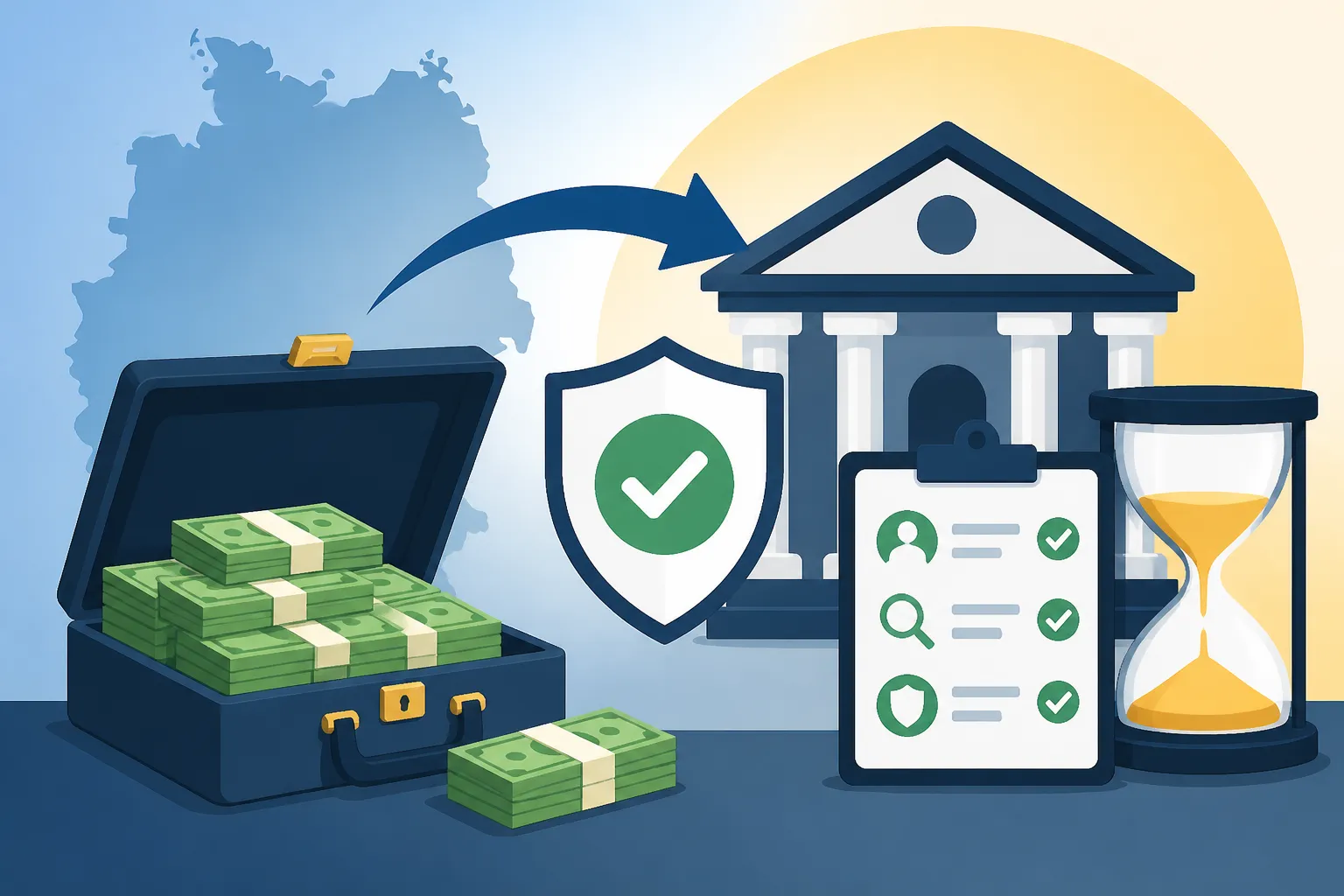
When you move a substantial amount of money into a German account, your bank isn't just processing a transaction; they're acting as gatekeepers against financial crime. Germany, like many other developed nations, operates under stringent Anti-Money Laundering (AML) and Know Your Customer (KYC) regulations. These aren't just buzzwords; they're legal obligations for every financial institution here.
What does this mean for you? It means your bank needs to understand who you are, where your money comes from, and why you're transferring it. If a transaction deviates from your usual financial patterns – say, a sudden influx of €20,000 when your typical monthly income is €3,000 – it raises a red flag. Banks are legally required to report suspicious activities to the authorities, and for transfers exceeding a certain threshold (which can vary but is often around €10,000 or €12,500 for cross-border transactions), they have an automatic reporting duty. This isn't about accusing you of wrongdoing; it's about their due diligence to ensure the funds aren't linked to illicit activities. They're literally protecting the financial integrity of the country, and you, inadvertently, become part of that scrutiny.
Common Reasons for Lump Sum Transfers
It's important to remember that most large transfers by expats are for perfectly legitimate reasons. The German banks understand this, but they still need proof. Here are some of the most common scenarios we expats face:
- House Down Payments: You've saved diligently, perhaps sold property back home, and now you're finally putting down roots in Germany. Transferring funds for a property purchase, whether it's a deposit or a full payment, is one of the most frequent reasons for large transfers. When you're dreaming of your new Wohnung, the last thing you want is your funds stuck in limbo. If you're considering Buying a House or Apartment in Germany: Guide for Foreigners, you'll definitely need to master this step.
- Inheritance: Dealing with the loss of a loved one is hard enough without financial hurdles. If you've inherited a sum from abroad, bringing it into Germany requires careful documentation of its source.
- Business Investments: For entrepreneurs or those looking to expand their business ventures, a large capital injection is often necessary. This requires clear evidence of the business's legitimacy and the investment's purpose.
- Selling Property Abroad: Many expats liquidate assets in their home country, like a previous home, to fund their new life or investments in Germany. The proceeds from such sales can be substantial.
- Large Savings Transfers: Sometimes, you just want to consolidate your funds. Maybe you've had savings sitting in an account in your home country, and now that you're settled, you want to bring it all into your primary German account for easier management. This is a simple, yet often scrutinized, reason.
These are all valid reasons, and while the bank might initially flag them, with the right documentation, your transfer should proceed without issue. The key is understanding what "the right documentation" actually entails.
Essential Documents and Information You'll Need
This is where your inner German bureaucrat needs to shine. The more prepared you are, the smoother your experience will be. Think of it as doing your homework – an annoying but necessary task that pays off in the end.
Proof of Funds and Source of Wealth
This is arguably the most critical part of the process. German banks want to see a clear paper trail for your money. They need to understand the legitimate origin of your wealth. This isn't about being judgmental; it's about ticking boxes for those AML/KYC regulations we talked about.
You should be ready to provide documents that clearly establish how you acquired the funds. This could include:
- Bank Statements: Not just any statement, but comprehensive ones from the originating account, ideally showing the accumulation of the funds over time or the specific transaction that led to the lump sum.
- Sale Agreements/Contracts: If the money comes from selling a property, shares, or a business, the official sale contract is crucial. It details the asset, the buyer, the seller, and the amount.
- Inheritance Documents: For inherited funds, you'll need the will, probate documents, or a certificate of inheritance (Erbschein).
- Salary Slips/Tax Returns: If the lump sum is from accumulated earnings, recent payslips or tax returns can demonstrate a consistent income that justifies the amount. This is especially relevant if you've accumulated significant savings over years. Looking at Understanding Your German Payslip: Gross vs Net Salary Explained can give you a better idea of how your earnings are structured if you need to explain them.
- Investment Portfolio Statements: If you've liquidated investments, statements from your brokerage or investment firm will serve as proof.
It might feel invasive to share such detailed financial history, but it's a standard request. Think of it from the bank's perspective: they need to demonstrate to regulators that they've done their due diligence. A platform like Wise is fantastic here because they often ask for these documents upfront, which helps to avoid delays once the transfer is initiated. They have a system designed to pre-clear funds, which can save you a lot of back-and-forth later.
Personal Identification and German Tax ID
Beyond proving the money's origin, you need to prove you are who you say you are, and that you're a legitimate resident of Germany.
- Valid Passport and Residence Permit: These are your primary forms of identification. Make sure they are current and clear. If your residence permit (Aufenthaltstitel) is new, your bank might ask for additional verification.
- German Tax ID (Steuer-ID): This nine-digit number is fundamental for almost any financial transaction in Germany. It links you to the German tax system, which is crucial for the bank to fulfill its reporting obligations. If you haven't received yours yet, or can't locate it, you absolutely need to sort this out. Our guide on Getting Your Tax ID (Steuer-ID) and Tax Number in Germany can walk you through the process. Having this ready with any large transfer shows your financial institution that you're an officially recognized resident with tax obligations, which helps with compliance.
Always have high-quality copies of these documents ready, and be prepared to show originals if requested. Being organized here will save you immense frustration.
The Transfer Process: What to Expect
Once you've gathered your documents and braced yourself for the German efficiency (or lack thereof, depending on the day), it's time to actually move the money. How you choose to transfer it can significantly impact the speed, cost, and overall headache factor.
Choosing Your Transfer Method: Traditional Banks vs. Fintech Solutions
You essentially have two main avenues for transferring a lump sum:
-
Traditional Banks (SWIFT Transfers): This is the old-school method. You go to your German bank, or initiate a wire transfer from your bank abroad, specifying the recipient account in Germany. While familiar, these transfers, especially for large amounts, can be slow, expensive, and opaque.
- Fees: Banks often charge hefty transfer fees, and these can be compounded by intermediary bank fees (meaning banks between yours and the recipient's might take a cut).
- Exchange Rates: This is often the biggest hidden cost. Traditional banks typically offer exchange rates that are several percentage points worse than the real market rate, meaning you lose money on the conversion itself.
- Speed: SWIFT transfers can take 3-5 business days, sometimes longer, particularly if there are compliance delays or missing information.
- Transparency: Tracking the exact status of your transfer can be difficult, often requiring calls to customer service.
-
Fintech Solutions (e.g., Wise): This is where modern technology really shines for expats. Services like Wise (formerly TransferWise) were built specifically to address the pain points of international money transfers.
- Lower Fees: Wise typically charges a small, upfront fee that's far more transparent and usually lower than bank fees.
- Mid-Market Exchange Rate: This is the real game-changer. Wise uses the actual mid-market exchange rate – the one you see on Google – without markups. This means you get more of your money converted.
- Speed: Transfers are generally much faster. For many currency corridors, transfers can arrive within hours or even minutes, and often within 1-2 business days for larger sums.
- Transparency: You can easily track your transfer every step of the way online or through their app, providing peace of mind.
- Upfront Compliance: As mentioned, Wise often asks for documentation (proof of funds, ID) early in the process. While this might seem like an extra step initially, it significantly reduces the chances of delays later, as they've already cleared your funds.
- Customer Support: Many expats find their customer support to be more accessible and helpful than traditional banks for international transfers.
For a significant lump sum, the cost savings and reduced stress of using a platform like Wise are substantial. They really excel at making complex international money movement feel almost local. It’s definitely one of the Cheapest Ways to Send Money Abroad.
Potential Delays and How to Mitigate Them
Even with the best preparation, delays can happen. It's part of the expat experience in Germany, so try to factor it into your timeline.
Common causes of delays include:
- Missing or Incomplete Documentation: The number one reason. If the bank or Wise asks for something, and you don't provide it promptly or completely, everything grinds to a halt.
- Bank Holidays and Weekends: Transfers typically only process on business days. If you initiate a transfer on a Friday, don't expect it to land before Monday or Tuesday. German public holidays can add even more days.
- Manual Review by Compliance Departments: Any transfer flagged by the automated AML/KYC systems will be manually reviewed. This takes time, as a human needs to go through your documentation and approve it.
- Intermediary Banks: In traditional SWIFT transfers, your money might pass through several banks before reaching its destination, each adding potential delays and fees. This is less common with Wise, which often uses local payment networks.
- High Transaction Volume: Sometimes, during peak times, even efficient systems can get backed up.
Tips for mitigating delays:
- Be Proactive: Anticipate what documents might be needed and have them ready before initiating the transfer.
- Communicate Clearly: When asked for information, provide it clearly, completely, and promptly. Don't leave anything to guesswork.
- Use a Specialist Service: As highlighted, Wise's model is designed to minimize delays by handling compliance checks upfront and using efficient transfer routes.
- Plan Ahead: Always factor in a buffer of a few extra days, or even a week, especially for time-sensitive payments like a house deposit. You really don't want to miss a deadline because your money is stuck in transit. For all things money-related, check out our Money Matters in Germany: Complete Financial Guide for Expats.
After the Transfer: Tax Implications and Reporting
So, the money has landed! Phew. You might think you're done, but there are a couple more things to keep in mind, especially concerning German regulations.
Understanding German Tax Obligations
It's crucial to understand that transferring money into Germany is generally not a taxable event in itself. The act of moving your own funds from one account to another doesn't incur income tax.
However, the source of the money or how it is subsequently used could have tax implications. For example:
- Capital Gains: If you sold shares or property abroad and those gains are subject to taxation in Germany (depending on double taxation treaties and your tax residency status), you might have a capital gains tax liability.
- Inheritance Tax (Erbschaftsteuer): While the inheritance itself might be received abroad, if you (as the beneficiary) are a resident of Germany, German inheritance tax rules usually apply to your worldwide inheritance. The rates and allowances depend on your relationship to the deceased.
- Gift Tax (Schenkungsteuer): Similarly, if the lump sum is a gift from a relative or friend, German gift tax might apply if either the donor or recipient is a German resident. Again, there are allowances and rates based on the relationship.
These are complex areas, and relying on internet advice (even mine!) isn't enough. For any significant sum that isn't clearly just your existing, already-taxed savings, it is highly advisable to consult with a qualified German tax advisor (Steuerberater). They can help you navigate the specific rules, declare everything correctly, and ensure you're compliant. Our guide on Understanding Taxes in Germany: An Expat’s Guide to the German Tax System is a great starting point, but a personal consultation is key here. In fact, many expats realize that Hiring a Tax Advisor in Germany: Do You Need One? is not just a luxury, but often a necessity for these types of complex financial situations.
Reporting Requirements to the Bundesbank
Here's a little-known nugget of German bureaucracy that often catches expats off guard, but is incredibly important for large transfers. According to Section 67 of the German Foreign Trade and Payments Ordinance (Außenwirtschaftsverordnung – AWV), you are generally required to report cross-border payments (both inbound and outbound) that exceed €12,500 to the Deutsche Bundesbank (Germany's central bank).
This isn't a tax on the money; it's purely a statistical reporting requirement for balance of payments purposes. The report, known as a Meldepflicht, must be submitted by the 7th day of the following month after the transfer occurred. So, if your lump sum of €50,000 arrived in July, you'd need to report it by August 7th.
How do you do this? The Bundesbank has an online reporting portal called "AMS" (Außenwirtschafts- und Statistik-Meldewesen) or you can call their automated reporting service. The process itself is not overly complicated once you understand it, but the critical part is knowing you have to do it. Failure to report can result in significant fines. Your bank will not do this for you.
This is a specific obligation on the individual receiving or sending the money. Most people use the automated telephone service (0800 123 4111) as it's often simpler for one-off reports. Just be prepared for it to be in German!
Real-World Scenarios and Expert Tips
Let's put some of this into a practical context to show how it might play out in your expat life.
Case Study: Moving Savings for a House Purchase
Imagine you've been living in Germany for a few years, and you've decided to buy your first home. You have €100,000 saved up in your home country (let's say, Canada) from years of work and investments, and you need to bring it over for the down payment on your dream Reihenhaus in Potsdam.
- Preparation: Before even thinking about hitting 'send,' you'd gather all your Canadian bank statements showing the accumulation of these savings, possibly investment portfolio statements if you liquidated some assets. You'd also ensure your German tax ID is handy.
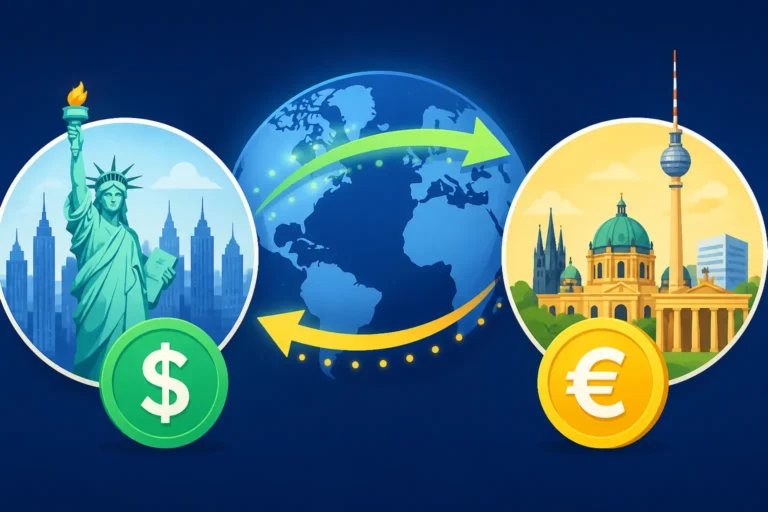
- Choosing a Method: You realize that a traditional bank transfer from Canada to Germany would incur high fees and a poor exchange rate, potentially costing you thousands. You decide to use Wise.
- Initiating the Transfer with Wise: You set up the transfer in your Wise account. Because it's a large sum, Wise immediately asks for proof of funds (your Canadian bank statements) and your ID. You upload everything.
- Compliance Check: Wise's compliance team reviews your documents. Because you provided everything clearly and proactively, the review is quick, perhaps taking a day or two. They confirm the funds are legitimate.
- Funding the Transfer: You transfer the €100,000 equivalent from your Canadian bank account to Wise's local Canadian account.
- Conversion and Payout: Wise converts your Canadian dollars to Euros at the real mid-market rate and pays it out to your German bank account. The entire process, from initiation to funds landing in your German account, might take 2-3 business days.
- Post-Transfer Obligation: Since the amount is well over €12,500, you remember the Bundesbank reporting requirement. By the 7th of the following month, you call the Bundesbank's automated service or use their online portal to report the inbound transfer, simply stating the amount and purpose (e.g., private savings for real estate).
This streamlined approach, especially with a provider like Wise handling the bulk of the currency exchange and initial compliance efficiently, makes a huge difference. Without it, you could be facing longer waits and more headaches, jeopardizing your home purchase. And speaking of which, if you haven't opened your German bank account yet, our guide on Opening a Bank Account in Germany: Step-by-Step for Newcomers will be invaluable. Remember, while some traditional banks can be a bit slower, services like Wise integrate well with any Best Banks in Germany for Expats: Low Fees and English Support.
Tips for a Smooth Transfer
Having been through this myself, I can offer a few hard-won tips:
- Don't Rush It: Allow ample time for large transfers, especially if it's for a time-sensitive purchase. Bureaucracy moves at its own pace.
- Over-Document, Don't Under-Document: When in doubt, provide more information rather than less. It saves time in the long run. Banks prefer too much information over not enough.
- Use the Right Tools: For international lump sums, modern fintech services like Wise are almost always superior to traditional bank transfers due to better rates, lower fees, and greater transparency. Their focus on digital efficiency and upfront checks really helps.
- Understand the "Why": Knowing why banks ask for certain documents helps you provide the correct information without feeling unduly scrutinized. It's about compliance, not suspicion.
- Keep Records: Always keep digital and physical copies of all transfer confirmations, submitted documents, and any communication with your bank or transfer service.
- Don't Forget Bundesbank Reporting: This is the big one that many expats miss. Set a reminder for yourself to report any transfer over €12,500 by the 7th day of the subsequent month.
| Feature / Service | Traditional Bank Wire (SWIFT) | Wise (formerly TransferWise) |
|---|---|---|
| Exchange Rate | Often includes a hidden markup on the interbank rate | Uses the real mid-market rate (no markup) |
| Fees | Fixed fees, percentage fees, and potential intermediary bank fees | Low, transparent upfront fee (often percentage-based) |
| Speed | Typically 3-5 business days, can be longer for large sums | Often 1-2 business days, sometimes hours for popular corridors |
| Transparency | Limited tracking, often requires customer service calls | Full online/app tracking, clear breakdown of costs |
| Compliance Checks | Usually after transfer initiation, leading to potential holds | Often requests documents upfront, streamlining the process |
| Ease of Use | Can be cumbersome for international transfers, branch visits | User-friendly online/app interface, fully digital |
| Customer Support | Varies; often general banking support | Specialized support for international transfers |
| Recommended For | Small, infrequent transfers; those who prefer branch interaction | Large lump sums, regular international transfers, best rates/speed |
Disclaimer
Please remember that I am an expat blogger and not a financial advisor, tax consultant, or legal expert. The information provided in this guide is based on my personal experience, general knowledge of German regulations, and publicly available information. Financial rules and regulations in Germany can be complex and change frequently. It is always highly recommended to consult with qualified professionals, such as a Steuerberater (tax advisor) or a financial consultant, for personalized advice regarding your specific financial situation, especially concerning large sums and potential tax implications.