Understanding Lab Results: Deciphering German Blood Test Reports
Receiving blood test results in Germany can be overwhelming, especially when faced with unfamiliar medical terms and abbreviations in a foreign language. This comprehensive guide helps expats translate German lab reports, understand key health metrics, and navigate the local healthcare system with absolute confidence.
Disclosure: This post may contain affiliate links. We may earn a commission at no extra cost to you if you make a purchase through these links. Read full disclosure.
The Basics of Blood Tests in the German Healthcare System
When and Why You Might Need a Blood Test
Navigating a new healthcare system often begins with a routine check-up, and in Germany, blood tests are a fundamental part of preventative care and diagnostics. Your general practitioner might order a blood test during an annual physical examination to establish a baseline for your general health. In Germany, patients over the age of thirty-five are entitled to a standard health check-up, known as the Gesundheits-Check-up, which includes a basic blood panel to screen for cardiovascular risks, diabetes, and kidney function. Understanding how these baseline tests fit into your broader Healthcare in Germany: A Comprehensive Guide for Expats is crucial for long-term well-being.
Beyond routine screenings, blood tests are ordered when you present specific symptoms. Whether you are dealing with chronic fatigue, sudden weight loss, or unexplained pain, your doctor will rely on laboratory results to pinpoint the underlying cause. In many cases, expats experience changes in their health due to the stress of relocation, changes in diet, or exposure to different environmental factors. If you suspect dietary deficiencies, you might consider taking supplements from iHerb after consulting with your physician to ensure you are meeting your nutritional needs.
It is also important to note that specialized blood tests might be required for certain administrative processes. For instance, if you are applying for specific types of visas or if you are entering certain professions that require a clean bill of health, a comprehensive laboratory report will be requested. Knowing when these tests are medically necessary versus administratively required will help you manage your healthcare expectations and obligations while living in Germany.
How to Schedule a Lab Test
Scheduling a laboratory test in Germany is generally straightforward, but the process might differ slightly from what you are accustomed to in your home country. Typically, you cannot simply walk into a laboratory and request a blood test on your own accord. Instead, the process must be initiated by a licensed physician. During your consultation, if the doctor determines that a blood test is necessary, they will issue a referral or conduct the blood draw directly in their office. Many primary care clinics have dedicated hours for blood collection, usually early in the morning, to accommodate fasting requirements.
If your doctor refers you to an external specialized laboratory, they will provide you with a specific form known as an Überweisungsschein. You will take this form to the designated lab, where the phlebotomist will draw your blood based on the doctor’s exact specifications. It is highly recommended to call ahead or check the laboratory’s website to see if an appointment is strictly required, as some facilities operate on a walk-in basis while others mandate prior scheduling. Understanding these logistical steps is an essential part of Navigating Medical Care in Germany: Doctors, Hospitals, and Pharmacies.
When preparing for your appointment, always confirm whether you need to fast beforehand. For a standard lipid panel or blood glucose test, doctors typically require you to abstain from food and drink, except water, for at least eight to twelve hours prior to the test. Failing to follow these instructions can lead to skewed results and may necessitate a repeat test, delaying your diagnosis and treatment plan.
The Role of Your General Practitioner
Your general practitioner, or Hausarzt, plays a central and indispensable role in managing your health and interpreting your laboratory results in Germany. Unlike in some healthcare systems where specialists operate highly independently, the German system relies heavily on the Hausarzt to act as the primary coordinator of your care. They are responsible for ordering the appropriate blood panels, receiving the results from the laboratory, and explaining the findings to you in a comprehensive manner.
Once the laboratory processes your blood sample, the results are sent directly to your general practitioner’s office. You will usually be asked to schedule a follow-up appointment or a phone consultation to discuss the outcome. During this consultation, your doctor will break down the complex medical jargon and explain what the numbers mean in the context of your overall health. If specialized care is required based on the lab results, your Hausarzt will issue referrals to the appropriate specialists, such as an endocrinologist or a hematologist.
Building a strong, trusting relationship with an English-speaking Hausarzt can significantly alleviate the anxiety associated with medical procedures abroad. They can bridge the language gap, ensuring that you fully comprehend your health status.
Common Abbreviations in German Lab Reports
Understanding the Complete Blood Count
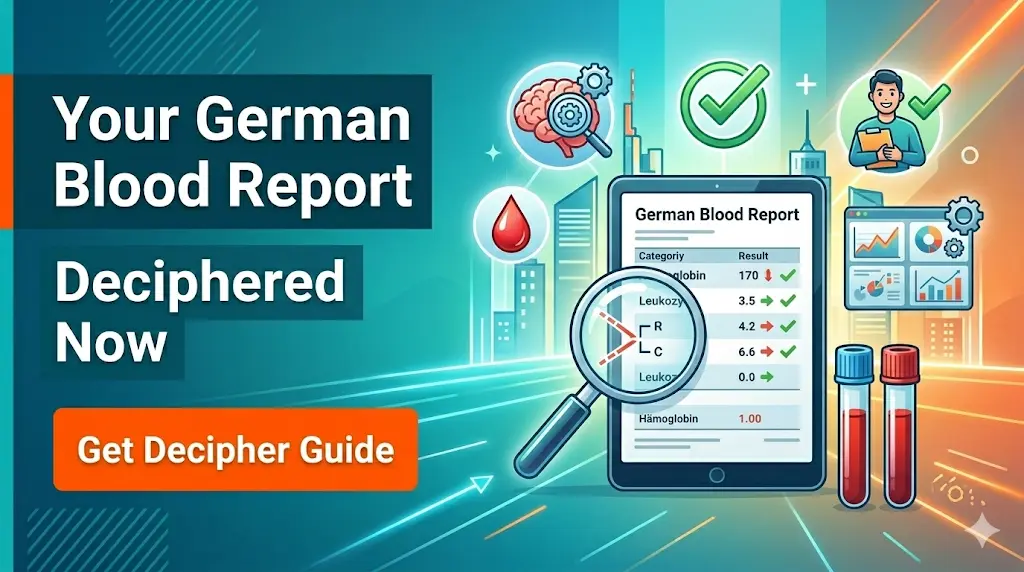
The Complete Blood Count, known in Germany as das kleine Blutbild, is one of the most frequently ordered laboratory tests. It provides a broad overview of your general health by evaluating the cells that circulate in your blood. When you look at your German lab report, you will encounter several specific abbreviations. For instance, Leukozyten (often abbreviated as Leuko or WBC) refer to your white blood cells, which are crucial for fighting off infections. An elevated count might indicate an active immune response, while a low count could point to an underlying vulnerability.
Another critical component is the Erythrozyten (Ery or RBC), which translates to red blood cells. These cells are responsible for carrying oxygen throughout your body. Closely related to this is the Hämoglobin (Hb), the protein within red blood cells that actually binds the oxygen. If your Hb levels are low, your doctor might diagnose you with anemia, a condition that can cause severe fatigue and weakness. Dietary adjustments might be recommended, and sometimes individuals look to sources like iHerb for high-quality iron supplements, though this should always be done under medical supervision.
You will also see Thrombozyten (Thr or PLT), which are platelets responsible for blood clotting. Additionally, the Hämatokrit (Hkt or Hct) measures the proportion of your blood volume that consists of red blood cells. Understanding these foundational terms empowers you to read your lab report not just as a collection of foreign words, but as a detailed map of your body’s current physiological state.
Deciphering Metabolic Panel Terms
Beyond the basic blood cells, your doctor will often order a metabolic panel to assess the function of your vital organs, particularly your liver and kidneys. In German medical terminology, kidney function is primarily evaluated through the markers Kreatinin (Creatinine) and Harnstoff (Urea). Elevated levels of Kreatinin can indicate that your kidneys are not filtering waste efficiently, which warrants prompt medical investigation.
Liver function tests, or Leberwerte, include several specific enzymes. You will frequently see abbreviations such as GOT (AST), GPT (ALT), and Gamma-GT (GGT). GOT and GPT are enzymes found primarily in the liver, and elevated levels typically suggest liver inflammation or damage. Gamma-GT is an enzyme that is particularly sensitive to alcohol consumption and certain medications, making it a key indicator of liver stress. Deciphering these terms is vital for expats monitoring chronic conditions or adjusting to new lifestyle habits.
Additionally, your metabolic panel will likely include a measurement of your Blutzucker, or blood sugar. The abbreviation Nüchternblutzucker refers specifically to fasting blood sugar, which is a primary screening tool for diabetes. Another crucial metric is the HbA1c, which provides a three-month average of your blood sugar levels. Knowing these terms allows you to actively participate in discussions regarding your metabolic health during your medical consultations.
Lipid Profiles and Cholesterol Markers
Cardiovascular health is a major focus in German preventative medicine, making the lipid profile a standard component of comprehensive blood tests. This section of your lab report will detail the fats present in your blood, which are significant indicators of your heart disease risk. The overall measure is referred to as Gesamtcholesterin, which translates directly to total cholesterol. While this provides a general overview, doctors are much more interested in the specific breakdown of this total number.
You will see the terms LDL-Cholesterin and HDL-Cholesterin on your report. LDL is often colloquially known as the “bad” cholesterol because high levels can lead to plaque buildup in your arteries. Conversely, HDL is the “good” cholesterol that helps carry LDL away from the arteries and back to the liver. A healthy lipid profile involves keeping your LDL low while maintaining a robust level of HDL.
Another critical component of the lipid profile is the Triglyzeride (Triglycerides), which are a type of fat found in your blood that your body uses for energy. High triglycerides, especially when combined with high LDL or low HDL, can significantly increase your risk of heart attacks and strokes. If your numbers are concerning, your Hausarzt will likely discuss dietary interventions, exercise routines, and potentially medication. You can read more about comprehensive coverage for such ongoing treatments in our guide regarding Public Health Insurance (gesetzliche Krankenkasse): What It Covers and Costs.
Interpreting Your Results and Reference Ranges
How German Labs Display Normal Values
When you receive your printed or digital lab report in Germany, you will notice a highly structured format designed to highlight any abnormalities immediately. The report typically consists of several columns: the name of the test, the result (Ihr Wert or Messwert), the unit of measurement, and the reference range (Referenzbereich or Normwert). The reference range represents the values expected in a healthy individual, providing the baseline against which your specific results are compared.
German laboratories are quite systematic in how they flag results that fall outside of this normal range. Often, if a value is too high, you will see a plus sign (+) or the letter ‘H’ (for Hoch) next to your result. Conversely, if a value is too low, it will be marked with a minus sign (-) or the letter ‘L’. Sometimes, laboratories will use an asterisk (*) or bold text to draw attention to abnormal findings. This visual flagging system makes it much easier to scan a complex document and immediately spot the areas that require attention.
It is important to remember that reference ranges can vary slightly between different laboratories across Germany. This variation is due to differences in testing equipment, chemical reagents, and the specific demographic data the lab uses to establish its baselines. Therefore, your doctor is the most qualified person to interpret whether a slightly out-of-range result is clinically significant or merely a natural fluctuation for your body.
Understanding Units of Measurement
One of the most confusing aspects for expats reviewing German lab reports is the units of measurement employed. Germany strictly adheres to the metric system and the International System of Units (SI). If you are coming from a country like the United States, the numbers on your report might look entirely alien because different standard units are used. For example, in the US, cholesterol is measured in milligrams per deciliter (mg/dL), whereas in Germany, it might be reported in millimoles per liter (mmol/L) depending on the lab, though mg/dL is also still widely used.
Similarly, blood glucose levels can cause significant confusion. In many European systems, glucose is measured in mmol/L, but some German clinics prefer mg/dL. A reading of 90 mg/dL is perfectly normal, but if the lab uses mmol/L, that normal reading would be around 5.0. It is crucial to check the ‘Einheit’ (Unit) column meticulously to avoid unnecessary panic. If you are managing a condition like diabetes and purchasing monitoring equipment or supportive supplements through platforms like iHerb, make sure you know which units your devices use compared to your lab reports.
Below is a helpful table translating some of the most common terms you will find on your German blood test report, providing clarity at a glance.
| German Term (Abbreviation) | English Translation | Common Measurement Unit (Germany) |
| Leukozyten (WBC) | White Blood Cells | /nl or G/l |
| Erythrozyten (RBC) | Red Blood Cells | /pl or T/l |
| Hämoglobin (Hb) | Hemoglobin | g/dl |
| Nüchternblutzucker | Fasting Blood Sugar | mg/dl or mmol/l |
| Gesamtcholesterin | Total Cholesterol | mg/dl |
| Kreatinin | Creatinine | mg/dl or µmol/l |
| Eisen | Iron | µg/dl or µmol/l |
What to Do If Your Results Are Out of Range
Seeing flagged results on your laboratory report can naturally induce anxiety, but it is essential to remain calm and approach the situation logically. The first and most important step is to avoid turning to internet search engines for a self-diagnosis. Symptoms and single blood markers are rarely enough to provide a clear medical picture without professional context. An isolated abnormal value could be the result of a temporary infection, recent stress, dietary intake right before the test, or even a minor lab error.
Your designated next step should be to attend your follow-up appointment with your Hausarzt. During this meeting, ask direct questions about the flagged values. You can prepare by writing down your concerns beforehand. Ask what the specific marker means, why it might be elevated or lowered, and what the clinical implications are for your long-term health. If the doctor determines that the abnormality requires further investigation, they will guide you through the next steps, which may involve repeat testing or seeing a specialist.
In some instances, your doctor might recommend lifestyle modifications, such as dietary changes or increased physical activity, to bring your levels back into the normal range. They will then schedule a follow-up blood test a few months later to monitor your progress. Understanding how your health insurance facilitates these ongoing monitoring steps is essential, and you can learn more about this in our article on Health Insurance in Germany: Understanding Public vs Private Coverage.
Navigating the Costs and Insurance Coverage
What Public Insurance Covers
For the majority of expats living and working in Germany, healthcare is accessed through the statutory public health insurance system, known as the Gesetzliche Krankenversicherung (GKV). When it comes to medically necessary laboratory tests, the public system is incredibly comprehensive. If your doctor determines that a blood test is required to diagnose an illness, monitor a chronic condition, or perform a routine age-appropriate check-up, the costs are fully covered by your provider. You simply present your insurance card (Gesundheitskarte) at the clinic or lab, and the billing is handled directly between the medical facility and the insurance company.
This direct billing system removes the stress of upfront payments and reimbursement paperwork for standard medical care. Covered tests typically include complete blood counts, metabolic panels, thyroid function tests if symptoms are present, and specific screenings for diseases based on your medical history. It is a highly efficient system designed to ensure that financial barriers do not prevent individuals from accessing vital diagnostic services.
However, it is crucial to understand that public insurance operates on the principle of medical necessity (Wirtschaftlichkeitsgebot). This means that they will only cover tests that are scientifically proven and directly relevant to a suspected condition. If you want a comprehensive vitamin panel simply out of personal curiosity rather than medical necessity, the public insurance will likely decline coverage, and your doctor will inform you of this before proceeding.
The Benefits of Private Coverage
For expats who opt for private health insurance (Private Krankenversicherung or PKV), the landscape of covered laboratory tests can be broader. Private insurance plans often offer more extensive coverage for preventative screenings and elective tests that might not meet the strict medical necessity criteria of the public system. Providers like Ottonova and Feather Insurance offer various private and supplementary plans tailored to expats, which often include enhanced diagnostic benefits.
With private insurance, you might find it easier to request specialized panels, such as detailed hormone profiles, extensive allergy testing, or comprehensive vitamin and mineral checks, without needing to prove severe clinical symptoms first. Private patients are often billed directly by the laboratory. You will receive an invoice in the mail, which you must pay and then submit to your insurance company for reimbursement. Managing these payments efficiently is important, and many expats use services like Wise to handle international money transfers if they are still organizing their local finances.
When choosing a private plan, it is vital to review the specific terms and conditions regarding preventative care and laboratory diagnostics. Some plans cover all diagnostics at 100%, while others might have deductibles or annual caps.
Paying Out of Pocket for Specialized Tests
In the German healthcare system, there is a specific category of medical services known as Individuelle Gesundheitsleistungen, commonly abbreviated as IGeL. These are services that doctors offer which are not covered by statutory public health insurance because they are deemed medically unnecessary or their benefits are not definitively proven. Many specialized or elective blood tests fall into this IGeL category.
If you request a test that your doctor does not believe is medically indicated—for example, a complete vitamin B12 and Vitamin D panel when you have no symptoms of deficiency—you will have to pay for it out of pocket. Before performing any IGeL service, your doctor is legally required to inform you of the costs and obtain your written consent. The prices for these tests are regulated by the Gebührenordnung für Ärzte (GOÄ), the official fee schedule for physicians, ensuring transparency in billing.
While paying out of pocket can be frustrating, it does grant you the autonomy to proactively monitor specific health metrics that you care about. If you engage in regular strenuous exercise or follow a strict vegan diet, paying for specific nutritional panels might give you peace of mind. Always ask your doctor for a cost estimate beforehand so you can make an informed decision about your healthcare expenditures.
Managing Your Health Records as an Expat
Requesting Copies of Your Lab Reports
As a patient in Germany, you have a legal right to access your medical records, including all laboratory reports. However, doctors do not typically hand over paper copies of your results proactively unless you specifically ask for them. To maintain a complete personal health history, especially as an expat who might eventually relocate again, it is highly advisable to request copies of every blood test you undergo.
You can simply ask the receptionist at your doctor’s office for a printout of your results during your follow-up visit. Most clinics will happily provide this free of charge, though some might request a nominal fee for the printing costs if the records are extensive. Increasingly, German medical practices are adopting digital solutions, allowing you to access your lab results through secure patient portals or encrypted email. This digitization makes it significantly easier to store and organize your health data.
Keeping a meticulous personal file of your lab reports is incredibly helpful if you ever need to switch doctors or consult with a specialist. It prevents redundant testing and provides new healthcare providers with a clear historical baseline of your health.
Translating Medical Documents
Translating medical documents is a common hurdle for expats navigating the German healthcare system. While you might be conversational in German, the highly specific medical terminology used in lab reports can be entirely perplexing. When you receive your results, you may need to rely on external resources to fully comprehend the nuances of the document.
There are numerous online medical dictionaries and translation apps specifically designed for healthcare terminology. However, relying solely on automated translation for complex health data can sometimes lead to misinterpretations. If you are dealing with a severe chronic illness and need to share your German lab reports with a physician in your home country, it is often worth investing in a professional medical translation service to ensure absolute accuracy.
Furthermore, many younger doctors in major German cities speak excellent English and are willing to write down the English equivalents of key diagnoses and findings on your report. Do not hesitate to advocate for yourself and ask your doctor to explain the results in English if you feel you are missing critical information due to the language barrier. Finding an English-speaking doctor from the start is highly recommended and discussed further in our Healthcare in Germany: A Comprehensive Guide for Expats guide.
Preparing for Follow-Up Consultations
A successful follow-up consultation regarding your blood test results requires proactive preparation on your part. Do not arrive at the doctor’s office expecting a passive experience; the German healthcare system favors patients who actively participate in their care. Before your appointment, review your lab report if you have received it in advance, and highlight any values that fall outside the normal reference ranges.
Write down a list of questions prioritizing your most significant concerns. If your cholesterol is elevated, ask specific questions about dietary adjustments versus medication. If your iron levels are low, inquire about the recommended dosage for supplements and how long it will take to see improvement. Being prepared ensures that you maximize the typically brief time allocated for medical consultations in Germany.
Finally, bring a notebook to jot down the doctor’s recommendations. Medical terminology combined with the stress of a doctor’s visit can make it easy to forget specific instructions. Taking clear notes will help you adhere to your treatment plan and provide a reliable reference until your next scheduled blood test.
References
Primary sources (official)
- Federal Ministry of Health (Bundesministerium für Gesundheit): https://www.bundesgesundheitsministerium.de/
- Federal Institute for Drugs and Medical Devices (BfArM): https://www.bfarm.de/
Other helpful sources
- The German Red Cross (First Aid Guidelines): https://www.drk.de/
Disclaimer
The information provided in this article is for educational and informational purposes only and does not constitute medical advice. While we strive to ensure the accuracy of the information regarding the German healthcare system, policies and procedures can change. Always consult with a licensed physician or qualified healthcare provider in Germany for formal medical diagnoses, interpretation of laboratory results, and personalized treatment plans.