What Is Glühwein and Where to Drink It
If you have ever stood on a street corner in a German city in late November, you know the exact moment the seasons change. The air turns sharp, the sun disappears by 4:00 PM, and a deep, bone-chilling dampness sets in. It is a moment that can feel incredibly isolating for a newcomer, but then, you smell it—a sweet, spicy aroma of cloves, cinnamon, and heated wine wafting from a wooden stall. This guide solves the mystery of Germany’s favorite winter beverage, teaching you the etiquette of the Christmas market, the different varieties of wine available, and exactly how to navigate the social customs of the "Glühwein stand" without looking like a tourist.
Disclosure: This post may contain affiliate links. We may earn a commission at no extra cost to you if you make a purchase through these links. Read full disclosure.
The Cultural Heart of the German Winter
For many expats, the first winter in Germany is a shock to the system. The "Grey Season" can last for months, and the lack of sunlight is a genuine hurdle. However, Glühwein is more than just a drink; it is a social glue that brings people out of their apartments and into the public squares. The term literally translates to "glow-wine," referring to the hot irons that were once used to heat the liquid. It is the centerpiece of the German Christmas Markets: Where to Go experience, providing a reason for friends, colleagues, and families to gather in the cold for hours on end.
When you approach a stall, you are participating in a tradition that dates back centuries. While the Romans are credited with the first versions of spiced, heated wine, the German iteration has been perfected over hundreds of years. It isn’t just about the alcohol; it’s about the "Gemütlichkeit"—that specifically German sense of coziness and belonging. Standing around a high table with a steaming mug in your hand is the primary way locals cope with the darkness. If you are traveling between cities to see different markets, using a platform like Omio can help you find the best train connections to ensure you spend more time at the stalls and less time on the platform.
The quality of Glühwein can vary wildly. At some mass-produced stalls, you might find "Industrieware" which is essentially pre-mixed wine from a carton. However, the true connoisseur looks for "Winzerglühwein." This is wine produced by specific estates, often using higher-quality base grapes like Dornfelder or Spätburgunder. Understanding this distinction is the first step in avoiding the dreaded sugar-induced headache the next morning. If you are curious about the culinary history behind these drinks, booking a food-focused walking tour through GetYourGuide can provide deeper insights into how regional spices differ from the North to the South of the country.
Navigating the Varieties: It is Not Just Red Wine
One of the biggest mistakes newcomers make is assuming that all Glühwein is created equal. While the classic red version is the standard, the variety available at a modern market is staggering. You will need to know the terminology before you reach the front of the queue, as the lines can be long and the "Glühwein-Verkäufer" (seller) is often working at a lightning pace.
Traditional Red Glühwein
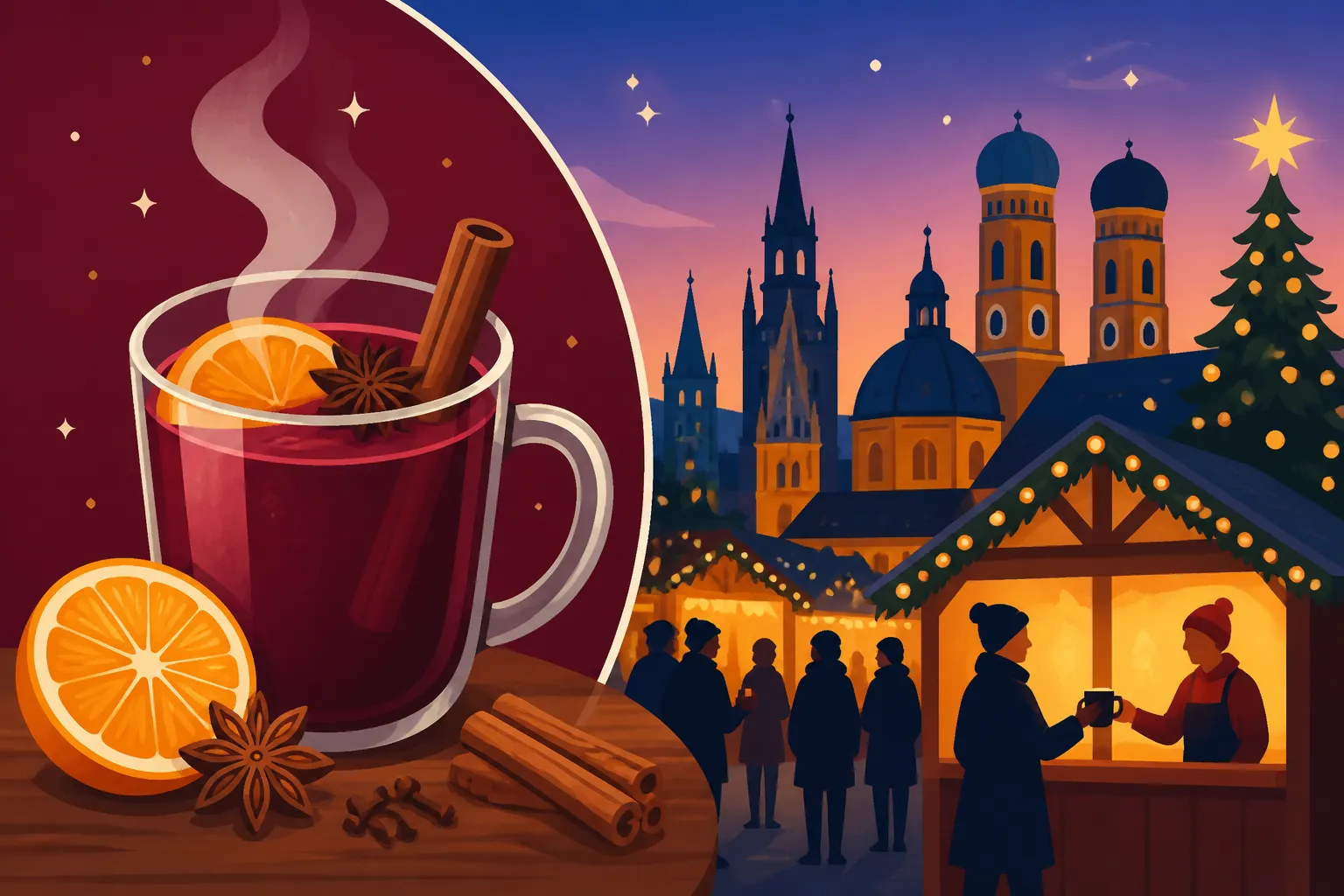
The classic red is typically made from a dry or semi-dry red wine base, infused with cinnamon sticks, cloves, star anise, citrus peel, and sugar. It is robust and warming. In regions like Bavaria, you might find it slightly sweeter, while in the North, it can be more spice-forward. If you are exploring the southern markets, such as those in Bavaria for Travelers: Munich, the Alps, and Beyond, you will find that the red variety is often served in heavy stoneware mugs that retain heat exceptionally well.
Weissglühwein: The White Alternative
In recent years, white Glühwein (made from Riesling or Pinot Grigio) has surged in popularity. It is often lighter, less syrupy, and features more delicate spices like ginger or cardamom. It is a fantastic alternative for those who find the red version too heavy or "Christmas-y." Many locals have switched to white Glühwein as their "first drink" of the evening because it feels slightly more refreshing despite the temperature.
Fruit Wines and Kinderpunsch
For those who aren't fans of grape wine, most stalls offer "Heidelbeerglühwein" (blueberry) or "Kirschglühwein" (cherry). These are much sweeter and have a deep, syrupy consistency. If you are visiting with family or don't drink alcohol, you should look for "Kinderpunsch." Do not be fooled by the name; adults drink this frequently as well. It is a non-alcoholic blend of fruit juices and the same Christmas spices, and it is a essential part of What to Eat and Drink at a German Christmas Market for those who need to stay sharp for the commute home.
The "Schuss": Adding an Extra Kick
You will often hear people ordering their drink "mit Schuss." This literally means "with a shot." Usually, this is a shot of rum, amaretto, or brandy added to the mug. This significantly increases the alcohol content and the "warming" effect of the drink. It is a common choice as the night progresses and the temperatures drop below freezing. Just be aware that adding a "Schuss" usually adds about €1 to €2 to the price of your drink.
| Type of Drink | Base Ingredient | Flavor Profile | Recommended For |
|---|---|---|---|
| Roter Glühwein | Red Wine | Spicy, berry-heavy, traditional | First-timers & purists |
| Weissglühwein | White Wine | Citrusy, floral, lighter | Those who dislike heavy sweetness |
| Heidelbeerglühwein | Blueberry Wine | Intensely sweet, tart finish | Dessert lovers |
| Kinderpunsch | Fruit Juice | Sweet, spiced, non-alcoholic | Families & drivers |
| Mit Schuss | Any of the above | Boozy, warming, intense | Bitterly cold nights |
The Art of the Pfand: A Practical Guide to Etiquette
The most confusing aspect of drinking Glühwein for any tourist is the "Pfand" system. When you order your first drink, you will notice the price seems suspiciously high—perhaps €7 or €8 for a single mug. This is because you are paying a deposit (Pfand) for the mug itself, which is usually around €3 or €4.
The mugs are often uniquely designed for that specific market and year, making them popular souvenirs. If you want to keep the mug, you simply walk away; your deposit covers the cost. If you don't want to collect a cupboard full of ceramic boots, you return the mug to the stall (or any stall with the same branding) and they will hand you back your cash. This system is a core part of the Money for Travel in Germany: Cash, Cards, and ATMs reality; because you are dealing with small cash deposits and returns, having coins on hand is essential. Most Glühwein stands are "Barzahlung" (cash only) environments.
Socially, the Glühwein stand is a place of high density. You will be bumping elbows with strangers. The etiquette is simple: find a tiny sliver of space at a tall table, make eye contact, and offer a quick "Hallo" or "Prost" (cheers) as you settle in. It is one of the few times Germans are quite open to small talk with strangers, particularly if the weather is particularly miserable. If you are staying in a central area, perhaps booked via Booking.com to be near the festivities, you can enjoy several mugs without worrying about navigating the U-Bahn late at night.
Where to Find the Best Glühwein Experiences
While every town has a market, certain cities are legendary for their Glühwein culture. Nuremberg is perhaps the most famous, known for its "Blueberry Glühwein" and strict quality standards. Dresden, home to the oldest Christmas market in Germany, is another must-visit. For those residing in the capital, Berlin for First-Time Visitors: Neighborhoods and Highlights offers a decentralized experience with dozens of smaller, "Kiez" (neighborhood) markets that feel much more authentic than the major tourist hubs.
If you are planning a trip specifically for the markets, consider the timing. The week before Christmas is the most crowded, often to the point of being uncomfortable. Late November or the first week of December is the "sweet spot" where the atmosphere is festive but you can actually reach the counter without a twenty-minute wait. For those worried about the cold during these long outdoor sessions, our guide on How to Stay Warm at German Christmas Markets is an essential read to ensure you don't end the night with numb toes.
Beyond the markets, you can often find "Glühwein stands" popping up outside of local bars or even in front of supermarkets in residential areas. These are the real community hubs. If you find yourself in a city for an extended period, try to find the "Stamm-Stand" (regular stall) in your neighborhood. Becoming a regular at a local stall is the fastest way to feel integrated into the community during the Visiting Germany in Winter: Christmas Markets and Snow season.
DIY Glühwein: Bringing the Market Home
Sometimes, the wind is too strong and the sofa is too tempting to head out to the market. Making Glühwein at home is incredibly simple and often results in a better flavor profile because you can control the quality of the wine and the sugar levels.
To make a traditional batch, you will need:
- A bottle of decent, dry red wine (do not use the cheapest bottom-shelf bottle, but don't use an expensive vintage either).
- One organic orange, sliced into rounds.
- Two cinnamon sticks.
- 6-8 whole cloves.
- 2 star anise.
- 3-4 tablespoons of brown sugar or honey (adjust to taste).
The golden rule of Glühwein is never let it boil. If the wine reaches a boil, the alcohol evaporates and the spices turn bitter. You want to simmer it gently on the lowest possible heat for about 20 minutes to let the flavors meld. This is a perfect activity for a quiet Sunday when everything else is closed, as discussed in our overview of Christmas Market Shopping: Crafts and Gifts. Serving it in glass mugs with a fresh cinnamon stick makes for a perfect winter evening indoors.
Disclaimer
The information provided in this guide is for educational and cultural informational purposes only. Alcohol consumption should always be practiced responsibly and in accordance with local German laws. Public intoxication can lead to fines or removal from festive areas. Always ensure you have a safe way to return to your accommodation. For the most accurate and up-to-date information regarding market opening times and local regulations, please consult official municipal websites for the specific city you are visiting.