Spa and Sauna Culture in Germany: Wellness for Health and Relaxation
Germany’s spa and sauna culture is a profound blend of ancient tradition, clinical health benefits, and deep cultural norms. This guide explores the “textile-free” philosophy, the multi-sensory Aufguss ritual, and how expats can leverage insurance subsidies for world-class wellness.
Disclosure: This post may contain affiliate links. We may earn a commission at no extra cost to you if you make a purchase through these links. Read full disclosure.
The Cultural Foundations of German Wellness
The Philosophy of the Sauna: FKK and Etiquette
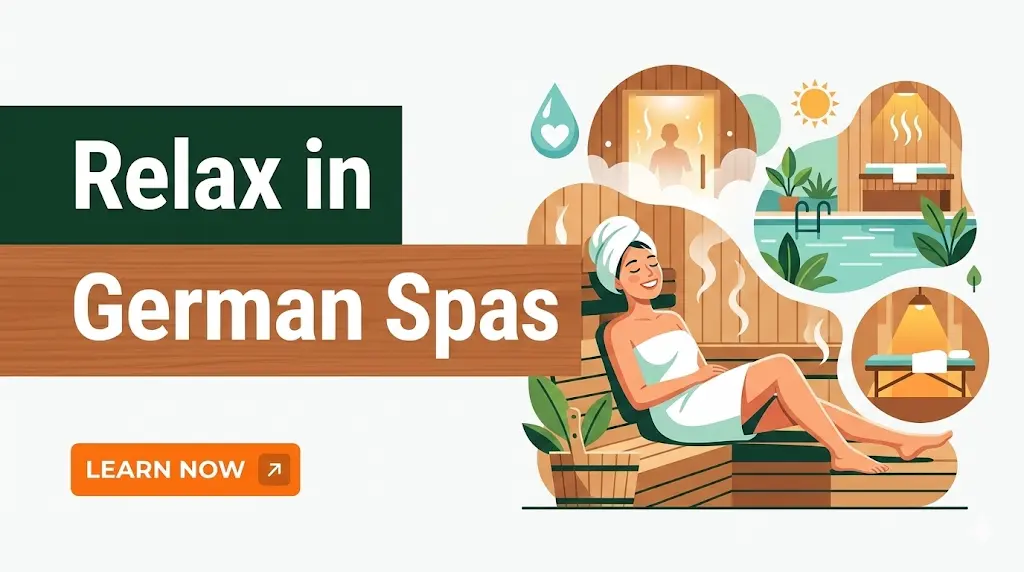
To understand the German sauna, one must first confront the concept of Freikörperkultur (FKK), or Free Body Culture. In Germany, saunas are almost universally “textile-free” (textilfrei) and mixed-gender. Wearing a swimsuit inside a sauna is not only considered a breach of etiquette but is often explicitly forbidden for hygiene reasons, as synthetic fabrics are believed to release vapors and trap sweat against the skin in high heat. For many expats, this non-sexualized public nudity can be a significant initial culture shock. However, the German perspective is clinical and egalitarian: in the heat of the sauna, every body is equal, and the focus remains entirely on health and relaxation.
Etiquette is meticulously enforced to maintain this atmosphere of mutual respect. The most important rule is “no skin on wood” (Kein Schweiß aufs Holz). You are expected to sit or lie entirely on a large towel so that your perspiration never touches the sauna benches. Silence is also highly valued; while quiet whispering might be tolerated in relaxation areas, the sauna itself is a place of meditative stillness. Staring is strictly prohibited—experienced sauna-goers maintain a “blasé” gaze, focusing on their own breathing or the heat. Mastering these social norms is a key step in Healthy Living in Germany: Wellness, Fitness, and Mental Health Guide.
The Ritual of the Aufguss
If the sauna is the heart of German wellness, the Aufguss (infusion) is its soul. An Aufguss is a highly ritualized ceremony led by a Saunameister (sauna master). The ritual begins when the master enters a jampacked sauna and pours water mixed with essential oils—such as eucalyptus, mountain pine, or citrus—over the hot volcanic stones. As the aromatic steam rises, the master uses choreographed towel movements to “swirl” the intense heat around the room, directing waves of fragrant air toward the participants.
These sessions typically last between 10 and 15 minutes and often feature music, special lighting, or even the distribution of ice chips or honey to rub onto the skin. The Saunameister acts as a guide, building the heat in “waves” until a peak of intensity is reached. It is considered poor form to leave during an Aufguss unless it is a physical necessity, as opening the door lets out the meticulously cultivated steam. Experiencing an Aufguss transforms a simple sweat session into a theatrical, multi-sensory event that many Germans schedule their entire day around.
Historical Spa Towns and the Kur Tradition
Germany is dotted with towns carrying the prefix “Bad” (e.g., Baden-Baden, Bad Homburg, Bad Kissingen), a title legally protected and reserved for locations that meet strict standards for air quality and the presence of natural healing waters. These Kurorte (spa towns) have been hubs of European wellness for centuries, attracting royalty and intellectuals who came to “take the waters.” This tradition evolved into the modern Kur—a medically prescribed preventative or rehabilitative retreat.
Unlike “wellness holidays” in other countries, a German Kur is a serious clinical intervention. A doctor might prescribe a three-week stay at a specialized clinic in a Kurort to treat chronic respiratory issues, musculoskeletal pain, or psychological burnout. During this time, patients follow a strict regimen of thermal baths, physical therapy, and nutritional counseling. This integration of luxury spas with clinical medicine is a unique feature of Healthcare in Germany: A Comprehensive Guide for Expats. Whether you are visiting for a day or a month, these towns offer a level of specialized care rarely found elsewhere.
Health Benefits and the Medicalization of Relaxation
Physiological Impact: Circulation, Immunity, and Recovery
The health benefits of the German sauna and thermal bath system are not merely anecdotal; they are backed by significant medical consensus in Central Europe. The core of the benefit lies in the “thermal cycle”—the alternation between extreme heat and rapid cooling. When you enter a 90°C (194°F) sauna, your heart rate increases, and peripheral blood vessels dilate, significantly improving circulation. This “passive cardiovascular training” is often recommended by German doctors to strengthen the heart and regulate blood pressure over the long term.
Rapid cooling, achieved through a plunge in a Tauchbecken (cold pool) or a dousing from a Schwallbrause (bucket shower), causes the vessels to constrict instantly. This “vascular gymnastics” trains the body to react more efficiently to temperature changes, which is believed to boost the immune system and reduce the frequency of seasonal colds. For athletes, the increased blood flow aids in the removal of metabolic waste like lactic acid, speeding up muscle recovery after intense workouts. Men, in particular, often utilize these facilities to manage cardiovascular risks, as detailed in Men’s Health in Germany: Prostate, Heart Health, and Regular Check-ups.
Mental Health and Stress Reduction in the Spa
Beyond the physical, the German spa is a critical tool for mental health maintenance. In a society known for its high productivity and professional rigor, the spa serves as an essential “third space” where digital devices and professional titles are left at the door. the forced stillness of the sauna cabin combined with the rhythmic sound of a towel during an Aufguss can induce a state of deep mindfulness. Many facilities include “silent rooms” (Ruheräume) with heated waterbeds or panoramic views of the forest, designed specifically for psychological decompression.
Chronic stress and burnout are taken very seriously by German medical professionals, and regular spa visits are frequently encouraged as part of a holistic stress-management strategy. The release of endorphins triggered by the heat, followed by the deep relaxation of the cool-down phase, can significantly improve sleep quality and reduce symptoms of mild anxiety.
When to Avoid the Sauna: Safety and Medical Contraindications
Despite the overwhelming benefits, the intense heat of a German sauna is not suitable for everyone. Individuals with acute inflammatory conditions, fever, or infectious diseases should strictly avoid the sauna, as the heat can exacerbate the illness and endanger other guests.
Pregnant women are generally allowed to use the sauna in Germany, provided they were regular users before pregnancy and stay on the lower, cooler benches, but medical advice is still paramount. Additionally, the consumption of alcohol is a major safety risk in the sauna, as it significantly increases the chance of fainting or circulatory collapse. Most high-end spas strictly regulate alcohol consumption on the premises to prevent such accidents.
Navigating the German Spa Landscape as an Expat
Types of Facilities: From Municipal Pools to Luxury Thermen
The German wellness infrastructure is incredibly varied, catering to all budgets. On one end of the spectrum are the Stadtbäder (municipal pools). Most of these local facilities include a small “Sauna-Landschaft” (sauna landscape) for an additional fee. While basic, they are clean, affordable, and deeply integrated into neighborhood life. For a more elevated experience, expats look to Thermen—massive thermal bath complexes like Therme Erding near Munich or the Caracalla Therme in Baden-Baden.
These Thermen are often architectural marvels, featuring dozens of themed saunas (e.g., a “Cinema Sauna” with movies, a “Bakery Sauna” that smells of fresh bread, or a “Salt Sauna” for respiratory health), massive wave pools, and elaborate outdoor thermal lagoons. A day pass to a luxury Therme can cost between €40 and €70, making it a “daycation” rather than a quick workout. Understanding the differences between these facilities helps you choose the right environment for your needs, a choice similar to deciding between Public Health Insurance (gesetzliche Krankenkasse): What It Covers and Costs and private options.
Essential Gear: Towels, Robes, and Flip-Flops
Coming unprepared to a German spa is a recipe for social awkwardness. The “holy trinity” of gear includes:
- At least two large towels: One extra-long towel to sit on in the sauna (ensuring no skin touches the wood) and another to dry off with after your shower.
- A bathrobe (Bademantel): This is your “clothing” while moving between saunas, relaxation rooms, and the spa restaurant.
- Flip-flops (Badeschlappen): Essential for hygiene in wet areas and showers. You leave them outside the sauna cabin door before entering.
While most luxury Thermen offer rentals for a fee, bringing your own is the norm. It is also wise to bring a large bottle of water to stay hydrated. For expats looking to stock up on wellness gear or high-quality supplements to support their spa recovery, many utilize iHerb for international wellness products that complement the German tradition.
Etiquette for Beginners: Avoiding the “Gawker” Label
The most common anxiety for newcomers is the nudity. The key is to remember that in a German sauna, nudity is functional, not erotic. The “Golden Rule” of etiquette is to act as if everyone is fully clothed. Do not stare, do not make comments about bodies, and keep your eyes at face level during conversations. When you are outside the sauna cabin, you should always wear your bathrobe or wrap yourself in a towel.
In the showers, which are often also mixed-gender and open-plan, the same blasé attitude applies. You are expected to wash thoroughly with soap before entering any pools or saunas. If the prospect of a mixed-gender sauna is too much, many facilities offer “Ladies only” days or specific hours. However, embracing the standard mixed environment is often the quickest way to feel like a “local.” This cultural integration is a significant milestone, much like successfully navigating Specialists and Referrals: How to See a Specialist Doctor in Germany.
Insurance, Subsidies, and the Economics of Wellness
How Public Health Insurance Subsidizes Wellness (Kassenzuschuss)
One of the most remarkable features of the German system is that your insurance company might pay for your wellness holiday. Under the Präventionsgesetz (Prevention Act), statutory health insurance providers are legally required to fund certified preventative courses. This is often called a Kassenzuschuss. If you book a “Wellness-Wochenende” (wellness weekend) that includes certified classes in yoga, stress management, or back training, your insurance will often reimburse up to €280 of the cost.
To qualify, the program must be officially recognized by the “Zentrale Prüfstelle Prävention” (ZPP). You usually pay the hotel or clinic upfront and then submit a certificate of participation to your Krankenkasse after the trip. Expats should actively ask their provider about “Vorsorgekurse” to maximize their health benefits.
Private Health Insurance Perks for Spa and Sauna
Premium private insurers like Ottonova or those found through Feather Insurance often include “Health Check-ups” and “Alternative Medicine” budgets that can be applied to medical spa treatments. Some private tariffs even cover a portion of the daily fee for thermal baths if they are part of a prescribed medical treatment plan.
Private patients also often benefit from “Digital Health Coaching,” which helps integrate spa-based recovery into a broader fitness and wellness plan. Because private insurance operates on a “pay and reclaim” basis, having a smooth way to manage international funds and local medical invoices is vital. Using Wise allows expats to handle these payments with transparent exchange rates, ensuring that their wellness budget isn’t eaten up by banking fees.
Managing Wellness Costs and International Payments
While municipal pools are cheap (€5–€15), frequent visits to luxury Thermen can impact your monthly budget. Many facilities offer “10-entry cards” (Zehnerkarten) or “Early Bird” specials that can save you up to 20%. For those living in Germany as freelancers or students, these discounts are essential for maintaining a regular routine.
If you are using funds from an overseas account to pay for an expensive Kur or a luxury spa membership, Wise is the most efficient way to convert your currency into Euros without the high markups typical of traditional German banks.
Practical Tips for a Perfect Wellness Day
Finding the Best Spas in Major German Cities
Every major city has its “wellness crown jewel.” In Berlin, the Vabali Spa offers a Balinese-themed escape that feels worlds away from the city’s grit. Munich residents flock to the Müller’sches Volksbad, an Art Nouveau masterpiece that is one of the most beautiful public pools in Europe. Stuttgart features the SchwabenQuellen, which takes you on a “global journey” through different regional sauna traditions.
Researching these facilities online beforehand is critical, as many require advanced booking for Aufguss sessions or massages. Use local review sites and expat forums to find the hidden gems in your neighborhood.
The Thermal Cycle: Heat, Cold, and Rest
To get the most health benefit, you should follow the traditional three-step cycle:
- The Heat (8-15 mins): Enter the sauna, place your towel down, and sit or lie. The higher the bench, the hotter the air.
- The Cold (1-2 mins): Exit the sauna, take a cold shower (starting with the feet and moving toward the heart), and then take a dip in the cold plunge pool.
- The Rest (20-30 mins): This is the most skipped but most important step. Wrap yourself in a robe and lie down in a relaxation room. This allows your heart rate to normalize and your body to enter a state of deep repair.
Repeat this cycle 2 or 3 times. Doing “just one” sauna session doesn’t trigger the full cardiovascular and immune benefits.
Supplementing Your Spa Day with Proactive Nutrition
A day of intense sweating depletes the body of minerals and fluids. While spa restaurants offer “healthy” options like salads and juices, they can be overpriced. Many savvy expats bring their own fruit and nuts to snack on in the relaxation areas. To replace lost electrolytes, consider high-quality mineral supplements.
iHerb is a favorite among expats for sourcing specialized magnesium and potassium supplements that might not be available in a standard Apotheke. Keeping your cellular health optimized ensures you leave the spa feeling genuinely rejuvenated rather than just tired.
Conclusion
Spa and sauna culture in Germany is far more than a leisure activity; it is a clinical, cultural, and communal pillar of health. By embracing the “textile-free” norms, mastering the etiquette of the Aufguss, and leveraging insurance subsidies, expats can transform a simple weekend into a powerful medical intervention for physical and mental well-being.
Whether you are seeking relief from the German winter or recovery from a high-stress job, the Therme is your ultimate ally. With the right insurance from providers like Feather Insurance or Ottonova, and the right financial tools like Wise, your journey into German wellness will be as seamless as it is relaxing.
References
Primary sources (official)
- German Sauna Association (Deutscher Sauna-Bund): https://www.saunabund.de/
- Federal Ministry of Health (BMG) – Prevention Act: https://www.bundesgesundheitsministerium.de/themen/praevention/praeventionsgesetz.html
Other helpful sources
- Therme Erding – Official Website: https://www.therme-erding.de/en/
- Lingoda Expat Blog – German Sauna Guide: https://www.lingoda.com/blog/en/german-sauna-guide/
Disclaimer
The information provided in this article is for general informational and educational purposes only and does not constitute professional medical, legal, or financial advice. Spa and sauna treatments involve extreme temperatures and physical stress; always consult with a qualified healthcare professional before beginning a new wellness regimen, especially if you have underlying health conditions or are pregnant. German health insurance policies and municipal pricing are subject to change.