Family-Friendly Cities in Germany: Best Places to Raise Kids
Realizing I needed to register my daughter on a daycare waiting list six months before she was even born was my brutal introduction to German parenting. Navigating foreign bureaucracy is tough enough, but doing it with dependents adds a layer of logistical terror that can paralyze even the most organized expat. This guide decodes the intense realities of raising kids in Germany and breaks down the most family-friendly cities to help you choose your landing pad wisely.
Disclosure: This post may contain affiliate links. We may earn a commission at no extra cost to you if you make a purchase through these links. Read full disclosure.
The German Parenting Reality: What to Expect
Before you pack your bags and order a shipping container, you must understand that the German system treats families with profound legal respect, but the infrastructure surrounding childcare is notoriously strained.
The Kita Crisis and Childcare Infrastructure
In Germany, early childhood education is managed through the Kindertagesstätte, universally referred to as the “Kita.” Legally, every child in Germany over the age of one is entitled to a childcare spot. However, the bureaucratic reality is vastly different from the legal statute. Germany is currently facing a catastrophic shortage of daycare educators (Erzieher), meaning the waiting lists for Kitas in major cities are astronomically long.
As an expat, this is usually your first major panic attack. You cannot simply arrive in a city, walk into a local daycare, and drop your child off. Families routinely apply to twenty or thirty different Kitas the moment they discover they are pregnant. If you are relocating with a toddler, you are already behind schedule. You will need to relentlessly email Kita directors, navigate municipal voucher systems (like the Kita-Gutschein), and potentially rely on private childminders (Tagesmutter) while you wait for a public spot to open up. Managing your career expectations during this childcare gap is a fundamental hurdle for newly arrived parents.
Finding Sufficient Living Space for Dependents
When moving as a single expat, you can easily crash on a friend’s couch or rent a tiny studio apartment. When moving with a family, German immigration law mathematically dictates your housing choices. The immigration authorities (Ausländerbehörde) enforce strict rules regarding “sufficient living space” (ausreichender Wohnraum).
Generally, you must prove you have at least 12 square meters of living space for every family member over six years old, and 10 square meters for children under six. If you attempt to squeeze your spouse and two children into a 45-square-meter apartment, your visa applications will be flatly rejected. This rigid mathematical requirement makes securing a long-term apartment incredibly stressful, a dynamic deeply analyzed in Bringing Your Family to Germany: The Family Reunification Visa.
To survive this initial housing gauntlet and guarantee visa compliance, veteran expats universally rely on Wunderflats. By booking a temporary, family-sized apartment through Wunderflats before you even cross the border, you guarantee that your housing meets the federal square footage requirements for your dependents. This buys you critical time to hunt for a permanent home without the terrifying threat of a visa rejection looming over your family.

Munich: The Premium Bavarian Safe Haven
Munich frequently tops the list for expat families, and for good reason. It operates less like a chaotic metropolis and more like an impeccably manicured, massively wealthy village.
Unmatched Safety and Access to Nature
If your primary concern is the physical safety and outdoor exposure of your children, Munich is arguably the best city in Europe. The city is remarkably safe; it is common to see young primary school children taking the U-Bahn or walking to school entirely unescorted by parents. This level of societal trust is a massive relief for anxious expat parents.
Furthermore, the access to nature is unparalleled. The English Garden provides a massive green lung right in the city center, perfect for weekend picnics and bike rides. More importantly, Munich sits at the foothills of the Alps. You can pack your family into a train and be skiing, hiking, or swimming in crystal-clear Bavarian lakes within an hour. The local culture heavily emphasizes outdoor activities, ensuring your children grow up deeply connected to nature despite living in a major economic hub.
The Brutal Cost of Living and Housing Reality
The utopian safety of Munich comes with a devastating price tag. Munich is officially the most expensive city in Germany regarding real estate. Finding a family-sized, three-bedroom apartment in a good school district will consume a massive portion of your monthly executive salary. Understanding this financial burden is essential, and you should thoroughly review Comparing Berlin vs Munich: Cost of Living and Lifestyle Differences before accepting a job offer here.
Because the local housing market is so fiercely competitive, landlords can afford to be incredibly selective, often discriminating against newcomers without a deep local credit history. Utilizing Wunderflats when you first arrive in Munich is often the only way to secure an immediate, high-quality family landing pad while you build your local financial profile.
Additionally, outfitting a nursery or buying seasonal kids’ clothing in Munich’s premium central boutiques will drain your savings rapidly. Smart expat parents bypass the local “Bavarian premium” by ordering their heavy strollers, high chairs, and seasonal kids’ gear directly through Amazon Germany. Using Amazon Germany ensures these bulky, essential items are delivered straight to your door at competitive prices, saving you from navigating crowded tram lines with heavy shopping bags and a crying toddler.
Stuttgart: The Industrial Giant with Family Roots
Stuttgart is the beating heart of Germany’s automotive and engineering sectors. While it lacks the international glamour of Berlin, it provides a highly structured, incredibly stable environment for raising a family.
International Communities and Corporate Support
Because Stuttgart is home to the global headquarters of Mercedes-Benz, Porsche, and Bosch, it attracts a massive influx of international engineers and executives. This means the city has a highly developed, deeply ingrained infrastructure for expat families.
There are numerous top-tier international schools offering the International Baccalaureate (IB) program, and local pediatricians and public services are highly accustomed to dealing with English-speaking families. Furthermore, the massive corporate presence means that many expats arrive with comprehensive relocation packages that ease the financial burden of moving a household. The salaries in Stuttgart are generally very high, providing a robust financial safety net that makes balancing the Cost of Living in Germany: Breakdown of Expenses Rent Food Transport much more manageable for a single-income household.
Navigating the Suburban Commuter Belts
Stuttgart itself sits in a basin (the “Kessel”), which can trap pollution and feel somewhat claustrophobic. Consequently, most expat families choose to live in the “Speckgürtel”—the affluent suburban commuter belt surrounding the city, such as Sindelfingen, Böblingen, or Esslingen.
Living in these suburbs provides families with larger houses, private gardens, and immediate access to the Swabian forests. The tradeoff is that you will almost certainly need to own a car, and the cultural isolation is slightly higher. Deciding between the urban core and the suburbs is a massive lifestyle choice detailed in Big City vs Small Town: Choosing the Right Environment in Germany. When living out in the deep suburbs, finding specific international toddler books, bilingual learning materials, or specialized expat comfort foods locally can be nearly impossible. Families here rely heavily on Amazon Germany to bridge that retail gap, ensuring that niche educational tools and familiar household brands are delivered directly to their suburban homes.
Leipzig: The Affordable Eastern Alternative
If you are a younger expat family, perhaps working in the creative industries or a digital startup, the financial gatekeeping of Munich and Stuttgart might be entirely prohibitive. Leipzig has emerged as the ultimate family-friendly release valve.
Budget-Friendly Family Living and Green Spaces
Often dubbed the “New Berlin,” Leipzig offers all the creative, vibrant energy of the capital without the catastrophic housing crisis. For families, the primary draw is pure economics. In Leipzig, a mid-level salary actually allows you to rent a spacious, beautifully renovated Altbau apartment with high ceilings and multiple bedrooms—a reality that is mathematically impossible for most in southern Germany.
The city is also incredibly green, heavily defined by the massive Clara-Zetkin-Park and a sprawling network of canals. You will find a highly active community of young parents, a thriving alternative arts scene, and a much more relaxed, less corporate approach to parenting. It is a city where cargo bikes rule the streets and weekend flea markets are the primary social event. Navigating this unique cultural landscape is deeply explored in Living in Leipzig: Up-and-Coming City Guide for Expats.
The Language Barrier and Local Integration
The major caveat for families moving to Leipzig is the language barrier. Unlike the massive corporate hubs in the west, Leipzig does not have an extensive network of expensive international private schools. If you move here, your children will almost certainly be attending the local German public school system.
While younger children adapt and learn German with astonishing speed, older children might struggle with this abrupt immersion. Furthermore, you as parents will need to learn German rapidly to communicate with teachers, pediatrician receptionists, and other parents. You cannot rely on an “English bubble” in Saxony. However, this forced immersion ultimately leads to much deeper, more authentic integration into the local community, ensuring your children grow up truly bilingual and integrated into German society.
Düsseldorf: The Rhineland’s Expat Paradise
Düsseldorf perfectly balances the economic power of a major corporate hub with the manageable size and walkability of a much smaller city. It is famously welcoming to foreigners and heavily optimized for family life.
Top-Tier International Schools and Connectivity
Düsseldorf hosts one of the largest Japanese communities in Europe, alongside a massive contingent of British, American, and French expats. Because of this diverse demographic, the city boasts an incredible array of international educational institutions, including the renowned International School on the Rhine (ISR) and several highly rated international preschools.
If your family is only planning to stay in Germany for a few years before relocating again, keeping your children in an English-language curriculum is vital to prevent academic disruption. Düsseldorf caters to this need flawlessly. Furthermore, when your children enter these rigorous international programs, they often require highly specific calculators, English-language reading curriculums, or specialized sports gear that local German stationery shops simply do not stock. Expat parents universally use Amazon Germany to procure these exact international school supplies, ensuring their kids are perfectly equipped for their curriculum without spending hours hunting through unfamiliar local stores.
Balancing the Urban Lifestyle with Family Needs
Düsseldorf is renowned for its high quality of life. The city is incredibly walkable, heavily featuring wide promenades along the Rhine river that are perfect for Sunday family strolls. The public transportation network is dense and highly reliable, meaning teenagers can navigate the city safely and independently.
Furthermore, the city is an incredible logistical basecamp. The Düsseldorf Airport is a major international hub, making flights back to your home country to visit grandparents incredibly convenient. You are also just a short train ride away from the Netherlands, Belgium, and France, allowing for effortless, enriching weekend family trips across Europe. If you are managing your finances across these various borders, setting up localized financial tools is a mandatory step outlined in How to Pay Rent and Bills in Germany: Banking Tips for Expats.
Essential Relocation Logistics for Families
Beyond choosing the right city, the physical logistics of moving a family to Germany require intense, proactive preparation.
Managing the Unfurnished Apartment Trap
The most devastating shock for an expat family is discovering the concept of the unfurnished German apartment. When you sign a standard long-term lease, you are usually renting a bare concrete box. There are no light fixtures, no closets, and absolutely no kitchen. You are entirely responsible for buying and installing your own cabinets, sink, oven, and appliances.
Moving into an empty apartment with a two-year-old is a logistical nightmare. You cannot cook, you cannot wash clothes, and you are sleeping on the floor. This is why Wunderflats is a non-negotiable lifeline for incoming families. By securing a fully furnished, functional apartment through Wunderflats for your first three to six months, your family has a comfortable, stress-free landing pad. It allows you to take your time hunting for a permanent, unfurnished apartment.
Once you do secure your permanent empty flat, outfitting it is physically exhausting. Instead of renting a van and dragging heavy appliances up four flights of Altbau stairs while holding a crying baby, veteran expats order their washing machines, microwaves, and flat-pack wardrobes directly through Amazon Germany. This ensures that the heavy lifting is handled by delivery professionals, allowing you to focus on settling your kids into their new routines rather than destroying your back moving a refrigerator.
The Vital Importance of the Anmeldung
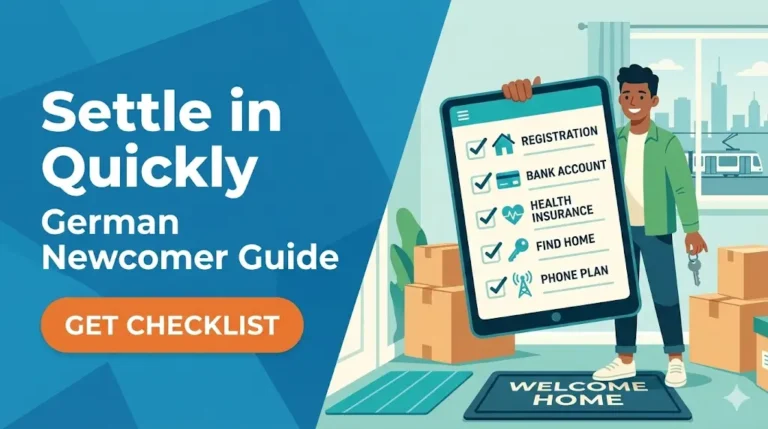
In Germany, you do not legally exist until you complete your address registration, known as the Anmeldung, at the local citizens’ office. For families, the Anmeldung is the critical key that unlocks the German social safety net.
Without your registration certificate, you cannot apply for the Kindergeld (a monthly child benefit payment given to all parents in Germany, regardless of income) or the Elterngeld (parental allowance). You also cannot officially join the waiting list for a public Kita or enroll your child in the local school system.
When you book your temporary arrival housing through Wunderflats, you must ensure that the property provides the Wohnungsgeberbestätigung—the mandatory landlord confirmation letter required by the government. Properties listed on their platform are specifically vetted to provide this paperwork, ensuring you can register on day one and immediately apply for your crucial family financial benefits. Decoding the profound impact these benefits have on your annual income is a vital skill explored in Understanding Your Tax Assessment Steuerbescheid After You File in Germany and German Bureaucracy 101: Understanding the Anmeldung, Schufa, and Tax ID.
City Comparison Summary for Families
| City | Primary Vibe | Average Housing Cost | Kita Availability | Best Suited For |
| Munich | Extremely safe, nature-focused, wealthy | Very High | Extremely competitive | High-earners, outdoor enthusiasts |
| Stuttgart | Corporate, suburban, stable | High | Competitive | Engineers, families seeking suburbs |
| Leipzig | Creative, green, budget-friendly | Moderate | Manageable | Young families, digital creatives |
| Düsseldorf | International, highly connected, walkable | High | Competitive | Short-term expats, corporate transfers |
References
Primary sources (official)
- Make it in Germany – Family Life: The federal government’s official English-language portal detailing the legal frameworks for family reunification, the public school system, and the state-mandated Kindergeld benefits. https://www.make-it-in-germany.com/en/living-in-germany/family-life
- Destatis (Federal Statistical Office) – Households and Families: The official central database providing granular demographic data regarding living space requirements, homeownership rates, and urban family distribution across Germany. https://www.destatis.de/EN/Themes/Society-Environment/Population/Households-Families/_node.html
Other helpful sources
- I Am Expat – Family & Kids in Germany: An incredibly comprehensive, crowdsourced expat guide explaining the harrowing realities of the Kita application process, the Elterngeld system, and maternity ward protocols. https://www.iamexpat.de/expat-info/family-kids
Disclaimer
The information provided in this article is for general informational and educational purposes only and does not constitute professional legal, tax, real estate, or immigration advice. German residency laws, specifically regarding the strict mathematical formulas for “sufficient living space” (ausreichender Wohnraum) for dependents, are rigorously enforced by the local immigration authorities (Ausländerbehörden). Childcare availability (Kita-Plätze) and the allocation of educational vouchers fluctuate heavily by municipality and federal state. Always consult a certified German immigration lawyer regarding complex family reunification cases.