Laundry in Germany: Using Shared Laundry Rooms and Waschsalons
Figuring out how to wash your clothes without accidentally violating a strict building code or shrinking your favorite sweater is a genuine expat struggle. I once received a fiercely passive-aggressive note from a neighbor for daring to run a washing machine on a Sunday afternoon. This guide explains German laundry etiquette, shared basement rules, and how to use local laundromats.
Disclosure: This post may contain affiliate links. We may earn a commission at no extra cost to you if you make a purchase through these links. Read full disclosure.
The Infamous Waschkeller and Shared Laundry Rules
Decoding the Waschplan
When you sign a lease for a traditional German apartment, you might be thrilled to learn the building has a Waschkeller (laundry cellar). However, this is rarely a free-for-all amenity. Shared laundry rooms in Germany are often governed by a rigid, non-negotiable schedule known as the Waschplan.
The Waschplan dictates exactly which days and hours each specific apartment is allowed to use the shared washing machine. If your designated slot is Tuesday from 8:00 AM to 1:00 PM, you absolutely cannot leave your clothes in the machine until 2:00 PM. If you do, you will likely find your wet clothes unceremoniously dumped in a plastic basket on the cold basement floor by the next tenant.
Furthermore, these shared machines rarely operate for free. They are usually hooked up to a central coin-meter or a token box (Münzzähler). You must hoard specific euro coins or purchase proprietary brass tokens from your building manager (Hausmeister) just to activate the power outlet. Understanding these rigid building rules is a critical part of Understanding German Rental Contracts: Key Terms and Conditions, as violating the house rules (Hausordnung) can lead to formal complaints.
The Sunday Wash Ban and Quiet Hours
The most jarring cultural shock for expats is the German concept of Ruhezeit (quiet hours) and the Sunday rest day (Ruhetag). By federal law and deeply ingrained cultural tradition, Sundays are strictly meant for quiet relaxation.
While modern tenancy laws have relaxed a bit—meaning running a modern, quiet washing machine on a Sunday is sometimes legally permissible—your building’s specific Hausordnung usually forbids it. Even if it isn’t explicitly forbidden, the cultural taboo is immense. The vibrations from the spin cycle (Schleudern) in an older building will almost certainly trigger a noise complaint from your downstairs neighbor.
If you miss your designated weekday laundry slot because of work, you cannot simply catch up on Sunday without risking a confrontation. If you find yourself out of clean clothes on a Sunday, you can always order a massive, foldable drying rack on Amazon Germany to hand-wash and quietly hang-dry emergency items in your bathtub. Adapting to this enforced deceleration of your weekend chores is a massive step in Coping with Culture Shock: Adjusting to Life in Germany.
Surviving the Local Waschsalon
How German Laundromats Operate
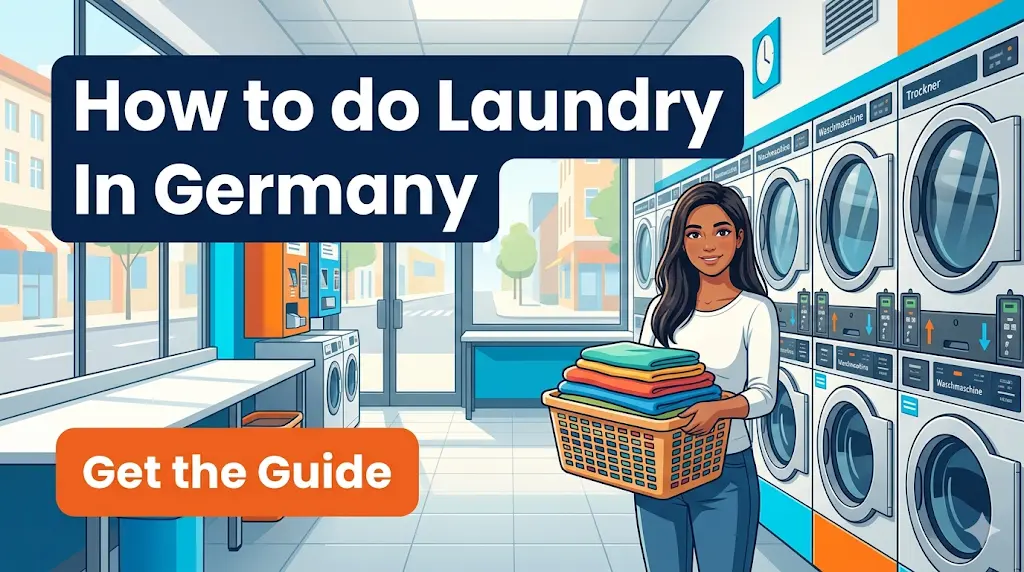
If your building does not have a Waschkeller and your apartment lacks the plumbing for a private machine, you will become intimately familiar with the local Waschsalon (laundromat).
German laundromats are highly efficient but operate slightly differently than those in North America or the UK. You rarely insert coins directly into the individual washing machines. Instead, there is a central payment terminal (Zentrale Kasse). You load your clothes, close the machine door, note the machine number, and walk to the central terminal. There, you select your machine number, insert your coins or card, and select the wash program. Only then will the machine power on.
| Laundry Option | Availability | Cost per Wash | Pros and Cons |
| Private In-Apartment Machine | Depends on plumbing and landlord | Only water/electricity costs | Ultimate freedom, but high upfront cost to purchase and install. |
| Waschkeller (Shared Basement) | Common in mid-sized apartment blocks | ~€1.50 to €3.00 (Coins/Tokens) | Conveniently in-building, but strictly limited by the Waschplan. |
| Waschsalon (Laundromat) | Common in large cities | ~€4.00 to €6.00 | Flexible hours and large industrial dryers, but requires traveling with heavy bags. |
Budgeting for laundromat runs is an essential part of managing your early finances, a topic explored deeply in Cost of Living in Germany: A Realistic Budget for Expats.
Supplies and Laundromat Etiquette
Unlike some premium international laundromats, German Waschsalons rarely have built-in detergent dispensers. You are entirely responsible for bringing your own Waschmittel (detergent) and Weichspüler (fabric softener). Buying tiny, overpriced travel packets of detergent from the laundromat vending machine will drain your wallet quickly.
To navigate the laundromat efficiently, I highly recommend buying bulk liquid detergent on Amazon Germany. Having a massive supply delivered to your door saves you from lugging heavy bottles back and forth from the supermarket, making the trip to the laundromat significantly lighter.
Etiquette inside the Waschsalon is strictly observed. You do not touch another person’s laundry, and you are expected to empty the machine the exact minute the cycle finishes. Bringing a book, grabbing a coffee, and waiting patiently is the standard procedure.
Drying Clothes the German Way
The Absence of Tumble Dryers
If you are moving from the United States, you are likely accustomed to throwing everything into a massive tumble dryer the moment it leaves the wash. Prepare for a massive adjustment. Tumble dryers (Wäschetrockner) are incredibly rare in standard German households. They are viewed as massive wastes of energy and terribly damaging to the environment.
The undisputed king of German laundry is the Wäscheständer (drying rack). Almost every single household uses a drying rack positioned in the living room or on the balcony. You must learn to hang your clothes strategically to avoid wrinkles, as iron usage also consumes high amounts of expensive electricity, a cost factor detailed in A Guide to German Utilities: Setting Up Electricity, Gas, and Water.
Shock Ventilation and Mold Prevention
Drying wet clothes inside a highly insulated German apartment introduces a massive hazard: Schimmel (mold). Because modern German windows are sealed so tightly to preserve heat, the moisture evaporating from your wet clothes has absolutely nowhere to go. It will accumulate on the cold exterior walls, leading to rapid, toxic mold growth.
To combat this, you must master the art of Stoßlüften (shock ventilation). If you are drying clothes on a rack inside your living room, you must open the windows completely—not just tilted on the upper hinge, but wide open—for five to ten minutes, at least twice a day. This pulls the humid air out and replaces it with dry air from outside.
Managing interior humidity is absolutely crucial. Purchasing a cheap, accurate digital hygrometer on Amazon Germany is an absolute must for any expat. A hygrometer from Amazon Germany will tell you exactly when the humidity in your room crosses the dangerous 60 percent threshold, reminding you instantly that it is time to open the windows. Failing to ventilate properly and causing mold is considered severe property damage and is heavily penalized by German landlords, a liability you want to avoid as much as you want to maintain your overall health, an aspect covered in Healthy Living in Germany: Wellness, Fitness, and Mental Health Guide.
Installing Your Own Machine or Choosing an Alternative
Navigating Water Connections and Liability
If you rent a traditional, empty German apartment, you might decide to buy your own washing machine. This requires navigating a notoriously complex delivery and installation process. You cannot simply plug a machine in. You must connect the fresh water intake and the wastewater drainage pipe securely.
If you install the hoses incorrectly and cause a water leak that floods your neighbor’s apartment, you are entirely financially liable for the catastrophic damages. This is why every machine must be fitted with an Aqua-Stop safety valve. If you are not a plumber, installing a heavy machine in a tight bathroom space is terrifying. If you do decide to buy your own machine, ordering it on Amazon Germany with a professional installation add-on saves you from carrying a hundred-kilo appliance up five flights of stairs and guarantees the hoses are sealed legally.
Buying major appliances also means retaining thick stacks of warranties and manuals. Managing this paperwork securely is a theme you will encounter constantly, much like organizing your immigration documents as advised in Bureaucracy Basics: Understanding Bescheinigung, Anträge, and Other Paperwork.
The Furnished Apartment Solution
Wrestling with the Waschplan, hauling bags to the Waschsalon, or risking a flooded bathroom by installing your own machine are all exhausting prospects for a newly arrived expat. The language barrier makes coordinating delivery technicians and reading complex lease rules incredibly difficult.
This is exactly why relying on Wunderflats when you first arrive is such a massive game-changer. When you book a temporary, move-in-ready apartment on Wunderflats, the laundry situation is already solved for you.
Many apartments listed on Wunderflats either come with a private, professionally installed washing machine directly inside the bathroom, or they explicitly outline a highly modern, easily accessible laundry setup in the building. Furthermore, the customer support team at Wunderflats can clarify any complex building rules regarding the washing machine before you even sign the lease. By utilizing Wunderflats, you completely bypass the grueling infrastructure challenges of a traditional empty German flat, allowing you to focus your energy on settling into your new life instead of fighting over a basement coin-meter.
References
Primary sources (official)
- Make it in Germany (Official Federal Portal) – Housing rules and Registration: https://www.make-it-in-germany.com/en/living-in-germany/housing-mobility/housing-registration
- BMWSB (Federal Ministry for Housing, Urban Development and Building) – Tenant Rights: https://www.bmwsb.bund.de/
Other helpful sources
- Berliner Mieterverein (Berlin Tenants’ Association) – Noise regulations and Ruhezeiten: https://www.berliner-mieterverein.de/recht/infoblaetter/info-96-massnahmen-gegen-laermbelaestigungen-das-abc-der-haeufigsten-streitpunkte.htm
- Deutscher Mieterbund (German Tenants’ Association) – Rules on drying clothes inside: https://www.mieterbund.de/
Disclaimer
The information provided in this guide is for general informational purposes only and reflects the subjective experiences of expats adjusting to the German housing landscape. Specific quiet hours (Ruhezeiten), shared laundry room rules (Waschpläne), and the liability surrounding mold prevention (Stoßlüften) are heavily dictated by your individual rental contract and local municipal laws. This article does not constitute legal, housing, or financial advice. Always consult your specific rental agreement (Mietvertrag), building house rules (Hausordnung), or a certified tenants’ association (Mieterverein) to ensure you are fully compliant with the regulations governing your specific residence.