Maternity and Pregnancy Care in Germany: Hebamme and Checkups
Finding out you are pregnant while living in a foreign country can trigger a mix of absolute joy and paralyzing bureaucratic dread. I remember sitting in my tiny Berlin kitchen, staring at a positive test, and realizing I had no idea how to say "ultrasound" in German or how to find a midwife in a city where they are harder to book than a Michelin-starred restaurant. This guide breaks down the German maternity system, from your first gynecologist visit to the postnatal care that will save your sanity.
Disclosure: This post may contain affiliate links. We may earn a commission at no extra cost to you if you make a purchase through these links. Read full disclosure.
Understanding the German Maternity Care System
The German healthcare system is world-class, but it is also highly structured and relies heavily on a dual-care model. Unlike some countries where you might only see a midwife or only see an OB-GYN, Germany often encourages a "best of both worlds" approach. However, navigating this requires a clear understanding of who does what and how your insurance fits into the puzzle.
The Roles of Gynecologists and Midwives
In Germany, your primary medical point of contact during pregnancy is your gynecologist (Frauenarzt). They are responsible for the clinical side of your care: blood tests, ultrasounds, and checking for any high-risk factors. You will typically visit your doctor every four weeks until the 32nd week of pregnancy, after which visits increase to every two weeks.
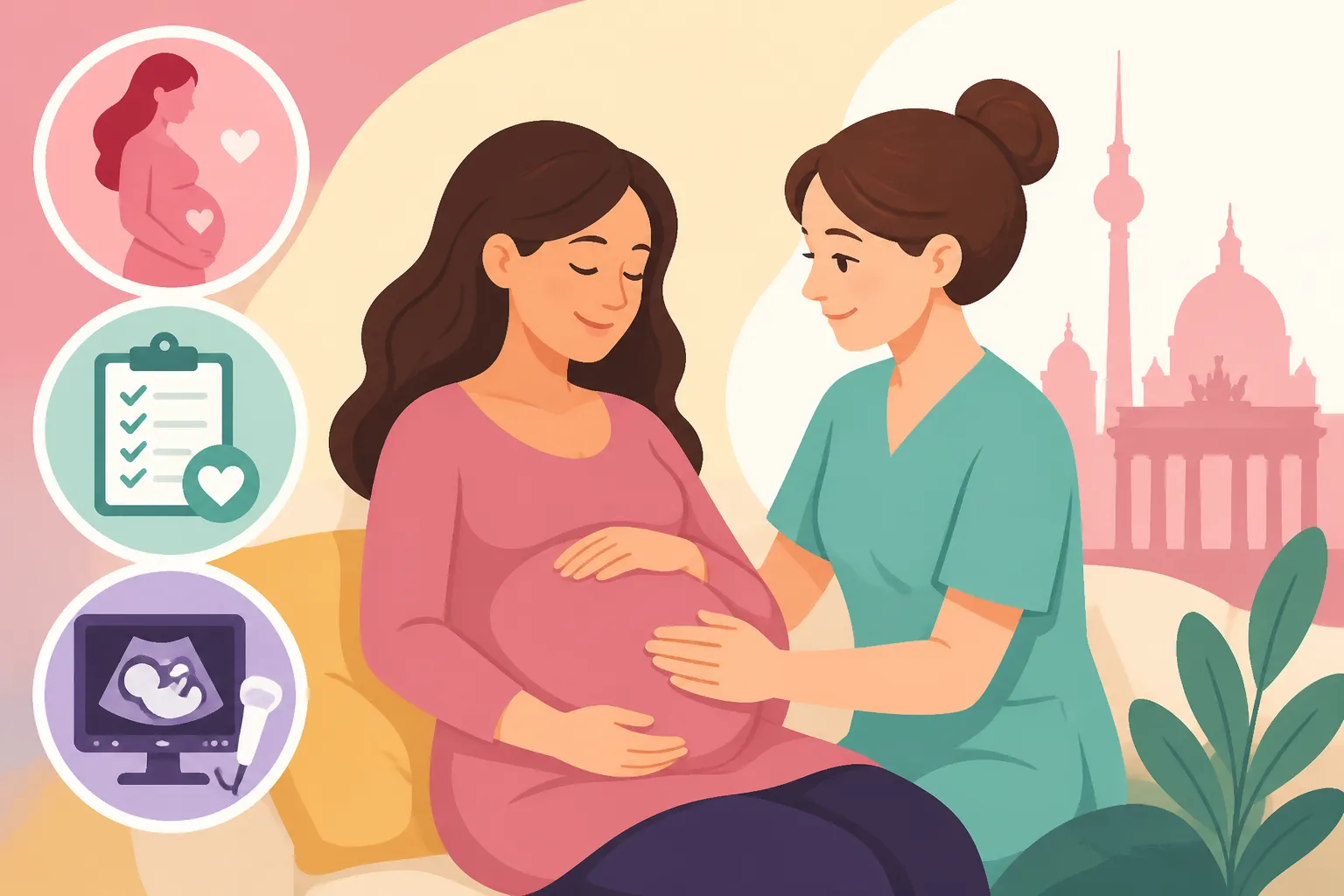
However, the "heart" of German maternity care is the Hebamme (midwife). In Germany, midwives are not just for home births; they are a fundamental right for every pregnant person. They can perform routine checkups, but their real value lies in the "holistic" support they provide. They offer advice on everything from morning sickness and breastfeeding to the emotional transition into parenthood. I quickly learned that while my doctor spent ten minutes checking my cervix, my midwife spent an hour in my living room talking about my fears and teaching me how to wrap a baby.
Public vs. Private Insurance Coverage
Whether you are on public or private insurance, pregnancy is generally well-covered. Public insurance (Gesetzliche Krankenkasse) covers all "medically necessary" treatments, including regular checkups, standard ultrasounds, the birth itself, and postnatal midwife visits. If you are looking for a more tailored experience, providers like ottonova or Feather Insurance offer private options that can simplify the process for expats, often providing English-speaking support and covering "extra" screenings that public insurance might not.
For those who are in Germany on shorter-term stays or are navigating the transition between visas, SafetyWing can be a vital resource for travel-related medical needs, though it is essential to check their specific maternity terms as they differ from long-term German resident insurance. For a broader look at how these systems differ, check out Health Insurance in Germany: Understanding Public vs Private Coverage.
The Concept of Mutterschutz and Legal Protection
Germany takes the protection of pregnant employees very seriously. The "Mutterschutzgesetz" (Maternity Protection Act) ensures that you cannot be fired during your pregnancy and for four months after birth. It also dictates a mandatory "Mutterschutz" period—six weeks before your due date and eight weeks after (twelve weeks for multiple births)—during which you are not allowed to work. During this time, your salary is typically covered through a combination of insurance and employer contributions. Understanding these rights is crucial, and you might find more details in our guide on Sick Leave in Germany: How to Get a Sick Note (Krankmeldung) and Your Rights.
Pregnancy Checkups and Medical Procedures
Once your pregnancy is confirmed by a doctor, you enter a cycle of "Vorsorgeuntersuchungen" (preventative checkups). These are designed to be thorough, and the German penchant for documentation shines here. You will be poked, prodded, and tested regularly, but the benefit is a very high level of safety for both you and the baby.
The Mutterpass: Your Most Important Document
The moment your pregnancy is confirmed, your doctor will issue you a "Mutterpass." This small, blue booklet is the holy grail of your pregnancy. It contains every piece of data: your blood type, iron levels, the baby’s growth charts, and results from every screening. You are expected to carry this with you everywhere—to every doctor's appointment, every midwife visit, and even when you go to the grocery store. If you end up in an emergency room, the doctors will look for your Mutterpass first.
I remember losing mine in the bottom of a diaper bag once and feeling more panicked than if I had lost my passport. It is a comprehensive record that ensures any doctor in Germany can take over your care instantly. For more on managing your health records, see Medical Records in Germany: Keeping Track of Your Health Documents.
Standard Tests and Screenings
During your regular visits, the doctor will perform several mandatory tests. These include blood pressure monitoring, urine analysis, and weight checks. You will also have three major ultrasound exams (Basis-Ultraschalluntersuchungen) throughout the pregnancy:
- Between weeks 9 and 12.
- Between weeks 19 and 22.
- Between weeks 29 and 32.
In addition to these, you will be screened for gestational diabetes (Zuckertest) between weeks 24 and 28. These are standard and covered by public insurance. If you find the terminology confusing, our list of Common German Medical Terms: A Mini Dictionary for Patients can help you decode the scribbles in your Mutterpass.
Specialized and Optional Tests (IGeL-Leistungen)
German doctors often offer additional tests known as "IGeL-Leistungen" (Individual Health Services). These are not considered "medically necessary" by public insurance but are offered for extra peace of mind. Common examples include Nuchal Translucency screening, Toxoplasmosis tests (especially if you have a cat), and the NIPT (Non-Invasive Prenatal Test) for chromosomal abnormalities. While some private insurers like ottonova might reimburse these, public patients usually pay out of pocket. It is worth discussing with your doctor which tests are actually beneficial for your specific situation to avoid unnecessary costs.
The Hunt for a Hebamme
If I can give you one piece of advice: start looking for a midwife the moment you see two lines on that pregnancy test. In major cities like Berlin, Hamburg, or Munich, the shortage of midwives is a legitimate crisis. I’ve known women who were rejected by 20 midwives before finding one who could take them.
Why You Need a Midwife
A midwife provides care that a doctor simply doesn't have the time for. They come to your home after the birth (Nachsorge) to check the baby’s weight, help with umbilical cord care, monitor your physical recovery, and provide invaluable breastfeeding support. In Germany, the cost of these home visits is fully covered by your insurance. Without a midwife, you are essentially on your own the moment you leave the hospital, which can be incredibly daunting for a first-time parent in a foreign country.
When and How to Start Your Search
Start early. Use websites like Hebammensuche.de or Ammely.de. You can also ask your gynecologist for a list of local midwives. When contacting them, be persistent. Send emails, but also follow up with phone calls. If you don't speak fluent German, emphasize that you are looking for an English-speaking midwife. Many midwives in Germany are multilingual and are happy to work with expats. For more tips on finding care in your native language, read Finding English-Speaking Doctors: Resources and Tips for Expats.
Types of Midwives: Vorsorge, Beleghebamme, and Nachsorge
Understanding the different roles a midwife can play is essential:
- Vorsorgehebamme: Provides prenatal checkups.
- Beleghebamme: A "stipulated" midwife who you hire to be present at your birth in a specific hospital. These are very rare and expensive (you pay a "readiness fee" or Rufbereitschaft), but they offer the comfort of a familiar face during labor.
- Nachsorgehebamme: The most common type, focusing on postnatal care at your home.
Most women aim for a midwife who can do both prenatal and postnatal care. If you are struggling with the administrative hurdles of booking care, companies like Feather Insurance can often point you toward resources that cater specifically to the expat community.
Choosing Your Birth Location
Germany offers three main paths for giving birth, and the choice is entirely yours. You don’t need a referral; you simply register at your chosen location around week 30-34.
Hospitals (Krankenhaus)
The vast majority of births in Germany happen in hospitals. German hospitals are generally excellent, offering high-tech medical intervention if needed, alongside "delivery rooms" (Kreißsaal) that look more like cozy bedrooms. Most offer water births, birthing balls, and epidurals (PDA) on request.
One unique feature of German hospitals is the "Familienzimmer" (family room). For an extra fee (not covered by public insurance), your partner can stay in the room with you and the baby. I highly recommend this; having my partner there for those first 48 hours made a massive difference. To understand more about what to expect in a clinical setting, see Hospitals in Germany: What to Expect for Inpatient and Emergency Care.
Birth Centers (Geburtshaus)
For those who want a completely natural, midwife-led birth but don't want to be at home, a "Geburtshaus" is a fantastic middle ground. These centers are run entirely by midwives. There are no doctors on-site and no epidurals. If a complication arises, you are transferred to a nearby hospital. Birth centers focus on the "natural" process of birth, but they book up even faster than midwives, so register very early.
Home Births (Hausgeburt)
Home births are legal and supported in Germany, provided you have a midwife willing to attend. While less common, the insurance system does cover home births. It is a deeply personal choice, but in a country with a very high medical standard, many feel safe choosing this "back to basics" approach.
| Feature | Hospital (Krankenhaus) | Birth Center (Geburtshaus) | Home Birth (Hausgeburt) |
|---|---|---|---|
| Medical Support | Full (Doctors/Nurses) | Midwife-led only | Midwife only |
| Pain Relief | Epidurals, Gas, IV | Natural methods only | Natural methods only |
| Atmosphere | Clinical but comfortable | Homelike/Cozy | Your own home |
| Emergency Prep | Immediate access | Requires transfer | Requires transfer |
| Cost Coverage | Fully covered (Public/Private) | Mostly covered | Mostly covered |
Practical Preparation and Bureaucracy
Germany loves its paperwork, and having a baby generates a lot of it. Staying organized is the only way to survive the "Papierkrieg" (paper war).
Registering the Birth and Elterngeld
After your baby is born, you have one week to register the birth at the local Standesamt (registry office). The hospital will usually give you the necessary forms. You will need your own birth certificates (translated into German by a certified translator—see Legalizing and Translating Documents for German Visa Applications) and your marriage certificate if applicable.
Once you have the birth certificate, you can apply for "Elterngeld" (Parental Allowance) and "Kindergeld" (Child Benefit). Elterngeld is a monthly payment from the government that covers about 65% of your previous salary (within certain limits) while you stay home with the baby. For a deep dive into how to claim these, refer to Child Benefit (Kindergeld): How Expats Can Claim and What It Provides.
Prenatal Classes (Geburtsvorbereitungskurse)
Most insurance companies cover the cost of a "Geburtsvorbereitungskurs" (Birth Preparation Course). These classes are a great way to meet other expecting parents and learn about the German hospital process. Many are offered in English in larger cities. They cover breathing techniques, labor positions, and basic baby care. Don't skip these; the "communal venting" with other expats about the German system is worth the price of admission alone.
Setting Up Your Home
As an expat, you might not have the "village" of family nearby to help. Setting up your home effectively before the baby arrives is key. Many expats use Amazon Germany for bulk-buying diapers and eco-friendly baby gear, especially if they don't have a car to haul heavy boxes from the drugstore. For more on managing your household as an expat, see Housing in Germany: Renting, Buying, and Finding Your Home as an Expat.
Postnatal Care (Wochenbett) and Support
In Germany, the period after birth is called the "Wochenbett" (literally "weeks of bed"). It is culturally respected as a time for the mother to do nothing but heal and bond with the baby.
The First Ten Days and Beyond
During the first ten days after you leave the hospital, your Hebamme can visit you every single day. She will check your stitches (if you had them), monitor your uterus shrinking, and check the baby for jaundice. After the first ten days, visits become less frequent but are still covered by insurance for several weeks. This level of care is often a shock to expats from the US or UK, where postnatal care can feel like an afterthought. It is a luxury—utilize it!
Mental Health and Wellness After Birth
Postnatal depression is a serious issue that can be exacerbated by the isolation of living abroad. If you are feeling overwhelmed, talk to your midwife or your doctor immediately. Germany has excellent resources for maternal mental health, and insurance often covers therapy if needed. For more on maintaining your well-being, check out Mental Health Care in Germany: Finding Therapists and Psychologists.
Staying active can also help. Many "Heilpraktiker" and fitness studios offer "Rückbildungsgymnastik" (postnatal recovery exercise) specifically designed to strengthen your pelvic floor. Most public insurances will cover one of these courses if you complete it within a certain timeframe after birth. You can find more fitness tips in our guide to Healthy Living in Germany: Wellness, Fitness, and Mental Health Guide.
Navigating Life with a Newborn in Germany
Once you are out and about, you'll find that Germany is surprisingly baby-friendly. Most public transport has dedicated areas for strollers, and most cafes (especially in "Kiez" areas) will have high chairs and changing tables. However, you will need to find a pediatrician (Kinderarzt) early. Just like midwives, the good ones fill up fast. For more on your child’s health, read Children’s Healthcare: Pediatricians and Routine Check-ups (U-Untersuchungen).
Disclaimer Regarding Medical and Legal Information
This article is intended for informational purposes only and does not constitute professional medical, legal, or financial advice. Healthcare regulations and insurance policies in Germany are subject to change. Always consult with a qualified medical professional (Frauenarzt/Hebamme) or a legal expert regarding your specific circumstances. While we strive to provide accurate and up-to-date information, the complexities of individual insurance plans and regional German laws mean that you should always verify details with your provider or local authorities.