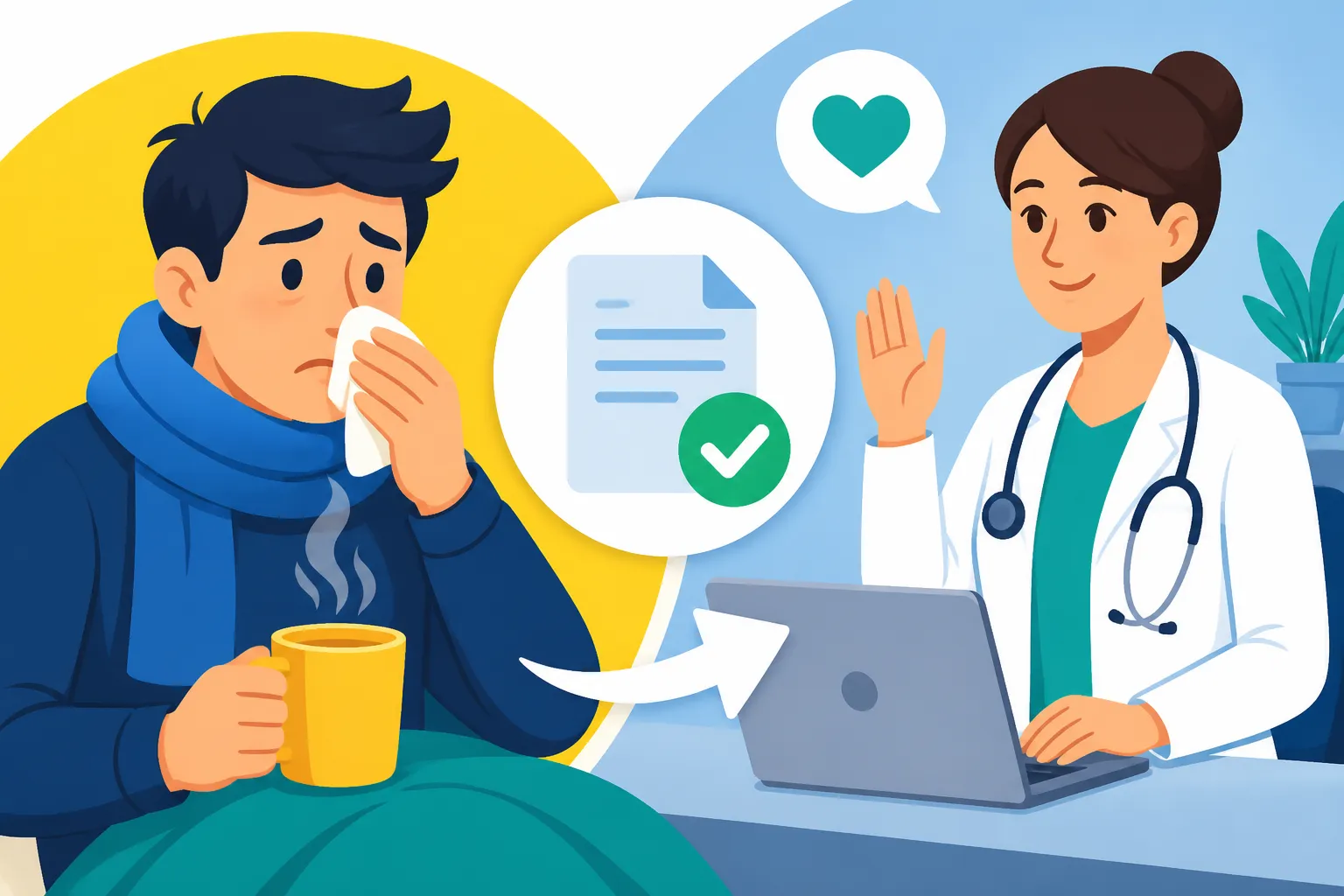
How to Get a Sick Note (Krankschreibung) in Germany
Waking up with a pounding headache or a fever is stressful enough, but in Germany, the immediate realization that you need to navigate the medical bureaucracy can feel like a secondary illness. I remember my first winter in Berlin, shivering under three blankets while trying to decipher my contract to see if I needed a doctor’s note on day one or day three. This guide breaks down the essential process of obtaining a Krankschreibung so you can focus on recovery rather than paperwork.
Disclosure: This post may contain affiliate links. We may earn a commission at no extra cost to you if you make a purchase through these links. Read full disclosure.
The Cultural Weight of the Krankschreibung
In many countries, calling in sick is a simple matter of trust between you and your manager. In Germany, it is a formal, legally regulated process. The document you are looking for is officially called an Arbeitsunfähigkeitsbescheinigung (Certificate of Incapacity for Work), but everyone calls it a Krankschreibung or an AU. This isn't just a suggestion from your doctor; it is a legal shield that protects your salary and your job security.
Germans take their health seriously, and the expectation is that if you are sick, you should be at home recovering, not "powering through" and infecting the office. However, the system relies heavily on the paper (or now, electronic) trail. Understanding the Healthcare in Germany: A Comprehensive Guide for Expats is the first step toward feeling comfortable with these requirements. Without this document, your employer is technically allowed to withhold pay for the days you missed, and in some cases, repeated failure to provide an AU can be grounds for a warning or even termination.
The system is designed to be fair, but it is rigid. You have rights, such as How Does Sick Pay Work in Germany?, which ensures that you continue to receive your full salary for up to six weeks of illness. But these rights are only activated once that doctor’s note is in the system.
When Do You Actually Need a Sick Note
One of the most common points of confusion for newcomers is the timing. German law generally states that an employee must provide a medical certificate if the illness lasts longer than three calendar days. This means if you feel unwell on Monday, you must have the note by Thursday. However—and this is a big "however"—your employer has the legal right to demand a sick note from the very first day of your illness.
You must check your employment contract immediately. Look for the section on Arbeitsunfähigkeit. If it says you need an AU from day one, you cannot wait. Even if your contract allows for the three-day rule, many expats find it safer to just visit a doctor immediately. If you are covered by Public Health Insurance (gesetzliche Krankenkasse): What It Covers and Costs, the cost of the visit and the note is fully covered, so there is little reason to delay.
If you are a freelancer or a digital nomad using a provider like SafetyWing, your requirements might be different since you are essentially your own boss, but you may still need documentation for insurance claims or specific client contracts. For those in the traditional workforce, being proactive is the best way to maintain a good relationship with your HR department.
Finding the Right Doctor for Your Note
To get a sick note, you typically need to visit a Hausarzt (General Practitioner). This is where the challenge often begins. Many doctors' offices in popular neighborhoods are "full" and won't take new patients. I’ve spent many mornings calling five different offices before finding one that would see me for an "acute" issue.
When you call, don't ask for a standard appointment three weeks from now. Use the term Akut-Sprechstunde. This refers to the block of time—usually first thing in the morning—reserved for patients with urgent, short-term illnesses like the flu or a stomach bug. You will likely have to wait in the practice for an hour or two, but they will see you. For more tips on this, read about Finding a Doctor (Hausarzt) in Germany: How to Choose and Register.
If you are struggling to find a local doctor who speaks English or if you are too ill to leave the house, modern solutions are becoming more prevalent. Companies like ottonova offer digital-first private insurance that integrates seamlessly with apps to help you find care. Similarly, Feather Insurance provides English-language support and can guide you toward expat-friendly clinics.
The Move to the Electronic Sick Note (eAU)
For decades, the "yellow slip" (der gelbe Schein) was the iconic symbol of being sick in Germany. It was a three-part carbon copy form: one for you, one for your insurance, and one for your employer. Thankfully, as of 2023, Germany has largely moved to the elektronische Arbeitsunfähigkeitsbescheinigung or eAU.
Now, when you visit a doctor and they "write you sick," they transmit the data digitally to your health insurance provider. Your employer then requests the data directly from the insurance company. This has removed a massive burden of physical paperwork. However, you are still required to inform your employer immediately (usually via email or phone before your official start time) that you are sick and how long you expect to be out. The digital system doesn't replace the need for a quick "I'm sick" message to your boss.
Even with the eAU, I always ask the doctor for a printed copy "for my records" (für meine Unterlagen). Technical glitches happen, and having that piece of paper in your hand provides peace of mind if your HR department claims they haven't received the digital notification. This is especially relevant if you are navigating Private Health Insurance in Germany: Benefits, Costs, and Eligibility, as some private setups still rely on manual uploads to their specific portals.
Digital Sick Notes and Telemedicine
Telemedicine has finally arrived in Germany, and it is a game-changer for the common cold. You can now get a sick note via a video consultation without leaving your bed. This is particularly helpful if you have a high fever and the thought of sitting in a drafty waiting room for two hours feels impossible.
Apps and platforms like those supported by ottonova allow you to book a video call with a licensed doctor. If they determine you are unfit for work, they can issue a digital AU. Keep in mind that there are limits; usually, a digital note is only valid for a few days, and for more serious or long-term conditions, a physical examination is required.
If you are using Telemedicine in Germany: Online Doctor Appointments and e-Prescriptions, ensure the provider is recognized by German health insurance. Most major public insurers now have partnerships with these apps. For expats who haven't yet mastered the language, these digital platforms are often the easiest way to find an English-speaking doctor who can handle the Sick Leave in Germany: How to Get a Sick Note (Krankmeldung) and Your Rights without a language barrier.
Navigating the "Sick Note" Table of Responsibilities
Understanding who needs to do what can be confusing when your brain is foggy from illness. Use the table below as a quick reference for the standard procedure.
| Action Item | Responsible Party | Timeline |
|---|---|---|
| Initial Notification | Employee | Immediately (before work starts on Day 1) |
| Visit to Doctor | Employee | Latest Day 3 (or Day 1 if contractually required) |
| Submission of eAU to Insurance | Doctor | Automatically at the end of the visit |
| Requesting AU Data | Employer | Once notified by the employee |
| Requesting a Prescription | Employee | During the doctor's visit |
| Informing of Extension | Employee | Immediately if the doctor extends the sick leave |
What to Say (and Not Say) to Your Boss
In Germany, your medical privacy is fiercely protected. Your doctor is legally forbidden from writing your diagnosis on the copy of the sick note intended for your employer. All the employer sees is that you are "unable to work" and the duration of that incapacity.
You are under no obligation to tell your manager why you are sick. Whether it’s a migraine, a broken toe, or a mental health day, you can simply say, "I am unwell and have a doctor's certificate for the next four days." In fact, many German HR professionals prefer you don't share details to avoid any potential liability or bias.
If you feel pressured to explain yourself, remember your rights under the Sick Leave in Germany: The AU (Krankschreibung) Explained framework. The only exception is if you have a highly contagious disease that poses a public health risk (like certain infections), but even then, the reporting usually goes through official health channels rather than a casual chat with your supervisor.
Sick Notes for Children (Kinderkrankengeld)
If you are a parent, you don't just get sick yourself—your kids do, too. In Germany, if your child is ill and cannot attend school or Kita, you are entitled to "child sick days" (Kinderkrankentage). To claim these, you need a specific type of sick note from the pediatrician (Kinderarzt), not your own doctor.
You would visit the pediatrician, and they would issue a note stating that the child requires care and that you, the parent, are unable to work as a result. This allows you to stay home and receive a portion of your salary (usually around 90% of net pay) from your health insurance rather than your employer. This process is a lifesaver for expat families who don't have a local "Oma" to step in. For more on this, check out Children’s Healthcare: Pediatricians and Routine Check-ups (U-Untersuchungen).
Managing these days is part of the broader Family Health Insurance: Adding Your Spouse and Kids to Your Plan benefits. Make sure both parents' insurance details are up to date, as the days are allocated per parent, per child.
Avoiding Common Pitfalls and "Wait Times"
The biggest mistake I see newcomers make is waiting too long to see a doctor. If you wait until Friday afternoon to get a note for a sickness that started on Wednesday, you might find that every local practice is closed or refusing new patients. German doctors' offices often close early on Wednesday and Friday afternoons.
If you find yourself in an emergency situation after hours or on a weekend, do not wait for your Hausarzt to open on Monday. You can use The 116117 Medical On-Call Service in Germany Explained or visit an Aerztlicher Notdienst (Emergency Medical Service). They can issue a Krankschreibung that covers the weekend and the start of the week, ensuring there is no gap in your documentation.
Additionally, always remember to bring your insurance card (Gesundheitskarte). Without it, the office cannot process your eAU, and you might be billed as a private patient. If you've lost yours, contact your provider or use an expat-friendly service like Feather Insurance to help you get a temporary replacement certificate quickly.
When the Pharmacy Becomes Part of the Process
Once you have your sick note, the doctor will likely give you a prescription (Rezept). In the past, these were pink slips of paper for public insurance, but these have also gone digital (e-Prescription). You simply take your insurance card to any German Pharmacies (Apotheke): Prescriptions and Advice and they scan it to see what has been prescribed.
While the pharmacist cannot give you a sick note, they are an incredible resource for minor ailments. If you are waiting for your doctor's appointment, an Apotheker can provide over-the-counter relief to get you through the morning. Just remember that for the official Krankschreibung, only a licensed physician (or certain specialized therapists in specific cases) will suffice.
For those traveling or between jobs, having Travel Health Insurance: What Expats Need for Schengen Visa & Short Trips is vital, but remember that travel insurance like SafetyWing is generally for emergencies and may not cover a standard Krankschreibung for a common cold unless it leads to more serious complications. Always ensure your primary German health insurance is active for day-to-day sick leave needs.
Health and Medical Disclaimer
The information provided in this article is for general informational purposes only and does not constitute professional medical advice, diagnosis, treatment, or legal counsel regarding German employment law. Always seek the advice of a qualified healthcare provider or a legal professional with any questions you may have regarding a medical condition or your rights as an employee in Germany. While every effort is made to keep the information up to date, regulations and procedures may change. No doctor-patient or client-attorney relationship is formed by reading this content.