How Does Sick Pay Work in Germany?
Coming down with a severe case of the flu or an unexpected injury while working in Germany often triggers an immediate, panicked thought: will I still get paid if I cannot show up? I remember staring at my first German employment contract, terrified that a single week of illness would result in a massive deduction from my monthly salary. This guide explains exactly how sick pay works in Germany so you can focus on your recovery without financial stress.
Disclosure: This post may contain affiliate links. We may earn a commission at no extra cost to you if you make a purchase through these links. Read full disclosure.
The Foundations of Employer Continued Pay (Entgeltfortzahlung)
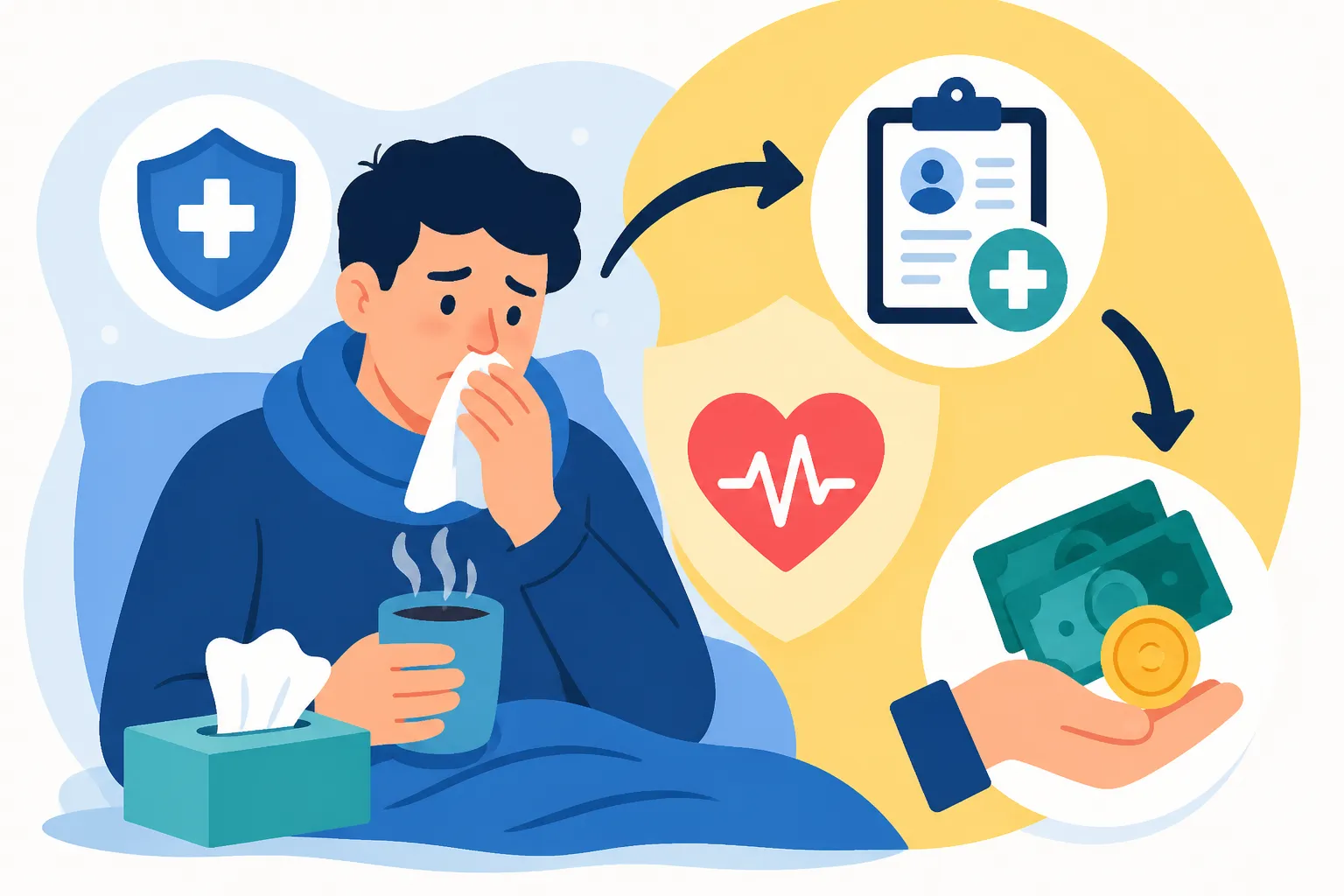
In Germany, the law is remarkably protective of employees when it comes to illness. Under the Continued Remuneration Act (Entgeltfortzahlungsgesetz), your employer is generally required to pay 100% of your regular salary for up to six weeks (42 calendar days) per illness. This is not a benefit provided by your insurance, but a direct legal obligation of the company you work for. It ensures that your lifestyle is not disrupted by a common infection or a short-term medical recovery.
However, it is vital to understand that this six-week period applies to a specific illness. If you are sick with a respiratory infection for two weeks, return to work, and then six months later fall ill with the same chronic respiratory issue, the days may accumulate toward that 42-day limit. Conversely, if you recover from the flu and later break your leg, the six-week clock usually resets because it is a "new" medical event. This distinction is a frequent source of confusion for expats, so keeping a personal log of your absences can be helpful if you have a recurring condition.
There is one major caveat often overlooked by newcomers: the four-week waiting period. Your right to continued pay from your employer only kicks in after you have been employed for four consecutive weeks. If you fall ill during your first 28 days on the job, your employer is not legally required to pay your salary for the days you missed. In this specific scenario, your health insurance provider usually steps in to provide sickness benefits from the very first day of the illness. For more details on the broader medical landscape, you might want to check out Healthcare in Germany: A Comprehensive Guide for Expats.
The Role of the Medical Certificate (Arbeitsunfähigkeitsbescheinigung)
While German law technically allows an employer to wait until the fourth day of illness to demand a medical certificate, many employment contracts state that you must provide one from the very first day. You should always check your specific contract for the term "vorlage einer ärztlichen Bescheinigung." I once made the mistake of assuming the "three-day rule" applied to everyone, only to receive a stern warning from HR because my contract required a note immediately.
The process has become significantly more streamlined with the introduction of the electronic sick note (eAU). Previously, you had to mail a yellow piece of paper to your employer and another to your insurance. Today, when you visit a doctor, they transmit the data digitally to your health insurance provider. You simply notify your employer that you are sick and have seen a doctor, and they retrieve the necessary data from the insurance company. For a deeper look at this process, read our article on Sick Leave in Germany: The AU (Krankschreibung) Explained.
Even with the digital system, your "duty to notify" (Anzeigepflicht) remains your responsibility. You must inform your boss or HR department as early as possible on the first day—usually before your shift starts—that you are unfit for work. Failing to do so can lead to a formal warning (Abmahnung), regardless of whether you eventually get a doctor's note. If you are struggling to find a physician, our guide on Finding a Hausarzt (Family Doctor) in Germany offers practical tips for navigating local practices.
What Happens During the Probation Period?
The probation period (Probezeit) in Germany typically lasts six months, during which the notice period for termination is significantly shorter. Many expats fear that taking sick leave during this time will lead to immediate firing. While it is true that an employer can terminate a contract without a specific reason during probation, the rules for sick pay still apply. If you have been there for more than four weeks, they must pay you for your period of illness.
If you find yourself in the unfortunate position of being sick during your very first month, you will need to contact your insurance provider immediately. They will guide you through the process of receiving sickness benefits to cover the gap left by your employer. If you are using a digital-first provider like Feather Insurance, their English-speaking support can be invaluable during these early bureaucratic hurdles. Understanding How to Get a Sick Note (Krankschreibung) in Germany is essential for ensuring your paperwork is in order during this sensitive time.
Transitioning to Krankengeld (Statutory Sickness Benefit)
If your illness lasts longer than six weeks, the financial responsibility shifts from your employer to your health insurance provider. This payment is known as Krankengeld (sickness benefit). It is a safety net designed to support you during long-term recoveries, such as major surgeries or burnout. However, unlike the employer’s continued pay, Krankengeld does not cover 100% of your net salary. It is a reduced amount intended to provide a basic level of financial security.
The calculation of Krankengeld is somewhat complex. Generally, it is either 70% of your gross salary (up to the social security contribution ceiling) or 90% of your net salary—whichever is lower. Because of this reduction, many expats find that their monthly income drops significantly once they move onto Krankengeld. If you are concerned about this gap, looking into Health Insurance in Germany: Understanding Public vs Private Coverage can help you decide if additional supplemental insurance is necessary.
The maximum duration for Krankengeld is 78 weeks within a three-year period for the same underlying illness. This 78-week total includes the initial six weeks paid by your employer. Once you reach this limit, if you are still unable to work, the system transitions you toward other forms of support, such as disability pensions or unemployment benefits. It is a long runway, but the transition requires a lot of paperwork and constant communication with your Krankenkasse.
Calculation and Duration of Benefits
To give you a realistic idea of the financial impact, consider an employee earning a net salary of €2,500. Once they transition to Krankengeld after the 42nd day, they might receive roughly €2,250, depending on their gross pay and tax class. While the drop isn't always catastrophic, it can be stressful if you have high fixed costs like rent or debt repayments. Statutory providers will also deduct your share of social security contributions (pension, unemployment, and long-term care insurance) from the Krankengeld amount.
You don't need to "apply" for Krankengeld in the traditional sense, but the process is triggered by your continuous medical certificates. As long as your doctor continues to issue an eAU without any gaps, your insurance company will eventually send you documents to facilitate the payment. If you have chosen a private provider like ottonova, the terms for daily sickness allowance (Krankentagegeld) may differ significantly, often allowing you to insure 100% of your net income or choose when the payments start.
| Feature | Employer Continued Pay (0-6 Weeks) | Sickness Benefit / Krankengeld (6+ Weeks) |
|---|---|---|
| Payment Amount | 100% of regular salary | ~70% gross / 90% net |
| Payer | The Employer | Health Insurance Company |
| Prerequisite | Employed for > 4 weeks | Continued medical certificate |
| Max Duration | 42 days per illness | 78 weeks per 3-year period |
| Social Security | Deducted as usual | Deducted from the benefit |
Communication with Your Health Insurance
During a long-term illness, your Krankenkasse will become your primary point of contact for financial matters. They may occasionally ask for more detailed medical reports or invite you to an assessment with the Medical Service of the Health Insurance (MDK) to determine if rehabilitation or other measures could help you return to work. This is not necessarily an adversarial process, but it can feel overwhelming if you are already unwell.
For those who value a seamless digital experience and English support, providers such as Feather Insurance or ottonova often offer more personalized assistance in navigating these interactions. If you are currently unhappy with how your provider is handling your case, you might consider Changing Health Insurance Providers: Can and Should You Switch? to find a better fit for your needs. Always remember that the goal of the insurance company is to see you healthy and back in the workforce, so they are generally supportive of recovery programs.
Sick Pay for Freelancers and the Self-Employed
For the self-employed, the "six-week rule" does not exist because there is no employer to foot the bill. If you don't work, you don't get paid—unless you have specifically opted for sickness coverage in your insurance plan. This is one of the biggest culture shocks for freelancers moving to Germany. I have seen many digital nomads assume they are covered by their basic insurance, only to find themselves with zero income during a month-long bout of pneumonia.
If you are in the public health insurance system, you usually pay a reduced contribution rate that does not include Krankengeld. To get coverage, you must pay the "standard" rate (which is slightly higher) and declare to the insurance company that you want to include sickness benefits starting from the 43rd day. Even then, you are left without income for the first six weeks. To bridge this gap, many freelancers purchase a private supplemental policy (Krankentagegeldversicherung) that pays out much earlier, sometimes as soon as the 4th or 15th day of illness.
Private health insurance often handles this differently. When you sign up for a plan with a company like ottonova, you can choose your "waiting period." While a longer waiting period lowers your monthly premium, it increases your financial risk. For freelancers, balancing this premium cost with the peace of mind of early sick pay is a critical financial decision. You can find more targeted advice in our guide on Health Insurance for Freelancers and the Self-Employed in Germany.
Voluntary Sickness Benefit Supplements
There are also "discretionary" sickness benefits (Wahltarife) offered by public insurers. These are essentially contracts where you agree to stay with that specific insurer for a set period (usually three years) in exchange for customized sick pay options. For example, a freelancer might choose a plan that pays out from the 22nd day of illness. However, these plans can be rigid, and if your business income fluctuates, you might find the lock-in period frustrating.
For those who are not yet fully settled or are working on short-term projects, SafetyWing provides a different kind of flexibility, though it is primarily designed as travel medical insurance rather than a full German statutory replacement. It is excellent for those in transition, but once you are a registered resident with a local freelance tax ID, you generally need to move into the German public or private system to meet legal requirements and access long-term sick pay.
Managing Costs and Expectations
The reality of being self-employed in Germany means you must build a "sick day fund" into your hourly or daily rates. Since you are paying both the employer and employee portions of social security, your overhead is high. If you fail to account for the possibility of being unable to work for a month, you are putting your residency and business at risk.
It is also worth noting that if you have children, the rules for "child sick days" (Kinderkrankentage) are different for the self-employed. While employees get paid days off to care for a sick child through their insurance, freelancers often have to manage this on their own unless their specific policy includes a provision for it. This is a key reason to look into Family Health Insurance: Adding Your Spouse and Kids to Your Plan to see how dependents impact your coverage and requirements.
Special Circumstances and Practical Advice
The German system has several "fine print" rules that can catch you off guard if you aren't prepared. One of the most common questions I hear is: "What happens if I get sick while I'm already on vacation?" In many countries, you simply lose those vacation days. In Germany, if you have a doctor's certificate proving you were unfit for work during your holiday, those vacation days must be credited back to your account. You cannot "extend" your vacation by the number of sick days automatically—you must return as planned and then re-book the saved days later.
Another unique aspect is the "Child Sickness Benefit" (Kinderkrankengeld). If your child is ill and requires your care, and they are also covered by public health insurance, you are entitled to a certain number of days per year where your insurance pays a portion of your salary so you can stay home. This was significantly expanded during the pandemic and remains a vital resource for expat parents. To understand how to manage your family's health needs, see Public Health Insurance (gesetzliche Krankenkasse): What It Covers and Costs.
Dealing with Employers and HR
While the law protects you, the "culture" of sick leave can vary between companies. In "Start-up culture," there might be an unspoken pressure to work from home even if you have a note. Legally, a medical certificate means you are forbidden from working. Your employer's liability insurance might not even cover you if you have an accident while working against medical advice. If you feel pressured to work while sick, it is important to stand your ground and point to your AU.
Transparency is key. While you are never legally required to tell your employer what illness you have (the diagnosis is not on the employer's copy of the sick note), keeping them updated on your expected return date is considered good professional etiquette. If your recovery is taking longer than expected, inform them as soon as you have a follow-up appointment with your doctor. For those dealing with stress-related issues, we have a specific guide on Mental Health Care in Germany: Finding Therapists and Psychologists.
Common Expat Pitfalls
One major pitfall is forgetting to register your address (Anmeldung). Without your The Anmeldung: Registering Your Address in Germany documents, getting a health insurance card (Gesundheitskarte) is difficult, which in turn makes it harder for the doctor to process your eAU correctly. Always ensure your administrative foundations are solid so that when illness strikes, the system works for you rather than against you.
Finally, if you are traveling outside of Germany while on long-term Krankengeld, you must get permission from your health insurance provider first. If you leave the country without their consent, they have the right to stop your payments immediately. This applies even to short trips back to your home country. If you are planning a trip, consider the implications for your coverage by reading about Travel Health Insurance: What Expats Need for Schengen Visa & Short Trips.
Disclaimer
This article is for informational purposes only and does not constitute legal or professional medical advice. While every effort has been made to ensure the information is accurate and up-to-date, German labor laws and insurance regulations are subject to change. Always consult with a qualified legal professional, your HR department, or your health insurance provider regarding your specific situation and rights.