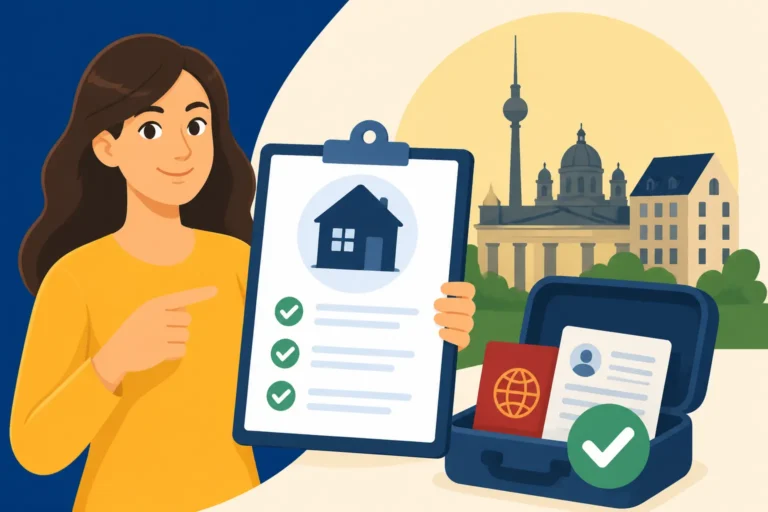
The Spouse Visa for Germany and the A1 German Requirement
Moving to a new country is already a logistical nightmare, but realizing your spouse is stuck on the other side of an ocean because of a language test feels like a personal gut punch. I remember the sleepless nights staring at the ceiling in my empty Berlin apartment, wondering if my partner and I would ever actually be together. This guide solves the confusion surrounding the German Spouse Visa and the A1 language requirement.
Disclosure: This post may contain affiliate links. We may earn a commission at no extra cost to you if you make a purchase through these links. Read full disclosure.
Understanding the German Spouse Visa (Ehegattennachzug)
The German Spouse Visa, officially known as Ehegattennachzug (family reunification for spouses), is the legal pathway that allows the husband or wife of a resident in Germany to join them. This isn't just a simple "plus one" sticker on a passport; it is a complex administrative process designed to ensure that the family unit can survive and integrate within the German social fabric. When I first navigated this, I was shocked by how much the German government cares about the specifics of your marriage certificate and your living room's square footage.
The Legal Basis for Bringing Your Partner
Under German law, the "protection of marriage and the family" is enshrined in the Basic Law (Grundgesetz). This means the state is technically on your side, but they have a very rigid way of showing it. To qualify for this visa, your marriage must be legally recognized in Germany. If you were married abroad, you often need an apostille or a legalized certificate. This is where services like Lingoking become essential, as they provide the certified translations required by the embassy to prove your union is legitimate.
If you are a resident in Germany holding a valid residence permit—whether it’s a Blue Card, a work visa, or permanent residency—you have the right to apply for your spouse to join you. However, the "right" is contingent on meeting several strict criteria. The German authorities want to see that your marriage wasn't entered into solely for immigration purposes (a "marriage of convenience") and that you aren't going to rely on the state's social welfare system the moment your partner lands at Frankfurt Airport.
Who Needs a Spouse Visa? (EU vs. Non-EU)
The rules change drastically depending on the nationality of both the "sponsor" (the person already in Germany) and the "applicant" (the spouse joining). If you are an EU/EEA citizen, you are in luck. You benefit from the principle of freedom of movement, meaning your spouse can join you with significantly fewer hurdles. Even if your spouse is from a non-EU country, the process for family members of EU citizens is generally smoother and often exempts them from the A1 language requirement.
For those of us coming from "third countries" (non-EU nations like the US, India, or Turkey), the process is the full marathon. If both spouses are non-EU citizens, the applicant almost certainly needs to apply for a National D-Visa at the German embassy in their home country before traveling. You cannot simply arrive on a tourist visa and hope to "switch" it once you’re here, unless you are from a privileged nation like Canada, Australia, or Japan. This is a common mistake that leads to heart-wrenching deportations or forced departures. You can learn more about this in our guide on National (D) Visa vs Schengen Visa for Germany to ensure you don't fall into this trap.
Key Eligibility Requirements Beyond Language
Before we even get to the "A1 hurdle," there are three pillars of a successful application: housing, health insurance, and income. The German government requires that your apartment is large enough for two people. Generally, this means at least 12 square meters of living space per person. I’ve seen applications rejected because a studio apartment was just a few meters too small. You’ll need to provide a Wohnungsgeberbestätigung or a rental contract as proof.
Financially, you must demonstrate that your salary can support both of you after paying rent and utilities. The calculation is based on the current Bürgergeld (social benefit) rates plus your warm rent. Furthermore, your spouse must have adequate health insurance from day one. Many expats use Expatrio to secure incoming insurance that satisfies embassy requirements until the spouse can be added to a domestic public or private health insurance plan. This is a crucial step in How to Bring Your Spouse to Germany on a Family Visa.
The A1 German Language Requirement Explained
The A1 language requirement is perhaps the most debated part of the German immigration system. It requires the joining spouse to demonstrate "basic" knowledge of the German language before they are even granted a visa to enter the country. While it sounds intimidating, it is essentially about proving you can survive a trip to the grocery store or introduce yourself to a neighbor. I recall the stress my own partner felt, but once we broke down what "basic" actually meant, it became a manageable goal.
What is the A1 Level?
The A1 level is the lowest tier of the Common European Framework of Reference for Languages (CEFR). At this stage, the applicant should be able to understand and use familiar, everyday expressions and very simple sentences. This includes being able to introduce themselves, ask others personal questions (where they live, people they know, things they have), and respond to similar questions. You aren't expected to discuss German philosophy or the intricacies of the tax code.
The exam usually consists of four parts: listening, reading, writing, and speaking. The "writing" part often involves filling out a simple form or writing a short note (e.g., inviting a friend to a party), while the "speaking" part involves basic interaction with an examiner. It is a functional level of language. If you're worried about the difficulty, checking Goethe Exam Prep With a Tutor: Choosing Your Level and Timeline can give you a better idea of how the German system evaluates progress and what to expect as you move beyond the basics.
Why Germany Mandates Language Proficiency
The official stance of the German Federal Office for Migration and Refugees (BAMF) is that the A1 requirement promotes integration. The theory is that if a spouse arrives with zero language skills, they are more likely to become socially isolated and dependent on their partner. By forcing basic study before arrival, the government ensures that the newcomer has a "head start."
From my perspective as an expat, I see the logic, even if it feels cruel to keep families apart. Being able to read a "Keine Werbung" sign on your mailbox or understand when a bus driver tells you there’s a delay makes those first few weeks in Germany significantly less traumatizing. However, the requirement is also a filter. It ensures that the family is serious about living in Germany long-term. If you’re struggling with the cultural adjustment, reading about Coping with Culture Shock: Adjusting to Life in Germany can help put these requirements into perspective.
Recognized Language Certificates and Providers
You cannot simply show up at the embassy and speak a few words of German to prove your level. You need a standardized certificate. The most widely recognized certificate is the "Start Deutsch 1" from the Goethe-Institut. They have testing centers all over the world, but spots fill up fast. In some regions, you might have to wait months just for an exam date.
Other recognized certificates include those from Telc (The European Language Certificates), ÖSD (Austrian Language Diploma German), and TestDaF. However, if you are applying from abroad, the Goethe-Institut is the gold standard. Be wary of private language schools claiming their "internal" certificates are valid for visas—they usually aren't. Always verify with the local embassy. For those already in Germany looking to level up, From A1 to A2 With a Tutor: What to Cover in 20 Lessons offers a roadmap for continuing the journey once the initial visa is secured.
| Requirement Type | Description | Common Proof Needed |
|---|---|---|
| Language | Basic A1 Proficiency | Goethe-Zertifikat A1 or equivalent |
| Housing | Sufficient living space | Rental contract + landlord confirmation |
| Income | Financial self-sufficiency | Last 3 months of payslips |
| Relationship | Legally valid marriage | Translated/Apostilled Marriage Certificate |
| Insurance | Comprehensive coverage | Health insurance policy (e.g., via Expatrio) |
Exemptions and Exceptions to the A1 Rule
Not everyone has to take the A1 test. In fact, there is a long list of exemptions that can save you months of studying. I’ve seen people spend hundreds of euros on tutors only to realize they were exempt all along. Understanding these loopholes is vital for a stress-free application.
Exemptions Based on Nationality
If the joining spouse is a citizen of certain countries, the A1 requirement is waived. These include "privileged" nations like the USA, Canada, Australia, New Zealand, Israel, Japan, and South Korea. Citizens of these countries can enter Germany as tourists and apply for their residence permit directly at the local Ausländerbehörde without proving language skills beforehand.
This is a massive advantage. If your spouse holds one of these passports, they can skip the embassy interview in their home country and handle everything while already living with you in Germany. However, once they are in Germany, the immigration office might still require them to attend an integration course to reach the B1 level. You can find more details on this in our guide on German Integration Courses: Language & Orientation for New Residents.
Professional and Educational Exemptions
If the spouse already in Germany (the "sponsor") holds an EU Blue Card, a visa for highly qualified workers, or a researcher visa, the A1 requirement for the joining spouse is usually waived. The German government assumes that "highly skilled" households will integrate more easily or might only stay in Germany temporarily, making the pre-arrival language test less critical.
Additionally, if the joining spouse themselves has a university degree, they may be exempt. The logic here is that a person with a higher education degree has a "discernibly low integration need." However, the embassy is the final judge of this. They may still ask for an A1 certificate if they feel the degree doesn't translate well to the German job market. If you are a student, check Bringing Your Family While Studying: Can Spouses Work or Kids Attend School? for specific rules regarding your situation.
Hardship Cases and Special Circumstances
There are also "hardship" clauses. For example, if your spouse has a physical or mental disability that prevents them from learning a language or taking a test, the requirement can be waived with a proper medical certificate. Furthermore, if the spouse can prove they have made an "earnest effort" to learn the language for a long period but simply cannot pass the test, or if there are no language schools in their home country, they might be granted an exception.
Another significant exemption applies if the "sponsor" in Germany is a German citizen or an EU citizen. While family members of Germans used to be exempt by default, the rules have tightened, but there are still more "hardship" considerations for them compared to families of non-EU expats. For a full breakdown of how these rules apply to permanent residents, see our section on From Resident to Citizen: Ultimate Guide to Permanent Residency & Citizenship in Germany.
Preparing Your Spouse Visa Application Step-by-Step
Once you’ve determined that your spouse needs the A1 certificate (or is exempt), the real paperwork begins. This is where you need to be meticulous. One missing signature or an outdated payslip can set your application back by weeks. I always recommend creating a physical folder with tabs—it’s very "German" and actually helps keep your sanity.
Gathering the Mandatory Documents
The basic list is extensive. You will need valid passports, biometrically compliant photos, and the visa application form (often called Videx). But the most important document is your marriage certificate. If it’s not in German or English, you must get it translated. Lingoking is a fantastic resource here because they provide sworn translations that are legally valid in Germany.
You will also need a copy of the sponsor's residence permit, passport, and Meldebescheinigung (address registration). If the marriage took place after the sponsor moved to Germany, the embassy might look more closely at the timing to ensure it's not a "visa marriage." Providing a few photos of your wedding or travel history together doesn't hurt, though it’s not officially required. For more on the registration process, check out How to Register Your Address (Anmeldung) in Germany.
Proving Financial Stability and Housing
You must prove that your household is financially sound. This usually means providing your last three payslips and a work contract that is not under notice. If you are a freelancer, this is much harder; you will need a statement from a tax advisor (Steuerberater) confirming your net income after taxes and insurance. You can find more advice on this in How to Find an English-Speaking Tax Advisor (Steuerberater) in Germany.
Regarding housing, you need your rental contract (Mietvertrag) and a recent confirmation of occupancy from your landlord. The embassy will check the number of rooms and the total square footage. If you live in a shared flat (WG), ensure your contract explicitly allows your spouse to move in. Many expats find it helpful to use services like Expatrio to handle the insurance side of things, ensuring that the financial proof for health coverage is bulletproof.
The Interview and Embassy Process
The visa interview at the German embassy can be a nerve-wracking experience. The applicant should be prepared to answer questions about their spouse's life in Germany—what they do for work, where they live, and even how you met. It’s not an interrogation, but they are looking for consistency.
After the interview, the embassy sends the documents to the Ausländerbehörde (Foreigner's Office) in the city where the sponsor lives. The local office then checks the housing and income requirements. This is why the process takes so long—often 8 to 12 weeks. If you’re wondering how to track this, reading about How to Track Your German Visa Application Status might offer some peace of mind during the long wait.
Strategies for Passing the A1 Exam and Relocating
If the A1 test is mandatory, don't panic. Thousands of people pass it every month. It’s less about being "good at languages" and more about understanding the format of the exam. The Start Deutsch 1 is a very predictable test, and with the right strategy, your spouse can pass it within 2-3 months of part-time study.
Study Resources for the Start Deutsch 1
The Goethe-Institut offers official practice materials on their website. These are gold. They provide mock exams for the listening, reading, and writing sections. I highly recommend doing at least five of these under timed conditions. There are also countless YouTube channels (like "Learn German with Anja" or "Easy German") that break down the A1 vocabulary list.
Focus on the "Letter Writing" section. You will likely be asked to write a short email about a vacation, a doctor's appointment, or an invitation. Learning five or six "templates" for these letters can almost guarantee a high score in that section. If your spouse is struggling, consider How to Find Intensive German Courses for Newcomers to see if an intensive course might be better than self-study.
Navigating Certified Translations and Document Prep
The German bureaucracy is obsessed with "Urkunden" (official documents). Everything must be "beglaubigt" (certified). If your marriage certificate is from a country where documents are easily forged, the embassy may initiate a "document verification" process, which can take months and cost several hundred euros.
To avoid delays, ensure all translations are done by "sworn translators" recognized in Germany. This is where Lingoking shines, as they specialize in the specific types of legal translations required for visa processes. Don't try to save money by having a bilingual friend translate it—the embassy will simply reject it. For those moving to the capital, Living in Berlin: Expat Guide to Neighborhoods and Lifestyle provides specific insights into the local requirements.
Using Support Services like Expatrio and Lingoking
Relocating a spouse is expensive. Between flight tickets, language courses, and visa fees, the costs add up. Using established services can actually save you money by preventing costly mistakes. Expatrio is a one-stop-shop for health insurance and blocked accounts (if needed), which are critical for the financial proof part of the visa.
Meanwhile, Lingoking ensures that your legal documents are beyond reproach. When the official at the embassy sees a professionally translated and stamped document, it sets a tone of professionalism for the entire application. It shows you've done your homework. For a broader look at the financial implications of moving, our guide on Cost of Living in Germany: Budgeting Guide for Expats is a great resource.
Post-Arrival Steps and Integration in Germany
Once the visa is stamped and your spouse lands in Germany, the journey isn't quite over. The visa in the passport is usually only valid for 90 days. You have a limited window to convert it into a long-term residence permit. I remember the relief of seeing my partner at the gate, but the "Bürgeramt" was already calling our name for the next morning.
The Anmeldung and Residence Permit Conversion
The very first thing your spouse must do is register their address (Anmeldung). Without this, they cannot get a tax ID, open a bank account, or finalize their residence permit. Once you have the Meldebescheinigung, you must book an appointment with the local Ausländerbehörde to apply for the actual residence card (Aufenthaltstitel).
This is often the hardest appointment to get. In cities like Berlin or Munich, appointments are booked months in advance. You might need a Fiktionsbescheinigung (a temporary permit) if the 90-day entry visa is about to expire before your appointment date. You can learn more about this in How to Apply for a German Residence Permit After Arrival.
Integration Courses and Further Language Study
In many cases, the Ausländerbehörde will issue an "Integration Course Requirement" (Verpflichtung zum Integrationskurs). This means your spouse is legally required to attend German classes until they reach the B1 level and pass an "Life in Germany" test. The good news is that the government subsidizes these courses, making them very affordable (often around 2.29 EUR per hour).
Passing the B1 level is not just a requirement; it is the key to your spouse's future in Germany. It allows them to find better jobs, make local friends, and eventually apply for German Citizenship by Naturalization: Eligibility and Application Steps. The A1 was just the beginning. The real adventure starts once you can both navigate the "Kaffee und Kuchen" culture together. If you're looking for ways to stay fit during this stressful time, check out Staying Fit in Germany: Joining Gyms, Pools, and Sports Clubs.
Disclaimer
This article is for informational purposes only and does not constitute legal advice. Immigration laws in Germany are subject to frequent changes, and individual cases may vary significantly. Always consult with the official website of the German Federal Foreign Office (Auswärtiges Amt), your local German embassy, or a qualified immigration lawyer before making any decisions regarding your visa application. Neither the author nor this website is responsible for any visa denials or legal issues arising from the use of this information.