Short-Term and Furnished Rentals in Germany
Landing in a German city with three suitcases and no permanent address is a rite of passage that is as stressful as it is common. I still vividly remember the cold sweat I broke into when I realized that my "confirmed" temporary sublet in Berlin fell through just forty-eight hours before my flight took off. This guide is your roadmap to navigating the world of short-term and furnished rentals in Germany so you can avoid the "couch-surfing scramble" and secure a stable base from day one.
Disclosure: This post may contain affiliate links. We may earn a commission at no extra cost to you if you make a purchase through these links. Read full disclosure.
The Reality of the German Housing Market for Newcomers
If you are coming from a country where you can sign a lease online and move in the next day, the German rental market is going to be a massive culture shock. The competition for long-term, unfurnished apartments in cities like Munich, Hamburg, or Berlin is nothing short of legendary—and not in a good way. Landlords often receive hundreds of applications within minutes of posting an ad, and they almost exclusively favor tenants who are already physically present, have a German bank account, and possess a solid SCHUFA record.
Why You Can’t Just Sign a Long-Term Lease from Abroad
The primary hurdle is the "Besichtigung" or the apartment viewing. German landlords and property managers rarely rent to someone they haven't met in person. It is a protective measure in a system where tenant rights are incredibly strong; once you are in, it is very hard for them to get you out, so they vet candidates with surgical precision. Furthermore, you typically need to provide a SCHUFA and Documents Landlords Want in Germany pack, which includes your last three months of German salary slips—something a newcomer simply doesn't have yet.
This creates a "chicken and egg" problem: you need a job to get an apartment, but you often need an address to register for your tax ID and finalize your employment. This is where short-term, furnished rentals become your essential bridge. They allow you to bypass the intense vetting process of the long-term market while you get your administrative ducks in a row.
The Concept of the Bridge Rental
A "bridge rental" is a furnished apartment or room that you rent for anywhere from one to six months. The goal isn't to live here forever; it’s to give yourself a headquarters. From this home base, you can attend those elusive in-person viewings, open your bank account, and wait for your SCHUFA score to generate.
I’ve seen too many expats burn through their savings in expensive hotels or cramped Airbnbs because they thought they would find a permanent home in two weeks. Reality check: it usually takes three to six months to find a long-term "unfurnished" flat in a major city. Short-term furnished rentals, such as those found on platforms like Wunderflats, are designed specifically for this transition period, offering more comfort and better legal protections than a standard vacation rental.
Avoiding the "Scam-Demic"
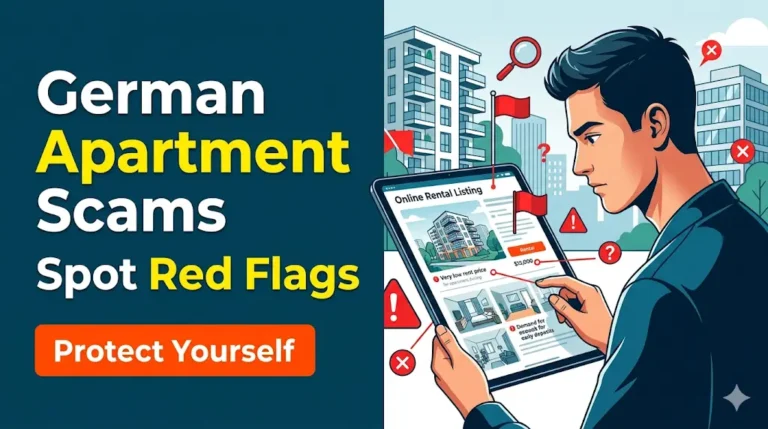
Unfortunately, the desperation of newcomers makes them prime targets for scammers. If you see a beautiful, centrally located furnished apartment for a price that seems too good to be true, it almost certainly is. Never, under any circumstances, wire money via Western Union or pay a deposit before you have seen the place or used a reputable, verified platform. Reputable platforms act as an intermediary, ensuring that your money is safe until the contract is finalized.
Types of Short-Term and Furnished Accommodations
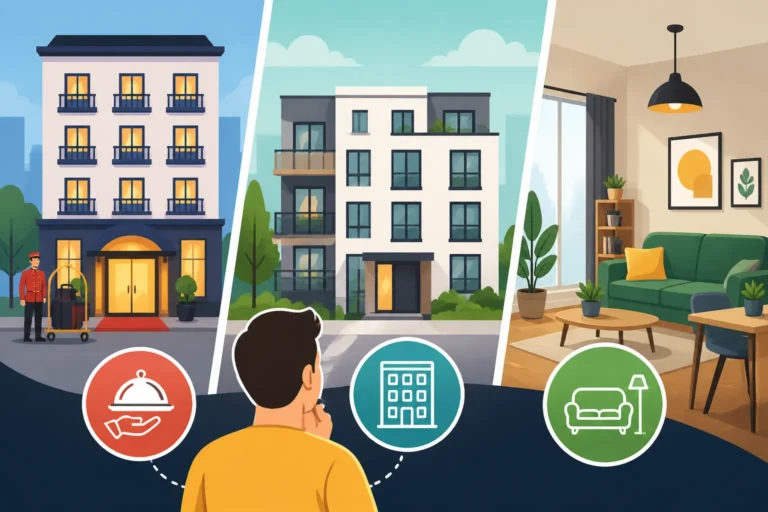
Germany offers a variety of temporary living situations, each catering to different budgets and lifestyle needs. Understanding the nuances between a "Boarding House" and a "Zwischenmiete" can save you hundreds of Euros and significant legal headaches.
Serviced Apartments and Boarding Houses
Serviced apartments are essentially a hybrid between a hotel and a flat. They are fully furnished, often include weekly cleaning services, and have all utilities—including high-speed internet—baked into the price. These are highly "expat-friendly" because the staff usually speaks English and the contracts are standardized.
The downside is the cost. You are paying for convenience. However, for a professional relocating with a company relocation package, this is often the smoothest route. These buildings are accustomed to providing the Wohnungsgeberbestätigung Explained document, which is the legal proof of residence you need for your city registration.
Private Sublets or Zwischenmiete
A "Zwischenmiete" is a temporary sublet, usually because the main tenant is going abroad for a semester or a work assignment. You can find these on sites like WG-Gesucht. These are often the most affordable furnished options and give you a "real" German neighborhood experience.
The catch? You must ensure the main tenant has written permission from their landlord to sublet to you. If they are doing it "under the table," you will not be able to perform your Anmeldung: Registering Your Address in Germany, which will stall your entire relocation process. Always ask upfront: "Is Anmeldung possible?" If the answer is no, walk away, no matter how beautiful the balcony is.
Professional Furnished Apartment Platforms
In recent years, the market has shifted toward professionalized platforms like Wunderflats that specialize in mid-term rentals (1–12 months). These platforms bridge the gap between the chaotic private market and the overpriced serviced apartments. They vet the landlords and ensure the apartments are actually equipped for living—meaning there’s a bed, a desk, and a functional kitchen. This is a massive relief for those who don't want to spend their first weekend in Germany hunting for a mattress.
Costs and Contracts: What to Expect
Budgeting for a furnished apartment in Germany requires a different mindset than budgeting for a long-term "Kaltmiete" (cold rent). In the short-term world, prices are usually "all-inclusive," but that convenience comes at a premium.
Decoding the Price Tag: Warmmiete vs. All-In
In a standard German rental, you see the Kaltmiete, Warmmiete, Nebenkosten breakdown. Short-term furnished rentals usually simplify this into one monthly "Flat" price. This "All-In" price typically covers:
- Base rent and furniture surcharge.
- Heating, water, and electricity.
- High-speed internet (vital for remote workers).
- Sometimes the "Rundfunkbeitrag" (TV/Radio tax).
| Feature | Short-Term Furnished | Long-Term Unfurnished |
|---|---|---|
| Availability | High (Bookable online) | Low (Intense competition) |
| Price | Higher monthly flat rate | Lower base rent + utilities |
| Furniture | Fully equipped (Kitchen, bed) | Empty (Often no kitchen!) |
| Commitment | 1–6 months | Indefinite (3-month notice) |
| Anmeldung | Usually provided | Always provided |
| Vetting | Identity & Income proof | Schufa, 3x Salary, Mietschuldenfreiheit |
Understanding Short-Term Rental Contracts
Short-term contracts are often "befristet" (fixed-term). Unlike long-term contracts, which are legally assumed to be indefinite unless stated otherwise, a short-term contract has a hard move-out date. Make sure you understand the cancellation policy. Some allow you to cancel with one month's notice, while others lock you in for the full duration of the term.
Also, pay attention to the Rental Deposit (Kaution) in Germany: Rules and Return. For furnished places, the deposit is often one to two months' rent. Because these are short-term stays, you want to ensure the "Übergabeprotokoll" (handover protocol) is meticulous. Take photos of every scratch on the table and every chip in the paint the day you move in so you get your full deposit back when you leave.
Hidden Costs to Look For
While "all-inclusive" sounds great, check the fine print for "Endreinigung" (final cleaning) fees. These can range from €100 to €300 and are deducted from your deposit. Also, check if there is a cap on electricity usage. With the recent energy price spikes in Germany, some landlords include a clause that if you exceed a certain kilowatt-hour limit (by, say, running a space heater all winter), you will be billed the difference.
The Legal Must-Haves: Anmeldung and Beyond
In Germany, your address isn't just where you sleep; it is your legal identity. Without a registered address, you are essentially a ghost in the machine.
Why the Wohnungsgeberbestätigung Is Your Golden Ticket
To register at the "Bürgeramt" (Citizens' Office), you need a specific form signed by the landlord or the person you are subletting from. This is the "Wohnungsgeberbestätigung." It is a legal requirement under the Federal Act on Registration.
Many people make the mistake of booking a "holiday apartment" only to find out later that the owner refuses to sign this form because they aren't registered to let the place out for long-term residency. If you cannot get this form, you cannot get your How to Get a Steuer-ID in Germany (Tax ID), which means your employer will be forced to tax you at the highest possible rate (Tax Class 6). Always verify that the rental includes this document before signing anything.
Consumer Rights in Temporary Housing
Even in a temporary furnished flat, you have rights. If the heating fails in the middle of a German winter, the landlord is legally obligated to fix it promptly. If they don't, you may be entitled to a "Mietminderung" (rent reduction). However, navigating this in a foreign language can be daunting.
I always recommend that newcomers join a "Mieterverein" (Tenants' Association) as soon as they arrive. For a small annual fee, you get access to legal advice and protection. When you are in a short-term rental, having an expert look over your contract or help you dispute a withheld deposit is worth its weight in gold.
Logistics: Setting Up Your Temporary Base
Once you’ve secured your furnished apartment, the "living" part begins. Even the most "fully equipped" apartment will likely have a few gaps that you’ll need to fill quickly to feel at home.
Staying Connected from Day One
Don't wait for your furnished apartment's Wi-Fi to be your only lifeline. Sometimes the routers are old or the signal is weak in the bedroom. I learned the hard way that trying to navigate a new city while hunting for a SIM card shop is a nightmare. Using a service like Airalo to get an eSIM before you even touch down at the airport ensures you have data for Google Maps and translation apps the moment the plane lands. This allows you to communicate with your landlord about your arrival time without frantically searching for airport Wi-Fi.
Furnishing the "Gaps" in Your Furnished Place
In Germany, "furnished" is a spectrum. Some places include everything down to the teaspoons and towels; others give you a bed, a wardrobe, and a lonely lightbulb. You will inevitably need a few essentials. Whether it's a better pillow, a desk lamp, or a basic set of pots because the provided ones are scratched, Amazon Germany is the most efficient way to get these items delivered directly to your door. This saves you from dragging heavy bags through the U-Bahn during your first week.
If your "furnished" place turns out to be one of those classic German apartments where the previous tenant took the kitchen (yes, Furnishing a German Apartment and the Empty-Kitchen Problem is a real thing!), you might need to buy a small plug-in induction hob or a kettle just to survive the first few days while you look for a more permanent solution.
Managing the Rundfunkbeitrag
Even if you are only in Germany for three months in a furnished flat, you will likely receive a letter from "ARD ZDF Deutschlandradio Beitragsservice." This is the mandatory Broadcast Fee (Rundfunkbeitrag) in Germany. It’s roughly €18 per month per household. In many furnished rentals, the landlord pays this and includes it in your rent. If they do, keep a copy of their "Beitragskontonummer" (account number). If the authorities write to you, you can simply tell them the fee is already being paid for that address. If it's not included, you must pay it yourself; ignoring these letters is a bad way to start your credit history in Germany.
Comparative Analysis: Short-Term vs. Long-Term Rentals
It’s tempting to try and skip the short-term phase to save money, but let's look at the actual numbers and effort involved.
| Aspect | Short-Term (6 Months) | Long-Term (6 Months) |
|---|---|---|
| Monthly Rent | €1,400 (All-in) | €900 (Warm) |
| Initial Furniture Cost | €0 | €3,000+ (Kitchen, Bed, Sofa) |
| Internet/Electricity Setup | Included (Immediate) | 4–6 weeks wait time |
| Search Time | 1–2 weeks | 3–6 months |
| Success Rate for Expats | Very High | Low (Without German History) |
When you factor in the "Furniture Shock"—the fact that most long-term apartments come without even a light fixture or a kitchen sink—the higher monthly cost of a furnished place like those on Wunderflats actually saves you money and massive amounts of stress in your first year.
Once you are settled in your temporary base, you can take your time to learn about the different Living in Berlin: Neighborhoods and Practical Tips or compare Living in Munich vs Hamburg: A Practical Comparison to see where you actually want to plant roots. You can visit neighborhoods at night, check the commute times, and find the local supermarket without the pressure of being homeless in 48 hours.
Navigating the Handover: Moving In and Out
The "Übergabe" (handover) is a sacred ritual in German housing. Whether you are moving into a high-end serviced apartment or a student WG, the protocol is the same.
The Moving-In Protocol
When you get the keys, the landlord or manager will walk through the flat with a list. They will check if the lights work, if the fridge is clean, and if there are any marks on the floor. Do not rush this. If you see a stain on the sofa, point it out and make sure it is written down.
In a furnished rental, you are also responsible for the "Inventarliste" (inventory list). This lists every plate, fork, and duvet cover. If the list says there are six wine glasses and you only see four, speak up. You don't want to be charged for those missing glasses when you move out.
The Moving-Out Protocol
When it's time to move to your permanent home, you must return the apartment in the state you found it. Most furnished rentals require "besenrein" (broom-clean) condition, but check if you need to perform a professional deep clean. If you've hung pictures, you'll likely need to fill the holes and paint over them—though in many short-term furnished contracts, drilling into walls is strictly forbidden.
The return of your Security Deposits (Kaution) in Germany: Getting It Back and Protecting Yourself can take time. Legally, landlords have several months to return it, though for short-term professional rentals, it is usually much faster (2–4 weeks). Keeping a good relationship with your short-term landlord is also beneficial because you can ask them for a "Mietschuldenfreiheitsbescheinigung"—a document confirming you paid your rent on time, which is a powerful weapon to have in your folder when applying for a long-term flat.
Final Advice for Your Temporary Stay
Use your time in short-term housing wisely. It is not just a place to sleep; it is your orientation phase. Use these months to:
- Build your "Bewerbungsmappe" (Application Folder): Get your SCHUFA, your salary slips, and your identity documents ready.
- Network: Tell everyone—your colleagues, your barista, your German teacher—that you are looking for a long-term place. Many of the best apartments never hit the public portals; they are passed between friends.
- Learn the Ropes: Understand the Waste Sorting in Germany (Mülltrennung) and Pfand system. Nothing annoys a German neighbor faster than putting plastic in the paper bin. Use your short-term stay to master these cultural nuances so you are a "dream tenant" when you finally apply for your permanent home.
Short-term and furnished rentals are the safety net that makes a move to Germany possible. They turn a chaotic international relocation into a manageable series of steps. Take a deep breath, book a verified place, and welcome to your new life in Deutschland.
Disclaimer
The information provided in this guide is for informational purposes only and does not constitute legal or financial advice. German rental laws and immigration regulations are subject to frequent changes. While we strive to provide the most up-to-date information, we recommend consulting with a legal professional or a registered tenants' association (Mieterverein) for specific advice regarding your rental contract or legal status in Germany.