How to Return Bottles and Claim Pfand in Germany
Standing in front of a German supermarket shelf, you might notice that the price on the tag doesn't match the price you pay at the register. I remember my first week in Munich, feeling a surge of irritation when my "cheap" bottle of sparkling water suddenly cost 25 cents more than I expected. This guide explains exactly how the German deposit system works so you can stop losing money and start recycling like a local professional.
Disclosure: This post may contain affiliate links. We may earn a commission at no extra cost to you if you make a purchase through these links. Read full disclosure.
The Logic Behind the German Pfand System
The word Pfand translates to "deposit," and in Germany, it is a cornerstone of the country's environmental policy. Unlike many countries where recycling is a voluntary act of goodwill, Germany has turned it into a financial transaction. When you buy a drink, you are essentially "renting" the container. The extra money you pay at the checkout is a security deposit that the store holds until you return the empty bottle or can.
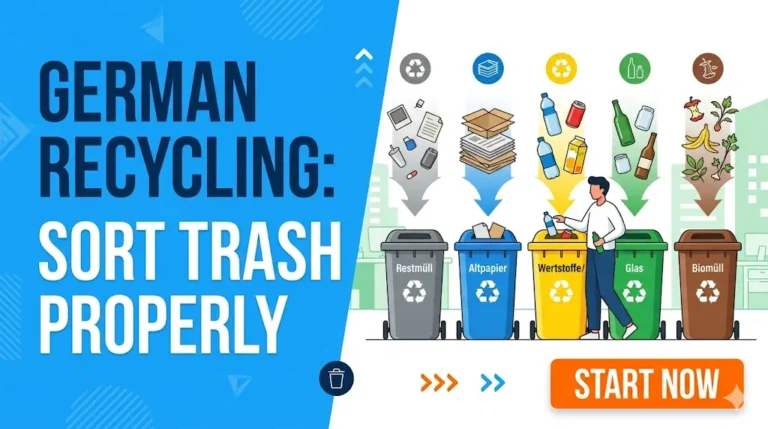
This system was designed to incentivize consumers to return containers so they can either be refilled or recycled efficiently. It is part of the larger Waste Sorting in Germany (Mülltrennung) and Pfand culture that many newcomers find overwhelming at first. I personally spent months throwing away beer bottles before I realized I was literally tossing money into the trash. In a country where the Cost of Living in Germany: Breakdown of Expenses (Rent, Food, Transport) can add up quickly, every 25 cents matters.
There are two main categories you need to recognize: Einwegpfand (single-use) and Mehrwegpfand (multi-use). Identifying these is the first step to mastering the system. Single-use containers, like most plastic water bottles and soda cans, are shredded and recycled into new products. Multi-use containers, usually sturdier glass or thick plastic bottles, are washed and refilled up to 50 times. You will see a specific logo on single-use items—a small icon of a bottle and a can with an arrow. If you don't see that logo, look for the words Pfand-Glas or Mehrweg.
Breakdown of Deposit Values
The amount of money you get back depends entirely on the type of container. It is not a flat rate, which is where many expats get confused. If you are living in a temporary apartment found through a service like Wunderflats, you might find a cabinet full of various bottles left by the previous tenant. Knowing the values helps you decide if it’s worth the trip to the store.
Plastic bottles that are meant for single-use almost always carry a 0.25 EUR deposit. This is the most common type you will encounter with water and soft drinks. Aluminum cans also carry a 0.25 EUR deposit. Glass beer bottles are usually 0.08 EUR, though some specialty bottles with "swing-top" lids (like Flensburger) can be 0.15 EUR. Even those large yogurt jars you find in the dairy aisle often have a 0.15 EUR deposit attached to them.
| Container Type | Deposit Value | Material | Typical Use |
|---|---|---|---|
| Single-use Plastic (Einweg) | 0.25 EUR | PET | Water, Soda, Juice |
| Aluminum Cans | 0.25 EUR | Aluminum | Energy Drinks, Beer, Soda |
| Standard Beer Bottle | 0.08 EUR | Glass | Most German Beers |
| Specialty Beer Bottle | 0.15 EUR | Glass | Swing-top or heavy glass |
| Multi-use Plastic (Mehrweg) | 0.15 EUR | Hard Plastic | Coca-Cola or mineral water 1L |
| Yogurt Jars | 0.15 EUR | Glass | Organic or premium yogurt |
| Wine/Cider Bottles | 0.00 – 0.05 EUR | Glass | Often no deposit (check label) |
It is worth noting that not every single bottle has a deposit. Most wine bottles and spirit bottles do not have a Pfand. These should be taken to the public glass bins (Altglascontainer) located in every neighborhood. You’ll need to sort them by color: white, green, and brown. If you aren't sure where your nearest supermarket or glass bin is, you can use your mobile data via Airalo to check Google Maps while you are out exploring your new neighborhood.
Where and How to Return Your Bottles
The golden rule of the German system is: if a store sells a certain type of material (like plastic or glass), they are legally required to take it back, even if they don't sell that specific brand. However, there are some nuances. Small kiosks, known as Spätis in Living in Berlin: Neighborhoods and Practical Tips, may only accept the brands they actually stock because they have limited storage space.
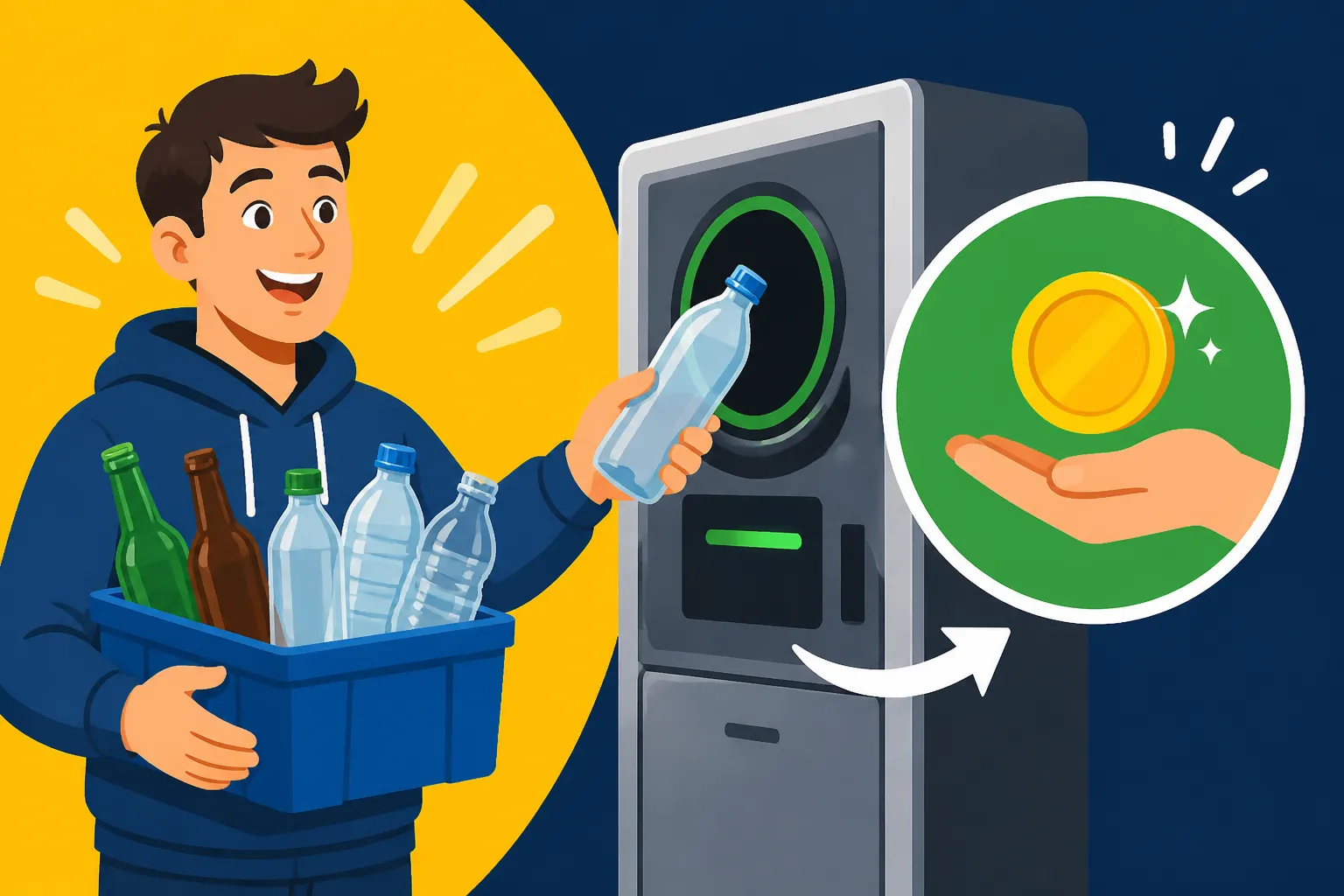
Most people take their bottles to a large supermarket like REWE, EDEKA, Lidl, or Aldi. Look for the Leergut (empty goods) section, usually located near the entrance or at the back of the store. You will find a large machine with a circular opening. This is the Pfandautomat.
To use the machine, follow these steps:
- Ensure the bottle is empty. Do not crush plastic bottles or cans, as the machine needs to scan the barcode and the weight to verify the deposit value.
- Insert the bottle into the hole, bottom first. The machine will rotate the bottle to find the barcode.
- If you have a crate (Kasten) of beer bottles, many machines have a lower opening where you can slide the entire crate in at once.
- Once you have finished, press the large button on the screen. The machine will print a small receipt called a Pfandbon.
- Take this receipt to the cashier when you do your regular Navigating German Supermarkets: Grocery Shopping Tips and Tricks. They will scan it and deduct the amount from your total bill. If you aren't buying anything, they will simply give you the cash.
One thing to keep in mind is Shopping on Sundays in Germany: What’s Open and How to Plan. Since almost all supermarkets are closed on Sundays, the bottle return machines will be inaccessible. If you find yourself with a mountain of bottles on a Sunday morning, you'll have to wait until Monday or find a train station supermarket, though those are often crowded and the machines frequently break down due to high volume.
Troubleshooting and Common Issues
The Pfandautomat is notoriously temperamental. If you try to insert a bottle and the machine spits it back out, check the barcode. If the label is ripped or missing, the machine cannot identify it. In this case, you might need to take the bottle to a human staff member at the service counter, though many discount supermarkets like Aldi don't offer this option and will simply refuse the bottle.
Another common issue is the "crate" scanner. If one bottle in your beer crate is of a different brand or shape than the others, the machine might reject the entire crate. You’ll have to pull out the "offending" bottle and feed it through the individual bottle slot instead. I’ve spent many frustrated minutes at the REWE in Prenzlauer Berg arguing with a machine that simply wouldn't accept a stray Radler bottle.
If you are setting up your new home and find you have a massive amount of recycling from a housewarming party, you can find heavy-duty recycling bags or bottle bins on Amazon Germany to keep your kitchen organized. Nothing ruins the aesthetic of a nice apartment faster than a leaning tower of empty Pilsner bottles in the corner.
If a machine is full, a red light will flash and an alarm might sound. Don't just walk away; usually, there is a "Personal" button you can press to alert a staff member to come and clear the internal bin. Germans take their recycling seriously, and leaving a pile of rejected bottles on top of the machine is considered quite rude.
The Cultural Etiquette of "Pfand gehört daneben"
There is a beautiful social custom in Germany that every expat should know: Pfand gehört daneben. This translates to "the deposit belongs beside it." If you are out in a park or walking through the city and you finish a drink, do not throw the bottle inside the trash can. Instead, place it neatly on the ground next to the bin or on a special rack attached to the side of the bin.
This is done out of respect for the "bottle collectors" (Pfandsammler). These are often elderly people on low pensions or individuals experiencing homelessness who collect bottles to supplement their income. By placing the bottle beside the bin, you save them the indignity and danger of reaching into the trash. It’s a small gesture that is deeply ingrained in German urban life.
If you are traveling and using Getting Around German Cities: U-Bahn, S-Bahn, Trams, and Buses, you will often see people walking through train cars looking for empty bottles. If you have one you don't want to carry, you can simply hand it to them. They will be grateful for the 8 or 25 cents, and you'll have one less thing to carry to your next destination.
Inside the supermarket, you may also notice a second button on the Pfandautomat labeled Spenden (Donate). If you press this, your deposit money will be donated to a local charity—often a food bank (Die Tafel)—instead of printing a receipt for you. It’s an easy way to do a bit of good with your spare change.
Logistics for Large Volumes
For those living in shared apartments (WGs) or large family homes, the volume of bottles can become a logistical challenge. If you don't have a car, carrying three crates of empty glass bottles to the supermarket is a workout you probably didn't sign up for. In this case, consider using a beverage delivery service like Flaschenpost.
These services allow you to order crates of water, beer, and soda online. When the delivery driver arrives at your door, they will take away your empty bottles and crates and instantly deduct the Pfand value from your current or future order. It is an absolute life-saver for anyone living on the fourth floor of an Altbau (old building) without an elevator.
Remember that the system only works for bottles purchased in Germany. If you brought a pack of soda from a weekend trip to France or Poland, the German machines will not recognize the barcodes and will not give you money back. These should be placed in the yellow bin (Gelber Sack/Gelbe Tonne) for general plastic recycling.
Managing your Pfand is one of those "hidden" tasks of living in Germany that eventually becomes second nature. Once you stop seeing empty bottles as trash and start seeing them as quarters in a piggy bank, you’ll know you’ve truly integrated into German life.
Disclaimer
This guide is intended for informational purposes only. While the German Pfand system is standardized by federal law (Verpackungsgesetz), individual store policies regarding manual returns and machine maintenance may vary. Deposit values are subject to change based on government regulations. Please check local signage at your supermarket for the most current information.