Ordering Food and Drinks in German: A Practical Phrasebook
Oh, the sheer terror of that first time you walk into a German restaurant, the menu a dense thicket of umlauts and unfamiliar words, and the waiter approaches with that expectant look! Believe me, we've all been there. That knot in your stomach, the frantic flipping through a mental dictionary – it's a rite of passage for every expat. But fear not, my friend, because this guide is your culinary Rosetta Stone, designed to equip you with the essential German phrases and cultural know-how to order food and drinks with confidence and enjoy Germany's delightful dining scene without breaking a sweat.
Disclosure: This post may contain affiliate links. We may earn a commission at no extra cost to you if you make a purchase through these links. Read full disclosure.
The Initial Hurdle: Getting Comfortable with German Menus and Service
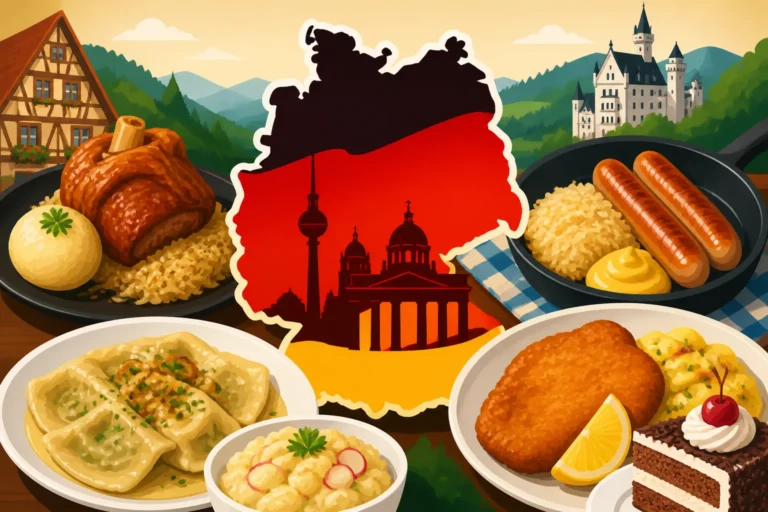
Stepping into a German eatery can sometimes feel like entering a silent challenge. Are you supposed to seat yourself? Is that a glare from the Kellner or just their resting face? And what on earth is a Schweinshaxe? Relax, you’re not alone in these moments of mild panic. Understanding the basics of a German menu and how service typically operates can alleviate so much of that initial anxiety.
Decoding the Menu: Key Vocabulary
German menus can be deceptively simple or incredibly intricate, often depending on the type of establishment. Unlike some countries where you might find heavily detailed descriptions for every dish, German menus often present the main components, assuming a certain familiarity with regional cuisine. Your first mission is to familiarize yourself with the common categories you'll encounter.
You'll almost always see Vorspeisen (appetizers), Hauptspeisen (main courses), Getränke (drinks), and Nachspeisen or Desserts (desserts). Sometimes Suppen (soups) or Salate (salads) might have their own sections, especially in more traditional places. When you delve into the main courses, you'll notice recurring prefixes or suffixes that help describe the dish. For example, -braten often refers to a roast (like Schweinebraten for roast pork), -schnitzel indicates a cutlet, typically breaded and fried (like Wienerschnitzel or Jägerschnitzel), and -wurst clearly means sausage. Keep an eye out for terms like mit (with) and ohne (without), which are crucial for customizing. You'll also see cooking methods such as vom Grill (from the grill), gebraten (fried), or gekocht (boiled). Don't be afraid to discreetly use your phone's translation app for those really tricky words; many Germans appreciate the effort you're making, even if you need a little digital help.
First Impressions: Approaching the Waitstaff and Getting Seated
One of the first cultural nuances that trips up many newcomers is the seating arrangement. In some German restaurants, particularly smaller, cozier ones or traditional Gaststätten, it’s common to simply find an empty table and seat yourself. You might even join others at a larger, shared table if it’s bustling. However, in more upscale establishments or busy city restaurants, it’s best to wait to be greeted and seated by a member of staff.
If you’re unsure, a polite Entschuldigung, haben Sie einen Tisch frei? (Excuse me, do you have a table free?) works wonders. If you have a reservation, you’d say, Ich habe eine Reservierung auf den Namen [Your Name], bitte. (I have a reservation under the name [Your Name], please.). For a specific number of people, it would be Einen Tisch für [number] Personen, bitte. (A table for [number] people, please.). Germans value directness, so there’s no need for elaborate small talk at this stage. Just state your request clearly and politely. This initial interaction sets the tone for your dining experience, so a confident (even if rehearsed) start can make a big difference.
Mastering the Art of Ordering Your Meal
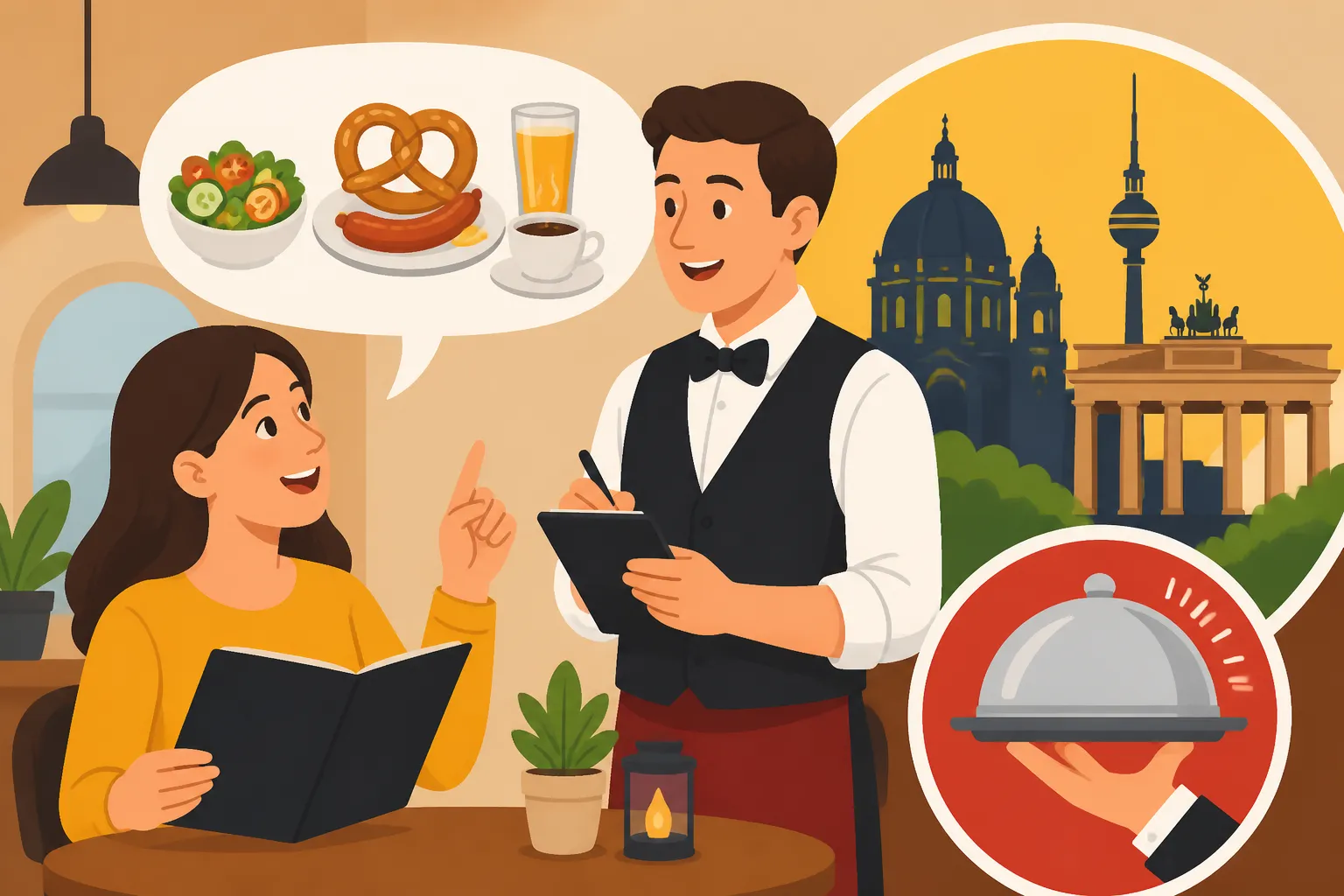
Once you're settled and have had a moment to glance at the menu, the moment of truth arrives: placing your order. This is where those carefully practiced phrases truly come into play. Remember, politeness is paramount, and a little "bitte" (please) goes a long way.
Making Your Choices: Essential Phrases for Ordering Food
When the waiter approaches, they might simply ask Was möchten Sie bestellen? (What would you like to order?) or Haben Sie schon gewählt? (Have you already chosen?). Here are your go-to phrases for ordering your food:
Ich hätte gerne den/die/das [Gericht], bitte.(I would like the [dish], please.) – This is a very polite and common way to order. Remember to use the correct article (der/die/das) for the dish.Für mich bitte [Gericht].(For me, [dish], please.) – A more concise option.Ich nehme [Gericht].(I'll take [dish].) – Slightly more casual, but still perfectly acceptable.
Let’s say you’re eyeing a specific schnitzel. You’d point and say, Ich hätte gerne das Jägerschnitzel, bitte.
If you have specific dietary needs, it's crucial to communicate them upfront. Germany has become increasingly accommodating to different diets, especially in larger cities.
Ich bin Vegetarier.(I am vegetarian.)Ich bin Veganer.(I am vegan.)Ich habe eine Allergie gegen [allergen].(I have an allergy to [allergen].) – For example,Ich habe eine Allergie gegen Nüsse.(I have an allergy to nuts.)Ist dieses Gericht vegetarisch/vegan?(Is this dish vegetarian/vegan?)Gibt es das auch ohne [Zutat]?(Is this also available without [ingredient]?)
Don't shy away from asking for recommendations if you're feeling adventurous or overwhelmed. Was empfehlen Sie? (What do you recommend?) is a great way to discover local favorites and show interest in the cuisine. Many menus will also highlight "Specials" or seasonal dishes, often indicated with Saisonale Angebote or Tageskarte. If you're struggling to choose, sometimes looking at what others are eating can help, and then you can simply point and ask, Was ist das für ein Gericht? (What kind of dish is that?).
Quenching Your Thirst: Ordering Drinks
Ordering drinks follows a similar pattern to food, but with its own set of common vocabulary. German dining often involves a drink alongside your meal, whether it's water, a Saftschorle, or, of course, beer or wine.
For water, you’ll need to specify if you want sparkling or still:
Ein Wasser mit Kohlensäure, bitte.(A sparkling water, please.)Ein Wasser ohne Kohlensäure, bitte.(A still water, please.)
A popular non-alcoholic drink is Apfelschorle (apple juice mixed with sparkling water), which you can simply ask for by name: Eine Apfelschorle, bitte. Other common juices (Säfte) include Orangensaft (orange juice) and Apfelsaft (apple juice).
When it comes to beer, you'll quickly learn the different types, which vary by region. Common requests include:
Ein Pils, bitte.(A Pilsner, please.)Ein Weizenbier/Hefeweizen, bitte.(A wheat beer, please.)Ein dunkles Bier, bitte.(A dark beer, please.)
For wine, you might ask for Ein Glas Rotwein/Weißwein, bitte. (A glass of red/white wine, please.). To specify a larger or smaller size, use klein (small) or groß (large), though often beer glasses are standard sizes. If you want another round of something you've already had, a simple Noch ein [Getränk], bitte. (Another [drink], please.) will do the trick. You can explore more about German Beer Culture: Styles, Beer Gardens, and Breweries by checking out our dedicated guide.
Asking Questions and Making Special Requests
Sometimes you need a little more information or want to tweak an order. This is where good communication comes in handy. Remember, it's always better to ask than to be surprised.
Ist das scharf?(Is that spicy?)Ist da Fleisch drin?(Is there meat in it?)Was ist in diesem Gericht enthalten?(What is included in this dish?)Kann ich statt Pommes Salat bekommen?(Can I get salad instead of fries?)Könnten Sie das ohne Zwiebeln zubereiten?(Could you prepare this without onions?)
Most waitstaff are accustomed to these kinds of questions, especially in more international cities. They want you to enjoy your meal, so don't feel like you're being a nuisance. The key is to be clear and polite.
Navigating the Meal Experience: From Starters to Dessert
Once your order is placed, the rhythm of the meal begins. Unlike some cultures where waiters constantly check in, German service can sometimes feel more hands-off. Don’t mistake this for inattentiveness; it’s often a sign of respecting your privacy during your meal. However, if you need something, don't hesitate to signal your waiter.
Service During the Meal: Getting Attention and Refills
If you need your waiter, a subtle raised hand and eye contact, perhaps accompanied by a polite Entschuldigung! (Excuse me!), is usually sufficient. Avoid snapping fingers or loud calls, as this is generally considered rude.
Common requests during the meal might include:
Noch ein Getränk, bitte.(Another drink, please.) – If you're ready for a refill.Könnten wir noch etwas Brot haben?(Could we have some more bread?)Hätten Sie etwas Salz/Pfeffer, bitte?(Could we have some salt/pepper, please?)Die Rechnung, bitte.(The bill, please.) – Though typically you’d wait until the end of your meal for this.
Learning about German Dining Etiquette: Eating Out, Tipping, and Table Manners can give you even more insights into how to navigate these interactions smoothly.
Expressing Satisfaction or Addressing Issues
Hopefully, your meal is delicious! Germans appreciate honest feedback.
Es schmeckt sehr gut!(It tastes very good!) – A simple and effective compliment.Vielen Dank, das war sehr lecker.(Thank you very much, that was delicious.)
However, sometimes things don't go as planned. If there's an issue, it's best to address it calmly and clearly.
Entschuldigung, aber das Essen ist kalt.(Excuse me, but the food is cold.)Das ist leider nicht, was ich bestellt habe.(Unfortunately, this is not what I ordered.)Könnten Sie das bitte überprüfen?(Could you please check this?)
Most German restaurants are keen on providing a good experience, and they will usually rectify mistakes promptly. Remember, directness is not rudeness in Germany, but maintain a polite tone.
Ordering Dessert and Coffee
After the main course, you might be ready for something sweet or a warm drink.
Die Nachspeisekarte, bitte.(The dessert menu, please.) orDie Dessertkarte, bitte.Einen Kaffee, bitte.(A coffee, please.)Einen Espresso, bitte.(An espresso, please.)Einen Milchkaffee, bitte.(A latte, please.)Einen Cappuccino, bitte.(A cappuccino, please.)
Germany has a rich Kaffee und Kuchen (coffee and cake) culture, so don't be surprised by the array of cakes and pastries available. You can delve deeper into this delightful tradition by reading our guide on German Cafés and Kaffee und Kuchen Culture. If you're just looking for a digestif, you might ask for Einen Schnaps, bitte.
The Grand Finale: Paying the Bill
The end of the meal brings us to another potentially awkward moment for expats: paying. The process can vary slightly from what you might be used to, particularly regarding tipping and splitting the bill.
Requesting the Bill
Unlike in some countries where the bill might be brought without asking, in Germany, you almost always have to request it.
Die Rechnung, bitte.(The bill, please.) – The most common and polite way.Zahlen, bitte.(Pay, please.) – Also widely used.
If you're dining with others and want to split the bill, make sure to state this clearly before the waiter presents the final bill.
Wir möchten getrennt zahlen.(We would like to pay separately.) – Each person pays for their own.Wir möchten alles zusammen zahlen.(We would like to pay everything together.) – One person pays for the whole table.
Sometimes, if you're splitting, the waiter might ask each person what they had to calculate individual totals. This is normal.
Tipping Etiquette and Payment Methods
Tipping in Germany is a gesture of appreciation for good service, rather than a mandatory percentage that's automatically added. The standard is usually to round up the bill or add 5-10% for excellent service. It's often done directly when paying.
For example, if your bill is €22.50, and you want to tip, you might say Machen Sie 24 Euro, bitte. (Make it 24 Euros, please.) or Stimmt so. (Keep the change/It’s fine as it is.) if you’re handing over the money and happy to leave the rest as the tip. You can find more comprehensive details in our Tipping in Germany: When, Where, and How Much guide.
While card payments are becoming more prevalent, especially in larger cities and chain restaurants, Germany is still very much a cash-friendly society, particularly in smaller towns or traditional Gaststätten. Always carry some cash, just in case. When paying by card, you might be asked if you want to add the tip to the card payment, or if you prefer to tip in cash. It's perfectly fine to do either. Learning about Cash vs Card in Germany: What Visitors Should Know can help you prepare for different payment scenarios.
Table: Essential Phrases for Ordering and Paying
| Situation | German Phrase | English Translation |
|---|---|---|
| Requesting a table | Einen Tisch für zwei, bitte. |
A table for two, please. |
| Ordering food | Ich hätte gerne den/die/das [Gericht], bitte. |
I would like the [dish], please. |
| Ordering a specific drink | Ein Pils/Wasser/Apfelschorle, bitte. |
A Pilsner/water/apple spritzer, please. |
| Asking for still/sparkling | mit/ohne Kohlensäure |
with/without sparkling water (carbonation) |
| Dietary restrictions | Ich bin Vegetarier/Veganer. |
I am vegetarian/vegan. |
| Asking about allergens | Ich habe eine Allergie gegen Nüsse. |
I have an allergy to nuts. |
| Asking for recommendations | Was empfehlen Sie? |
What do you recommend? |
| Asking for the bill | Die Rechnung, bitte. |
The bill, please. |
| Splitting the bill | Wir möchten getrennt zahlen. |
We would like to pay separately. |
| Paying all together | Wir möchten alles zusammen zahlen. |
We would like to pay everything together. |
| Rounding up the tip | Machen Sie [Amount] Euro, bitte. |
Make it Amount Euros, please. |
| Telling them to keep the change | Stimmt so. |
Keep the change/It's fine as it is. |
| Saying goodbye | Danke schön, auf Wiedersehen! |
Thank you very much, goodbye! |
Leaving and Saying Goodbye
Once you've paid and are ready to leave, a polite Danke schön, auf Wiedersehen! (Thank you very much, goodbye!) is always appreciated. If you've had a particularly good experience, you might even add Das Essen war ausgezeichnet! (The food was excellent!). These small gestures show respect and can leave a positive impression.
Practice Makes Perfect: Beyond the Phrasebook
Feeling a bit more confident now? Excellent! Remember, this phrasebook is a starting point. The real learning happens out there in the wild, in the bustling Brauhaus or the cozy Café.
Leveraging Technology for Confidence
While nothing beats authentic practice, technology can be a fantastic crutch, especially in the early days. Don't be shy about using translation apps on your phone. Many apps now offer offline dictionaries, which are invaluable when Wi-Fi isn't available. Some even have camera translation features, which are a lifesaver for deciphering those intimidatingly long German words on a menu. You might also find that some restaurants in tourist-heavy areas have QR codes that link to online menus, sometimes even with English translations, which can be a huge relief.
When planning trips to different German cities, platforms like Omio can help you book train or bus tickets efficiently, taking you to new culinary adventures. And if you’re booking tours or experiences through GetYourGuide, pay attention to those that include meals. Often, your guide can assist with ordering and even provide fascinating insights into regional dishes and dining customs, making the experience even more enriching.
Regional Differences and Local Delicacies
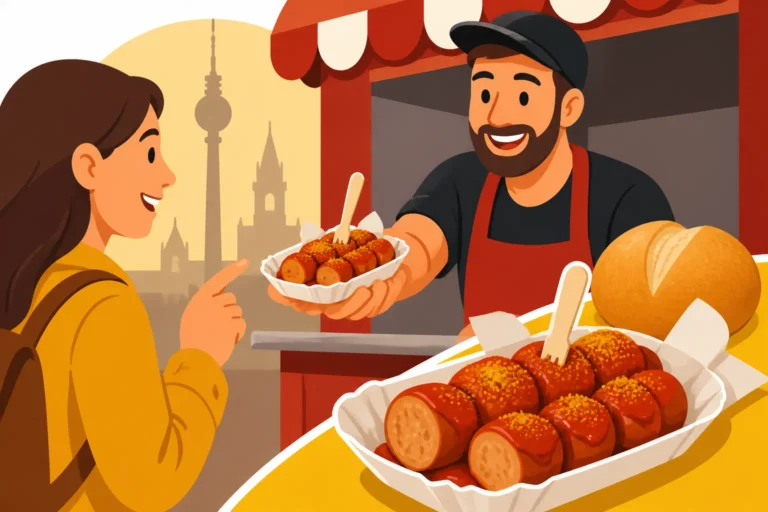
Germany is a country of diverse regions, each with its own culinary traditions and local delicacies. A menu in Bavaria might feature Weisswurst and Brezn, while a menu in Hamburg will lean towards fish dishes like Fischbrötchen. Even the names of common dishes can vary slightly. For example, a "meatball" might be a Frikadelle in the north and a Fleischpflanzerl in the south.
Embracing these regional differences is part of the fun of living in Germany. Don't limit yourself to just the "greatest hits" of German cuisine. Be adventurous! Try the local specialties. You can always refer to our guide on German Regional Dishes Every Visitor Should Try to get an idea of what to expect in different parts of the country.
Overcoming Language Anxiety and Embracing the Experience
It’s completely normal to feel a bit of anxiety about speaking a new language, especially when you’re hungry! But Germans, by and large, appreciate the effort. Even if your pronunciation isn't perfect, or you mix up your articles, the attempt itself shows respect for their culture. Most service staff in cities will have at least some basic English, and if they see you trying, they’re often more willing to switch to English to help you out.
Think of each interaction as a mini-language lesson. You might stumble, you might make a mistake, but you'll learn something new every time. This journey of learning the language goes hand-in-hand with integrating into daily life. If you're serious about improving your German, check out our recommendations for Learning German: Top Language Schools and Resources for Expats. And for those initial days where comfort is key, remember that platforms like Booking.com are excellent for finding accommodation, and many larger hotels or guesthouses will have staff who speak fluent English, offering a little oasis of familiarity before you dive into the German linguistic deep end. The goal isn't perfection, it's connection and enjoyment of your expat life.
Disclaimer
Please note that while this guide provides comprehensive information, regulations and cultural norms can evolve. Always verify specific details, especially regarding prices, opening hours, or legal requirements, as close to your planned activity as possible. This information is for general guidance and personal experience sharing and does not constitute professional advice.