Germany’s Most Beautiful Small Towns to Visit
It’s easy to get caught up in the buzzing energy of Germany’s big cities, with their endless opportunities and fast pace. But sometimes, the soul longs for something different, a slower rhythm, a place where history whispers from every cobblestone and the scenery feels straight out of a storybook. Germany’s small towns offer precisely that escape, providing a chance to truly immerse yourself in the country’s rich heritage and breathtaking landscapes without the overwhelming rush. This guide is your personal tour through some of Germany's most beautiful small towns, helping you discover those hidden gems and plan your perfect, enchanting getaway.
Disclosure: This post may contain affiliate links. We may earn a commission at no extra cost to you if you make a purchase through these links. Read full disclosure.
Why Small Towns in Germany Are So Enchanting
Stepping into a small German town can feel like stepping back in time. It’s a world away from the gleaming skyscrapers of Frankfurt or the bustling streets of Berlin. Here, life unfolds at a more deliberate pace, inviting you to slow down, breathe deeply, and soak it all in. For expats, these towns offer an invaluable opportunity to connect with a more traditional side of German life, often revealing cultural nuances that can be missed in the larger, more international cities.
A Glimpse into German History and Culture
Germany's small towns are often living museums, with centuries of history etched into their architecture and traditions. Unlike many larger cities that suffered extensive damage during wars and rebuilt with modern designs, many of these smaller settlements have miraculously preserved their medieval cores, their half-timbered houses, ancient town walls, and cobblestone lanes standing much as they have for hundreds of years. Walking through these towns, you're not just observing history; you're feeling it underfoot. It’s a completely different experience than visiting a museum, offering an authentic, tangible link to Germany's past.
From the stories of forgotten princes and powerful merchants to local festivals that have been celebrated for generations, these towns are keepers of Germany's diverse regional cultures. You might stumble upon a local bakery using recipes passed down through families for centuries, or a small independent shop selling handcrafted goods that speak volumes about local artistry. It's in these moments that you truly begin to understand the local Gemütlichkeit – that sense of coziness, friendliness, and belonging that defines German culture in its purest form.
Escaping the Urban Hustle
Let's be honest, city living, while exciting, can be incredibly draining. The constant noise, the crowds, the endless errands – it all adds up. That's why the serene embrace of a German small town is so appealing. Imagine waking up to the sound of church bells instead of traffic, enjoying breakfast at a café where the owner knows your order, and spending your afternoon wandering through quiet streets without a specific destination in mind. This is the magic of these smaller places.
They offer a chance to disconnect from the digital world and reconnect with yourself and your surroundings. Whether it’s hiking through rolling hills, cycling along a picturesque river, or simply enjoying a leisurely Kaffee und Kuchen in a quiet town square, the focus shifts from doing to simply being. For those of us who have navigated the often-complex German bureaucracy in big cities, the slower pace and more personal interactions in smaller towns can be a welcome relief, making daily life feel less like a chore and more like an experience.
Fairy-Tale Wonders: Towns Along the Romantic Road
No discussion of Germany’s most beautiful small towns would be complete without highlighting the treasures nestled along the famed Romantic Road (Romantische Straße). This scenic route through Bavaria and Baden-Württemberg truly lives up to its name, connecting some of the most picturesque medieval towns in the country. It’s a journey through time, full of turrets, ramparts, and half-timbered houses that look like they've leaped directly from the pages of a Brothers Grimm fairy tale.
Rothenburg ob der Tauber
Rothenburg ob der Tauber is, without a doubt, the undisputed star of the Romantic Road. It’s so perfectly preserved that it often feels more like a movie set than a real town. Enclosed within its intact medieval walls, Rothenburg’s winding cobblestone streets, colorful half-timbered houses, and charming squares are simply breathtaking. The town’s history as a powerful Free Imperial City is evident everywhere, from the imposing gates to the grand Town Hall (Rathaus).
During your visit, make sure to walk the entire perimeter of the town walls – it offers unparalleled views of the red-roofed houses and the surrounding Tauber Valley. Don't miss the famous Plönlein, a picturesque intersection with a leaning half-timbered house and two fountains, which is probably the most photographed spot in town. Rothenburg is also famous for its year-round Käthe Wohlfahrt Christmas Village, making it feel festive no matter when you visit. In the evenings, taking the Night Watchman's Tour is an absolute must. The watchman, in full historical attire, shares fascinating and often humorous tales of medieval life, adding another layer of charm to an already magical experience. It can get very busy, especially in summer and during the Christmas market season, so booking accommodation on Booking.com well in advance is a wise idea.
Dinkelsbühl
Often overshadowed by its more famous neighbor, Rothenburg, Dinkelsbühl is a true hidden gem that offers a similar medieval charm with fewer crowds. This stunning town boasts one of Germany's best-preserved medieval old towns, complete with a complete ring wall, numerous towers, and beautiful gates. Unlike Rothenburg, which can feel a bit crowded, Dinkelsbühl allows you to wander its streets at a more leisurely pace, truly soaking in the atmosphere.
The town’s architecture is a feast for the eyes, with vibrant half-timbered houses lining every street, many adorned with intricate carvings and flower boxes. Its rich history includes avoiding destruction during the Thirty Years' War, a feat celebrated annually with the "Kinderzeche" festival, a historical play performed by the town's children. For a unique experience, consider climbing the tower of St. George's Minster for panoramic views over the colorful rooftops. Finding a cozy guesthouse and exploring the local shops and eateries will give you a real taste of authentic Franconian hospitality. Dinkelsbühl truly embodies that quintessential German small-town feel.
Nördlingen
Another fascinating stop along the Romantic Road is Nördlingen, a town with a truly unique origin story. It’s the only German city located entirely within a meteorite crater, known as the Nördlinger Ries. This impact event, which occurred some 15 million years ago, left behind a landscape that has shaped the town’s very fabric. The distinctive building material, suevite stone, found throughout the town, contains tiny diamonds formed during the meteorite's immense pressure.
Nördlingen is completely encircled by a walkable medieval town wall, the only one in Germany that is fully preserved. A walk along the wall offers incredible views of the town's charming center and the surrounding crater landscape. You can even climb the Daniel, the 90-meter-high tower of St. George's Church, for an even more expansive vista. From this vantage point, you can truly appreciate the circular layout of the town within the crater. Nördlingen offers a quieter, more understated charm than its more bustling neighbors, making it perfect for those seeking a peaceful exploration of history and geology combined.
Alpine Charm and Bavarian Gemütlichkeit
Venture south into the heart of Bavaria, and you'll discover small towns nestled amidst breathtaking Alpine scenery. Here, the air is crisp, the mountains loom majestically, and traditional Bavarian culture thrives with a warmth and cheerfulness that is utterly infectious. These towns are perfect bases for outdoor adventures or simply enjoying the idyllic mountain lifestyle.
Garmisch-Partenkirchen
At the foot of Germany’s highest mountain, the Zugspitze, lies Garmisch-Partenkirchen, a stunning Alpine resort town that effortlessly blends natural beauty with Bavarian tradition. Once two separate villages, Garmisch and Partenkirchen merged for the 1936 Winter Olympics, and today they offer a captivating mix of bustling resort amenities and old-world charm. Partenkirchen, in particular, boasts the historic Ludwigstraße, famous for its beautifully painted houses adorned with intricate Lüftlmalerei – traditional Bavarian frescoes depicting scenes from folklore, religious stories, or everyday life.
This town is a paradise for outdoor enthusiasts. In winter, it's a prime destination for skiing, snowboarding, and other winter sports, offering access to world-class slopes. In summer, the opportunities for hiking, mountain biking, and exploring the Eibsee – a stunning turquoise lake – are endless. You can easily take a cable car up the Zugspitze for unparalleled panoramic views across four countries. Even if you're not an adrenaline junkie, simply strolling through the town, enjoying a hearty Bavarian meal, and taking in the dramatic mountain backdrop is an experience in itself. Consider checking out GetYourGuide for local tours that can take you to the best hiking spots or scenic viewpoints.
Oberammergau
The name Oberammergau immediately conjures images of its world-famous Passion Play, performed only once every ten years by the villagers themselves in fulfillment of a vow made during the bubonic plague. But even outside of the Passion Play years, Oberammergau is a delightful Bavarian village worth visiting. Like Garmisch-Partenkirchen, many of its houses feature exquisite Lüftlmalerei, turning a simple walk into an outdoor art gallery.
Beyond the painted facades, Oberammergau is renowned for its woodcarving tradition, a craft that has been passed down through generations. You’ll find numerous workshops and shops selling intricate carvings, from religious figures to cuckoo clocks. The town’s tranquil setting, surrounded by the Ammergau Alps, makes it an ideal spot for peaceful walks and enjoying nature. It’s smaller and quieter than Garmisch-Partenkirchen, offering a more intimate experience of Bavarian village life. If you're interested in the Passion Play, plan your visit many years in advance, as tickets and accommodation sell out incredibly fast.
Berchtesgaden
Nestled in the southeastern corner of Bavaria, almost entirely surrounded by Austria, Berchtesgaden is a jewel box of Alpine beauty, home to Germany's only Alpine national park, Berchtesgaden National Park. This region is a dramatic landscape of towering peaks, crystal-clear lakes, and lush forests, offering some of the most stunning natural scenery in Germany. The town itself is charming, with traditional Bavarian architecture and a lively market square.
The undisputed highlight here is the Königssee, a fjord-like lake renowned for its emerald-green waters and dramatic cliffs, often referred to as Germany's most beautiful lake. Electric boats ferry visitors across the serene waters to St. Bartholomä, a picturesque pilgrimage church with its distinctive red onion domes. Another significant, albeit somber, site is the Documentation Center Obersalzberg, which provides historical information about Hitler’s former mountain retreat, the Berghof, and offers access to the Kehlsteinhaus, or "Eagle's Nest," which provides stunning views. Berchtesgaden offers a blend of natural splendor and significant historical reflection, making it a profoundly impactful destination. You can plan your journey to these stunning locations easily using Omio for train and bus connections to the region.
River Valleys and Vineyards: Western Germany's Hidden Treasures
Western Germany, particularly the regions along the Rhine and Moselle rivers, is a tapestry of rolling vineyards, dramatic castles, and charming medieval towns. These areas offer a different kind of beauty, where the landscape is shaped by ancient rivers and the culture is steeped in wine-making traditions. These towns provide a perfect blend of scenic cruises, historic exploration, and delicious local gastronomy.
Cochem
Perched majestically above the Moselle River, with the Reichsburg Cochem castle dominating the skyline, Cochem is the epitome of a picturesque German river town. Its setting is truly idyllic, with steep vineyard-covered slopes leading down to the winding river, and a charming old town filled with narrow, winding streets and traditional half-timbered houses.
The Reichsburg Cochem is undoubtedly the town's most famous landmark. This beautifully restored imperial castle, with its distinctive pointed turrets, offers guided tours that provide a fascinating glimpse into its medieval past and breathtaking views of the Moselle Valley. You can reach the castle by a pleasant walk or a shuttle bus. For even more spectacular views, take the chairlift up to the Pinnerkreuz viewpoint. Of course, being in the Moselle Valley, wine tasting is a must. The region is famous for its Riesling wines, and numerous wineries in and around Cochem offer tastings and cellar tours. A leisurely river cruise on the Moselle is also a wonderful way to appreciate the stunning scenery and the many castles dotting the banks. This is definitely a place to slow down and enjoy the journey, perhaps even considering a longer stay in one of the quaint hotels found on Booking.com.
Bacharach
Further along the Rhine River, south of the more bustling cities, lies Bacharach, a small town that epitomizes the romance of the Middle Rhine Valley. Often considered one of the most beautiful towns in the region, Bacharach is famous for its perfectly preserved half-timbered houses, ancient town walls, and the ruins of Stahleck Castle, which now serves as a youth hostel, perched high above the town.
The town’s origins date back to Roman times, and its prosperity was once tied to its wine trade. Today, you can still experience this rich heritage by exploring the charming lanes, visiting local wineries, and enjoying a glass of crisp Riesling. Don't miss the opportunity to walk through the medieval gates and along parts of the old town walls, which offer fantastic views of the Rhine and the surrounding vineyards. The Wernerkapelle, a stunning Gothic ruin, also adds to the town's dramatic beauty. A Rhine river cruise is an excellent way to see Bacharach from the water, appreciating its harmonious blend of history and natural splendor, perhaps as part of a longer trip exploring the castles and villages along the Rhine Valley. You can find more information on The Rhine Valley: Castles, Wine, and River Towns.
Monschau
Tucked away in the Rur river valley within the Eifel region, near the Belgian border, Monschau is a picture-postcard town that feels like a forgotten corner of Germany. Its tightly packed, half-timbered houses cling to the steep valley sides, with the rushing Rur River flowing through the heart of the town. This pedestrian-only old town is incredibly charming and offers a sense of tranquility rarely found in more accessible locations.
Monschau's historic prosperity came from its wool weaving industry, and you can still visit the Red House (Rotes Haus), a former weaver's mansion that now serves as a museum showcasing the opulent lifestyle of the town's textile barons. The narrow streets are perfect for leisurely strolls, discovering small artisan shops, cozy cafes, and traditional restaurants. The ruins of Monschau Castle overlook the town, providing another scenic viewpoint. For a unique local experience, visit the Felsenkeller Brewery, one of the oldest breweries in the Eifel, which offers tours and tastings. Monschau is truly a magical escape, especially during the Christmas season when its market lights up the valley, making it feel even more enchanting.
Northern Beauty: Coastal Breezes and Hanseatic Heritage
While many imagine Germany's charm solely in its southern regions, the north offers its own distinct beauty, characterized by Hanseatic brick Gothic architecture, proximity to the Baltic and North Seas, and a quieter, often more rugged appeal. These towns showcase a rich trading history and a unique maritime culture that sets them apart.
Lübeck
Known as the "Queen of the Hanseatic League," Lübeck is a magnificent city that feels much larger than its population might suggest, thanks to its incredibly well-preserved medieval old town, a UNESCO World Heritage site. The entire old town is situated on an island surrounded by the Trave River, giving it a distinctive character. Its iconic Holstentor gate, with its two distinctive towers, is one of Germany’s most recognizable landmarks and serves as a grand entrance to a city rich in history.
Lübeck's prosperity was built on trade, particularly salt, which is reflected in its impressive brick Gothic architecture, from the towering St. Mary's Church (Marienkirche) to the grand Rathaus (Town Hall). Don't leave Lübeck without trying its famous marzipan – the Niederegger Café is legendary and offers countless marzipan delights. Exploring the narrow Gänge (passageways) and courtyards that hide behind the main streets reveals another charming side of the city. A stroll along the waterfront and through the winding medieval streets will transport you to a bygone era of powerful merchants and thriving trade. The city also hosts beautiful Christmas markets, which can be a lovely experience, as noted in Christmas Markets and Festive Germany.
Stralsund
Another stunning example of Hanseatic brick Gothic architecture and a UNESCO World Heritage site, Stralsund is beautifully situated on the Strelasund, a strait of the Baltic Sea. Its maritime history is palpable, with a historic harbor that still bustles with activity and grand merchant houses that line its ancient streets. The town’s silhouette, dominated by the spires of its three impressive brick Gothic churches – St. Mary's, St. Nicholas', and St. James' – is unforgettable.
Stralsund offers a wonderful blend of history and coastal charm. The Ozeaneum, a modern aquarium and museum dedicated to the marine life of the Baltic and North Seas, is a fantastic attraction, especially for families. You can also explore the Gorch Fock I, a historic sailing ship, docked in the harbor. The historic old town square, Alter Markt, is surrounded by magnificent buildings, including the Rathaus and several gabled merchant houses. Walking around the harbor, enjoying fresh seafood, and soaking in the Baltic Sea air provides a refreshing experience. Getting to Stralsund might involve a train journey, and services like Omio can help you find the best routes and tickets.
Quedlinburg
Nestled in the northern foothills of the Harz Mountains, Quedlinburg is an extraordinary medieval town, another UNESCO World Heritage site, boasting an unparalleled collection of half-timbered houses – over 2,000 of them – dating back more than six centuries. It truly feels like an open-air museum, with every street revealing another delightful architectural masterpiece. The town’s labyrinthine cobblestone lanes and charming squares are a joy to explore.
Quedlinburg's history as a powerful medieval imperial city is evident in its castle hill (Schlossberg), crowned by the Romanesque Collegiate Church of St. Servatius and the adjacent castle, which offer commanding views over the town. The church is home to the Quedlinburg Treasure, a collection of medieval art and artifacts. The relaxed pace of Quedlinburg makes it perfect for simply wandering, getting lost in its historical beauty, and discovering its countless hidden corners. During Advent, the town transforms with a unique "Advent in den Höfen" (Advent in the Courtyards) event, where private courtyards open up, offering crafts and festive treats, adding to the magical atmosphere. If you’re looking for a genuinely authentic and historic German town experience, Quedlinburg is an absolute must-visit.
Planning Your Small Town Escape
Deciding to explore Germany's charming small towns is the first step; now comes the fun part: planning your adventure! While the pace is slower, a little preparation goes a long way to ensure a smooth and enjoyable trip, especially when dealing with transportation or finding the perfect cozy place to lay your head.
Getting There
Unlike larger cities with international airports, many small towns are best accessed via Germany's excellent train network. Deutsche Bahn (DB) is extensive, and while it might take a bit longer than a direct flight, the scenic routes often add to the experience. You can easily plan your train journey and purchase tickets through platforms like Omio, which aggregates various transport options, including trains and long-distance buses (like FlixBus), making it convenient to compare routes and prices. For specific details on navigating the rail system, check out Getting Around Germany: Trains, Buses, Flights, and Car Hire.
If you prefer the flexibility of exploring at your own pace, renting a car is an excellent option. This allows you to visit multiple towns, stop at scenic viewpoints, and discover hidden gems off the main routes. Driving in Germany is generally straightforward, with well-maintained roads and the famous Autobahn. Just remember that many old town centers are pedestrian-only zones, so you'll often need to park outside and walk in.
Where to Stay
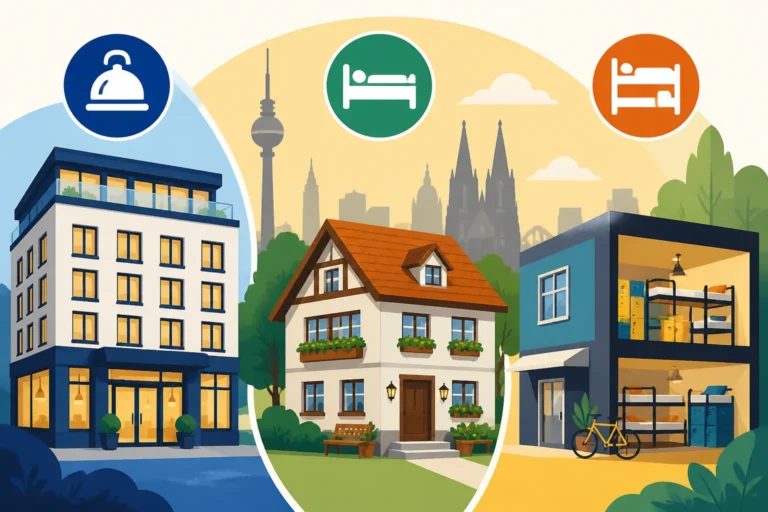
When it comes to accommodation in small towns, you're often looking at charming guesthouses (Pensionen), family-run hotels, or perhaps even a quaint B&B, rather than large international hotel chains. These local establishments often offer a more personal touch, with hosts who can provide invaluable local insights and recommendations.
Websites like Booking.com are fantastic for finding a wide range of options, from budget-friendly rooms to more luxurious stays, allowing you to filter by location, price, and amenities. For a truly authentic experience, look for places that offer traditional breakfast and are centrally located within the historic old town, putting you right in the heart of the action. It's often advisable to book in advance, especially if you're traveling during peak season or specific local festivals, as options can be more limited than in bigger cities. For more general advice on lodging, take a look at Accommodation in Germany: Hotels, Pensionen, and Hostels.
Making the Most of Your Visit
To truly appreciate these towns, embrace their slower pace. Don't try to rush through a checklist of sights. Instead, allow yourself to wander without a rigid itinerary. Sit at a local café, sip on a coffee or a regional wine, and watch the world go by. Engage with the locals if you can – even a few words of German can open doors to friendly conversations and unique insights into their way of life, something you can pick up with help from German Language and Everyday Communication for Visitors.
Many small towns offer guided walking tours, which are an excellent way to learn about the local history and folklore. You can often find these organized by the local tourism office or through platforms like GetYourGuide, which sometimes offers unique, off-the-beaten-path experiences. Don't forget to sample the local cuisine! Small towns are often where regional specialties truly shine, from hearty Franconian dishes to delicate Moselle wines. For more on what to eat, check out German Regional Dishes Every Visitor Should Try.
Remember, part of the charm of these smaller destinations is their distinct character. While you might not find the same level of English spoken everywhere as in, say, Berlin, the warmth and hospitality of the locals more than make up for it. Just be prepared with a phrasebook or translation app, and a smile!
Here’s a quick comparison of some of these enchanting small towns:
| Town Name | Region | Key Highlight | Best For | Nearest Major City (approx.) |
|---|---|---|---|---|
| Rothenburg ob der Tauber | Bavaria | Perfectly preserved medieval walls | Fairy-tale charm, Christmas markets, history | Nuremberg (1h 15m) |
| Dinkelsbühl | Bavaria | Complete medieval ring wall, fewer crowds | Authentic medieval experience, tranquility | Nuremberg (1h) |
| Nördlingen | Bavaria | Town within a meteorite crater | Unique geology, walkable town wall | Augsburg (1h) |
| Garmisch-Partenkirchen | Bavaria | Alpine scenery, Zugspitze | Outdoor activities, traditional murals | Munich (1h 20m) |
| Berchtesgaden | Bavaria | Königssee, National Park | Nature lovers, scenic beauty, history | Salzburg (30m) |
| Cochem | Rhineland-Palatinate | Reichsburg Cochem, Moselle River | Castle tours, wine tasting, river cruises | Koblenz (45m) |
| Bacharach | Rhineland-Palatinate | Rhine River views, half-timbered houses | Romantic views, wine, river cruises | Mainz (1h) |
| Monschau | North Rhine-Westphalia | Half-timbered houses, Rur River | Picturesque charm, relaxation, hiking | Aachen (30m) |
| Lübeck | Schleswig-Holstein | Holstentor, brick Gothic architecture | Hanseatic history, marzipan, unique island | Hamburg (45m) |
| Stralsund | Mecklenburg-Vorpommern | Historic harbor, Ozeaneum | Maritime history, Baltic Sea, brick Gothic | Rostock (1h) |
| Quedlinburg | Saxony-Anhalt | Over 2,000 half-timbered houses | Medieval architecture, unique history | Magdeburg (1h) |
Disclaimer
The information provided in this guide is intended for general informational purposes only. While we strive to provide accurate and up-to-date information, circumstances such as opening hours, accessibility, transportation schedules, and local regulations can change. We recommend verifying specific details with local tourism boards, service providers, or official sources before making travel arrangements. Travel experiences are subjective and may vary.