What German Beer Styles Should You Try?
Walking into a traditional German Wirtshaus for the first time can be surprisingly overwhelming. You expect a simple beer list, but instead, you are met with a dizzying array of regional specialities like Helles, Dunkel, and Weizen, often with no description of what they actually taste like. This guide solves that confusion by breaking down every essential German beer style, ensuring you order with confidence and truly experience the liquid gold of the Bundesrepublik.
Disclosure: This post may contain affiliate links. We may earn a commission at no extra cost to you if you make a purchase through these links. Read full disclosure.
The Foundation of German Brewing Culture
Before you even take your first sip, you have to understand the invisible law that governs every drop of beer in this country: the Reinheitsgebot, or the German Beer Purity Law. Dating back to 1516, this regulation originally dictated that beer could only be brewed using three ingredients: water, barley, and hops. Yeast was added to the list later once it was actually discovered. As an expat, you’ll quickly realize that Germans take this law very seriously. It isn’t just a marketing gimmick; it’s a point of national pride that ensures you won't find corn syrup, artificial flavors, or preservatives in your glass.
However, don't let the "purity" fool you into thinking all German beer tastes the same. The diversity comes from the different types of malt, the mineral content of local water, and the specific strains of yeast used in different regions. Whether you are in the industrial north or the alpine south, the beer is a reflection of the local soil and history. For example, the soft water of Pilsen (now in the Czech Republic but historically influential) led to the crisp Pilsner, while the harder water of Munich birthed the malty Helles.
When you are planning your journey through these different "beer states," I highly recommend using Omio to compare train and bus prices. Traveling from the Pilsner-heavy north to the Wheat-heavy south is a long trek, and having a solid transport plan is key to a stress-free "degustation" tour. Once you arrive in a new city, checking out Beer, Wine, and German Drinking Culture will give you the cultural context needed to avoid looking like a complete "Touri" at the bar.
Bottom-Fermented Classics: The Lagers and Pilsners
The most common beers you will encounter across Germany are lagers. These are bottom-fermented, meaning the yeast works at cooler temperatures at the bottom of the tank. This process results in a clean, crisp finish that most international drinkers are familiar with, though the German versions have significantly more character than your average global commercial brand.
The Munich Helles
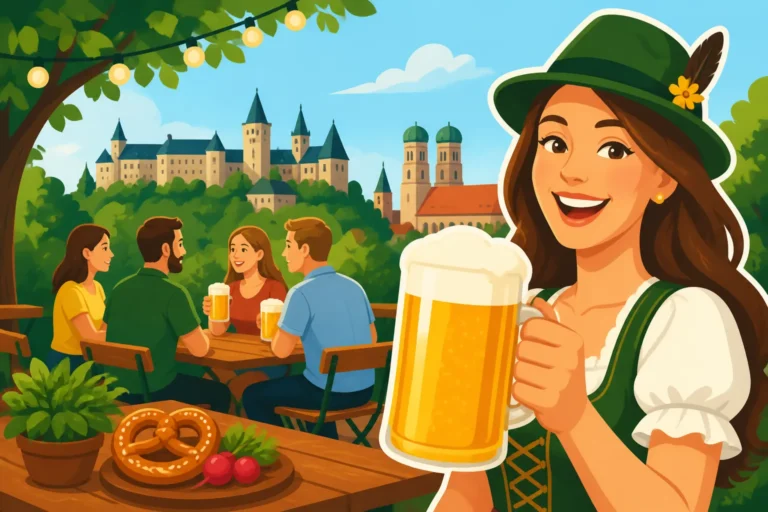
If you find yourself in a sunny Bavarian beer garden, the Helles is likely what will be in your mug. "Helles" literally means "bright" or "light." It was created in the late 19th century as Munich’s answer to the rising popularity of the Pilsner. Unlike its bitter cousin, the Helles is malt-forward. It is incredibly smooth, with a subtle sweetness and a very low hop bitterness. It is designed for session drinking—which is why it is usually served in a one-liter Maß (mass). If you're heading to the Bavarian capital, you should definitely read Munich for First-Time Visitors: What to See to find the best spots to grab one.
The German Pilsner
This is the most popular style nationwide, especially as you move toward the north. A German Pils is pale, golden, and characterized by a sharp, flowery hop bitterness. It has a much drier finish than a Helles. In cities like Hamburg or Berlin, the Pilsner is the king of the "Feierabendbier" (the beer you have after work). Brands like Jever or Flensburger offer that classic "herbe" (bitter/sharp) profile that northern Germans love. When navigating between these northern cities, Omio is again your best friend for finding quick connections between the big brewing hubs.
Dunkel and Schwarzbier
For those who prefer something darker, the Dunkel (dark lager) and Schwarzbier (black beer) are essential tries. Despite their dark colors, they are surprisingly light-bodied. A Dunkel, particularly the Munich variety, tastes of toasted bread and caramel. Schwarzbier goes a step further, with notes of chocolate and coffee, but without the heavy, creamy mouthfeel of a Guinness. It’s a crisp lager that just happens to look like midnight. If you want to find the most authentic cellars serving these, I suggest looking for specialized tours on GetYourGuide, as many historic breweries have hidden underground vaults that are only accessible through guided visits.
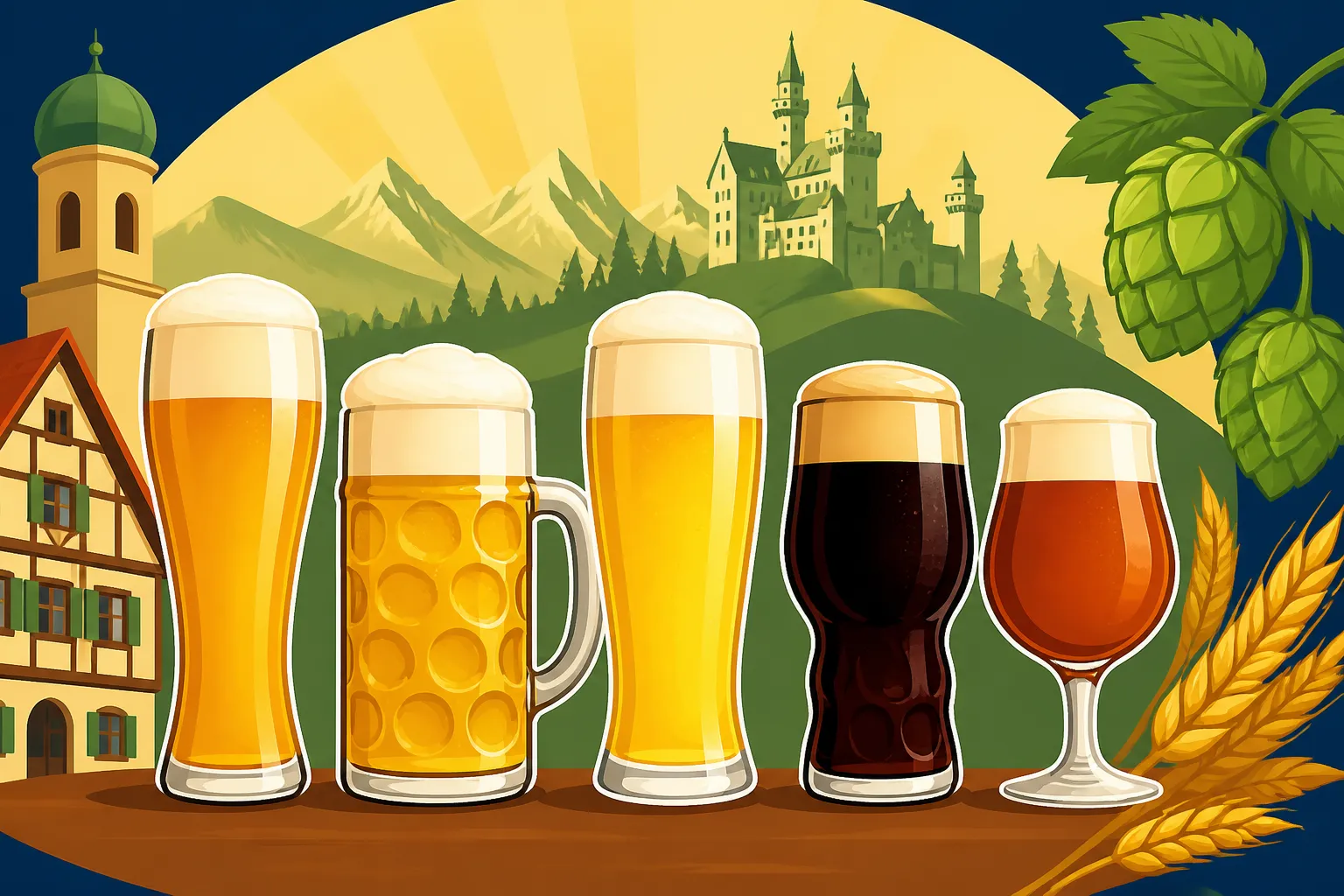
| Beer Style | Color | Flavor Profile | Region |
|---|---|---|---|
| Helles | Pale Gold | Malty, Sweet, Smooth | Bavaria (South) |
| Pilsner | Light Gold | Hoppy, Bitter, Dry | Nationwide (Strong in North) |
| Dunkel | Amber/Brown | Toasted Bread, Caramel | Bavaria |
| Schwarzbier | Black | Coffee, Chocolate, Crisp | Thuringia / Saxony |
| Weizen | Cloudy Gold | Banana, Clove, Creamy | Bavaria |
Top-Fermented Specialties: From Wheat to Regional Rivals
Top-fermentation happens at warmer temperatures, and the yeast rises to the top of the tank. This process creates esters, which give the beer fruity or spicy aromas. This is where German beer gets really interesting and, for some expats, a bit of an acquired taste.
Weissbier (Hefeweizen)
The icon of Southern Germany, Weissbier is brewed with at least 50% malted wheat. It is unfiltered, giving it a cloudy appearance, and the specific yeast strains produce unmistakable notes of banana and clove. Never, ever drink this from the bottle; it must be poured into a tall, curvy vase-like glass to allow the thick, creamy head to form. There is a whole ritual to pouring it where you leave the last bit of yeast in the bottle, swirl it, and pour it on top. If you are planning a trip specifically to taste these, Oktoberfest in Munich: A First-Timer's Guide is a great resource, as the "Big Six" breweries all showcase their best wheat beers during the festival.
Kölsch and Altbier: The Great Rivalry
One of the funniest things you will encounter as an expat is the "beer war" between Cologne (Köln) and Düsseldorf.
- Kölsch: This is a light, highly drinkable beer from Cologne. It is unique because it is top-fermented like an ale but then "lagered" (aged cold) like a lager. It is served in small 0.2L glasses called Stangen. The servers (Köbes) will keep bringing them until you put a coaster on top of your glass.
- Altbier: Just a short train ride away in Düsseldorf, they drink Altbier. It is dark, copper-colored, and much more bitter and nutty than Kölsch.
Don't ever try to order a Kölsch in Düsseldorf or an Altbier in Cologne unless you want a very stern look from the waiter! To see this rivalry in action, I recommend staying a night in each city. You can find excellent centrally located hotels on Booking.com that put you right in the heart of the "Altstadt" (Old Town) in both locations. For more on how to handle yourself in these traditional spots, check out German Dining Etiquette for Visitors.
Strong, Seasonal, and "Weird" Brews
Germany also has a side that moves away from the "daily drinkers" into the realm of the intense and the highly specific. These are the beers that tell a story of monks, seasons, and ancient traditions.
Bock and Doppelbock
If you see a beer with a goat (Bock) on the label, be careful—it’s strong. Originally brewed by monks to sustain them during Lenten fasts ("liquid bread"), Doppelbocks like Salvator are heavy, malty, and can have an alcohol content of 7% to 10% or more. They are perfect for the cold German winters. If you're visiting during the colder months, you'll likely find these at local markets; read Germany's Best Christmas Markets: Where to Go to find out which regions serve the best seasonal "Starkbier."
Rauchbier (Smoked Beer)
This is the ultimate "love it or hate it" beer. Hailing from the UNESCO city of Bamberg, Rauchbier is made using malt that has been dried over open beechwood fires. The result? A beer that tastes exactly like liquid bacon or smoked ham. It is a shock to the system for the first three sips, but by the end of the glass, most people are hooked. Using GetYourGuide to book a historic walking tour in Bamberg is the best way to find the Schlenkerla brewery, the ancestral home of this style.
Berliner Weisse
In the capital, you might see people drinking a bright green or red beer through a straw. This is Berliner Weisse, a sour, tart wheat beer. Because it is quite acidic, it is traditionally served "mit Schuss"—with a shot of woodruff (green) or raspberry (red) syrup. It’s the ultimate refreshing summer drink. If you're spending time in the city, Berlin for First-Time Visitors: Neighborhoods and Highlights will help you find the trendy beer gardens in Kreuzberg where this style is making a huge craft comeback.
Practical Tips for Your Beer Pilgrimage
Living here for years has taught me that the beer is only half the experience; the culture around it is what makes it stick. First, let’s talk about the Pfand (deposit) system. If you buy a beer at a kiosk or a festival, you will often pay a "Pfand" (usually 1 or 2 Euros) for the glass or bottle. You get this back when you return the container. Don't just leave your bottle on the table!
Secondly, the way you toast matters. You must look the other person in the eye when you say "Prost!" Failure to do so is famously said to bring seven years of bad luck (of a very specific variety). Also, if you are in a crowded beer garden, it is perfectly normal to ask "Ist hier noch frei?" (Is this seat free?) and sit down with strangers. It’s the best way to make local friends.
For those planning a full-scale brewery tour across the country, I always suggest using Booking.com to find "Gasthöfe"—traditional guesthouses that often have their own small brewery attached. It’s a much more intimate experience than staying in a big chain hotel. To navigate the complexities of the German rail system while hopping between these rural breweries, keep Omio bookmarked on your phone to catch the regional train deals.
Finally, if you’re worried about the language barrier at the bar, don't be. Most waiters in beer hubs speak enough English to get you what you need, but a little German goes a long way. Check out Survival German for Travelers: Key Phrases to Learn First to master the basics of ordering. And if you find yourself falling in love with the culture and thinking about a longer stay, you might want to look into How to Find English-Speaking Doctors: Resources and Tips for Expats, because after all that beer testing, you might eventually need a check-up!
Disclaimer
The information provided in this guide is for informational and cultural purposes only. Alcohol consumption should be handled responsibly. Please be aware of local laws regarding public intoxication and legal drinking ages in Germany. This guide does not constitute medical or legal advice.