How to Visit a Riesling Winery in Germany
One of the most frustrating things about visiting German wine regions is the "closed door" feeling that greets unprepared travelers. Unlike the sprawling, always-open tasting rooms of Napa Valley, many of Germany's finest Riesling producers are small, family-run estates where the winemaker might also be the person driving the tractor. This guide solves the logistical puzzle of securing appointments, navigating the steep vineyard terrain, and understanding the cultural etiquette required to taste world-class Riesling right where it is grown.
Disclosure: This post may contain affiliate links. We may earn a commission at no extra cost to you if you make a purchase through these links. Read full disclosure.
Choosing Your Region: The Mosel vs. The Rheingau
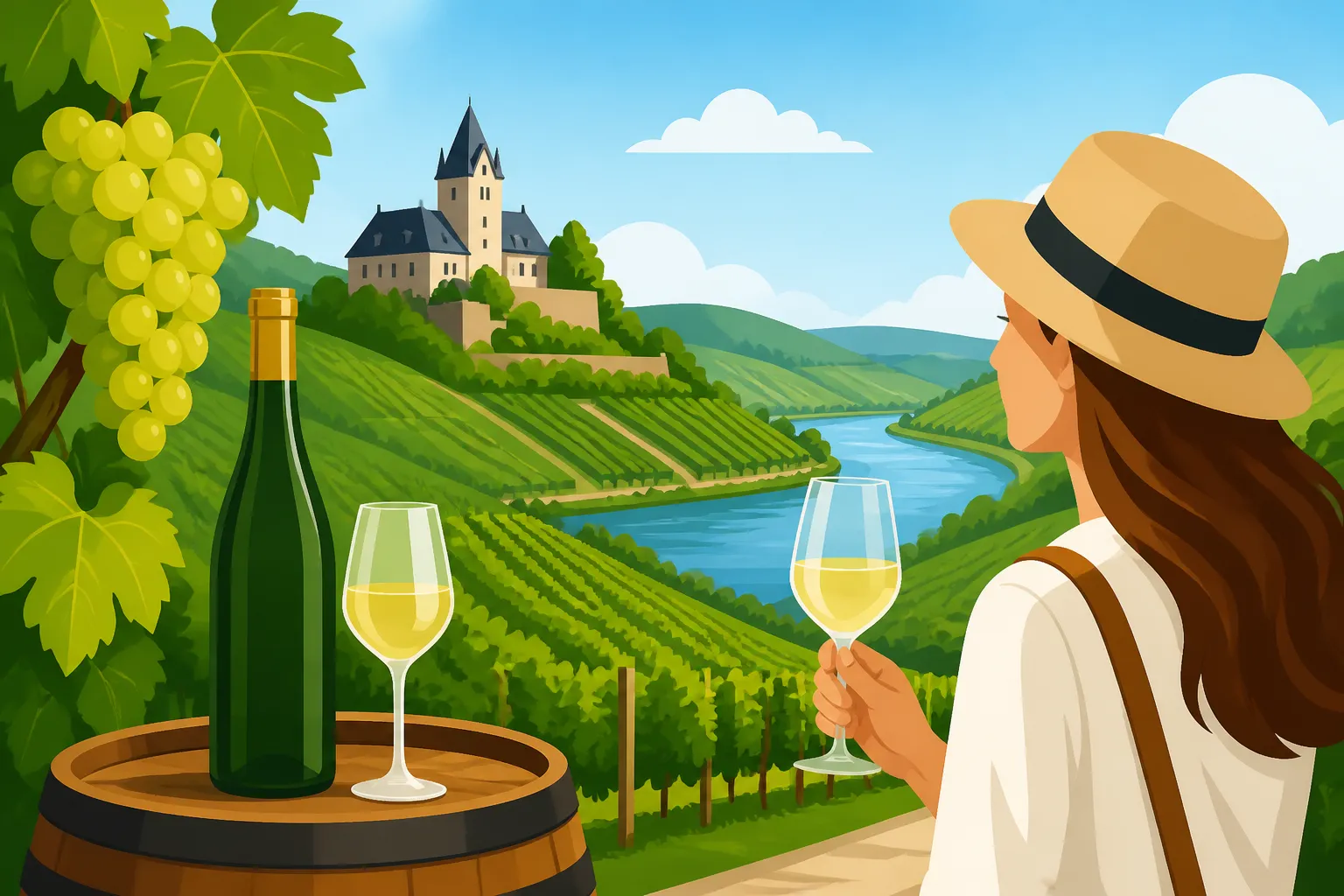
When you decide to go on a Riesling pilgrimage, your first hurdle is deciding which river valley to follow. Germany has 13 designated wine regions, but for the true Riesling enthusiast, the battle usually comes down to the Mosel and the Rheingau. I remember my first trip to the Mosel; I was completely overwhelmed by how vertical the vineyards were. We are talking about slopes so steep that workers have to use monorail carts just to harvest the grapes. This geography isn't just for show; it’s what gives the wine its distinct mineral character.
The Mosel is famous for its light, high-acid, and incredibly floral Rieslings. If you enjoy a wine that tastes like "slate and sunshine," this is your spot. You will likely find yourself in towns like Bernkastel-Kues or Traben-Trarbach. I highly recommend spending time in the "Middle Mosel," where the river curves intensely. You can find more specific details on this in my guide on How to Visit the Moselle Wine Region. The culture here is a bit more rustic and laid-back, reflecting the winding nature of the river itself.
On the other hand, the Rheingau is the land of nobility and tradition. Located just west of Frankfurt, this region produces Rieslings that are sturdier, often drier (Trocken), and more "aristocratic" in feel. This is the home of Schloss Johannisberg, the estate credited with "discovering" Spätlese (late harvest) wine. The Rheingau is much more accessible if you are staying in a major hub, but it feels more formal. To get a better sense of how these areas fit into the larger picture, you might want to check out German Wine Regions: Riesling and Beyond. Choosing between them depends on whether you want the dramatic, fairy-tale scenery of the Mosel or the refined, historic elegance of the Rheingau.
Practicalities: Logistics, Transport, and Where to Stay
Getting to these regions requires a bit of planning because the best wineries are rarely located near major airports. When I’m planning a trip for visiting friends, I always start by looking at the rail connections. The German train system is excellent for reaching wine towns, though the "last mile" to a specific vineyard can be tricky. I typically use Omio to compare the regional train schedules against local bus routes, especially when traveling between the smaller villages in the Mosel. You can often find great deals on regional tickets that allow for unlimited travel within a specific state for a day. For more on navigating the tracks, see High-Speed Trains in Germany (ICE): Deutsche Bahn Routes and Savings.
Once you arrive, you need a home base. I strongly suggest staying directly in a wine-growing village rather than a nearby city like Koblenz or Mainz. There is nothing quite like waking up to the mist over the vineyards. I usually search Booking.com for a "Weingut" (winery) that also offers "Gästezimmer" (guest rooms). Staying at the winery itself often grants you an "in" for a private tasting that a random walk-in wouldn't get. It also solves the "who is the designated driver" problem, which is a serious concern on the narrow, winding roads of the Rhine valley. You can find more tips on selecting the right place to stay in our overview of Accommodation in Germany: Hotels, Pensionen, and Hostels.
For those who find the idea of self-organizing a bit daunting, there are organized options. I have seen many people have great success using GetYourGuide to book day tours out of Frankfurt or Cologne. These often include a boat cruise on the Rhine or Mosel, which is a classic experience. It allows you to see the castles and vineyards from the water without worrying about the logistics of driving. Just be sure to pick a tour that specifically mentions "small group" or "estate visit" to ensure you are getting an authentic look at the Riesling production rather than a generic tourist trap.
The Tasting Experience: Etiquette and Expectations
The biggest culture shock for foreigners visiting German wineries is the concept of the "Termin" (appointment). In Germany, showing up unannounced at a high-end estate is often seen as a bit rude, or at the very least, you might find the gates locked because everyone is out in the vines. I always tell people to email or call at least a week in advance. Even a simple "We would love to taste your Rieslings on Tuesday at 2:00 PM" goes a long way. This validates your interest and ensures someone is actually there to greet you.
When you sit down for a tasting, it is usually a seated, guided experience. You aren't just standing at a bar. The pourer—who might be the owner—will walk you through the different levels of Riesling. This is where you need to understand the Prädikat system. You will start with the "Kabinett" (light and crisp), move to "Spätlese" (riper and more intense), and perhaps "Auslese" (sweeter and more concentrated). Don't be afraid to ask questions about the soil or the vintage. Germans take great pride in the technical aspects of their winemaking. While you are in town, you'll likely want to grab a meal, so it helps to understand German Meal Times and Restaurant Basics for Visitors to avoid showing up when the kitchen is closed.
Buying and shipping is another area where people get tripped up. Most wineries are thrilled to sell you a few bottles, but shipping to the US or Asia can be prohibitively expensive or legally complex. If you fall in love with a particular wine, ask if they have a distributor in your home country. Many of the VDP (Verband Deutscher Prädikatsweingüter) estates—identifiable by the eagle logo on the bottle neck—have international reach. Also, keep in mind that Tipping in Germany: When, Where, and How Much applies differently in a tasting room; if there is a tasting fee, you don't necessarily need to tip, but if the tasting is free, it is customary to buy at least a couple of bottles to show your appreciation.
| Region | Primary Flavor Notes | Terroir/Soil | Best For |
|---|---|---|---|
| Mosel | Green apple, floral, slate, low alcohol | Devonian Slate (Blue/Grey/Red) | Fans of elegant, high-acid, and slightly sweet styles. |
| Rheingau | Ripe peach, full-bodied, structured | Quartz, Loess, and Clay | Those who prefer dry (Trocken) and historic, powerful wines. |
| Pfalz | Exotic fruit, spicy, citrusy | Sandstone, Limestone, Basalt | Travelers looking for a warmer climate and sunnier wine vibes. |
| Nahe | A mix of Mosel acidity and Rheingau body | Volcanic rock and Porphyry | Explorers who want to find the "middle ground" of Riesling. |
Top Wineries to Put on Your Shortlist
If you are looking for specific names to get your planning started, I have a few personal favorites that never disappoint. In the Mosel, Weingut Dr. Loosen in Bernkastel is a titan. They are very used to international visitors and offer a fantastic range of wines. Another gem is Weingut Willi Schaefer in Graach; it is much smaller and more intimate, producing some of the most sought-after Kabinett Rieslings in the world. Visiting these places often takes you through some of Germany's Most Beautiful Small Towns to Visit, so give yourself time to wander the cobblestone streets between tastings.
In the Rheingau, you cannot skip Schloss Johannisberg. It is a literal palace on a hill with a view that will take your breath away. They have a wonderful wine shop and a restaurant where you can pair their Rieslings with local dishes. For a more modern but equally high-quality experience, check out Weingut Robert Weil in Kiedrich. Their turquoise-labeled bottles are iconic, and the tasting room is sleek and professional. If you find yourself getting hungry after all that acidity, look for a "Straußwirtschaft"—a seasonal wine tavern run by the growers themselves. These are the best places to Find Authentic Restaurants in Germany (Not Tourist Traps) and enjoy a plate of Spundekäs (cheese dip) with your glass.
Finally, remember that the "Riesling experience" is as much about the landscape as it is about the liquid in the glass. Don't spend your whole day in tasting rooms. Take the time to hike the "Rheinsteig" or the "Moselsteig" trails. Walking through the vines gives you a physical understanding of why these wines taste the way they do. You'll see the heat reflecting off the stones and the way the river acts as a mirror for the sun. It is a sensory experience that no bottle can fully replicate at home, no matter how good the vintage.
Disclaimer
This guide is for informational purposes only. Local regulations regarding winery visits, alcohol consumption, and transportation can change. Always check with individual estates for their current opening hours and booking requirements. Please drink responsibly and utilize Germany's excellent public transportation or local taxi services if you plan on participating in multiple tastings.