What Happens in Germany on Unity Day (October 3)?
You wake up on a crisp October morning, expecting the usual hum of German efficiency, only to find the streets eerily quiet and your local REWE doors locked tight. If you didn't check the calendar, you’ve just encountered one of Germany's most significant dates. This guide explains exactly what happens on October 3rd, why the country grinds to a halt, and how you can navigate the closures while joining the nationwide celebration.
Disclosure: This post may contain affiliate links. We may earn a commission at no extra cost to you if you make a purchase through these links. Read full disclosure.
The Deep Significance of Tag der Deutschen Einheit
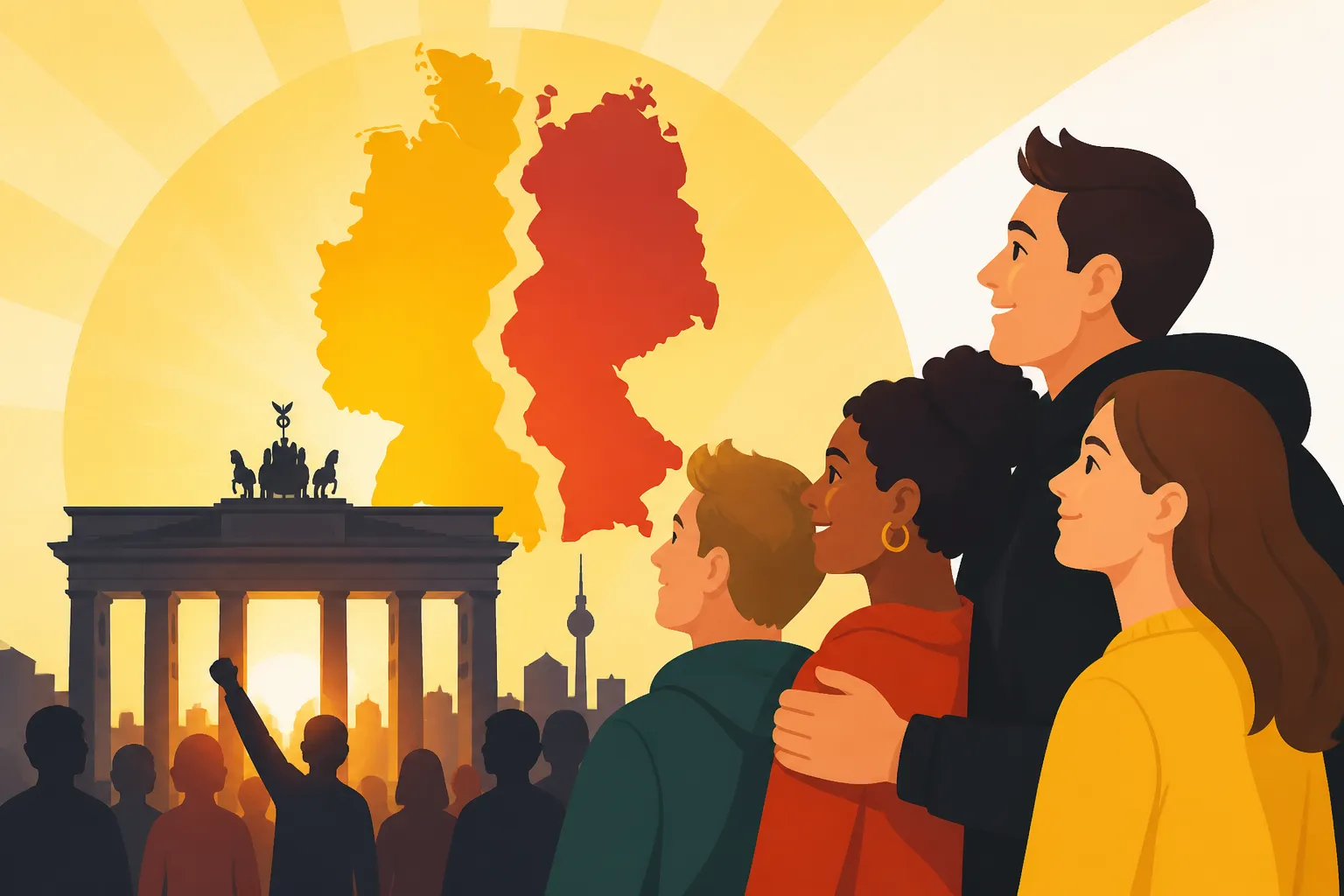
To understand why October 3rd is such a big deal, you have to look beyond the closed shop shutters and realize that, for many Germans, this day represents a miracle they never thought they’d see. Tag der Deutschen Einheit, or German Unity Day, commemorates the official reunification of West and East Germany in 1990. While the Berlin Wall "fell" on November 9, 1989, that date wasn't chosen as the national holiday because it coincided with darker anniversaries in German history. Instead, October 3rd marks the legal conclusion of the unification treaty.
As an expat living here, you’ll notice that German patriotism is often quite reserved compared to the flag-waving fervor of the Fourth of July in the States or Bastille Day in France. Tag der Deutschen Einheit is more a day of reflection and quiet pride than one of boisterous nationalism. It is the only national holiday in Germany that is established by federal law; all other holidays are determined at the state level. This gives it a unique standing in the German Public Holidays: How They Affect Life and Work schedule.
The atmosphere is generally one of "Feierabend" on a national scale. Families take the day to go for long walks in the forest (Waldspaziergang), visit historical sites, or simply enjoy a slow breakfast. However, underneath the calm, there is a massive logistical operation happening in a different city every year. Understanding this historical context helps you appreciate why the local bakery might be closed, but the city center is buzzing with a festival vibe.
The Survival Guide to Closures and Logistics
If there is one thing I’ve learned from years of living in Germany, it’s that "Public Holiday" means exactly that—the public world of commerce shuts down. If you are a newcomer, the first October 3rd can be a shock. In Germany, the Ladenschlussgesetz (shop closing law) is strictly enforced on Unity Day. This means all high-street shops, department stores, and most importantly, grocery stores are closed for the full 24 hours.
Do not wait until the morning of October 3rd to buy milk or bread. The day before, October 2nd, usually sees a frantic rush at supermarkets as people stock up. It’s wise to plan your meals in advance and check Grocery Prices in Germany: How Much to Budget for Food to ensure your pantry is ready for the "quiet day." If you absolutely find yourself with an empty fridge, your only options are small shops in gas stations or "traveler" supermarkets located inside major train stations or airports, which are legally allowed to stay open.
Public transport also shifts to a "Sunday Schedule." This means buses and trains run less frequently. If you are planning to travel between cities to see the festivities, I highly recommend using Omio to check the adjusted timetables and book your seats in advance. High-speed ICE trains can get incredibly crowded on this day as people take advantage of the long weekend. For more on navigating the rails, have a look at our Deutsche Bahn Guide: Using Trains for City and Long-Distance Travel.
| Feature | Status on October 3rd | Notes |
|---|---|---|
| Supermarkets | Closed | Except for those in major train stations/airports. |
| Retail Shops | Closed | High streets will be quiet; window shopping only. |
| Restaurants/Cafes | Open | Most stay open, but reservations are highly recommended. |
| Museums | Open | Often have special exhibitions or free entry for the day. |
| Public Transport | Reduced | Follows the "Sonntagsfahrplan" (Sunday schedule). |
| Pharmacies | Emergency Only | Only "Notdienst" pharmacies are open on a rotation. |
Where the Party Is: Festivals and Events
While your neighborhood might feel like a ghost town, the designated "Host City" for the year will be throwing the party of a lifetime. Germany has a tradition where the state currently presiding over the Bundesrat (the federal council) hosts the official celebrations, known as the Bürgerfest. This rotating system ensures that every part of the country, from the industrial hubs of the Ruhr to the coastal towns of the North, gets to showcase its culture.
If you are lucky enough to be in the host city, you’ll find the Ländermeile (State Mile). This is a massive street festival where each of Germany’s 16 federal states sets up a pavilion to showcase its local food, music, and traditions. It is a fantastic way to "travel" across Germany in a single afternoon. If you’re looking for a place to stay during these celebrations, Booking.com is your best bet for finding hotels near the festival grounds, though you should book months in advance.
Berlin, while not always the official host, always puts on a massive show at the Brandenburg Gate. This is the symbolic heart of reunification. The "Einheitsbuden" (Unity Booths) and open-air concerts draw hundreds of thousands of people. It’s a powerful experience to stand at the gate that once stood in a "no-man's land" between East and West. For those visiting the capital for the first time, checking Berlin for First-Time Visitors: Neighborhoods and Highlights will help you find the best spots to retreat to once the crowds get too thick.
Beyond the big festivals, many smaller towns have their own local traditions. You might find a communal "Unity Hike" or a local fire department hosting a grill fest. Museums and historical sites often have "Open Monument" days where you can see parts of Castles, History, and Architecture in Germany that are usually closed to the public. If you want to dive deeper into the history without the stress of planning, you can find excellent guided historical tours through GetYourGuide that focus specifically on the Cold War and the path to reunification.
Practical Tips for Expats and Travelers
Navigating Unity Day as an expat requires a blend of German-style planning and a bit of festive spirit. One of the most important things to remember is the Cash vs Card in Germany: What Visitors Should Know rule. While bigger restaurants in the city center will take cards, the smaller stalls at a Bürgerfest or a local neighborhood festival almost certainly will not. You don’t want to be the person standing in front of a delicious Bratwurst stall only to realize the nearest ATM is ten blocks away and might be out of cash.
Another tip is to keep an eye on the "Brückentag" (Bridge Day). If October 3rd falls on a Tuesday or a Thursday, many Germans will take the intervening Monday or Friday off to create a four-day weekend. This means that while October 3rd itself is the holiday, the entire weekend becomes a major travel period. Hotels will be pricier, and trains will be packed. If you are planning a getaway, check Unity Day and German Public Holidays to see how the dates align for the current year.
If you find the crowds of the big festivals overwhelming, Unity Day is actually one of the best times to visit more remote historical sites. Many people flock to the cities, leaving the countryside relatively peaceful. It’s a great day to rent a car and drive along the former "Inner German Border," where many small museums and memorial sites (Gedenkstätten) offer a poignant look at what life was like when the country was divided.
Finally, embrace the silence. There is something quite beautiful about a German city when the commerce stops. Without the roar of delivery trucks and the bustle of shoppers, you can really appreciate the architecture and the atmosphere of your home. Take a book to a park, find a cozy cafe that is open (and there will be many!), and enjoy the fact that for one day, nobody is expected to be productive. It’s the ultimate lesson in German culture: sometimes, the most important thing to do is to stop and remember how far you've come.
Disclaimer
The information provided in this guide is for informational purposes only. While we strive to keep the details regarding opening hours, transport schedules, and event locations up to date, these can change based on local government decisions or specific regional regulations. Always check with local authorities or official transport apps like Omio or DB Navigator before making definitive travel plans for public holidays in Germany. This guide does not constitute legal or professional travel advice.