How to Reach Germany’s Fairy-Tale Towns by Train
Many travelers arrive in Frankfurt or Munich with visions of Brothers Grimm landscapes, only to be overwhelmed by the complexity of the secondary rail lines that actually lead to these hidden gems. Navigating the transition from high-speed tracks to regional spurs can be daunting and prone to delays. This guide breaks down exactly how to reach Germany's most enchanting fairy-tale towns using the train system, ensuring you spend less time on the platform and more time on the cobblestones.
Disclosure: This post may contain affiliate links. We may earn a commission at no extra cost to you if you make a purchase through these links. Read full disclosure.
The Reality of the German Rail System for Small Towns
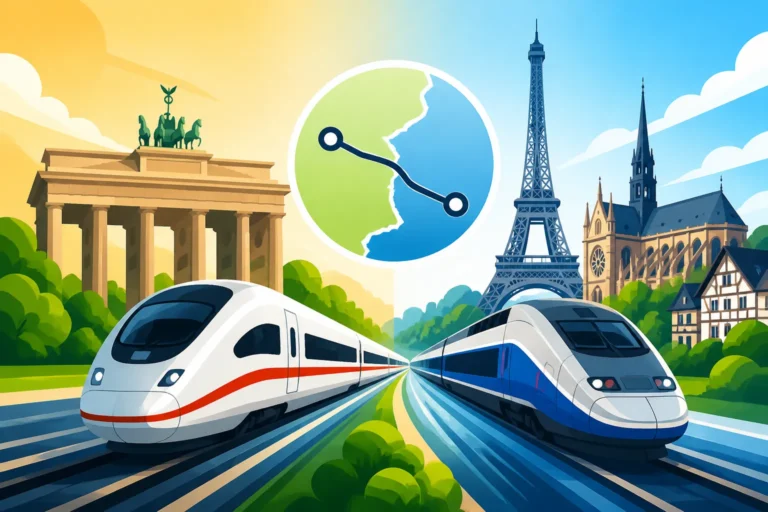
When you first look at a map of Germany, the bright red lines of the ICE (InterCity Express) look like the promised land of travel. They are fast, sleek, and comfortable. However, the true "fairy-tale" experience—the half-timbered houses of the Harz mountains or the vine-covered hills of the Moselle—is almost never located on an ICE line. To get to the magic, you have to embrace the Regional-Express (RE) and Regionalbahn (RB). These are the workhorses of the German countryside. They stop more often, they look a bit more "vintage," and they require a bit more patience.
The first thing you need to know is that while the high-speed trains are great for getting from Berlin to Munich, they won't help you much when you are trying to find Germany's Most Beautiful Small Towns to Visit. You will likely be transferring at least once, often at a small, wind-swept station where the signage is exclusively in German. This is where tools like Omio become your best friend. Instead of wrestling with the sometimes-clunky local machines, using a platform like this allows you to compare the regional rail options with local bus connections that often fill the gaps where the tracks end.
It is also vital to understand the ticket structure. If you are planning to hit several of these towns in one month, you should absolutely look into What Is the Deutschland-Ticket and Is It Worth It?. This 49-euro monthly pass covers all regional transport. If you are only going for a day, the Länder-Tickets (State Tickets) offer unlimited regional travel within a specific state like Bavaria or Saxony for a flat fee. Understanding these nuances can save you a fortune, as buying individual tickets for every leg of a journey to a remote village is the fastest way to drain your travel budget.
Rothenburg ob der Tauber: The Quintessential Fairy-Tale Stop
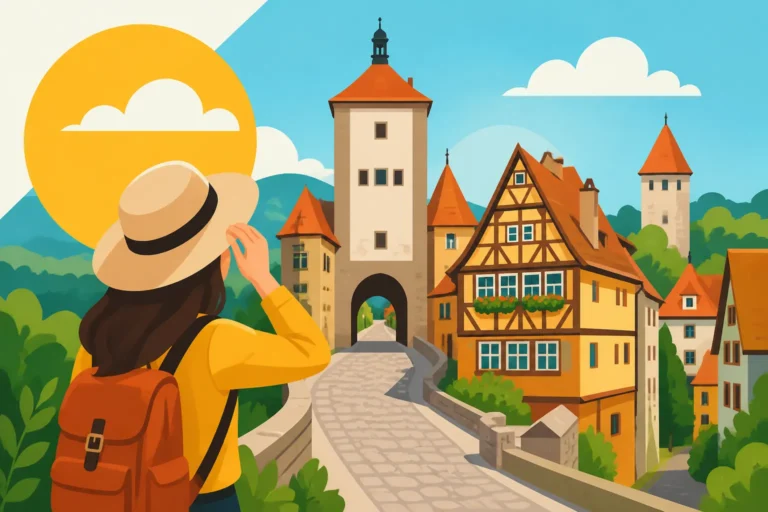
Rothenburg is the town that everyone pictures when they think of romantic Germany. It is perfectly preserved, surrounded by a massive stone wall, and looks like it was lifted directly out of a 19th-century storybook. Because it is so popular, people assume it is easy to reach. The reality? It is tucked away on a tiny spur line that requires a very specific transfer.
To get there from a major hub like Nuremberg or Munich, you must travel to a station called Steinach (bei Rothenburg). This is a crucial distinction—don't confuse it with other Steinachs in Germany. At Steinach, you will transfer to a small, two-car shuttle train that runs back and forth to Rothenburg all day. The connection time is often tight, sometimes only five or six minutes. If your incoming regional train is late, don't panic. The shuttle train often waits for a few minutes because its sole purpose is to ferry tourists and locals to the medieval center. Once you arrive at the Rothenburg station, it is a straightforward 10-minute walk to the Rödertor, one of the main gates into the old town.
Because Rothenburg is so visually stunning, it can get incredibly crowded during the day. I always recommend staying overnight to experience the town after the tour buses leave. You can use Booking.com to find small, family-run guesthouses inside the city walls, which offer a far more authentic experience than the modern hotels outside the gate. Once the sun sets and the day-trippers are gone, the Night Watchman tour is a must. You can often find skip-the-line bookings or combined walking tours on GetYourGuide that help you navigate the history of the wall and the torture museum without getting stuck in the mid-day throngs. If you are coming from the south, make sure to read about Fairy-Tale Germany: Villages Along the Romantic Road to see how Rothenburg fits into the larger itinerary of the region.
Cochem and the Moselle Valley: Castles and Vineyards
If your version of a fairy tale includes a castle perched on a hill overlooking a winding river, then Cochem is your destination. Located in the Moselle Valley, it is one of the most picturesque stops in Western Germany. Reaching Cochem by train is actually one of the more pleasant journeys you can take, as the line follows the curves of the river, providing stunning views of steep vineyards and crumbling ruins.
Most travelers will reach Cochem via a connection in Koblenz. The regional trains from Koblenz to Trier stop in Cochem frequently. The journey takes about 40 minutes, and I highly recommend sitting on the left side of the train when heading toward Cochem to get the best views of the water. This is a region where How to Visit the Moselle Wine Region knowledge comes in handy, as the train stops in several other tiny wine-producing villages like Ediger-Eller or Bullay, which are worth a quick "hop-off, hop-on" if you have a flexible ticket.
The walk from the Cochem station to the town center is about five minutes along the river. The big draw here is the Reichsburg Cochem. It looks ancient, but it is actually a 19th-century reconstruction of a medieval castle, which in many ways makes it even more "fairy-tale" in its perfection. To save yourself the steep uphill hike, there is a shuttle bus, but many prefer the walk through the winding, narrow streets. For the best experience, check GetYourGuide for boat tours that depart from the Cochem docks; seeing the town from the river provides a perspective that you simply cannot get from the train tracks or the road.
Quedlinburg: The Hidden Timber-Framed Treasure
While Rothenburg gets the fame, Quedlinburg in the Harz Mountains of Saxony-Anhalt is, in my opinion, the more authentic experience. It boasts over 1,300 half-timbered houses and is a UNESCO World Heritage site. Because it was part of East Germany, it didn't see the same level of modernization or tourist commercialization for decades, leaving it feeling like a true time capsule.
Reaching Quedlinburg requires a bit more effort. From Berlin, you typically take a regional train to Magdeburg and then transfer to the "Harz-Elbe-Express" (HEX). The rolling stock on these lines is often newer and very comfortable, with large windows perfect for watching the flat plains of the north transition into the rugged, forested hills of the Harz. This is a journey where you will definitely want to have the How to Use the DB Navigator App in Germany ready to go, as platform changes in Magdeburg can be sudden.
Once you are in Quedlinburg, you are at the gateway to the Harz narrow-gauge railway. This is a dream for any rail enthusiast or anyone who wants to feel like they are heading to Hogwarts. You can take steam-powered locomotives up to the Brocken, the highest peak in Northern Germany. For accommodation, Booking.com lists several "Fachwerk" (timber-framed) hotels where the floors are slightly slanted and the beams are centuries old. It is an experience you won't find in the big city. While you are exploring the northern regions, don't forget to check Regional Trains and the Deutschland-Ticket Explained to ensure your transit passes cover these specific private rail operators that occasionally manage the local lines.
Essential Strategies for a Stress-Free Journey
The biggest hurdle to enjoying these towns is the stress of the "Umstieg" or transfer. German trains are famously punctual in theory, but the reality on the ground has changed over the last decade. Delays are common. When you are booking your route on Omio, I suggest looking for connections that give you at least 10 to 15 minutes of buffer time. A five-minute transfer sounds efficient until you realize you have to lug a suitcase down a flight of stairs and up another one because the elevator is out of service.
| Town | Nearest Hub | Transfer Point | Total Time (Approx) |
|---|---|---|---|
| Rothenburg ob der Tauber | Nuremberg | Steinach | 1 hour 15 mins |
| Cochem | Koblenz | Direct Regional | 40 mins |
| Quedlinburg | Berlin | Magdeburg | 3 hours |
| Bamberg | Nuremberg | Direct Regional | 45 mins |
| Wernigerode | Hanover | Goslar | 1 hour 30 mins |
Another tip from a veteran expat: always have some physical currency on you. While the train stations take cards, many of the small cafes or bakeries in these fairy-tale towns are still very much "nur Barzahlung" (cash only). You don't want to reach a remote village only to find you can't buy a coffee while waiting for your return train. For more on this, see Cash vs Card in Germany: What Visitors Should Know.
Lastly, keep an eye on your luggage. While Germany is generally safe, the regional trains don't always have dedicated luggage racks like the ICEs do. You might end up keeping your bags in the footwell or in the multipurpose area (where bikes and strollers go). If you’re planning a complex route with multiple stops, consider How to Plan a Germany Itinerary by Train to map out your lockers and storage options at the larger stations.
Navigating the "Last Mile" and Local Culture
Once the train pulls into the station, your journey isn't quite over. In many of these towns, the station was built outside the historic walls to preserve the medieval architecture. This means you have a "last mile" to cover. Most of these walks are scenic, but if you have heavy bags, look for local buses. The beauty of the Regional Trains and the Deutschland-Ticket Explained is that it usually covers these local city buses as well, so you won't need to fumble for change when you step off the train.
When you finally arrive at your destination, the temptation is to head straight to the main square. However, the true magic of places like Bamberg or Monschau is found in the side alleys. In Bamberg, for instance, you can walk from the station to the "Altes Rathaus" (Old Town Hall) which sits in the middle of a bridge. It’s a direct 15-minute walk. While there, you should definitely try the local "Rauchbier" (smoked beer), but be warned: it's an acquired taste. Finding these spots is easier if you check How to Find Authentic Restaurants in Germany (Not Tourist Traps) before you head out.
For those who want a more structured experience, GetYourGuide offers excellent local walking tours that often meet right at the train station or the main town gate. These guides are usually locals who can tell you which house was owned by the executioner and which one was a secret brewery during the 30 Years' War. It adds a layer of depth that you just can't get from a guidebook alone. And if you're coming from a major city for just a day, like a trip to see the castles, you might want to look at How to Visit Neuschwanstein Castle From Munich for a comparison on how different regions handle their tourist rail traffic.
Managing Your Expectations and Enjoying the Ride
Living in Germany as an expat teaches you one thing: the journey is part of the destination. If you approach train travel as a chore, you’ll be frustrated by the occasional "Schienenersatzverkehr" (bus replacement service). But if you look out the window at the rolling hills of Thuringia or the rocky outcrops of Saxon Switzerland, the travel time becomes part of the fairy tale itself.
Remember to pack a "Reiseproviant" (travel snacks). While major stations have plenty of bakeries, the smaller spurs often have nothing but a vending machine that may or may not accept your coins. A good piece of German bread and some cheese from a local "Feinkost" will make a 20-minute delay much more bearable. Also, pay attention to the "Ruhezeit" (quiet hours) if you are traveling on a Sunday. The towns will be peaceful, but almost all shops will be closed. This makes it the perfect time for photography, but a terrible time for souvenir shopping.
By combining the ease of booking via Omio, the reliability of finding a place to sleep on Booking.com, and the local insight of tours from GetYourGuide, you can craft a rail journey that feels less like a commute and more like a step back in time. How to Buy Deutsche Bahn Tickets and Save Money is your final step in ensuring that this trip is as cost-effective as it is magical.
Disclaimer
The information provided in this guide is for informational purposes only. While every effort is made to ensure accuracy, German rail schedules, ticket prices, and regional regulations can change frequently. Always check the official Deutsche Bahn website or app for real-time updates before beginning your journey. This guide does not constitute legal or professional travel advice.