How to Plan a Germany Itinerary by Train
Ah, planning a train trip through Germany! Let me tell you, as someone who’s navigated this system more times than I care to count, it’s a brilliant way to see the country, but it can feel like trying to solve a Rubik's Cube blindfolded at first. Don't worry, you’re not alone in feeling overwhelmed by the myriad of ticket options, train types, and potential disruptions. This guide is going to cut through the jargon and give you the real-world wisdom you need to craft an unforgettable German train itinerary without losing your mind—or your luggage.
Disclosure: This post may contain affiliate links. We may earn a commission at no extra cost to you if you make a purchase through these links. Read full disclosure.
Why Choose Train Travel in Germany? The Good, The Bad, and The Realistic
Germany’s train network, primarily operated by Deutsche Bahn (DB), is famously extensive and, for the most part, efficient. It connects bustling metropolises, charming medieval towns, and stunning natural landscapes, making it an ideal choice for expats and tourists who want to experience the country without the hassle of driving or the carbon footprint of flying. But let’s be real, it’s not always a smooth ride.
The Perks: Convenience, Scenery, and Sustainability
First off, the sheer convenience is a game-changer. Imagine stepping off a plane at Frankfurt Airport, hopping directly onto an ICE (Intercity-Express) train, and being whisked away to your destination, often right into the city center. No rental car lines, no parking nightmares, just seamless travel. Most major German cities are directly connected to the high-speed network, and smaller towns are easily reachable via regional trains. This allows you to truly explore diverse regions, from the bustling streets of Berlin to the serene lakes of Bavaria.
Then there’s the scenery. Traveling by train means you get to see Germany unfold outside your window. Think rolling vineyards along the Rhine River, dense forests in the Black Forest, or picturesque villages nestled in valleys. It’s a completely different perspective than zipping past on the Autobahn. Plus, let’s not forget the environmental aspect. Choosing trains over flights for domestic travel significantly reduces your carbon footprint, which is a big win for many of us who are mindful of our impact. It also means you can often avoid the stressful experience of airports altogether, especially for shorter journeys within Europe. If you're pondering longer journeys, understanding how the European Health Insurance Card (EHIC): Using It in Germany and Abroad works is always a good idea for any cross-border trip.
The Pitfalls: Delays, Strikes, and Price Hikes
Now, for the dose of reality. While German trains are generally reliable, delays are a fact of life. You'll hear about them often, and you'll likely experience a few yourself. Engineering works (Bauarbeiten), technical issues, or even "people on the tracks" (Personen im Gleis) are common culprits. Deutsche Bahn reports that around two-thirds of long-distance trains were on time in 2023. This isn't terrible, but it's not the clockwork precision many expect. A 5-minute delay can easily turn into 30, and sometimes, especially with regional connections, this can snowball into missed connections. My advice? Always build in buffer time, especially if you have a tight schedule or an important appointment.
Strikes, while not a daily occurrence, do happen. Germany has a strong union culture, and sometimes, workers' demands lead to widespread train cancellations. These are usually announced in advance, but they can throw a wrench into your meticulously planned itinerary. Keeping an eye on the news and checking the DB website or app regularly closer to your travel date is crucial.
Finally, pricing. Booking tickets last-minute, especially for high-speed ICE trains, can be eye-wateringly expensive. It's a supply-and-demand game, and if you just show up at the station an hour before departure, you might pay double or triple what someone who booked weeks ago did. This is a common pain point for new arrivals, who quickly learn that spontaneity can be costly in Germany’s train system.
Essential Tools and Resources for Planning Your Train Journey
Navigating Germany's train network effectively means knowing your tools. Forget just showing up; planning is your best friend here.
Decoding Deutsche Bahn: Your Main Player
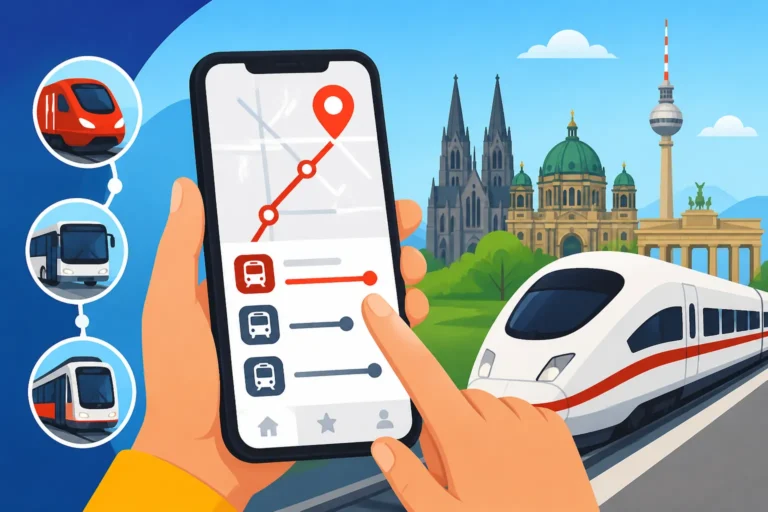
Deutsche Bahn (DB) is the national railway company and your primary resource for almost all train travel in Germany. Their website (bahn.de) and the "DB Navigator" app are indispensable. Seriously, download the app now if you haven't already. It's your real-time companion for everything: searching for connections, buying tickets, checking platform numbers, and tracking delays.
When you're looking at connections, you'll see different train types:
- ICE (Intercity-Express): These are Germany’s high-speed trains, sleek and comfortable, connecting major cities. They’re the fastest option but also the most expensive if not booked in advance.
- IC/EC (Intercity/Eurocity): These are long-distance trains, a bit slower than ICEs, often stopping at more stations, but still comfortable. Eurocity trains cross international borders.
- RE (Regional-Express) / RB (Regionalbahn): These are regional trains that connect smaller towns and cities within a region. They stop more frequently and are generally slower.
- S-Bahn (Stadtschnellbahn): These are suburban trains that serve metropolitan areas and their surrounding regions, often integrated into city public transport systems.
The DB Navigator app is also fantastic for tracking potential delays or platform changes. It’s saved my skin more times than I can count, giving me a heads-up to sprint to a different platform or quickly find an alternative route when things go sideways.
Beyond DB: Regional Passes and Alternatives
While DB is king, it's worth knowing about regional passes and other options that can save you a bundle, especially if you're exploring a specific area.
- Deutschland-Ticket (49-Euro Ticket): This is a relatively new game-changer. For €49 a month, it gives you unlimited travel on all local and regional public transport across Germany. This includes RE, RB, and S-Bahn trains, as well as buses, trams, and U-Bahns (subways) within cities. It does not cover long-distance ICE/IC/EC trains. However, for exploring a region like Bavaria, the Black Forest, or the North Sea coast, it's an absolute steal. It's a subscription, but you can cancel it monthly. If you're planning on using local transport extensively, make sure to read more about What Is the Deutschland-Ticket and Is It Worth It?.
- Länder-Tickets: Before the Deutschland-Ticket, these were the go-to for regional travel. They offer unlimited travel for a day within a specific German state (e.g., Bayern-Ticket for Bavaria, Baden-Württemberg-Ticket for Baden-Württemberg) for a fixed price, usually around €25-€30 for one person, with discounts for groups. They are valid on regional trains and local transport. They can still be useful if you're only planning one or two specific regional day trips and don't want the monthly commitment of the Deutschland-Ticket, or if you plan to travel with many people (up to 5 can often travel on one ticket).
- FlixBus: For longer distances, especially if train tickets are prohibitively expensive or you're on a tight budget, FlixBus is a great alternative. It's Germany’s dominant long-distance bus operator, offering extensive routes and often much cheaper fares than trains, though journeys are slower. It's not as comfortable as an ICE, but it gets you there. You can easily find and book FlixBus tickets through platforms like Omio.
- Car-sharing/Ride-sharing: Websites like BlaBlaCar connect drivers with passengers for shared rides, which can be a cost-effective and sometimes more direct way to travel between cities, especially if you're open to a bit of spontaneity.
Booking Platforms and Apps
While the DB Navigator app is your best bet for booking DB tickets directly, other platforms offer convenience, especially if you're comparing different modes of transport or traveling internationally.
- Omio: This is a fantastic platform for comparing and booking train, bus, and flight tickets across Europe, including Germany. It aggregates options from multiple providers (like DB and FlixBus), allowing you to see all your choices in one place and pick the best one for your budget and schedule. I’ve used Omio many times to quickly compare travel times and prices when planning multi-leg journeys across different countries.
- GetYourGuide: While not for transport booking directly, GetYourGuide is invaluable for planning activities and excursions at your destination. Once you've figured out how to get to, say, Munich, you can use GetYourGuide to book walking tours, castle visits, or even a beer garden experience. It helps round out your itinerary beyond just the travel itself.
- Booking.com: After you’ve got your travel plans sorted, you'll need a place to crash! Booking.com is my go-to for finding accommodation, whether it’s a hotel, guesthouse, or apartment. It has a massive selection and often competitive prices, which is super helpful when you’re hopping between cities.
Here's a quick comparison of popular train ticket types:
| Ticket Type | Coverage | Ideal For | Pros | Cons |
|---|---|---|---|---|
| Sparpreis | Specific long-distance (ICE/IC/EC) connection | Booking well in advance, fixed travel dates | Very affordable, includes specific seat booking | Non-refundable, non-changeable, fixed train |
| Flexpreis | All long-distance trains on a chosen day | Flexible travel plans, last-minute decisions | Full flexibility, can use any train on route | Most expensive option, no reserved seat |
| Länder-Ticket | Regional trains within one state for a day | Day trips within a state, group travel | Cost-effective for groups, regional exploration | Only regional trains, time restrictions |
| Deutschland-Ticket | All regional transport nationwide for a month | Extensive regional travel, daily commuting | Unlimited regional travel, simple | Monthly subscription, no long-distance trains |
| Interrail/Eurail Pass | Extensive multi-country or Germany-wide travel | Grand European tours, long-term exploration | Excellent value for many trips, flexibility | Can be expensive for short trips, requires seat reservations on some trains |
Crafting Your Itinerary: Step-by-Step for a Smooth Ride
Okay, let's get down to actually building your train adventure. This isn't just about picking cities; it's about smart planning to maximize your experience and minimize stress.
Choosing Your Destinations: From Big Cities to Hidden Gems
Germany offers an incredible variety, so think about what kind of trip you want. Are you a city explorer, a nature lover, or a history buff?
- For City Hoppers: Berlin (history, art, nightlife), Munich (Bavarian culture, beer gardens, Alps access), Hamburg (port city, maritime history, nightlife), Frankfurt (financial hub, museums, Rhine Valley access), Cologne (cathedral, Roman history, carnival). These cities are typically well-connected by ICE trains. A classic Best Day Trips From Berlin or Best Day Trips From Munich article can give you ideas for extending your city stays.
- For Culture & History Enthusiasts: Dresden (Baroque architecture, art), Leipzig (Bach, classical music, dynamic arts scene), Nuremberg (medieval charm, WWII history), Heidelberg (romantic castle, university town), Rothenburg ob der Tauber (fairy-tale medieval town). Many of these require a mix of ICE and regional trains.
- For Nature & Scenic Routes: The Rhine Valley (castles, vineyards, river cruises between Mainz and Koblenz), Black Forest (hiking, cuckoo clocks, charming villages like Freiburg), Bavarian Alps (Zugspitze, Garmisch-Partenkirchen, stunning lakes), Saxon Switzerland National Park (rock formations, hiking). These destinations often involve scenic regional train lines.
Once you have a list, look at a map. Germany is bigger than it looks on paper. Try to group destinations that are geographically close to minimize travel time. For example, combining Munich with a trip to the Bavarian Alps makes perfect sense. Or linking Cologne and Düsseldorf if you want to explore the Rhine-Ruhr area. Don't try to cram too much into one trip – you'll spend more time on trains than actually enjoying your destinations. A good rule of thumb for a relaxing pace is 2-3 nights per major city.
Optimizing Your Routes and Travel Times
This is where the DB Navigator app and bahn.de truly shine.
- Input your origin and destination: Start with your main legs first (e.g., Berlin to Munich).
- Check travel times: ICE trains are usually your fastest bet. Note the duration and directness. Direct trains are always less stressful.
- Consider connections: If a direct train isn't available or is too expensive, the system will suggest connections. Pay close attention to the transfer times. A 5-minute transfer might seem doable, but if your first train is delayed, you'll be sprinting. I generally aim for at least 15-20 minutes for a comfortable transfer, especially in larger stations like Frankfurt Hauptbahnhof or Berlin Hauptbahnhof, which are sprawling.
- Flexibility is key: If your dates are flexible, play around with them. Traveling midweek or at off-peak hours (mid-morning or late afternoon, avoiding commuter rush hours) can sometimes yield cheaper tickets and less crowded trains.
- Night trains: For very long distances, consider a Nightjet (operated by ÖBB, the Austrian railway, but running to/from Germany). They save you a night of accommodation and let you wake up in a new city. These are becoming more popular for sustainable international travel.
Remember, travel duration estimates are just that: estimates. Always pad your schedule a bit, especially if you have a flight to catch or a critical appointment. It’s better to arrive early and enjoy a coffee at the station than to miss a connection. You can use the tips in Booking Doctor Appointments in Germany and Cutting Wait Times if you need to coordinate medical visits with your travel.
Mastering Ticket Types and Saving Money
This is where most expats initially get tripped up. German train tickets aren't always straightforward.
- Book in Advance (Sparpreis & Super Sparpreis): This is the golden rule for saving money on long-distance trains. These "saver fares" are released about six months in advance and are limited in number. The earlier you book, the cheaper they are. The downside? They are tied to a specific train and are generally non-refundable and non-changeable (Super Sparpreis is usually the cheapest and most restrictive, Sparpreis offers a bit more flexibility for a fee). If you miss your specific booked train, your ticket is usually invalid for the next one unless the delay was caused by DB itself.
- Flexpreis: This is the most flexible (and expensive) ticket. It allows you to take any train on your chosen route on the specified day. If your plans might change, or you prioritize flexibility, this is your go-to. A reserved seat is not included but can be purchased separately for a few euros.
- Seat Reservations (Sitzplatzreservierung): For ICE/IC/EC trains, a seat reservation is typically an additional cost (around €4.90 for second class, €5.90 for first class). While not mandatory with a Flexpreis ticket, it's highly recommended, especially during peak travel times, holidays, or on popular routes. Standing for a 3-hour journey is not fun. With a Sparpreis ticket, the reservation is often included, or you can add it. If you're wondering how to snag one, check out How to Book Deutsche Bahn Tickets and Save Money.
- BahnCard: If you plan on traveling frequently by train within Germany (especially long distances), a BahnCard can save you a lot. There are different types: BahnCard 25 (25% discount), BahnCard 50 (50% discount), and BahnCard 100 (unlimited travel). They are annual subscriptions, so do the math to see if it makes sense for your travel frequency. For expats considering longer stays, understanding the nuances of Money Matters in Germany: Complete Financial Guide for Expats can help decide if a BahnCard is a wise investment.
Pro Tip: If you're traveling with friends or family, especially on regional routes, always check group tickets for Länder-Tickets or the 49-Euro Ticket. Often, the price per person drops significantly.
On the Tracks: Practical Tips for Your German Train Adventure
You've planned your itinerary and booked your tickets – fantastic! Now, let’s talk about the actual travel experience.
Navigating Stations and Onboard Etiquette
German train stations, especially the larger ones (like Berlin Hauptbahnhof, München Hauptbahnhof, Frankfurt Hauptbahnhof), can be huge and bustling. They are usually well-signposted, with electronic boards displaying departure and arrival times, platform numbers (Gleis), and any delays.
- Arrival Time: Aim to arrive at the station at least 15-20 minutes before your train's departure, especially if you have a reservation or need to find a specific platform.
- Platform Changes: Keep an eye on the departure boards and the DB Navigator app. Platform changes (Gleiswechsel) happen. Sometimes, they're announced just minutes before departure, which can be stressful if you're on a tight connection.
- Finding Your Carriage (Wagenreihung): For ICE trains, many platforms have "Wagenreihung" displays that show the order of carriages. This helps you position yourself correctly on the platform so you can board near your reserved seat.
- Onboard Etiquette: Germans value quiet and order. Keep noise levels down, especially in the "Ruhebereich" (quiet zone) coaches. If you have a phone call, step into the vestibule. Keep your luggage tidy and out of the aisle. And please, don't put your feet on the seats!
Dealing with Delays and Unforeseen Circumstances
Delays are part of the game. Here's how to handle them:
- Check the DB Navigator App: This is your best friend. It provides real-time updates on delays, platform changes, and often suggests alternative connections.
- Information Boards: Look for the digital departure/arrival boards at the station.
- "Anschluss verpasst" (Missed Connection): If you miss a connection due to a DB-caused delay, your original ticket is often valid for the next available train to your destination (even if it's a Sparpreis). Head to a "Reisezentrum" (travel center) or ask the train conductor for endorsement or advice. They'll usually write something on your ticket or provide a new one. Don't just buy a new ticket!
- Compensation: If your train is significantly delayed (60+ minutes), you are entitled to compensation. For delays of 60 minutes or more, you get 25% of the fare back; for 120 minutes or more, it's 50%. You can claim this via a form you pick up at the Reisezentrum or online. It’s a bit of paperwork, but worth it for significant delays.
- Travel Insurance: For major trips, especially if you have non-refundable bookings tied to your arrival time, consider getting travel insurance. This could cover costs if delays severely impact your plans. If you're an expat, you might also be looking into Travel Health Insurance: What Expats Need for Schengen Visa & Short Trips.
Luggage, Food, and Staying Connected
- Luggage: Trains generally have ample luggage racks above seats and larger storage areas at the ends of carriages. For heavier items, aim for the end-of-carriage racks. Try to travel light, especially if you have multiple connections or are navigating busy stations. Consider using a backpack or smaller roller bag if possible.
- Food and Drink: ICE trains usually have a Bordbistro or Bordrestaurant where you can buy snacks, meals, and drinks. Regional trains generally don’t. Feel free to bring your own food and drinks onboard. Many stations have bakeries (Bäckerei), supermarkets, or kiosks where you can grab provisions.
- Wi-Fi and Power: Most ICE trains offer free Wi-Fi, though the quality can vary. Power outlets are usually available at every seat in both 1st and 2nd class on ICE trains, and sometimes on IC/EC trains too. It’s a great way to stay productive or entertained during your journey. For connectivity when you arrive, check out Internet and Mobile Phone Plans in Germany: Getting Connected Fast.
Sample Train Itineraries for Different Travel Styles
To get you started, here are a couple of ideas, but remember, Germany is your oyster!
The Classic City Hopper: Berlin, Munich, Hamburg (7-10 Days)
This itinerary focuses on Germany's biggest, most vibrant cities, all easily connected by high-speed ICE trains.
- Day 1-3: Berlin. Arrive at Berlin Hauptbahnhof. Explore historical sites like the Brandenburg Gate, Reichstag, Berlin Wall Memorial, and Museum Island. Enjoy the vibrant nightlife and diverse culinary scene.
- Travel Tip: Berlin has an excellent public transport network (U-Bahn, S-Bahn, tram, bus). A daily or multi-day pass is highly recommended.
- Day 4: Travel to Munich. Take an ICE from Berlin Hauptbahnhof to München Hauptbahnhof (approx. 4-6 hours). This is a longer leg, so book a Sparpreis well in advance. Settle into your accommodation.
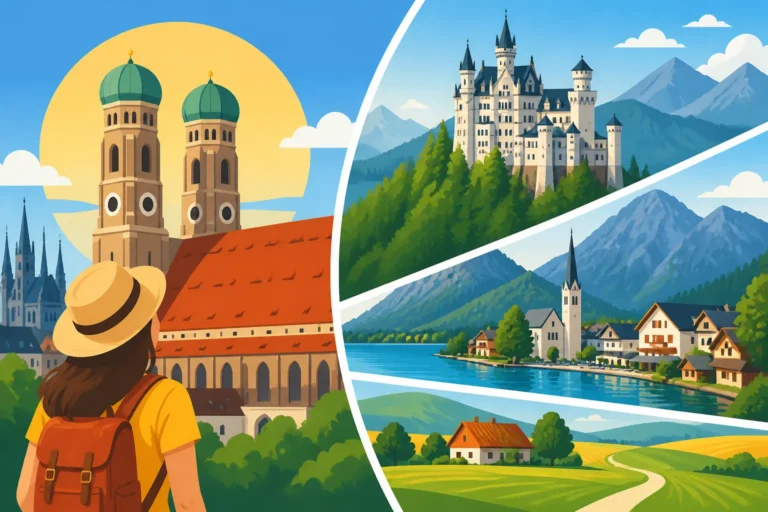
- Day 5-6: Munich. Immerse yourself in Bavarian culture. Visit Marienplatz, Hofbräuhaus, Deutsches Museum, and relax in the English Garden. Consider a day trip to Neuschwanstein Castle (train to Füssen, then bus – easy to book via GetYourGuide for a tour, or independently).
- Travel Tip: Munich is very walkable, but the U-Bahn system is efficient for longer distances.
- Day 7: Travel to Hamburg. Take an ICE from München Hauptbahnhof to Hamburg Hauptbahnhof (approx. 6-7 hours). Another longer leg, so again, secure that Sparpreis ticket early!
- Day 8-9: Hamburg. Discover Germany's "Gateway to the World." Explore the Speicherstadt (warehouse district), HafenCity, take a harbor cruise, and visit the Elbphilharmonie. Enjoy the vibrant Reeperbahn area in the evening.
- Day 10: Departure. From Hamburg, you can easily connect to airports or other international train routes.
Fairy Tale Routes and Nature Escapes: Rhine Valley & Black Forest (7-9 Days)
This itinerary combines picturesque landscapes, castles, and charming towns, utilizing a mix of regional and high-speed trains.
- Day 1-2: Frankfurt / Mainz. Fly into Frankfurt Airport, then take a short regional train to Mainz (approx. 25 mins). Mainz is a lovely base on the Rhine, known for its cathedral and Gutenberg Museum.
- Day 3-4: Rhine Valley Exploration. From Mainz, take a regional train (MittelrheinBahn) along the Rhine. This is one of Germany’s most scenic train routes. Hop off at towns like Bacharach, Oberwesel, or St. Goar to explore castles (e.g., Burg Rheinfels) or enjoy a wine tasting. Consider a river cruise for part of the journey. You can travel up to Koblenz.
- Travel Tip: A Länder-Ticket (Rheinland-Pfalz-Ticket) or the Deutschland-Ticket would be ideal for this regional exploration.
- Day 5: Travel to Freiburg im Breisgau. From the Rhine Valley, take an ICE or IC train (likely with one change) to Freiburg im Breisgau (approx. 2.5-4 hours). Freiburg is the gateway to the Southern Black Forest, known for its sustainable living and charming Old Town.
- Day 6-7: Black Forest Immersion. Explore Freiburg itself. Take a regional train (e.g., Höllentalbahn) into the Black Forest to Titisee or Hinterzarten for hiking, lake activities, or simply enjoying the traditional atmosphere. Consider renting a bike.
- Travel Tip: The KONUS guest card, often provided by accommodations in the Black Forest, grants free use of public transport within the region.
- Day 8-9: Departure. From Freiburg, you can easily take an ICE back to Frankfurt Airport or another major hub for your onward journey.
Remember, this is just a starting point. Germany has so much to offer, and train travel makes it incredibly accessible. Whether you’re finding your way to Finding a Doctor (Hausarzt) in Germany: How to Choose and Register or simply looking for the German Dental Appointment: How to Book and What to Expect on Your Visit, getting around smoothly makes all the difference. Enjoy the ride, and don't be afraid to embrace the occasional German efficiency hiccup – it's all part of the expat experience!
Disclaimer
Please note that while I strive to provide accurate and up-to-date information, train schedules, prices, and regulations in Germany can change. Always check the official Deutsche Bahn website (bahn.de) or the DB Navigator app for the most current information before making any travel plans or purchases. This guide is for informational purposes only and should not be considered legal or financial advice.