What’s the Best Area to Stay in Munich?
Finding the right neighborhood in Munich is a common source of anxiety for travelers who realize too late that the city's pristine reputation hides a complex layout of distinct "Viertels." Choosing the wrong area can mean overpaying for a sterile room far from the action or ending up in a noisy nightlife hub when you wanted a quiet family retreat. This guide provides an expat's perspective on the best areas to stay in Munich to ensure your base matches your travel style and budget.
Disclosure: This post may contain affiliate links. We may earn a commission at no extra cost to you if you make a purchase through these links. Read full disclosure.
The Munich Neighborhood Landscape: More Than Just the Marienplatz
When I first moved to Munich, I was struck by the city's self-proclaimed title: the "Millionendorf" or the village of a million people. Unlike Berlin’s sprawling, gritty urbanism, Munich feels like a collection of cozy, affluent villages that happen to be connected by an incredibly efficient train system. For a newcomer, the instinct is often to stay as close to the city hall (Neues Rathaus) as possible, but that is rarely where the most authentic Munich experience lies.
The city is roughly divided by its historical center (Altstadt) and the surrounding rings. To make an informed choice, you first need to understand the transport infrastructure. Most visitors arrive via the airport and need to figure out How to Get From Munich Airport to the City Center. Once you are in the city, the U-Bahn (subway) and S-Bahn (suburban trains) become your lifelines. Staying near a "Stammstrecke" station (the central line where all S-Banhs run) offers the most flexibility, but it can also be the most hectic.
When planning your arrival, using a platform like Omio can help you compare train and bus prices if you are coming from other German cities or neighboring Austria. Munich is a major hub, and how you enter the city often dictates which side of town is most convenient for your first night. If you're staying for more than a few days, you should also look into Getting Around German Cities: U-Bahn, S-Bahn, Trams, and Buses to understand how to navigate the zone system, which can be notoriously confusing for tourists who accidentally end up with a "Schwarzfahren" (fare dodging) fine.
A Deep Dive into Munich's Most Popular Districts
Munich’s neighborhoods are not just geographical markers; they are lifestyle choices. Depending on whether you want high-end luxury, a student-led artsy vibe, or a quiet place near the river, your "best" area will vary significantly.
Altstadt-Lehel: The Historic Core
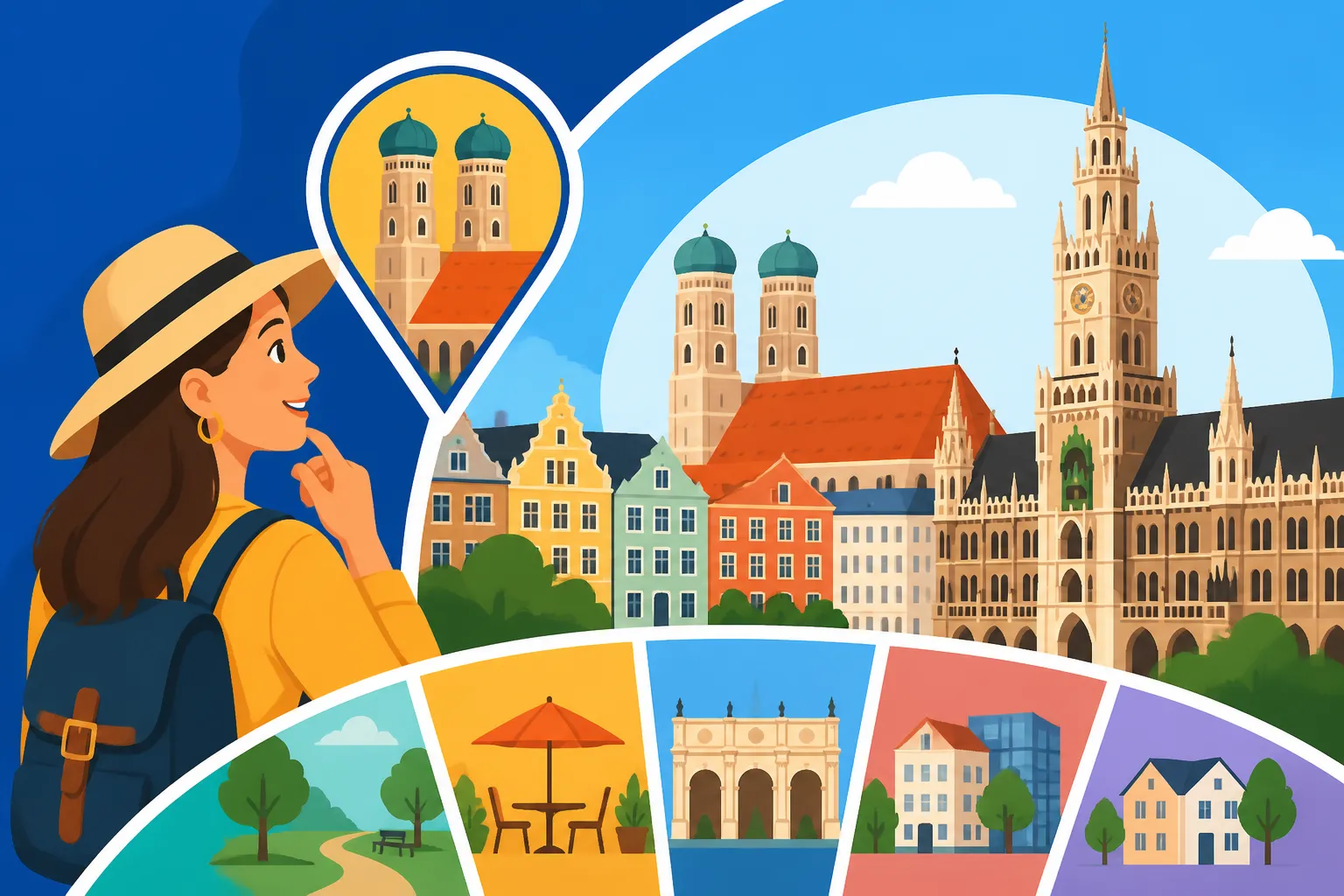
This is the Munich you see on postcards. It encompasses the Marienplatz, the Frauenkirche, and the high-end shopping streets like Maximilianstraße. If your goal is to walk out of your hotel and immediately see the major sights, this is the place. However, as an expat, I always warn friends that this is the most expensive and least "local" part of the city. You will be surrounded by other tourists and international chain stores.
Lehel, the residential portion of this district, is much more charming. It is one of the most prestigious postcodes in the city, filled with stunning Altbau (old-style) apartment buildings. It’s quiet, safe, and borders the English Garden. If you have the budget, checking Booking.com for boutique hotels in Lehel offers a much more refined experience than the crowded hotels right on the pedestrian zone. For those on their first trip, staying here makes it easy to follow a guide on Munich for First-Time Visitors: What to See without ever needing a taxi.
Maxvorstadt: The Intellectual and Artistic Hub
Maxvorstadt is the academic heart of Munich, home to the two major universities (LMU and TUM). This translates to a vibrant, youthful energy that isn't as "rough" as student districts in other cities. It is also the museum district (Kunstareal). If you are coming to Munich for the world-class galleries like the Pinakotheken, this is the best area to stay.
The streets here are lined with excellent bookstores, small cafes, and affordable eateries catering to students. It feels lived-in and authentic. You can easily spend an afternoon wandering the museums and then find a quiet spot for "Kaffee und Kuchen." I often suggest travelers book a tour via GetYourGuide to explore the historical significance of this area, as it was also the site of many pivotal moments in 20th-century history. Staying here puts you within walking distance of the English Garden and the Altstadt, but with lower prices and better coffee.
Ludwigsvorstadt-Isarvorstadt: Diversity and Nightlife
This district is a bit of a Jekyll and Hyde situation. The area immediately surrounding the Hauptbahnhof (Central Station) in Ludwigsvorstadt is the grittiest part of Munich. While perfectly safe by international standards, it is noisy, crowded, and lacks the "Bavarian charm" people expect. However, it is incredibly convenient for those taking Best Day Trips From Munich by train, as you can roll out of bed and be on the platform in five minutes.
On the other side of this district lies Isarvorstadt and the Glockenbachviertel. This is arguably the coolest neighborhood in the city. Historically the center of Munich’s LGBTQ+ community, it has evolved into a trendy hub of independent boutiques, bars, and restaurants. It’s the best place to stay if you want to experience Munich’s nightlife or enjoy a morning walk along the Isar River. It is also adjacent to the grounds where the world's most famous beer festival takes place, making it the primary target for anyone reading an Oktoberfest in Munich: A First-Timer's Guide.
Au-Haidhausen: The French Quarter
Located on the eastern bank of the Isar, Haidhausen is often called the French Quarter because of its historic street names and cozy, village-like squares. This is my personal favorite recommendation for families and slow travelers. It is slightly removed from the tourist center but remains incredibly well-connected via the Rosenheimer Platz S-Bahn station.
Haidhausen is home to the Gasteig (a major cultural center) and the Müller’sches Volksbad, a stunning Art Nouveau indoor swimming pool. The neighborhood is full of small parks, artisan bakeries, and some of the best Beer Gardens and Beer Halls in Germany that aren't overrun by tour buses. Staying here feels like being a local. You can shop at the local markets and enjoy the quieter side of Munich while still being only three S-Bahn stops away from Marienplatz.
| Neighborhood | Best For | Vibe | Price Range |
|---|---|---|---|
| Altstadt-Lehel | First-time sightseeing | Historic & Grand | High |
| Maxvorstadt | Museum lovers & Students | Intellectual & Airy | Mid-Range |
| Glockenbachviertel | Nightlife & Foodies | Trendy & Vibrant | Mid-High |
| Au-Haidhausen | Families & Quiet stays | Cozy & Local | Mid-Range |
| Schwabing | Park access & Sophistication | Bohemian & Chic | High |
| Near Hauptbahnhof | Logistics & Budget | Gritty & Functional | Low-Mid |
Strategic Planning: How to Choose Based on Your Itinerary
When deciding on an area, you must factor in the timing of your visit. Munich undergoes a massive transformation several times a year. For example, if you are visiting during German Public Holidays: How They Affect Life and Work, you might find that staying in a residential area like Haidhausen means all the local shops are closed, whereas the Altstadt stays a bit more active.
If your itinerary involves a lot of regional travel, staying near the Hauptbahnhof is a logical choice, despite its lack of aesthetic appeal. You can use Omio to book your long-distance ICE trains to Berlin or Salzburg, and being near the station saves you from lugging suitcases across cobblestone streets. However, if your focus is more on local culture and relaxation, the extra ten minutes on the U-Bahn to stay in a district like Schwabing is well worth the effort.
Schwabing, located north of the center, was once the home of artists like Kandinsky and writers like Thomas Mann. Today, it is an affluent area with beautiful boulevards and direct access to the northern part of the English Garden. It’s an excellent choice for those who want a sophisticated atmosphere and want to see the famous river surfers at the Eisbach wave, which is a highlight for many following a GetYourGuide city tour.
Navigating the Logistics of Your Munich Stay
Once you have picked your neighborhood and found a place on Booking.com, you need to manage the practicalities of German city life. Munich is a city that follows rules, and your stay will be much smoother if you understand the local etiquette.
First, consider your transport passes. For most visitors, a day ticket or a week ticket is more economical than single journeys. You can find detailed breakdowns in guides like Public Transport Tickets and Passes: Navigating German Transit Systems. If you plan on exploring more of Bavaria, you might even consider What Is the Deutschland-Ticket and Is It Worth It? if you are staying for a full month, as it allows unlimited regional travel across the entire country.
Another logistical point to consider is the "Ruhezeit" or quiet hours. Munich residents value their peace. If you stay in a residential apartment rental in an area like Maxvorstadt, remember that loud noises after 10:00 PM are generally frowned upon. This is part of the cultural trade-off for staying in the more authentic neighborhoods; you get the charm, but you must respect the local lifestyle.
Finally, always have some cash on hand. While Munich is becoming more card-friendly, many smaller cafes and traditional beer gardens in neighborhoods like Au-Haidhausen still operate on a "Barzahlung" (cash only) basis or have a minimum spend for cards. Being prepared will save you from the awkward search for a Sparkasse ATM in the middle of your dinner.
Disclaimer
This guide is for informational purposes only. While every effort has been made to ensure the accuracy of the information provided, neighborhoods can change, and travel conditions may vary. Please verify current transport schedules, local laws, and booking terms directly with providers before making your travel arrangements. The author and publisher are not responsible for any issues arising from the use of this guide.