How to Get From Munich Airport to the City Center
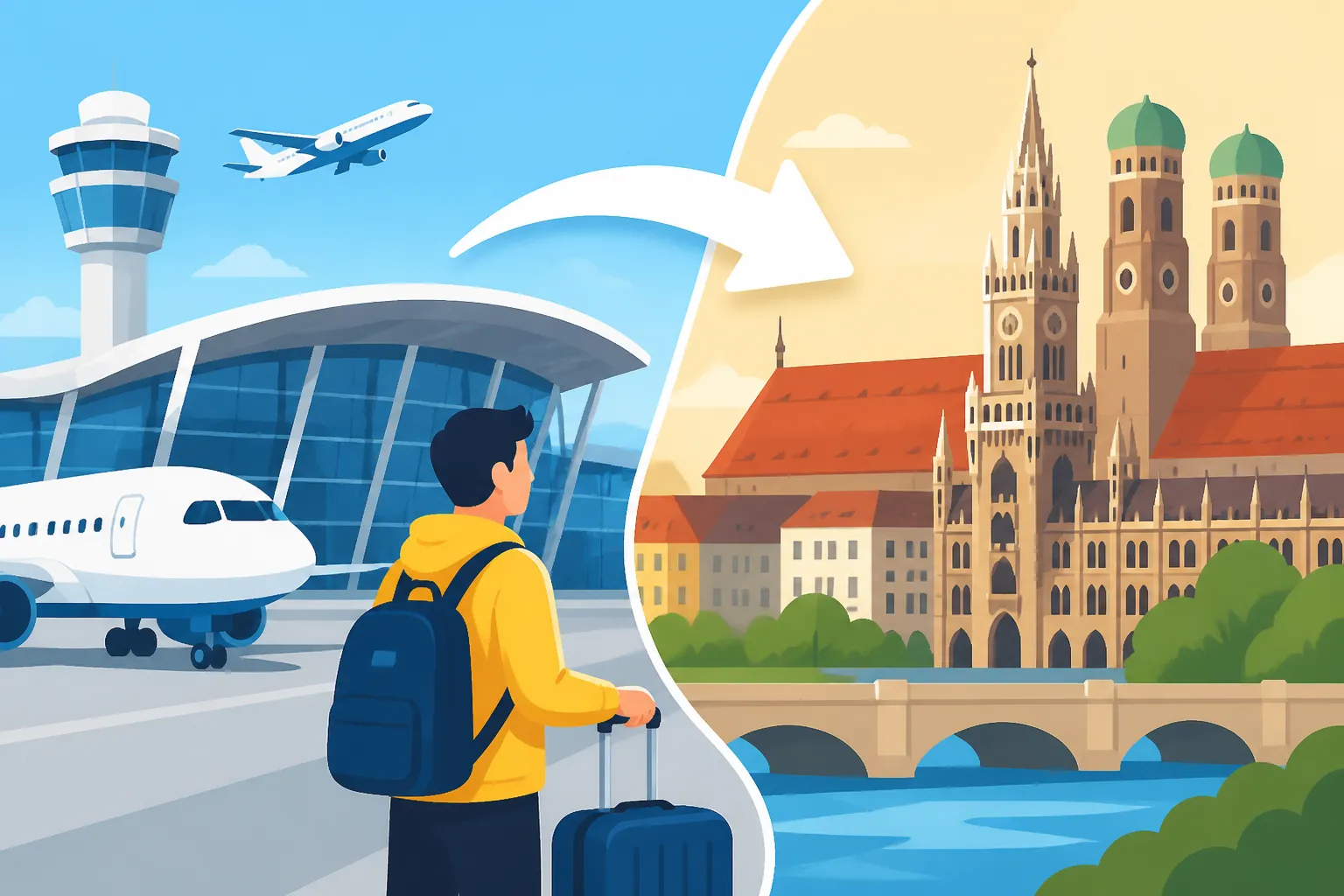
Arriving in a new country, especially in a bustling hub like Munich, can often feel like navigating a maze, and the journey from the airport to the city center is usually the first big hurdle. Don't sweat it! This guide is designed to cut through the confusion and give you all the practical, insider knowledge you need to get from Munich Airport (MUC) to the heart of the city efficiently and without any undue stress, just like a seasoned expat.
Disclosure: This post may contain affiliate links. We may earn a commission at no extra cost to you if you make a purchase through these links. Read full disclosure.
The Various Transport Options from Munich Airport (MUC)
Munich Airport, or "Flughafen München" as the locals call it, is a modern, well-connected facility. Thankfully, getting into the city isn't nearly as daunting as the paperwork for a Germany Work Visa & Immigration Guide for Professionals. You've got a few solid options, each with its own charm and price tag. Let's break them down.
S-Bahn (Suburban Train): The Expat's Best Friend
Ah, the S-Bahn. For many expats and budget-conscious travelers, this is the default and often the most reliable choice. Munich's S-Bahn system is remarkably efficient and links the airport directly to various points in the city center.
When you arrive at Munich Airport, you'll be looking for one of two lines: S1 or S8. Both lines depart frequently, typically every 10-20 minutes, from the airport's dedicated S-Bahn station, which is conveniently located beneath Terminal 1 and Terminal 2. Just follow the "S" signs. The journey to the main train station, Munich Hauptbahnhof, usually takes around 40-45 minutes. If your final destination is Marienplatz, the iconic heart of Munich, it's roughly the same duration, with Marienplatz being a major stop for both S1 and S8.
The S-Bahn is a particularly great option if you're traveling light or with manageable luggage. During peak hours, the trains can get quite busy, but generally, there's enough space. The best part? It's integrated into Munich's public transport network (MVV), which means a single ticket covers your entire journey into the city. Plus, once you're on the S-Bahn, you can sit back and relax, perhaps even starting to plan your Day Trips and Weekend Getaways Across Germany.
Lufthansa Express Bus: Direct and Comfortable
If you prefer a direct journey with just one stop instead of the many stops of the S-Bahn, the Lufthansa Express Bus might be your ticket. Don't let the name fool you; you don't need to be flying Lufthansa to use it. It's open to everyone!
These buses offer a comfortable ride with amenities like free Wi-Fi and ample luggage storage under the bus, which can be a real blessing if you're lugging large suitcases. The Lufthansa Express Bus makes two main stops in the city center: Munich Hauptbahnhof (the main train station) and München Nord/Schwabing (near Nordfriedhof U-Bahn station), which is handy if you're staying in the northern parts of the city. The journey to Hauptbahnhof typically takes about 25-30 minutes, making it often quicker than the S-Bahn, especially if your hotel is right by the Hauptbahnhof.
Buses depart every 15 minutes from outside Terminal 1 and Terminal 2. You can purchase tickets online in advance, or directly from the bus driver, though buying online often comes with a slight discount and ensures you have your spot. This is also where platforms like Omio can be useful, allowing you to compare and book bus tickets alongside train options. It offers a comfortable, fuss-free journey, particularly valuable after a long flight.
Taxis and Ride-Sharing: Convenience at a Price
Sometimes, after a long flight, all you want is to be whisked directly to your accommodation without a single thought about tickets or routes. That's where taxis and ride-sharing services come in.
Taxis are readily available outside both terminals at Munich Airport. Just follow the signs for "Taxi." You'll find a regulated queue, ensuring fair service. The journey from the airport to the city center (e.g., Marienplatz or Hauptbahnhof) usually takes about 35-45 minutes, depending on traffic. The cost, however, is significantly higher than public transport. Expect to pay anywhere from €70 to €90 for a standard taxi ride. While it's pricey, it's ideal for groups splitting the fare, families with young children, or those with excessive luggage who prioritize door-to-door service.
Ride-sharing apps like Uber also operate in Munich. You can book a ride through the app, and it will direct you to a designated pickup point at the airport. Prices can sometimes be slightly lower than traditional taxis, but they are still in the same general range and subject to surge pricing during high demand. For ultimate convenience, especially late at night or with a lot of gear, a taxi or ride-share offers unparalleled ease.
Car Rental: Freedom for Further Exploration
If your plans extend beyond Munich's city limits or you simply prefer the flexibility of having your own wheels, renting a car directly from Munich Airport is a straightforward option. All major international car rental companies, like Sixt, Hertz, Avis, Europcar, and Enterprise, have desks and parking facilities conveniently located within the airport terminals.
Renting a car in Germany offers incredible freedom to explore the beautiful Bavarian countryside, perhaps embarking on a Fairy-Tale Germany: Villages Along the Romantic Road adventure or discovering charming towns at your own pace. However, remember that driving and parking in Munich's city center can be challenging and expensive. Traffic can be dense, and parking is often limited and costly. If your main goal is just to reach the city center and stay there, a rental car might be more of a hindrance than a help.
Make sure you're familiar with Driving in Germany: Rules, Road Signs, and Getting Your License Converted before you hit the Autobahn! Also, bear in mind that many rental cars in Germany are manual transmission, so if you require an automatic, be sure to specify this when booking.
Navigating Tickets and Fares: What You Need to Know
Understanding the German public transport ticketing system can feel like learning a new language, especially with all the different zones and options. But once you get the hang of it, it's remarkably efficient.
MVV Public Transport System: Zones and Tariffs
Munich's public transport system, the MVV (Münchner Verkehrs- und Tarifverbund), uses a zone-based fare structure. The city of Munich itself falls within the "M-Zone" (inner white zones), but the airport (Flughafen) is located quite a bit further out, falling into the "Gesamtnetz" (entire network) for fare calculation, or specifically, four zones if you're looking at the old system, or roughly Zone M-5 in the newer system. The key takeaway is that you need a ticket that covers the airport and the city center.
Here are the most common ticket types for airport travel:
- Single Ticket (Einzelfahrkarte): This is suitable if you're only making one trip from the airport to the city center and not planning any further public transport use that day. However, it's not the most cost-effective for airport travel.
- Day Ticket (Tageskarte): A day ticket offers unlimited travel within your selected zones for an entire day (until 6 AM the next morning). For airport travel, you'll need the "Airport-City-Day-Ticket" (sometimes called "Gesamtnetz-Tageskarte"). This ticket covers the entire MVV network, including the airport, and is often the best value for solo travelers, especially if you plan to use public transport within Munich once you arrive.
- Group Day Ticket (Gruppen-Tageskarte): This is a fantastic option for two to five people traveling together. The Airport-City-Day-Ticket also comes in a group version, covering up to five adults (or children counting as half a person). This ticket usually works out significantly cheaper per person than individual tickets.
Prices for these tickets do change, so it's always good to check the current MVV website or a reliable travel app like Omio for the most up-to-date fares. As of 2026, an Airport-City-Day-Ticket for a single person costs €17.50, while a group day ticket for up to five people costs €32.60. These prices cover all S-Bahn, U-Bahn (metro), tram, and bus services within the network.
Buying Your Ticket: Machines, Apps, and Counters
Purchasing your MVV ticket is quite straightforward once you know where to look.
- Ticket Machines: These are your primary method at the airport. You'll find MVV ticket machines at the S-Bahn station platforms (Terminal 1 and Terminal 2), and often at bus stops. The machines have multiple language options (English is always available). Select "Airport-City-Day-Ticket" (or "Gesamtnetz") and then choose "Single" or "Group" depending on your party size. You can pay with cash (coins and notes), debit cards, and often credit cards.
- MVV App: For tech-savvy travelers, downloading the official MVV app is a great idea. You can purchase digital tickets directly on your smartphone, which saves time and hassle. Just make sure your phone is charged!
- Service Counters: While less common at the airport itself for MVV tickets, there might be information desks or service points where you can purchase tickets, especially at the main train station (Hauptbahnhof) in the city. At the airport, focus on the machines at the S-Bahn station.
- Lufthansa Express Bus Tickets: For the bus, you can buy tickets directly from the bus driver (cash or card) or, as mentioned, pre-book online through the Lufthansa Express Bus website or a booking platform like Omio or GetYourGuide for convenience.
Remember, always validate your physical ticket if it doesn't have a pre-printed date/time. For MVV tickets, look for small validation boxes (usually blue or yellow) at the entrance to platforms or inside buses/trams. Digital tickets from the app are usually valid immediately upon purchase. Don't forget this step, as traveling without a valid or validated ticket can result in a hefty fine!
Here’s a quick overview of the main transport options:
| Transport Type | Journey Time to City Center (e.g., Hauptbahnhof) | Approx. Cost (Single Adult) | Frequency | Key Features | Best For |
|---|---|---|---|---|---|
| S-Bahn (S1/S8) | 40-45 minutes | €17.50 (Day Ticket) | Every 10-20 minutes | Connects directly to main stations, reliable | Budget-conscious, solo/group, city explorers |
| Lufthansa Express Bus | 25-30 minutes | ~€11-€12 (Online Price) | Every 15 minutes | Direct, comfortable, luggage storage, Wi-Fi | Speed, comfort, heavy luggage, direct to HBF |
| Taxi | 35-45 minutes (traffic dependent) | ~€70-€90 | On demand | Door-to-door, private, premium convenience | Groups, families, late-night, ultimate convenience |
| Ride-Sharing (Uber) | 35-45 minutes (traffic dependent) | ~€60-€80+ (variable) | On demand | Similar to taxi, often app-based | Groups, families, app users |
| Car Rental | Varies by destination (40 min+ drive) | Varies by rental agreement | On demand | Complete freedom, explore beyond Munich | Day trips, rural exploration, independent travel |
Step-by-Step Guides for Each Mode of Transport
Let’s walk through the process for each major mode of transport, making your arrival as smooth as possible.
Taking the S-Bahn to Marienplatz (City Center)
This is a popular choice, and for good reason. Marienplatz is the historical and cultural heart of Munich, home to the New Town Hall and its famous Glockenspiel.
- Follow the "S" Signs: Once you’ve landed and collected your luggage, simply follow the green "S" signs for "S-Bahn" or "DB" (Deutsche Bahn, the German railway operator). These signs will lead you directly to the underground S-Bahn station, situated between Terminal 1 and Terminal 2.
- Buy Your Ticket: Locate one of the MVV ticket machines. Switch the language to English. Select "Airport-City-Day-Ticket" (or "Gesamtnetz-Tageskarte") and choose either "Single" or "Group." Pay using cash or card. Remember, you do not need to validate this ticket if it prints with the date and time already on it; if it's just a raw ticket, validate it in the blue/yellow boxes before you go down to the platform.
- Find Your Platform: Both S1 (direction Ostbahnhof) and S8 (direction Herrsching) will take you to Marienplatz. Don't worry about which one; they both stop there. Check the electronic displays for the next departure.
- Board the Train: Take the first available S1 or S8. Place your luggage in the designated areas or keep it close.
- Enjoy the Ride: The journey to Marienplatz takes about 40-45 minutes. You'll pass several stations. Marienplatz is a major, easily recognizable stop. The train announcements are usually in German and English, and electronic displays on board show the upcoming stations.
- Arrive at Marienplatz: Exit the train and follow signs for "Marienplatz" or "Ausgang" (exit). You'll emerge right into the vibrant square, ready to explore or head to your accommodation. If you need to connect to other parts of Munich, Marienplatz is also a major U-Bahn hub, so you can easily switch to a U-Bahn line.
Using the Lufthansa Express Bus to Hauptbahnhof
If speed and directness appeal to you, the Lufthansa Express Bus is a solid choice for reaching the main train station.
- Locate Bus Stops: After exiting the baggage claim, look for signs pointing to "Bus" or "Lufthansa Express Bus." The stops are clearly marked outside Terminal 1 and Terminal 2. There are typically attendants or clear signage to guide you to the correct bay.
- Purchase Tickets: You can buy your ticket from the bus driver directly (cash or card) or, better yet, purchase it in advance online through the Lufthansa Express Bus website. Using a travel platform like Omio or GetYourGuide can also be a convenient way to compare and book your bus ticket.
- Board the Bus: Once your bus arrives, show your ticket (digital or printed) to the driver, load your luggage into the compartment underneath the bus (the driver will usually assist), and find a seat.
- Direct Journey: The bus will make a quick stop at München Nord/Schwabing before heading directly to Munich Hauptbahnhof. Enjoy the comfortable ride, possibly with some free Wi-Fi.
- Arrive at Hauptbahnhof: You’ll be dropped off right outside the main train station. From here, you can easily walk to nearby hotels, catch a Getting Around German Cities: U-Bahn, S-Bahn, Trams, and Buses to your final destination, or even connect to a long-distance train if you're traveling further within Germany.
Grabbing a Taxi or Ride-Share
For maximum convenience, especially if you’re tired or carrying a lot, a taxi or ride-share is the way to go.
- Find the Taxi Stand: Upon exiting either terminal, simply follow the prominent "Taxi" signs. You'll be led to official taxi stands where a queue will be waiting.
- Confirm Your Destination: When it’s your turn, tell the driver your exact destination, including the street name and number if possible. Most taxi drivers in Munich speak enough English to understand common destinations.
- Ride-Share Pickup: If using an app like Uber, open the app, enter your destination, and follow the app's instructions to the designated pickup zone at the airport. This zone is typically well-marked and separate from the main taxi stands.
- Payment: Taxis usually accept cash and major credit cards. Confirm with the driver if you plan to pay by card at the start of the journey. Ride-share apps handle payment automatically through the app.
- Direct Drop-off: Sit back and relax as you’re driven directly to the front door of your hotel or apartment. This is particularly helpful if you've booked accommodation through a platform like Booking.com and want the easiest possible transfer.
Insider Tips for a Smooth Arrival
A little preparation and some local knowledge can go a long way in making your transition from airport to city seamless.
Language Barriers and Assistance
While many Germans, especially those in service industries at the airport, speak English, it’s always helpful to have a few German phrases up your sleeve. Basic greetings like "Hallo" (hello), "Danke" (thank you), and "Entschuldigung" (excuse me) can make a big difference. Don't be afraid to ask, "Sprechen Sie Englisch?" (Do you speak English?).
If you find yourself lost or confused, look for the "Information" desks at the airport. Staff there are usually multilingual and can point you in the right direction or assist with ticket purchases. Deutsche Bahn (DB) also has information points within the S-Bahn station area.
For a deeper dive into communication, check out our guide on German Language and Everyday Communication for Visitors.
Luggage Management
Consider your luggage when choosing your transport.
- S-Bahn: Fine for regular suitcases, but very large or numerous bags can be a squeeze during busy times. Be mindful of others and keep aisles clear.
- Lufthansa Express Bus: Excellent for larger luggage as it's stored in dedicated compartments under the bus.
- Taxis/Ride-Sharing: Best for heavy or bulky items, as it's direct to your door.
Remember that you are responsible for your own luggage on public transport. Don't leave it unattended.
Connecting to Other Destinations
Munich Airport isn't just a gateway to the city center; it's a major hub for further travel throughout Bavaria and beyond. Once you reach Munich Hauptbahnhof via S-Bahn or Lufthansa Express Bus, you're at the nexus of Germany's extensive train network.
From here, you can catch regional trains (Regionalbahn or Regional-Express) to explore nearby towns like Garmisch-Partenkirchen or Salzburg (in Austria, but very close!), or hop on an ICE (Intercity-Express) high-speed train to other major German cities like Berlin, Frankfurt, or Hamburg. You can plan and book these train journeys through Deutsche Bahn's website or apps, or use a platform like Omio which aggregates different transport options. For details on how to navigate the train system, our guide on High-Speed Trains in Germany (ICE): Deutsche Bahn Routes and Savings is a must-read.
Remember, sometimes an early arrival can mean checking into a hotel near the airport, especially if you have an early flight the next day. Websites like Booking.com can help you find suitable accommodation right at or near MUC.
Disclaimer
The information provided in this guide is for general informational purposes only and is subject to change. While we strive to keep details like prices, schedules, and regulations up-to-date, it is always advisable to check official sources such as the MVV (Münchner Verkehrs- und Tarifverbund) website, Lufthansa Express Bus website, or relevant transport apps for the most current information before your journey. We cannot be held responsible for any discrepancies or changes.