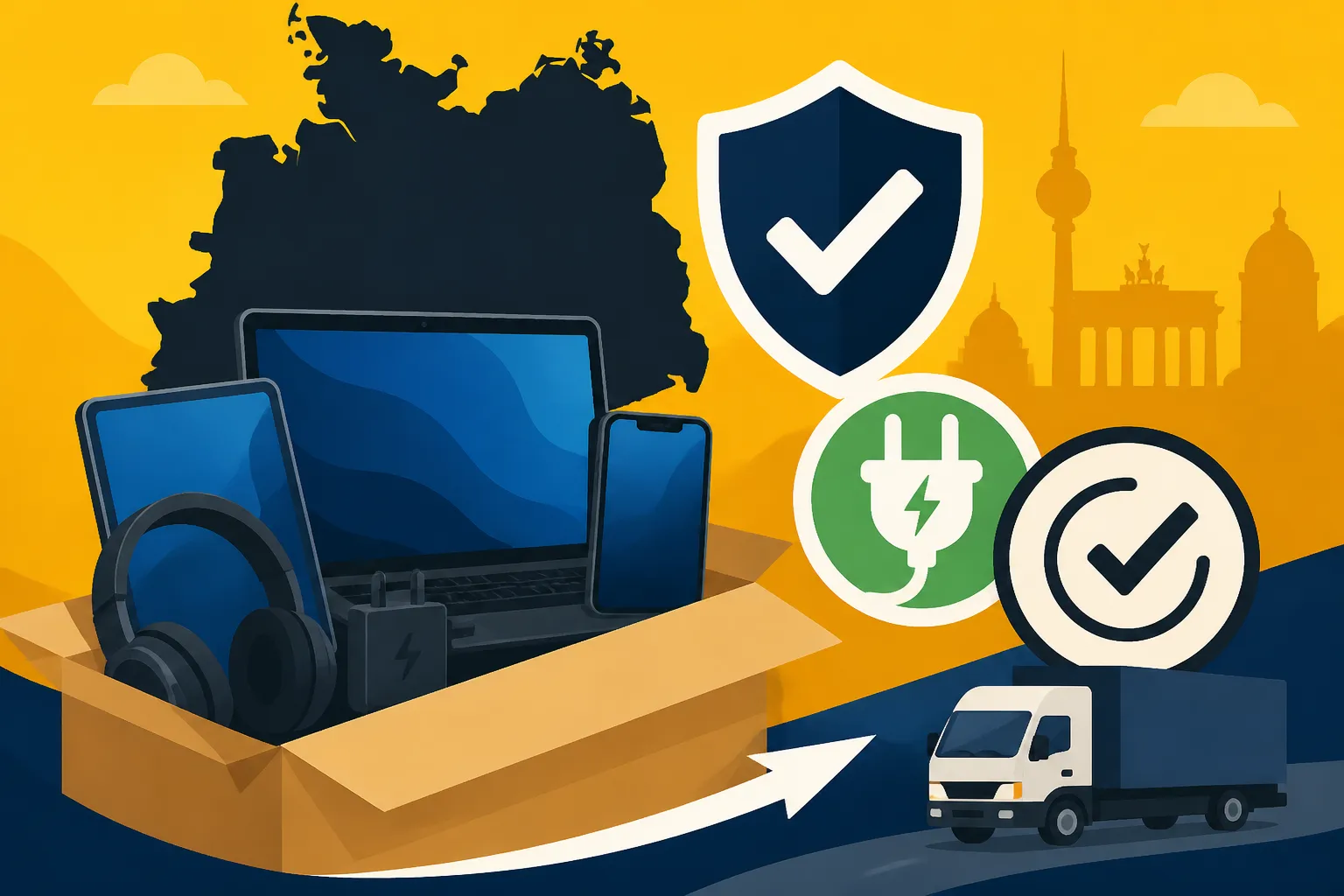
Shipping Electronics to Germany: Warranty, Voltage, and CE Marks
Moving to Germany is an exciting adventure, but let's be real – the sheer amount of planning and bureaucracy can make your head spin. And when it comes to bringing your cherished electronics, it's not as simple as packing them up and plugging them in. From different power standards to baffling certifications, shipping your devices can quickly turn into a headache. This guide is here to untangle that mess, helping you understand the intricacies of warranty, voltage, and those elusive CE marks, and how a trusted moving partner like Sirelo can simplify the entire process.
Disclosure: This post may contain affiliate links. We may earn a commission at no extra cost to you if you make a purchase through these links. Read full disclosure.
Understanding German Electrical Standards: Voltage, Plugs, and Frequency
One of the first big hurdles you'll face when bringing electronics from outside Europe is the fundamental difference in electrical standards. It's not just about finding an adapter; it's about the very juice that powers your devices. This can make or break whether your favorite gadget even works, let alone works safely.
The 230V/50Hz Standard: What It Means for Your Devices
Germany, like most of Europe, operates on a 230-volt, 50-hertz (Hz) electrical system. If you're coming from a country like the United States or Canada, you're likely used to 110-120 volts and 60 Hz. This difference is absolutely crucial. Connecting a 120V device directly to a 230V outlet without proper conversion is a recipe for disaster. At best, it won't work; at worst, it could overheat, fry its internal components, or even cause a fire. Trust me, I've heard too many stories of beloved appliances meeting a fiery end.
For low-power electronics like phone chargers, laptop power bricks, or camera chargers, you'll often find they are "dual voltage," meaning they can handle both 100-240V and 50-60Hz. Just check the tiny print on the adapter – it usually says "INPUT: 100-240V ~ 50/60Hz". These are generally safe to use with just a simple plug adapter. However, for anything with a motor or heating element – think hair dryers, blenders, coffee makers, or even some gaming consoles – the voltage and frequency difference becomes a serious issue. A 120V hair dryer will likely burn out instantly on 230V, and a device designed for 60Hz might run slower or even damage itself on 50Hz, even if the voltage is correctly converted.
While you can buy voltage converters (often called transformers) to step down 230V to 120V, they come with their own set of limitations. Good quality converters for high-wattage items are heavy, expensive, and can be cumbersome. They generate heat and are not always 100% efficient. Many expats find that after a few months, the hassle and cost of converters simply aren't worth it, especially for large kitchen appliances or power tools. It’s often more practical and safer to invest in new appliances locally, designed for the German grid.
Plug Types F and C: Adapters vs. Rewiring
Beyond voltage, there's the physical plug. Germany primarily uses Type F (Schuko) and Type C plugs. Type F is the most common, a round plug with two round pins and two grounding clips on the side. Type C is a simpler, ungrounded plug with two round pins, often found on smaller appliances. If you're coming from the US, you're likely familiar with Type A and B (the flat-pronged ones, one with an extra round grounding pin). These are incompatible with German outlets.
For many smaller, dual-voltage devices, a simple plug adapter is all you need. These are inexpensive and readily available in Germany at electronics stores like MediaMarkt or Saturn, or even online. They'll allow your foreign plug to fit into a German socket. However, these adapters only change the physical shape, not the voltage. You absolutely cannot use a simple plug adapter for a 120V hair dryer or toaster in a 230V German outlet. That's a direct route to appliance incineration.
For high-power appliances that you simply must bring and use with a voltage converter, consider if rewiring the plug to a Type F is an option, although this should ideally be done by a qualified electrician and only if the appliance itself can handle the 230V, 50Hz input (which is rare for 120V appliances). For the vast majority of cases, plug adapters are fine for compatible electronics, but they are never a substitute for correct voltage. It's truly a safety-first consideration, and when you're packing your belongings for Germany, consulting with a professional moving service found through Sirelo can help you identify which electronics are worth the trip.
The All-Important CE Mark: Safety and Compliance for Electronics
Ah, the CE mark. This little symbol, often overlooked, becomes a big deal once you cross into the European Economic Area. It's not just a fancy logo; it's a declaration of conformity, and without it, your electronics might face some serious hurdles.
What is the CE Mark and Why is it Essential?
The CE mark (which stands for Conformité Européenne – European Conformity) is a mandatory certification for certain products sold within the European Economic Area (EEA). It's essentially a manufacturer's declaration that their product complies with essential European health, safety, and environmental protection legislations. This means the product has undergone rigorous testing and meets the high safety standards required to be freely sold and used in countries like Germany. Think of it as a quality seal that assures consumers and authorities that a product is safe.
For electronics, the CE mark is particularly vital. It indicates compliance with directives like the Low Voltage Directive, Electromagnetic Compatibility (EMC) Directive, and potentially others like the Restriction of Hazardous Substances (RoHS) Directive. Without this mark, especially for electrical devices, authorities can assume the product has not met these safety benchmarks. This isn't just about red tape; it's about protecting consumers from potential hazards like electric shock, fire, or electromagnetic interference with other devices. When you're shipping your life across continents, ensuring your critical items are compliant can save you a world of trouble.
Importing Non-CE Marked Electronics: The Hurdles and Risks
Now, here's where it gets tricky. If you're bringing personal electronics that were purchased outside the EEA, especially from countries like the US, Canada, or Asia, they might not bear the CE mark. For a single personal laptop or phone, customs might overlook it, but for multiple devices, or anything deemed a "product" rather than a personal effect, you could face significant issues.
The hurdles can include customs delays, where your shipment gets held up for inspection. Customs officials have the right to refuse entry to products that do not comply with EU safety standards, which includes the absence of a CE mark. In the worst-case scenario, your items could be confiscated or you might be required to re-export them. Imagine the frustration of having your beloved home theatre system stuck in customs, or worse, deemed unusable. Furthermore, even if your non-CE marked electronics make it through customs, you might run into problems with insurance. If a non-CE marked appliance causes a fire or electrical fault, your Home Contents Insurance (Hausrat) might not cover the damages, arguing that the item was not compliant with local safety standards.
It’s an unfortunate reality that sometimes, the sentimental value or perceived monetary savings of bringing older, non-compliant electronics just isn’t worth the risk. For peace of mind and hassle-free living in Germany, it's often more prudent to prioritize CE-marked items or consider purchasing new appliances once you've settled. Professional movers, especially those found through Sirelo, can often advise on general customs expectations, but ultimately, the responsibility for product compliance lies with you.
Navigating Warranty and Repair: When Your Electronics Go Abroad
So, you've decided which electronics to bring, you've tackled the voltage and CE mark questions – but what happens if something goes wrong? Repairing electronics in a new country, especially those from a different region, can be surprisingly difficult and costly.
International Warranties: Fact or Fiction for Your Devices
The idea of an "international warranty" often sounds great on paper, but in reality, it's a mixed bag. For many global brands, a warranty is typically regional. This means if you bought your fancy new TV in North America, its manufacturer's warranty might only be valid within North America. Once you bring it to Germany, that warranty could be void or severely limited. While some premium brands, like Apple or certain high-end camera manufacturers, do offer genuinely international warranties, they are the exception rather than the rule.
It’s absolutely critical to check the warranty terms for each specific device before you ship it. Don't assume. Contact the manufacturer directly and get clarity in writing. If your device's warranty isn't international, then any repair, even for a manufacturing defect, will be out of pocket. This can be a significant financial risk, especially for expensive items. Imagine a major appliance like a washing machine or refrigerator breaking down shortly after arrival, only to discover its warranty is useless in Germany. When planning your move, consider the Cost of Living in Germany: Budgeting Guide for Expats and factor in potential repair costs for non-warrantied items.
Repairing Foreign Electronics in Germany: The Challenges
Even if you're prepared to pay for repairs, finding someone willing and able to fix your non-EU electronics in Germany can be a nightmare. Here's why:
Firstly, compatible parts are a huge issue. A technician in Germany will be set up to order and use parts designed for the European versions of products. If your item is a North American or Asian model, sourcing the correct internal components can be difficult, expensive, or even impossible. Secondly, authorized service centers might refuse to work on non-EU models. Their contracts with manufacturers often stipulate that they only service products sold within their authorized region to ensure they comply with local standards and part availability. Lastly, technician willingness can be a factor. Many technicians prefer not to work on unfamiliar foreign models due to the complexities of wiring, components, and the potential for liability if something goes wrong with a non-CE marked device.
This often leaves expats with two choices: pay exorbitant fees to independent repair shops (who may or may not have the expertise) or simply replace the item. For an expat still navigating the complexities of their new home, like trying to figure out How to Get Your Gesundheitskarte After Registering in Germany or setting up Internet and Mobile Phone Plans in Germany: Getting Connected Fast, dealing with a broken, unfixable electronic device is the last thing you need. It reinforces the argument for carefully curating what you bring, and for the big stuff, it’s often safer and less stressful to buy new once you're settled.
Practical Strategies for Shipping Your Electronics to Germany
Given all the potential pitfalls, how do you actually make smart decisions about your electronics? It's about being pragmatic and planning ahead. This is where a good moving strategy truly pays off, and having reliable partners can make all the difference.
Decide What to Bring and What to Leave Behind
This is perhaps the most crucial decision point. Before you even think about boxes, sit down and make a list of all your electronics. For each item, ask yourself:
- Is it dual voltage (100-240V, 50/60Hz)? If not, is it a low-wattage item you're willing to use with a bulky converter, or is it better to buy new?
- Does it have a CE mark? If not, are you willing to risk potential customs issues or insurance headaches for it?
- Is the warranty international? If not, are you okay with paying full price for any repairs, or would replacing it be cheaper in the long run?
- What is its sentimental value? Some items, like a cherished vintage radio from your grandmother, might be worth the extra effort and risk. A generic toaster, probably not.
- What's its replacement cost in Germany? Sometimes, selling your old, incompatible items and putting that money towards a new, compliant one in Germany is the most cost-effective and stress-free solution.
Many expats find that for large appliances like washing machines, dryers, refrigerators, and ovens, it's almost always better to sell them before you move and buy new ones in Germany. These items are heavy, expensive to ship, and almost guaranteed to have voltage, plug, and CE mark issues. For smaller kitchen gadgets, power tools, or even some televisions, the same logic often applies. Consider using a platform like Sirelo to compare quotes for shipping only the most essential and compatible items. They can help you calculate whether the shipping cost outweighs the replacement cost, especially when considering customs duties on non-personal effects.
Packing and Customs Declarations: Avoiding Headaches
Once you’ve made the tough decisions, proper packing is paramount. For any electronics you do decide to bring:
- Original Packaging is King: If you still have the original boxes and packing materials, use them! They're designed to protect the device during transit.
- Anti-Static Protection: Wrap sensitive electronics in anti-static bags or bubble wrap.
- Cushion, Cushion, Cushion: Use plenty of bubble wrap, packing peanuts, or crumpled paper to ensure items can't shift inside their boxes. Double-box fragile items for extra protection.
- Label Clearly: Mark boxes as "Fragile" and "Electronics." List the contents of each box accurately.
When it comes to customs, honesty is the best policy. You'll need to accurately declare the contents and value of your shipment. Typically, you'll declare these items as "used personal effects" or "household goods." This designation often allows you to import them duty-free, provided you've owned and used them for at least six months and intend to continue using them in Germany. However, if you're importing brand-new items or things clearly intended for resale, you'll face duties and taxes. A reputable moving company, which you can find and compare through Sirelo, will guide you through the customs declaration process and help you complete the necessary paperwork, which can be a real lifesaver.
Here's a quick comparison to help you visualize the decision-making:
| Item Type | Bring from Non-EU (e.g., US) | Buy New in Germany | Considerations |
|---|---|---|---|
| Phones/Laptops | ✅ (Dual voltage, plug adapter) | ✅ (Easier warranty, German keyboard layout) | Most are dual voltage. Only need plug adapter. Keyboard layout can be a minor annoyance. |
| Hair Dryers/Toasters | ❌ (High wattage, voltage converter bulky/unsafe) | ✅ (Safer, cheaper, CE-marked) | High risk of damage/fire. Converters are heavy, expensive for these. |
| Large Appliances | ❌ (Voltage, frequency, CE, shipping cost) | ✅ (Essential for safety, warranty, efficiency) | Washing machines, fridges, ovens almost always better purchased new in Germany. Shipping costs alone are prohibitive. |
| Gaming Consoles | ⚠️ (Dual voltage but regional locking/CE) | ✅ (No regional issues, warranty, CE-marked) | Often dual voltage, but check CE mark. Games can be regionally locked. Warranty issues. |
| Specialized Equipment | ⚠️ (Research specific product for voltage/CE) | ⚠️ (May be harder to find, but compliant) | High-end camera gear, specific tools – evaluate carefully. Voltage conversion can impact performance. |
| TVs | ⚠️ (Antenna/regional standards, CE) | ✅ (Better for local signal reception, warranty) | German TV system (DVB-T2 HD) might differ. Regional apps/streaming services work better. Check screen size limits for shipping. |
Choosing a Reliable Shipper for Your Valuables
This is not the time to skimp. Your electronics are valuable, both financially and often sentimentally. Choosing a reputable, experienced international moving company is paramount. They understand the intricacies of customs, proper packing, and dealing with delicate items. You want a company with a proven track record, comprehensive insurance options, and good communication.
This is where a service like Sirelo truly shines. Instead of sifting through countless websites and contacting movers individually, Sirelo allows you to easily compare multiple, vetted international moving companies. You can input your specific needs, including the nature of your items, and receive competitive quotes from movers experienced in shipping to Germany. This not only saves you a ton of time but also provides peace of mind that you're working with professionals who understand the nuances of things like customs declarations for personal electronics. They can advise on proper labeling, required documentation, and what to expect during transit. Seriously, finding a good moving partner through Sirelo can dramatically reduce your stress levels during this already overwhelming process. Don't underestimate the value of professional expertise in ensuring your gadgets arrive safe and sound.
Post-Arrival: Getting Your Electronics Set Up
You've made it! Your boxes are in your new German apartment, and now it's time to get connected. But even after the move, there are still a few things to keep in mind when plugging in and powering up.
Adapters, Converters, and Local Purchases
As we discussed, for dual-voltage devices like laptops, phone chargers, and many cameras, a simple plug adapter is sufficient. You can find these at electronics stores such as MediaMarkt, Saturn, or even smaller shops and supermarkets. Keep a few spares handy! Remember, these only adapt the plug shape, not the voltage.
For any high-wattage, non-dual-voltage items that you absolutely had to bring and intend to use, a voltage converter (transformer) is necessary. You can also purchase these in Germany, but again, be prepared for them to be heavy and potentially expensive, especially for converters designed for appliances like hair dryers or blenders. Seriously, read the wattage requirements of your device and buy a converter that can handle at least 20-30% more than that. Skimping on converter quality or capacity is a fire hazard. Many expats quickly realize that it's just easier, safer, and often cheaper in the long run to buy new toasters, kettles, and other kitchen appliances once they're in Germany. Not only are they designed for the local electrical system, but they'll also likely have better warranty coverage and repair options within the country. This can actually save you money in the long run, leaving more budget for things like exploring German Food Culture: Eating and Drinking as a Visitor.
Insurance for Your Valuables During and After the Move
Having robust insurance is critical. When you're coordinating your move, especially through a service like Sirelo, inquire about transit insurance or moving insurance. This type of coverage protects your belongings from damage, loss, or theft during the actual shipping process, from your old home to your new one. Make sure you understand exactly what it covers, any deductible, and how to file a claim if needed. Documenting the condition of your electronics before they're packed with photos and videos is always a smart move.
Once you're settled in Germany, your responsibility shifts. You'll want to secure appropriate local insurance. The most important one for your belongings is Home Contents Insurance (Hausrat). This insurance covers your personal possessions against risks like fire, theft, water damage, and sometimes even natural disasters within your home. It's not mandatory, but it's highly recommended for anyone living in Germany, especially if you have valuable electronics. Just be mindful of what we discussed earlier: if a non-CE marked appliance causes damage, your Hausrat insurance might challenge a claim. For very expensive individual items, you might consider scheduling them specifically on your policy or getting separate specialized insurance. Ensuring you have adequate coverage is just another piece of the puzzle for a worry-free life in Germany, alongside other crucial tasks like understanding your Household Bills in Germany: Understanding Nebenkosten and Monthly Costs.
Disclaimer
Please note that this guide provides general information based on common expat experiences in Germany. Regulations regarding customs, warranties, and electrical standards can change and may vary based on your country of origin and specific circumstances. Always verify the most current rules and seek professional advice from customs authorities, manufacturers, or certified electricians for your individual situation. The author and publisher are not liable for any issues arising from the use of this information.