Wise vs Your Home Bank’s SEPA Payment: Where the Hidden Margin Sits
Ah, the saga of moving money across borders! If you've just arrived in Germany or you've been here a while and are still relying on your traditional bank for international transfers, especially those seemingly straightforward SEPA payments, you're likely feeling a nagging suspicion that something isn't quite right. You send money, you see a "low fee" or even "no fee," but then the amount that lands in your German account (or back home) feels a little… light. That's because while your home bank might look like it's offering a good deal, there are often hidden margins lurking in the exchange rate, quietly siphoning off your hard-earned cash. This guide is here to shed light on those sneaky costs and show you a much better way to handle your money, making the excellent service from Wise your absolute hero in this financial maze.
Disclosure: This post may contain affiliate links. We may earn a commission at no extra cost to you if you make a purchase through these links. Read full disclosure.
The Allure and Illusion of "Free" SEPA Payments from Your Home Bank
When you first hear about SEPA, it sounds like a dream come true, especially if you're an expat navigating the complex world of German finances. It promises seamless, low-cost transfers, and who doesn't want that? But as many of us have learned the hard way, the reality can often be a bit of a rude awakening.
Decoding SEPA: The European Standard That Feels Familiar
Let's start with the basics. SEPA, which stands for the Single Euro Payments Area, was designed to make euro-denominated bank transfers between countries in the Eurozone (and a few others) as easy and cheap as domestic transfers. Think of it as a unified payment system, allowing you to send euros from a bank in Berlin to a bank in Paris (or Vienna, or Rome) without much fuss. It covers 36 countries, including all 27 EU member states, the UK, Iceland, Norway, Liechtenstein, Switzerland, Monaco, San Marino, Andorra, and Vatican City. For anyone living within this area, it’s genuinely fantastic. You can read more about how this system integrates into German finances in our guide on Understanding the German Banking System: IBAN, SEPA, and More.
The intention behind SEPA was to eliminate the distinction between national and cross-border euro payments, making the European financial landscape feel a bit smaller and more connected. When you’re making a transfer between two German accounts, or even from your German account to a friend’s account in, say, France, you’ll typically see quick processing times and minimal to no fees. This creates an initial sense of security and simplicity, leading many expats to believe that any euro transfer, regardless of its origin, will be equally smooth.
The Expat's Dilemma: When Your "Local" Bank Goes International
Here's where the illusion often breaks for expats. You're likely sending money to Germany from a bank account outside the Eurozone, perhaps in the US, Canada, India, or Australia. Or maybe you're sending money home from your German account to a non-Euro account. Your home bank, bless its heart, might process the transaction, convert your local currency to euros (or vice-versa), and then send it via the SEPA network to Germany. They might even advertise "no fees" on international transfers. Sounds perfect, right?
Wrong. This is where many of us have hit a wall, seeing the amount that arrives in our German bank account (or our home account) come up short. You meticulously calculated how much you needed for that initial rent deposit or for a significant purchase, only to find you're a few euros (or even dozens) short. It’s frustrating because it feels like a bait-and-switch. You trusted your bank, you saw no explicit charges, but your money has mysteriously shrunk. This discrepancy can cause real stress, especially when you're dealing with German landlords or utility providers who expect the full, exact amount. It's not always a visible line item on your bank statement; it's a subtle, almost insidious, erosion of your funds that leaves you scratching your head and feeling a bit ripped off. This hidden cost is precisely what we need to expose.
Unmasking the Invisible Costs: Where Your Home Bank Hides Its Margin
When your traditional bank handles an international transfer, even if it eventually becomes a SEPA payment, they're often not doing it out of the goodness of their hearts for free. They are, after all, businesses. The trick is understanding how they make their profit when they claim "no fees" or "low fees." It's often not in a blatant service charge, but in more subtle, less transparent ways.
The Deceptive Exchange Rate: Your Biggest Silent Surcharge
This is arguably the most common and significant way traditional banks profit from your international transfers. When you convert your money from one currency to another – say, US dollars to euros – your bank doesn't give you the "real" exchange rate. The "real" exchange rate is what's known as the mid-market rate, which is the midpoint between the buy and sell prices of a currency on the global market. It's the rate you'd see on Reuters or Google.
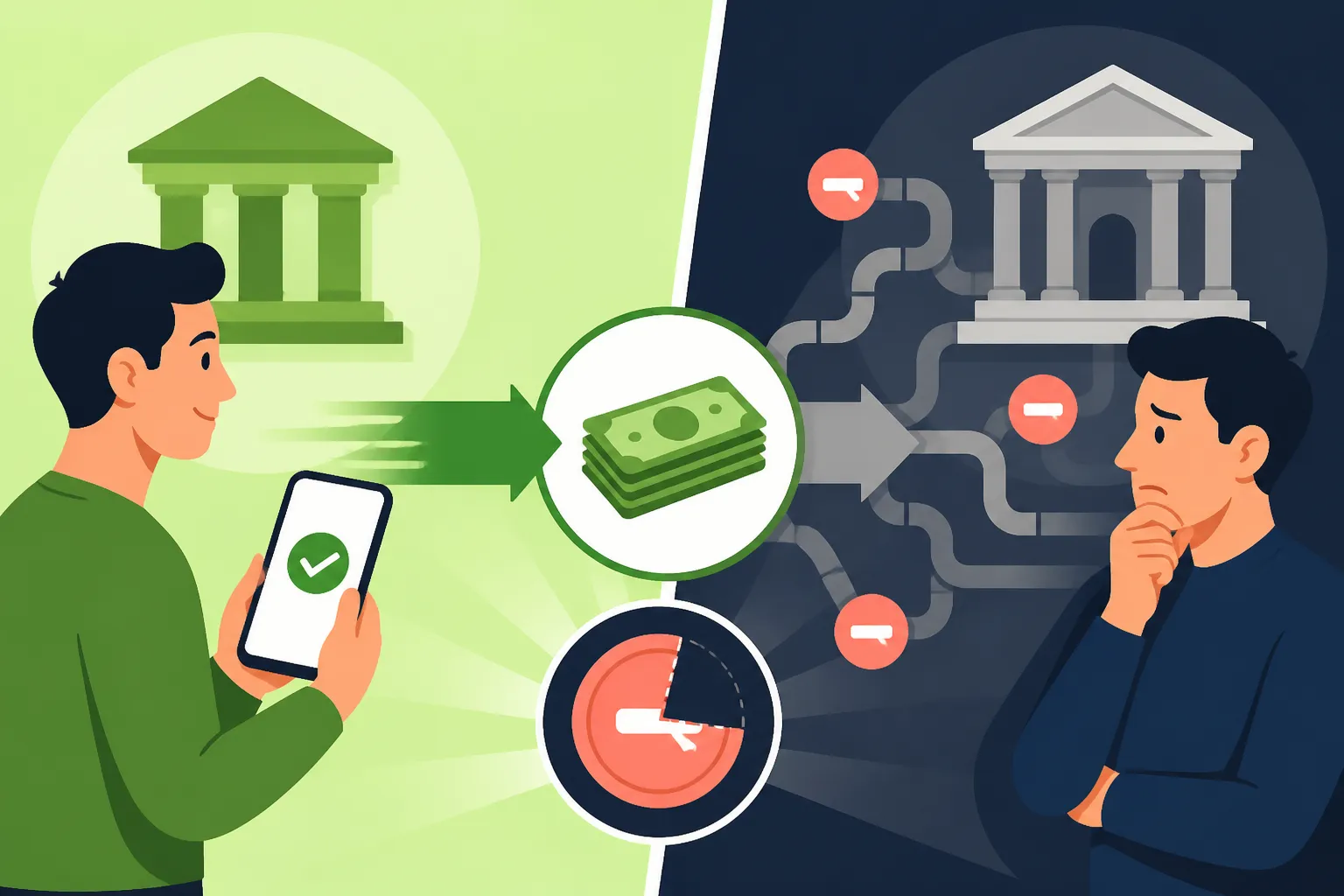
Your bank, however, will offer you a slightly different rate, one that's less favorable to you. They buy the currency at the mid-market rate and then sell it to you at a higher rate (or buy it from you at a lower rate), pocketing the difference. This difference is their "hidden margin" or "markup." It’s not a separate fee, which is why they can truthfully say "no transfer fees." But it's still a cost to you, and it can add up dramatically, especially on larger transfers.
Let's imagine you need to send 1,000 USD to your new German landlord for the first month's rent. If the true mid-market rate is 1 USD = 0.92 EUR, you'd expect to get 920 EUR for 1,000 USD. However, your bank might give you a rate of 1 USD = 0.90 EUR. In this scenario, for your 1,000 USD, you only receive 900 EUR. That's a 20 EUR difference, which the bank quietly keeps, without it ever appearing as a "transfer fee." This might seem small, but think about a larger sum, like your rental deposit, or if you're regularly sending money home. These small percentages quickly compound into substantial losses over time. It's a key factor to consider when comparing different methods for Transferring Money Internationally: Cheapest Ways to Send Money Abroad.
Intermediary Bank Fees: The Ghost in Your Transfer Machine
Even if your bank doesn't apply a hefty exchange rate markup, there's another sneaky culprit: intermediary banks. Traditional international bank transfers often don't go directly from your bank to the recipient's bank. Instead, they travel through a network of correspondent banks using the SWIFT system. Each one of these intermediary banks can (and often does) deduct its own fee as the money passes through.
Your bank might say, "We don't charge any fees for this transfer," and that might be true for their part. But they have no control over what intermediary banks along the SWIFT chain might charge. So, while your bank sends out 1,000 euros (or the equivalent), the recipient might only receive 985 or 990 euros, because one or more banks in the middle took a cut. The frustrating part is that these fees are unpredictable, completely opaque, and often only discovered when the money finally lands – short – in the recipient's account.
This unpredictability is particularly troublesome for expats who need to ensure exact amounts reach their destination, such as for utility bills or official payments. Imagine setting up direct debits or trying to pay your internet bill in Germany, only to find that the amount is consistently off due to these hidden deductions. It creates unnecessary administrative headaches and can even lead to late fees if the full amount isn't received.
Slow Processing and Lack of Transparency
Beyond the financial costs, traditional banks also often fall short in terms of speed and clarity. International transfers, especially those that traverse the SWIFT network before becoming SEPA, can take several business days to complete. In a world where we expect instant communication and immediate information, waiting 3-5 days (or even longer) for your money to arrive can be incredibly stressful. This delay can be particularly problematic when you're trying to make time-sensitive payments, like rent at the beginning of the month. Getting caught in a payment limbo while your landlord waits for funds that seem to have vanished into the ether is a scenario many expats dread. Knowing how to efficiently handle these payments is crucial, as covered in our guide on How to Pay Rent and Bills in Germany: Banking Tips for Expats.
Furthermore, the lack of transparency is a constant source of frustration. When you initiate a transfer, your bank often can't tell you the exact amount the recipient will receive, nor can they provide a precise timeline. You're essentially sending your money off into the void and hoping for the best. If something goes wrong, tracing the payment through multiple correspondent banks can be a bureaucratic nightmare, involving endless phone calls and confusing explanations. This lack of control and foresight adds a significant layer of stress to managing your finances in a new country.
Wise: Your Expat Champion for Transparent and Fair Transfers
After dealing with the headaches and hidden costs of traditional banks, it's a breath of fresh air to find a service that truly puts transparency and fairness first. This is precisely where Wise (formerly TransferWise) steps in as an indispensable tool for expats in Germany. It’s built on a philosophy that directly counters the opaque practices of conventional banking, making it the hero you need for your international money transfers.
The True Mid-Market Rate: No Hidden Surprises, Ever
The fundamental difference with Wise is its commitment to using the true mid-market exchange rate. This is the rate you see on independent sources like Reuters – the real rate, without any hidden markups. When you initiate a transfer with Wise, you'll see the exact exchange rate they're using, and it's updated in real-time.
Instead of hiding their profit in an unfavorable exchange rate, Wise charges a small, upfront fee for each transfer. This fee is always clearly displayed before you confirm your transaction, so you know exactly how much you're paying and exactly how much your recipient will receive. There are no nasty surprises, no intermediary bank deductions, and no wondering where those missing euros went. This clear, predictable cost model directly addresses the "hidden margin" problem of traditional banks.
Imagine needing to send money for your Cost of Living in Germany: Budgeting Guide for Expats. With Wise, you can calculate precisely how much local currency you need to send to ensure your German bank account receives the exact euro amount required for your rent, groceries, or other expenses. This transparency provides immense peace of mind, allowing you to budget effectively and avoid financial stress. Wise truly offers clear, predictable costs, making it a reliable choice for your financial management.
Speed, Simplicity, and Peace of Mind for German Living
Beyond transparency, Wise delivers on speed and simplicity – two crucial factors for anyone managing finances in a foreign country. Many SEPA transfers through Wise arrive on the same day, often within hours, or even minutes. This rapid transfer capability is a game-changer when you're dealing with time-sensitive payments or simply need quick access to your funds.
The user experience with Wise is also incredibly intuitive. Whether you're using their website or the mobile app, setting up a transfer is straightforward and hassle-free. You simply enter the amount, select the currencies, add the recipient's details (like their German IBAN), and confirm. The entire process is designed to be user-friendly, cutting through the bureaucratic red tape that often accompanies traditional banking. You can even set up recurring payments for regular expenses or use their 'rate alert' feature to get notified when the exchange rate is favorable.
Furthermore, Wise offers more than just transfers. Their multi-currency account, often referred to as a "Borderless account," allows you to hold and manage money in over 50 currencies, including euros, and get local bank details for several countries. This means you can effectively receive money in euros directly into your Wise account as if you had a German bank account, making it incredibly convenient for your daily life in Germany. Plus, with the Wise debit card, you can spend directly in euros (or other currencies) at the real exchange rate, avoiding foreign transaction fees often charged by other cards. It’s an ideal complement to your German banking setup and, honestly, makes managing your money significantly easier than struggling with traditional banks. Make your money work harder with Wise! For more on modern banking solutions, check out our insights on Mobile Banking Apps in Germany: N26, Revolut, and More.
More Than Just SEPA: Wise for Your Global Financial Needs
While we're focusing on SEPA payments to Germany, it's vital to recognize that Wise's utility extends far beyond just this one scenario. As an expat, your financial life isn't confined to a single currency or region. You might be sending money back home to your family, paying an international invoice for freelance work, or simply managing savings in various currencies.
Wise is designed to be a comprehensive solution for all these global financial needs. It facilitates transfers to and from a vast number of countries and currencies, always adhering to its transparent, mid-market rate model. This versatility makes it an invaluable asset for anyone with a truly international lifestyle, ensuring that you have a single, reliable platform for all your cross-border money movements.
Instead of juggling multiple bank accounts in different countries, or enduring the unpredictable costs of traditional international wire transfers, Wise offers a streamlined, cost-effective alternative. It means less stress about exchange rates, fewer unexpected fees, and more of your money actually reaching its intended destination. For anyone living the expat life in Germany, simplifying your financial world is a huge win. Join millions of expats already saving with Wise and experience the difference yourself.
Making the Smart Move: Unlock Real Savings with Wise
Choosing the right platform for your international money transfers isn't just about convenience; it's about real, tangible savings that add up over time. If you've been nodding along, realizing you've likely lost money to hidden bank margins, now is the perfect time to make a change. Switching to Wise is straightforward and will almost certainly save you money.
Your First Wise Transfer: A Practical Walkthrough
Getting started with Wise is incredibly simple, designed to be user-friendly even for those who might be wary of online financial services. Here's a quick rundown of what your first transfer might look like:
- Sign Up: Head to the Wise website or download their app. The registration process is quick and typically requires your email, a password, and basic personal details. You might need to verify your identity, which is a standard procedure for financial services to comply with regulations.
- Choose Your Currencies and Amount: On the main screen, you'll select the currency you're sending from (e.g., USD, GBP, INR) and the currency you want to send to (EUR for Germany). Then, input the amount you want to send or the amount you want the recipient to receive.
- Review the Costs: This is the magic part. Right there, upfront, Wise will show you the exact exchange rate they're using (the real mid-market rate) and the small, transparent fee for your transfer. It will also clearly state the exact amount your recipient will get. No hidden anything!
- Add Recipient Details: You'll need the recipient's full name, their IBAN (International Bank Account Number) for their German bank account, and sometimes their BIC/SWIFT code (though often the IBAN is enough).
- Fund Your Transfer: You can pay for your transfer using various methods, such as a debit card, credit card, or a local bank transfer. The speed and fees for these funding methods are also clearly displayed.
- Confirm and Send: Once you've reviewed everything, hit send! Wise will keep you updated on the transfer's progress via email and through their app, letting you know when the money has been sent and when it's expected to arrive.
It’s an incredibly intuitive process that takes the guesswork out of international money transfers. The immediate transparency of the cost is often the most surprising and reassuring part for new users.
Side-by-Side Savings: Bank vs. Wise (Comparison Table)
To really drive home the point, let's look at a hypothetical scenario. Imagine you need to send €2,500 to Germany for a large payment, perhaps a rental deposit or tuition fees. We'll compare a traditional bank's approach with Wise, based on typical hidden margins.
| Feature / Service | Traditional Home Bank (Hypothetical) | Wise (Illustrative) |
|---|---|---|
| Transfer Amount (Example) | Sending €2,500 | Sending €2,500 |
| Advertised Transfer Fee | "No Fee" or €10-€20 | Transparent fee, e.g., €12.50 |
| Exchange Rate Markup | ~2.5% below mid-market rate (hidden) | 0% (uses real mid-market rate) |
| Equivalent in Sending Currency | Requires ~€2,562.50 (due to rate markup) | Requires ~€2,512.50 (fee + actual €2,500) |
| Total Cost to You | €62.50 (hidden in rate) + €10 (fee) = €72.50 | €12.50 (visible fee) = €12.50 |
| Money Recipient Gets | €2,500 | €2,500 |
| Potential Savings with Wise | €60.00 on this single transfer | |
| Transparency | Low (rate markup, intermediary fees) | High (all costs shown upfront) |
| Speed | 3-5 business days (potentially more) | Same day to 1 business day (often faster) |
Note: The exact figures for traditional banks can vary wildly, and Wise's fees can also vary slightly by currency pair and amount, but this table illustrates the typical difference in approach and cost.
As you can see, even with an advertised "no fee" from a traditional bank, the real cost often outweighs the transparent fee from Wise. On a single transfer of €2,500, you could easily save €60 or more! Imagine how much that adds up over a year of living in Germany, sending money for rent, utilities, and other expenses. See the difference Wise makes for yourself.
Pro Tips for Maximizing Your Wise Experience
Once you've made your first successful transfer, you'll likely wonder how you ever managed without it. Here are a few pro tips to get even more out of your Wise experience:
- Set up Rate Alerts: If you're not in a rush, use Wise's rate alert feature. You can set it to notify you when the exchange rate reaches a specific target, helping you get the most bang for your buck.
- Explore the Wise Debit Card: This card is a true lifesaver for expats. It links to your multi-currency account, allowing you to spend directly in euros (or any other currency you hold) at the real exchange rate, with no foreign transaction fees. It's fantastic for travel within the Schengen area or even when visiting home.
- Utilize Borderless Accounts: If you frequently deal with multiple currencies, the multi-currency account is invaluable. You can receive money into local bank details (e.g., US dollar, British pound, Australian dollar, Canadian dollar, etc.) and hold various currencies, avoiding conversion fees until you need them.
- Verify Early: If you plan on making large or frequent transfers, complete Wise's identity verification process as soon as possible. This ensures smooth processing without delays down the line.
- Stay Informed: Be aware of common Financial Scams to Watch Out for in Germany: How to Protect Your Money and always double-check recipient details before sending. Wise is a secure platform, but vigilance is always key in personal finance.
Ready to ditch hidden bank fees? Try Wise today and take control of your international money transfers.
Disclaimer
Please note that this article provides general information and guidance for expats in Germany. While we strive for accuracy, financial regulations and service offerings can change. It is always recommended to check the most current terms and conditions directly with Wise and your financial institutions before making any decisions. This content is not financial advice.