Travel Medical Cover for Germany: What It Does and Does Not Replace
Ah, the delightful labyrinth of German bureaucracy, especially when it comes to something as vital as health insurance! You’re planning a trip, or maybe you’ve just arrived for a short stint, and suddenly you’re faced with a mountain of forms and confusing terms about health cover. It’s enough to make anyone’s head spin, wondering if you have the right kind of protection, or if your current insurance is even valid here. This guide is here to untangle that knot, explaining exactly what travel medical cover is for Germany, when it's absolutely necessary, and how it fits into – or rather, doesn't replace – the country's comprehensive healthcare system.
Disclosure: This post may contain affiliate links. We may earn a commission at no extra cost to you if you make a purchase through these links. Read full disclosure.
Understanding "Travel Medical Cover" in the German Context
When you first start looking into health insurance for Germany, it can feel like you’re trying to decode a secret language. The terms fly around – gesetzlich, privat, Sperrkonto, repatriation – and it's easy to get overwhelmed. Let's start by clarifying what "travel medical cover" actually means in the German landscape, because it's a very specific kind of protection designed for temporary situations, not for setting up long-term residency.
What is Travel Medical Cover, Really?
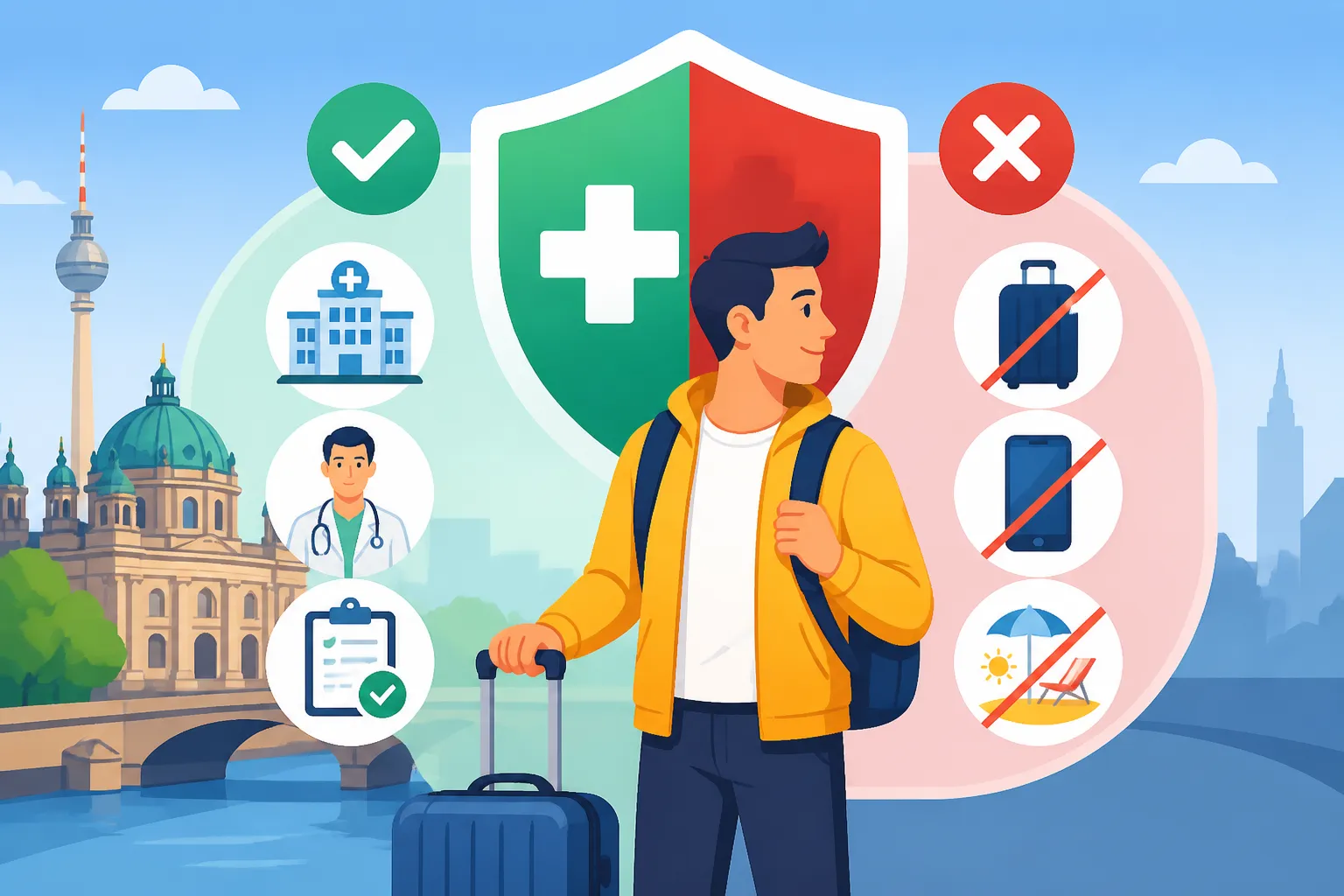
Think of travel medical cover as your immediate safety net for those unexpected, unfortunate moments during a temporary stay in Germany. It’s not meant to cover your annual check-ups, ongoing prescriptions, or planned dental work, which would fall under a comprehensive health insurance plan. Instead, its primary purpose is to safeguard you against the financial shock of a sudden illness or accidental injury. Imagine you're exploring the Black Forest and twist your ankle, or you wake up with a nasty fever in Berlin – this is where travel medical cover steps in.
The core of travel medical cover focuses on emergency medical treatment, hospital stays, and urgent doctor visits. It's designed for situations that are, by definition, unforeseen and require immediate attention. For instance, if you get food poisoning, break a bone, or need emergency dental work due to an accident, your travel medical insurance would typically cover these costs. It also often includes crucial benefits like medical evacuation back to your home country if your condition requires specialized care not available locally, or if it's deemed medically necessary for your recovery to continue closer to home. This aspect, known as repatriation, is a non-negotiable requirement for many German visas and cannot be understated in its importance. The cost of an international medical evacuation without insurance can easily run into the tens or even hundreds of thousands of euros, a financial burden no one wants looming over their head during an already stressful health crisis.
Who Needs Travel Medical Cover for Germany?
The short answer is: almost anyone visiting Germany for a limited time, especially if you're coming from outside the European Union or the Schengen Area. The need for this type of insurance is primarily driven by German visa requirements and the sheer practicality of avoiding crippling medical bills.
Tourists and Short-Term Visitors: If you’re coming for a holiday, to see friends, or for a brief business trip, and your stay is typically under 90 days, travel medical cover is generally essential. This applies whether you need a Schengen visa or if you're from a visa-exempt country like the USA, Canada, or Australia. While visa-exempt travelers aren't explicitly checked for insurance at the border, arriving without it is a huge risk. Imagine falling ill and facing a hefty German hospital bill – without travel medical insurance, you’d be personally liable for every cent. It's simply not worth the gamble.
Schengen Visa Applicants: For those applying for a Schengen visa (a short-stay visa for up to 90 days within a 180-day period), having adequate travel medical insurance is not just recommended; it's a strict, mandatory requirement. The German embassy or consulate processing your visa application will demand proof of this insurance. If you don’t provide it, or if it doesn’t meet their specific criteria, your visa application will be rejected, plain and simple. This insurance needs to cover the entire duration of your planned stay, be valid throughout the entire Schengen Area, and have a minimum coverage of €30,000 for medical expenses, including repatriation.
Those Awaiting Full German Insurance Activation: This is a less obvious but equally critical group. Many expats moving to Germany will eventually enroll in a comprehensive German public (GKV) or private (PKV) health insurance scheme. However, there's often a gap between your arrival date and when your long-term insurance becomes fully active. This could be due to waiting for your first paycheck to enroll in public insurance, navigating the complexities of private insurance applications, or simply the time it takes for paperwork to process after you register your address (Anmeldung). During this transitional period, travel medical cover can be a lifesaver, providing crucial protection until your comprehensive plan kicks in. It acts as a bridge, ensuring you're never uninsured, even for a short window.
The Crucial Difference: Travel Medical vs. Comprehensive German Health Insurance
This is perhaps the most critical distinction to grasp, and where many newcomers to Germany get tripped up. Confusing these two types of insurance can lead to serious headaches, legal issues, and financial woes.
Travel Medical Cover (Short-Term, Emergency Focus):
As we’ve discussed, this is for temporary stays. It's designed for emergencies and unforeseen medical events. It's not a substitute for the mandatory, long-term health insurance required for residents in Germany. Key characteristics include:
- Temporary: Typically covers durations from a few days up to a few months, usually a maximum of one year.
- Emergency-focused: Primarily covers acute illnesses, accidents, emergency hospitalizations, and repatriation.
- Limited scope: Does not cover pre-existing conditions (unless explicitly stated and often for an extra premium), routine check-ups, vaccinations, chronic disease management, or elective procedures.
- Compliance for Visas: Crucial for Schengen visa applications and as initial cover for some longer-stay national visas (D-visas) before full German insurance is obtained.
- Provider choice: Often gives you flexibility to choose doctors or hospitals, then you submit claims for reimbursement. Direct billing can sometimes be arranged for major emergencies.
Comprehensive German Health Insurance (Long-Term, Full Coverage):
This is what every legal resident in Germany must have. It's the backbone of the German healthcare system and provides extensive coverage for all your medical needs. You cannot live and work in Germany long-term without it. You can learn more about Health Insurance in Germany: Understanding Public vs Private Coverage in our detailed guide. Key characteristics include:
- Mandatory for Residents: Legally required for anyone living and working in Germany, including students and freelancers.
- Extensive coverage: Covers a vast array of medical services, including GP visits, specialist referrals, prescription medications, hospital stays, routine check-ups, preventative care, maternity care, and often some dental work (though supplementary dental insurance is common).
- Long-Term: Designed for indefinite stays, allowing continuous access to healthcare.
- Public (GKV) vs. Private (PKV): Germany has a dual system. Public health insurance (GKV) is income-dependent, with contributions shared by employer and employee. Private health insurance (PKV) is typically chosen by high-earners, civil servants, and freelancers, with premiums based on age, health, and chosen benefits.
- System Integration: You receive a Gesundheitskarte (health card) which you present directly to doctors and hospitals for direct billing.
The Bottom Line: Never mistake short-term travel medical cover for the comprehensive insurance you'll need if you plan to live in Germany for more than a few months. The former is a temporary safeguard; the latter is a legal necessity for long-term residency. Trying to use travel medical cover as a substitute for mandatory German health insurance beyond its intended temporary scope will lead to significant problems, including visa complications, refusal of treatment, and substantial personal financial liability. For newcomers trying to get their footing, a product like SafetyWing can be an excellent stop-gap measure, covering that crucial transitional period while you sort out your long-term How to Get Health Insurance in Germany: Step-by-Step for Newcomers.
Schengen Visa Requirements and Travel Medical Insurance
Applying for a Schengen visa to Germany can feel like an Olympic sport involving paperwork. One of the hurdles you absolutely must clear with flying colors is proving you have adequate travel medical insurance. There's no wiggle room here; the rules are strict, and failing to meet them means your trip is dead in the water before it even begins.
The Bare Minimum: What the Embassy Demands
When you submit your Schengen visa application to the German embassy or consulate, you'll need to provide proof of travel medical insurance that adheres to specific criteria set by the Schengen states. These aren't suggestions; they are non-negotiable mandates. If your insurance doesn't tick every single box, your application will be denied.
First and foremost, the insurance must be valid throughout the entire Schengen Area. This means it can't just cover Germany; it needs to be applicable in all 27 Schengen countries. So, if your plans include a quick jaunt to France or Italy after landing in Germany, your insurance must cover you there too. Secondly, the coverage must extend for the entire period of your intended stay. If you're applying for a 30-day visa, your insurance must cover all 30 days, starting from your arrival and ending on your departure. There cannot be any gaps.
Financially, the minimum coverage amount for medical emergencies, including emergency hospital treatment and repatriation, must be at least €30,000 (or the equivalent in your local currency). This figure is not arbitrary; it's designed to cover significant medical costs that could arise during a stay, preventing foreign visitors from becoming a financial burden on the host country's healthcare system.
Finally, and this is often overlooked, the insurance policy must explicitly cover repatriation in case of medical reasons and death. Repatriation means the cost of transporting you back to your home country if you fall seriously ill or are injured and cannot continue your journey. This can be an incredibly expensive undertaking, requiring specialized medical transport and personnel. Covering death means the cost of transporting remains. This aspect is crucial for the German authorities, as they want assurance that these complex and costly scenarios are fully handled without requiring state intervention. The policy should also ideally state that it covers the costs without any deductible, or with a very low deductible, to ensure immediate access to care without large upfront payments.
Why Your Home Country Insurance Might Not Cut It
You might think, "I already have health insurance at home, surely that's enough?" Unfortunately, for Schengen visa purposes and for practical reasons in Germany, your domestic insurance often falls short.
Many national health insurance plans (especially those from non-EU countries) simply do not offer sufficient international coverage, particularly for the specific requirements of the Schengen Area. They might cover you up to a certain limit abroad, but often that limit is below the €30,000 threshold, or they may have exclusions for certain types of medical emergencies or conditions when outside your home country.
A major hurdle is the lack of direct billing agreements with German hospitals and doctors. In Germany, if you have comprehensive local insurance (public or private), your Gesundheitskarte ensures direct billing. With foreign insurance, you'll likely be expected to pay upfront for services and then seek reimbursement from your insurer later. While some high-end international travel insurance policies may offer direct billing, many standard domestic plans do not. Imagine being in a German hospital, recovering from an accident, and simultaneously trying to navigate complex paperwork in German while coordinating payments with an insurer thousands of miles away. It's a nightmare scenario. Travel medical insurance, especially those designed for international travel like SafetyWing, often have established networks or at least clearer, more accessible claims processes for international incidents, making the experience far less stressful.
Furthermore, domestic plans rarely explicitly include repatriation coverage to the extent required by Schengen rules. They might cover emergency treatment abroad but won't necessarily cover the logistical and financial burden of getting you back home if you need long-term care or can't travel independently. The German authorities are very particular about this clause, making a specific travel medical policy almost mandatory.
Common Pitfalls for Visa Applicants
Navigating the visa application process is fraught with potential missteps, and insurance is a frequent culprit for rejections. Being aware of these common pitfalls can save you time, money, and a lot of frustration.
One of the most frequent errors is incorrect dates. Applicants often buy insurance that starts on their flight departure date from their home country but ends before their actual departure from the Schengen Area, or has gaps in between. The insurance must cover your entire stay, from the moment you land until the moment you leave. Even a single day uncovered can lead to rejection. Double-check your arrival and departure dates, and ensure your policy matches them precisely, perhaps even adding a day or two buffer on each side for unforeseen travel delays.
Another issue is insufficient coverage amount. While €30,000 is the minimum, some applicants try to find the cheapest policy possible, which might only just meet this threshold, or worse, fall slightly under it if exchange rates fluctuate. It's always wise to opt for a policy with a higher coverage amount if your budget allows. After all, medical costs can escalate quickly, and you want true peace of mind.
Then there's the problem of non-compliant providers or policies. Some applicants might opt for generic travel insurance that doesn't explicitly state its validity for the Schengen Area, or it might be from an insurer not recognized by the German authorities. Always ensure your chosen policy explicitly states its compliance with Schengen visa requirements. Reputable travel medical insurance providers, such as SafetyWing, clearly market their policies as Schengen-compliant, removing much of this uncertainty. Make sure the policy document you submit is in English or German, and clearly shows all the required information: your name, policy validity dates, coverage amount, and a statement on repatriation.
Finally, relying on credit card travel insurance benefits can be risky. While some premium credit cards offer travel insurance, these benefits often have numerous caveats, exclusions, and lower coverage limits that may not meet the strict Schengen requirements. They might also lack the explicit repatriation clause. Always read the fine print of any credit card insurance carefully and compare it against the official Schengen requirements before relying on it for your visa application. It's usually safer and clearer to obtain a dedicated travel medical insurance policy.
Beyond the Visa: Practical Protection for Your Trip
While meeting visa requirements is a primary driver for getting travel medical cover, the benefits extend far beyond simply getting your stamp. Having robust protection is about genuine peace of mind, knowing that if the unexpected happens, you won't be left in a dire financial or medical situation.
Unexpected Illnesses and Accidents: What Happens if You Get Sick?
Germany has a world-class healthcare system, but access to it comes at a cost, especially if you're not integrated into the local insurance system. Imagine you've just landed in Munich, excited for Oktoberfest, and suddenly you're hit with a severe bout of food poisoning, or you slip on a cobbled street in Berlin and break your wrist. These aren't just minor inconveniences; they're situations that require immediate medical attention.
Without travel medical cover, you're looking at potentially exorbitant bills. A simple visit to an emergency room (known as the Notaufnahme – a place you definitely want to avoid unless it's a true emergency, but sometimes it's unavoidable) can cost hundreds of euros just for triage, let alone any tests, X-rays, or actual treatment. A night in a German hospital can easily run into thousands of euros, and a short surgery? Well, let's just say you might need a second mortgage. For residents with German health insurance, these costs are mostly covered by their Krankenkasse (health insurance fund), but as a visitor, the responsibility falls squarely on your shoulders.
This is where a good travel medical policy like SafetyWing proves its worth. It ensures that these unexpected medical costs are handled, allowing you to focus on your recovery rather than worrying about the impending bill. The policy would typically cover the costs of your doctor's visits, prescribed medications, and any necessary hospital stays or surgeries up to your policy limits. Some policies also offer a 24/7 assistance hotline, which can be invaluable for navigating the German medical system, especially if you face language barriers. Being able to call a number and speak to someone who can guide you to an English-speaking doctor or hospital, and even help with direct billing, significantly reduces stress in an already difficult situation. For tips on how to handle medical situations, especially finding English-speaking care, check out our guide on Finding English-Speaking Doctors: Resources and Tips for Expats.
Repatriation and Emergency Evacuation: The Unthinkable Scenarios
While we all hope for smooth travels, sometimes things go seriously wrong. This is where the repatriation and emergency evacuation clauses of your travel medical insurance become critically important – not just for visa compliance, but for your actual well-being.
Emergency medical evacuation refers to the process of transporting you from your current location in Germany to the nearest appropriate medical facility equipped to handle your condition. For example, if you have a severe skiing accident in the German Alps and need specialized neurological surgery only available in a major city hospital, your insurance could cover the helicopter or ambulance transport. These types of transfers are incredibly expensive, often costing thousands of euros per hour.
Repatriation, on the other hand, means getting you back to your home country. This could be necessary if you suffer a severe, long-term illness or injury that requires ongoing care best provided in your home country, or if you're too ill to travel commercially. An air ambulance, complete with medical personnel, can cost upwards of €50,000 to €200,000 depending on the distance. Imagine a scenario where you've had a stroke or a severe accident, and your doctors recommend continuing your recovery in your home country, surrounded by family and familiar medical professionals. Without repatriation coverage, this essential journey would be financially out of reach for most people.
These are not pleasant scenarios to think about, but they are very real risks of international travel. Travel medical cover acts as a crucial safeguard against these catastrophic financial burdens, ensuring that even in the worst circumstances, you and your family won't be left to bear the astronomical costs of specialized medical transport across continents. It's a fundamental part of responsible international travel.
Travel-Related Incidents: Lost Luggage, Trip Interruption
While the primary focus of travel medical cover is, well, medical, many comprehensive travel insurance policies (which often bundle medical with other protections) also include benefits for non-medical travel mishaps. It's worth understanding the difference, as some specific travel medical plans might not include these.
For instance, if your luggage goes missing on your flight to Germany, or if it's severely delayed, many travel insurance policies offer a benefit to cover the cost of essential items (like toiletries and a change of clothes) until your bags are found. Some even cover the loss of personal belongings up to a certain value. While this won't cover your entire wardrobe, it can certainly soften the blow of arriving in a new country without your necessities.
Trip interruption or cancellation is another common feature. This benefit can reimburse you for non-refundable trip expenses if you have to cut your trip short or cancel it entirely due to unforeseen circumstances, such as a family emergency back home, a sudden illness (covered by your medical portion), or even severe weather disrupting travel plans. This protects your financial investment in flights, accommodations, and tours that you've already paid for.
While these non-medical benefits are fantastic additions to a comprehensive travel insurance package, it's important to remember that they are distinct from the core medical coverage. If your priority is solely to meet visa requirements and cover medical emergencies, then a pure travel medical policy will suffice. However, if you want broader protection for your entire journey, look for a policy that explicitly bundles these non-medical travel benefits alongside its medical cover. Always read the policy details carefully to understand exactly what is and isn't included in your chosen plan.
The SafetyWing Advantage for Travelers to Germany
For many of us who live and travel abroad, finding reliable, flexible, and truly international insurance has always been a pain point. The market is full of options, but few truly understand the unique needs of a transient, global lifestyle. That’s why I often recommend SafetyWing for those needing robust travel medical cover for Germany, especially digital nomads, remote workers, and those on short-term visits.
Why SafetyWing Shines for Short-Term Stays and Digital Nomads
SafetyWing has carved out a niche for itself by addressing the specific challenges faced by people who are constantly on the move, or who need flexible insurance that adapts to their unpredictable lives. It's particularly well-suited for temporary stays in Germany and for the burgeoning community of digital nomads.
One of its biggest selling points is its flexibility. Unlike many traditional travel insurance policies that require fixed dates and rigid plans, SafetyWing offers subscription-based coverage that you can start anytime and cancel anytime. This "monthly subscription" model is revolutionary for long-term travelers and digital nomads. If your plans change, you don't have to jump through hoops to adjust your policy; it simply rolls over until you decide to end it. This continuous coverage is incredibly valuable, as it removes the stress of having to re-apply or find new insurance every time you change countries or extend a trip.
For those heading to Germany on a short-term visa or as a tourist, SafetyWing is incredibly easy to acquire online, often within minutes. This speed and simplicity are a welcome change from the often-cumbersome process of traditional insurance applications. It’s also designed to be cost-effective, offering comprehensive medical travel benefits without the hefty price tag often associated with traditional plans.
Crucially, SafetyWing is Schengen-compliant. Their Nomad Insurance product explicitly meets the mandatory visa requirements for the Schengen Area, including Germany. This means you can confidently use their policy documentation for your visa application, knowing it covers the minimum €30,000 for medical emergencies and repatriation, and is valid across the entire zone. This specific compliance, combined with its flexibility, makes it a top choice for many.
What SafetyWing Offers (and How It Meets German Requirements)
Let's dive into the specifics of what SafetyWing's Nomad Insurance provides, and how it aligns perfectly with the needs of visitors to Germany.
SafetyWing's core offering focuses on unexpected illness and injury coverage. This includes doctor visits, hospital stays, prescription drugs, and intensive care, up to a maximum policy limit (which is typically $250,000, well above the €30,000 Schengen requirement). If you get sick or have an accident while exploring Germany, your medical bills are covered. This is the bedrock of what you need for peace of mind.
They also cover emergency dental treatment for pain relief, which is a common concern for travelers. While it won't cover elective procedures or major dental work, it's there for those sudden, excruciating toothaches. Importantly, SafetyWing's policies include emergency medical evacuation and repatriation of remains. This is that critical clause we discussed earlier, ensuring that if you need to be medically transported back home or if the worst happens, the costs are covered. This meets a fundamental requirement for German visas.
Another unique aspect is that SafetyWing offers limited home country coverage. If you spend a short period back in your home country between travels (e.g., up to 30 days every 3 months for every year your policy is active), you might still be covered for emergencies, which is a rare benefit in travel insurance and adds immense flexibility for nomads.
For those planning to visit or already in Germany, you can easily purchase SafetyWing online. The policy documentation provided is clear, concise, and typically accepted by German embassies and immigration authorities for short-term visa purposes. The transparency in their coverage details means you know exactly what you’re getting, without hidden clauses.
How to Get SafetyWing Cover: A Step-by-Step Guide
Getting insured with SafetyWing is designed to be straightforward, taking just a few minutes. Here's how you can secure your travel medical cover for your trip to Germany:
- Visit the SafetyWing Website: Head over to their official website. You'll find a clear interface designed for ease of use.
- Enter Your Details: You'll be asked for your age, your home country, and the dates you wish your coverage to begin and end. If you're unsure about end dates, remember SafetyWing's flexibility allows you to set it for a month and extend it as needed. For visa applications, you'll need to specify the full intended duration of your stay.
- Review Coverage: The website will present a summary of the coverage, including the maximum benefit, deductible, and what's covered (medical emergencies, repatriation, etc.). Take a moment to ensure this aligns with your needs and, crucially, with the Schengen visa requirements if you're applying for one.
- Confirm and Pay: Once you're satisfied with the details, proceed to payment. SafetyWing accepts major credit cards.
- Receive Policy Documents: Immediately after payment, you'll receive your policy documents via email. These will include your certificate of insurance, which clearly states your coverage dates, limits, and that it's valid for the Schengen Area. This is the document you will need to print and submit with your German visa application.
- Manage Your Policy: Through your online account, you can easily manage your policy, extend it, or cancel it if your plans change. This digital-first approach means less paperwork and more control over your insurance from anywhere in the world.
It's a refreshingly simple process, especially when compared to the typical administrative hurdles you might encounter when dealing with anything official in Germany. SafetyWing makes sure that securing this essential travel medical cover is one less thing to stress about.
When Travel Medical Cover Isn't Enough (And What Comes Next)
While travel medical cover is absolutely indispensable for short-term stays, it's vital to recognize its limitations. It's a temporary solution for temporary visitors. If your plans for Germany involve more than a fleeting visit, you'll quickly outgrow the scope of travel medical insurance.
Transitioning to Long-Term German Health Insurance
If you intend to live, work, or study in Germany for more than 90 days, your travel medical cover will eventually cease to be sufficient – both legally and practically. At this point, you must transition to a comprehensive German health insurance plan. This is not optional; it's a legal requirement for anyone seeking a long-term residence permit (a D-Visa or an Aufenthaltstitel).
The moment you start applying for a work visa, a student visa, or a freelance visa that allows you to stay beyond the 90-day Schengen limit, the German authorities will require proof of comprehensive health insurance. This means enrolling in either the public health insurance system (gesetzliche Krankenkasse, or GKV) or a private health insurance plan (private Krankenversicherung, or PKV). The choice between these two largely depends on your employment status, income, and personal preferences. For instance, if you're an employee earning below a certain threshold, you'll automatically be enrolled in public insurance. Freelancers and high-earners often have the option to choose private.
The transition process can be complex. You might need to have your foreign degree recognized, secure a job contract, or prove financial means for self-employment before you can even apply for a German health insurance plan. During this period, having a flexible travel medical policy like SafetyWing can act as a crucial bridge, ensuring you're covered for unexpected medical needs until your long-term German insurance is fully set up. Without this bridging insurance, you could face a gap in coverage, leaving you vulnerable to significant medical costs if anything happens. Our article on How to Get Health Insurance in Germany: Step-by-Step for Newcomers walks you through this in detail.
The Dangers of Relying Solely on Travel Cover for Extended Stays
Attempting to rely on travel medical cover for an extended stay in Germany beyond its intended temporary purpose is a recipe for disaster. There are several severe consequences:
Firstly, it's illegal for long-term residents. German law mandates that anyone residing in the country must have comprehensive health insurance. Travel medical policies do not meet this legal requirement for residency. If you're discovered to be living in Germany without proper insurance, you could face hefty fines, have your residence permit revoked, and even be deported. The Ausländerbehörde (Foreigners' Office) is very strict on this point.
Secondly, the scope of coverage is insufficient. Travel medical cover is designed for emergencies, not for managing your day-to-day health. It won't cover routine doctor visits, preventative screenings, ongoing medication for chronic conditions, maternity care, or most dental work. Imagine you develop a persistent cough, need a regular prescription refill, or become pregnant – these essential health needs would not be covered by a travel medical plan, leaving you to pay 100% out of pocket. German doctors and hospitals will not accept your travel medical insurance card for routine care, and without proper German insurance, you'll be treated as a private patient, which often means higher upfront costs and potentially longer waiting times for appointments.
Thirdly, you risk visa and residence permit complications. When you apply for or try to extend a long-term visa or residence permit, the German authorities will scrutinize your health insurance. If you present a travel medical policy that clearly states it's for short-term travel, your application will be rejected. They need to see proof of a German-compliant health insurance policy. This is a common stumbling block for expats trying to make the jump from a short visit to permanent residency.
Your Options for Comprehensive German Health Insurance
Once you're ready to commit to a long-term stay, you'll need to choose between Germany's two primary health insurance systems:
1. Public Health Insurance (GKV – Gesetzliche Krankenversicherung):
This is the default for most employees in Germany. Contributions are based on a percentage of your gross salary (shared by you and your employer) up to a certain income cap. It offers excellent, standardized coverage for a wide range of medical services for you and your family. All public health funds (like TK, AOK, Barmer, DAK) offer very similar benefits, though some have slightly different supplementary services or bonus programs. If you're an employee, it's usually the easiest and most straightforward option. Read more about Public Health Insurance (gesetzliche Krankenkasse): What It Covers and Costs.
2. Private Health Insurance (PKV – Private Krankenversicherung):
This is an option for freelancers, self-employed individuals, civil servants, and employees earning above a certain annual income threshold (the Jahresarbeitsentgeltgrenze). Premiums are not income-dependent but are based on your age, health status upon application, and the level of benefits you choose. PKV often offers perks like shorter waiting times for specialists, choice of doctors, and private hospital rooms. However, once you're in private insurance, it can be very difficult to switch back to public. This choice requires careful consideration. Dive deeper into Private Health Insurance in Germany: Benefits, Costs, and Eligibility.
The decision between GKV and PKV is significant and depends heavily on your personal circumstances. It's crucial to understand your eligibility and weigh the pros and cons carefully before making a commitment that will impact your financial and medical future in Germany.
Navigating German Healthcare with Travel Medical Cover
Even with your travel medical cover in hand, actually using the German healthcare system as a temporary visitor can feel a bit daunting. It’s different from what you might be used to, and knowing the ropes can save you a lot of stress (and money) in a moment of need.
What to Do in a Medical Emergency
First things first: if you're facing a genuine, life-threatening medical emergency, don't hesitate. Call 112. This is the pan-European emergency number for ambulance, fire brigade, and police, and it works everywhere in Germany. Speak slowly and clearly, state your location, and describe the emergency. Even if you don't speak German, they will usually have English-speaking operators or will connect you with someone who does. Our guide on Emergency Numbers in Germany: Calling 112, Poison Control, and More is a must-read for anyone new to the country.
For less severe, but still urgent, situations that don't warrant an ambulance but can't wait for a regular doctor's appointment (like a high fever, bad flu, or minor injury), you have a couple of options:
- Hospital Emergency Room (Notaufnahme): You can go directly to the emergency room of any hospital. Be prepared for potentially long waiting times, as life-threatening cases are prioritized. While they will treat you, you'll be expected to present your travel medical insurance details and potentially pay a deposit or the full bill upfront, which you'll then claim back from your insurer.
- Medical On-Call Service (Ärztlicher Bereitschaftsdienst): For non-life-threatening but urgent issues outside of regular doctor's office hours (evenings, weekends, public holidays), you can call 116117. This service connects you with an on-call doctor who can provide advice, arrange a home visit, or direct you to an emergency practice nearby. It's a great option to avoid the long waits and high costs of a hospital emergency room for conditions that aren't truly critical.
Always remember to inform your travel medical insurance provider as soon as reasonably possible after a medical incident, especially for hospitalizations or major treatments. They will guide you through the claims process and might be able to liaise directly with the medical facility.
Finding a Doctor Who Accepts Your Travel Medical Plan
This is where things can get a bit tricky compared to using a local German health card. As a visitor with travel medical insurance, you're essentially considered a private patient in the German system.
Direct Billing vs. Pay-and-Claim:
Most general practitioners (Hausärzte) and specialists in Germany will expect you to pay for your appointment and treatment upfront if you only have travel medical insurance. They will provide you with an invoice (Rechnung) that you then submit to your insurance company for reimbursement. It's crucial to keep all original invoices, receipts for medications, and any medical reports.
For more significant treatments, like a hospital stay or emergency surgery, your travel medical insurance company might be able to arrange direct billing with the hospital, but this is not guaranteed and often requires prior approval or coordination. Always contact your insurance provider's 24/7 emergency line in such situations; they can often help facilitate this.
Finding English-Speaking Doctors:
The good news is that many doctors in major German cities, particularly in specialties like general medicine, pediatrics, and gynecology, speak excellent English. You can use online directories (like doctolib.de or jameda.de) and filter for English-speaking doctors. Many expat forums and groups also have recommendations. Be sure to mention upfront that you have private travel medical insurance when booking an appointment. Our guide on Finding a Doctor (Hausarzt) in Germany: How to Choose and Register offers more tips, even if you’re only seeking temporary care.
What to Bring to Your Appointment:
Always carry your travel medical insurance policy documents (physical printout and digital copy), your passport, and any relevant medical history you have. Being prepared makes the process smoother. Explain your symptoms clearly and don't be afraid to ask for a detailed invoice that your insurance company will understand.
Understanding Out-of-Pocket Costs and Deductibles
Even with travel medical cover, you might encounter some out-of-pocket costs, especially if your policy has a deductible. A deductible is the amount you have to pay yourself before your insurance coverage kicks in. For example, if your policy has a €100 deductible, and your doctor's visit costs €150, you'll pay the first €100, and your insurance will cover the remaining €50. Some travel medical policies, especially those geared towards Schengen visa compliance, have a €0 deductible, which is ideal as it means your coverage starts immediately. Always check this detail in your policy.
Beyond deductibles, there might be other minor costs that are not fully covered, such as certain over-the-counter medications that a German doctor might recommend but which your insurance deems non-essential, or small co-pays for prescriptions. While your travel medical insurance should cover the bulk of emergency medical expenses, it's wise to have some cash or a credit card available for these smaller, immediate payments.
Remember, the purpose of travel medical cover is to protect you from the major financial risks of unforeseen medical events, not to cover every single minor expense. Understanding these nuances will help you navigate the German healthcare system more confidently and avoid unpleasant surprises.
| Feature / Type of Cover | Travel Medical Cover (e.g., SafetyWing) | Comprehensive German Health Insurance (GKV/PKV) |
|---|---|---|
| Purpose | Short-term, emergency medical for visitors & travelers | Mandatory, full medical for residents |
| Duration | Days to ~1 year (flexible, often subscription-based) | Indefinite, long-term |
| Legal Status in DE | Required for Schengen visa; valid for initial D-visas | Legally mandatory for residents & long-term visa holders |
| Coverage Scope | Emergency illness/injury, hospital, repatriation, some emergency dental | Routine GP/specialist, hospital, prescriptions, therapy, maternity, preventative, many dental (basic) |
| Pre-existing Conditions | Often excluded or very limited coverage | Generally covered (under GKV); assessed upon application (PKV) |
| Routine Check-ups | Not covered | Fully covered |
| Cost Basis | Flat daily/monthly premium based on age & duration | Income-dependent (GKV) or age/health-based (PKV) |
| Claims Process | Typically 'pay & claim' (reimbursement); direct billing for major emergencies | Direct billing with Gesundheitskarte (GKV/PKV) |
| Validity Area | Schengen Area / Worldwide (depending on policy) | Primarily Germany; EHIC for EU travel (GKV) |
| Home Country Coverage | Limited/specific clauses (e.g., SafetyWing allows brief home country visits) | Does not cover care in your non-EU home country |
| Example Use Case | Tourist breaks leg, digital nomad gets severe flu, visa applicant needs proof | Employee gets annual check-up, student needs therapy, family planning |
Disclaimer
The information provided in this guide is for general informational purposes only and does not constitute legal, medical, or financial advice. While we strive to provide accurate and up-to-date information, the German visa, immigration, and health insurance regulations are complex and subject to change. Always consult with official sources such as the German Embassy or Consulate in your home country, the Ausländerbehörde (Foreigners' Office) in Germany, a qualified insurance broker, or a legal professional for advice tailored to your specific situation. Reliance on any information in this guide is solely at your own risk.