Insurance for Brits in Germany After Brexit: What the GHIC Covers
Alright, my fellow Brits, let's talk about something that probably keeps many of you awake at night when you think about life in Germany: healthcare and what exactly that shiny new Global Health Insurance Card (GHIC) really means for you post-Brexit. The truth is, moving to a new country is a maze of bureaucracy, and when it comes to medical care, you absolutely cannot afford to get it wrong. This guide is here to cut through the confusion, lay out the facts about your GHIC, and help you understand the essential health insurance solutions available, with a keen eye on flexible options like SafetyWing.
Disclosure: This post may contain affiliate links. We may earn a commission at no extra cost to you if you make a purchase through these links. Read full disclosure.
Understanding Your GHIC Post-Brexit: The Reality for Brits in Germany
The departure from the European Union has certainly thrown a few curveballs our way, hasn't it? One of the biggest areas of confusion, and frankly, a source of major anxiety for many British expats in Germany, revolves around healthcare. Before Brexit, it was fairly straightforward: your European Health Insurance Card (EHIC) gave you access to medically necessary state-provided healthcare on the same terms as a local resident. Now, with the EHIC largely phased out for UK citizens, we're left with the Global Health Insurance Card (GHIC). But what does this actually mean when you're trying to build a new life in Germany?
What Exactly is the GHIC and How Does It Differ from EHIC?
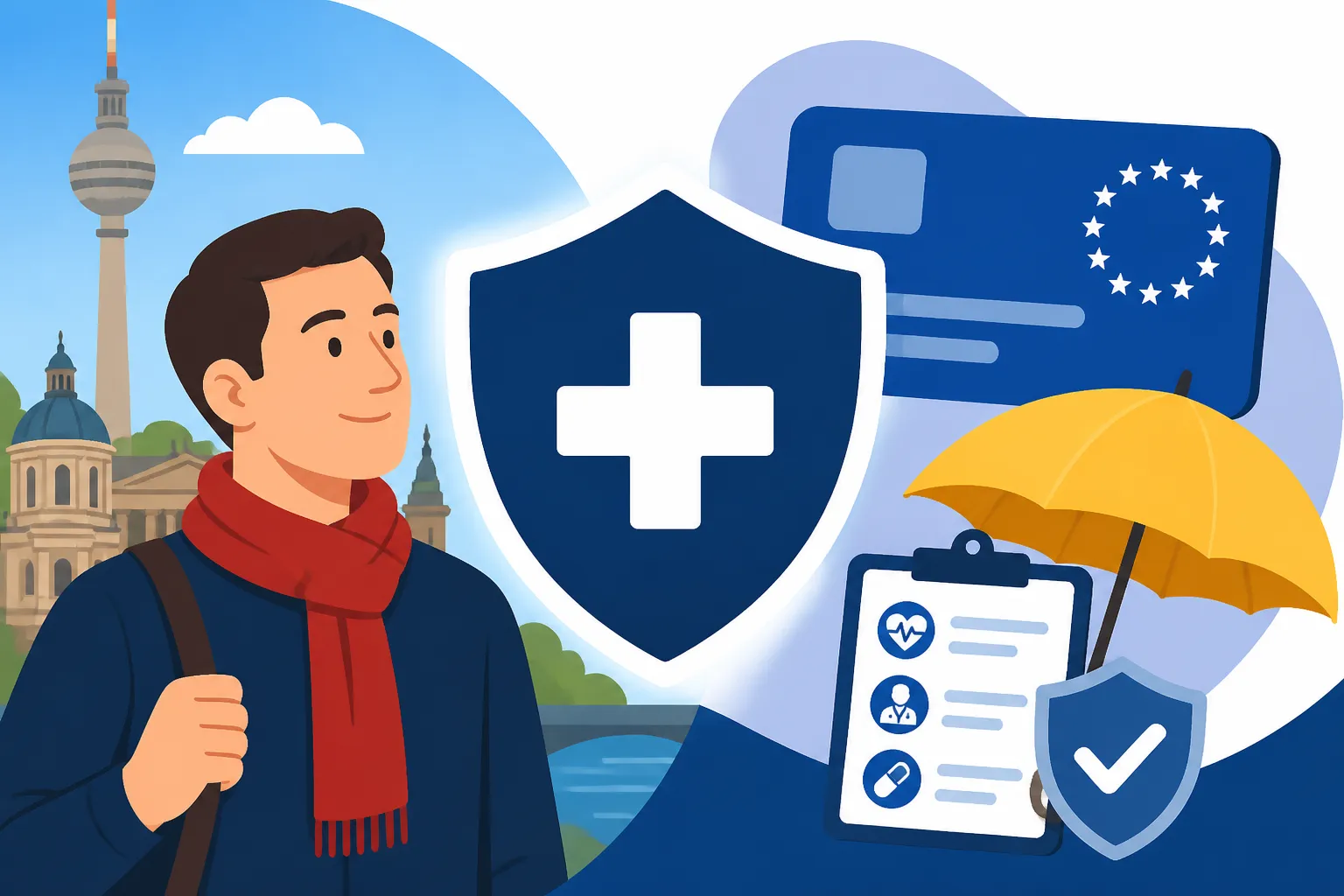
Think of the GHIC as the EHIC's younger sibling, born out of necessity post-Brexit. For many years, the EHIC was your trusty companion for holidays and short trips within the EU, giving you peace of mind that if you broke an ankle skiing or had a sudden illness, you wouldn't be landed with a massive bill. It allowed you to receive medically necessary treatment – meaning treatment that couldn't wait until you got back home – at the same cost as a local. For most UK citizens, the old EHIC is no longer valid, replaced by the GHIC.
The key difference, and this is crucial, is in its scope. While an EHIC covered you across the EU/EEA and Switzerland, the standard GHIC typically only covers medically necessary treatment in EU countries. The UK still has some bilateral agreements with non-EU countries that might extend coverage, but for our purposes in Germany, it largely functions similarly to the old EHIC for short-term stays. The core principle remains: it's for unexpected, urgent care, not for planned treatment or for covering your primary healthcare needs if you're a long-term resident. It’s a fallback for tourists, not a comprehensive insurance plan for expats.
When and Where Does Your GHIC Offer Coverage in Germany?
If you're still primarily a UK resident visiting Germany for a holiday, a GHIC can be a lifesaver. Let's say you're exploring the Brandenburg Gate in Berlin and twist your knee, or you're enjoying the Christmas markets and suddenly come down with a severe fever. In these scenarios, your GHIC would entitle you to state-provided healthcare on the same basis as a German citizen. This means you'd go to a general practitioner (Hausarzt) or a hospital, and your GHIC would cover the cost of medically necessary treatment. You'd present it just as a German would present their Gesundheitskarte.
However, and this is a colossal "however," this coverage is strictly for temporary stays. If you're residing in Germany, even for just a few months, and certainly if you've moved here long-term, established residency, or are working, the GHIC does not fulfill your legal obligations for health insurance. Imagine this: you've moved to Munich, registered your address (Anmeldung), and started a job. You can't simply flash your GHIC at the doctor's office for routine check-ups, ongoing prescriptions, or specialist referrals once you're considered a resident. The German system requires comprehensive coverage, and the GHIC simply doesn't provide that for residents. It's not designed to be a substitute for proper German health insurance like the gesetzliche Krankenkasse (public health insurance) or private Krankenversicherung (private health insurance).
Key Limitations and What the GHIC Doesn't Cover for Long-Term Residents
This is where many British expats face a harsh reality check. While the GHIC is a fantastic safety net for holidays, it has gaping holes when you're living and breathing German life. First and foremost, as mentioned, it does not count as comprehensive health insurance for residency purposes. When you apply for your visa or residence permit, or when you register for work, you'll need proof of valid, comprehensive health insurance in Germany. The GHIC will absolutely not suffice for this. You can read more about what is typically expected in our guide on Health Insurance in Germany: Understanding Public vs Private Coverage.
Secondly, the GHIC is not for planned medical treatment. If you know you need ongoing therapy, a specific non-urgent surgery, or regular check-ups, the GHIC won't cover these. It's reactive, not proactive. For example, if you have a chronic condition that requires regular medication or consultations, relying on the GHIC would leave you high and dry. You'd be expected to cover these costs out-of-pocket, which, as anyone who has experienced the German medical system knows, can be astronomically expensive if you're not properly insured. It’s also crucial to remember that it won't cover repatriation if you need to be flown back to the UK for medical reasons, nor will it cover lost luggage or trip cancellations, which a proper travel insurance policy or expat health insurance plan would typically include.
Why the GHIC Alone Isn't Enough for Long-Term Stays in Germany
Let's be brutally honest: thinking your GHIC is enough for living in Germany is like bringing a teacup to a wildfire. It might offer a tiny sip of relief in a dire emergency, but it won't put out the blaze of German bureaucracy or cover the vast majority of your healthcare needs as a resident. I've seen countless expats arrive here, blissfully unaware of the legal and financial repercussions of underinsurance, only to face immense stress and unexpected costs down the line.
The Legal Requirement for Comprehensive Health Insurance in Germany
Germany is incredibly strict about health insurance. It's not a "nice to have"; it's a legal mandate. Everyone residing in Germany must have valid, comprehensive health insurance. This isn't just a recommendation; it's a condition for obtaining and maintaining your visa or residence permit. When you go to the Ausländerbehörde (Foreigners' Office), one of the first things they'll ask for is proof of your insurance. If you're an employee, your employer will automatically enroll you in public health insurance, provided you meet the salary threshold, but you still need proof of this. For freelancers, students, or those on certain visas, the responsibility falls squarely on your shoulders to secure adequate coverage.
Imagine arriving in Berlin, finding an apartment, and heading to your Anmeldung appointment. They'll ask for your Wohnungsgeberbestätigung and also about your health insurance. You can't just hand over your GHIC. You need something that proves full coverage, be it a public Krankenkasse like TK or AOK, or a recognized private insurance provider. Without it, you won't get your residency sorted, and frankly, you won't even be able to legally live here. This is why getting your How to Get Health Insurance in Germany: Step-by-Step for Newcomers ducks in a row before you even land is paramount.
Gaps in GHIC Coverage: Emergency vs. Comprehensive Care
The fundamental flaw of relying on a GHIC for long-term residency is the stark difference between emergency care and comprehensive care. The GHIC is explicitly designed for emergencies that cannot reasonably wait until you return home. This means if you have a life-threatening accident or a sudden, acute illness, you'll be treated. But what about everything else that makes up typical healthcare?
Think about it: regular check-ups with a Hausarzt (general practitioner), dental cleanings, vision care, seeing a specialist for a nagging knee pain, getting a routine vaccination, or even prenatal care if you're planning a family. None of these fall under the "medically necessary emergency" umbrella for a resident, and thus, none are covered by your GHIC. This means you’d be paying out of pocket for every single one of these services. And let me tell you, medical bills in Germany, especially for private patients or those without insurance, can quickly become staggering. You don't want to find yourself in a situation where you're putting off seeing a doctor because you're worried about the bill.
Financial Risks of Relying Solely on GHIC
The financial implications of trying to navigate the German healthcare system with just a GHIC are simply too high to ignore. If you have an accident that isn't severe enough for an emergency room but requires X-rays and follow-up appointments, you'd pay for it all. A simple visit to the doctor for a common cold might not break the bank, but what if it turns out to be something more serious? A few specialist consultations, some diagnostic tests, and suddenly you're looking at hundreds, if not thousands, of Euros.
For example, a broken arm might cost you a few hundred euros for an emergency room visit with a GHIC, but follow-up physiotherapy, specialist consultations, and ongoing medication, if not deemed "medically necessary during your temporary stay", would fall outside that scope for a resident. This isn't just about covering immediate crises; it's about having the financial security to access all necessary healthcare without crippling debt. Expats often look for flexible and cost-effective solutions to cover this initial period, or for those whose residency might still be in flux. This is precisely where something like SafetyWing can really shine, offering that crucial bridge coverage.
Navigating Germany's Health Insurance Landscape as a British Expat
The German health insurance system is renowned for being robust, but also, let's face it, incredibly complex. For a new expat, especially post-Brexit, it can feel like trying to solve a Rubik's Cube blindfolded. Understanding the main types of insurance is the first step to securing your health and your legal right to reside here.
Public Health Insurance GKV: The German Default for Employees
For most employees in Germany, especially those earning below a certain income threshold (which is €77,400 per year in 2026), public health insurance (gesetzliche Krankenversicherung or GKV) is mandatory. This is the bedrock of the German system. It's comprehensive, covering a wide range of services from doctor visits, hospital stays, medication, and even some preventative care. The cost is a percentage of your gross salary, split almost equally between you and your employer, plus a small supplementary contribution that varies slightly between different providers (Krankenkassen).
When you start a job, your employer typically handles the initial setup, ensuring you're enrolled in a Krankenkasse. You usually get to choose your provider, with popular ones including TK, AOK, Barmer, DAK-Gesundheit, and others. Public health insurance is fantastic because it also covers your non-working spouse and children for free under the family insurance (Familienversicherung) scheme. This is often the most straightforward and secure option for employed expats. You can delve deeper into Public Health Insurance (gesetzliche Krankenkasse): What It Covers and Costs to compare options.
Private Health Insurance PKV: When It's an Option or a Requirement
Private health insurance (private Krankenversicherung or PKV) is a different beast entirely. It's generally an option for higher-earning employees (above the €77,400 threshold), freelancers, self-employed individuals, and civil servants. Unlike GKV, which is solidarity-based, PKV is risk-based, meaning your premiums are calculated based on your age, health status, and desired level of coverage. While it often offers perks like faster specialist appointments, direct access to private doctors, and more comfortable hospital rooms, it can also be more expensive, especially as you age or if you have pre-existing conditions.
Switching from private back to public is notoriously difficult, so this is a decision that requires careful consideration. For some, like certain types of freelancers, PKV might be their only choice, or a more financially viable one if they are young and healthy. When considering PKV, it's vital to research providers thoroughly and understand the long-term implications. Our guide on Private Health Insurance in Germany: Benefits, Costs, and Eligibility offers more detailed insights.
Bridging the Gap: Short-Term and Expat-Specific Solutions
So, what about those tricky periods? What if you're arriving in Germany on a job-seeker visa, or you're a freelancer just getting your business off the ground? Or perhaps you're simply in the process of transitioning between insurance types, waiting for your public health insurance to kick in with a new job? This is precisely where short-term, flexible, and expat-specific solutions come into play. The GHIC is, as we've established, useless here. You need something that the Ausländerbehörde will accept as valid and comprehensive, at least for a temporary period, but without the long-term commitment of a full German policy.
Many expats find themselves in this limbo. They need immediate, reliable, and compliant coverage that doesn't tie them into a complex German system before they're even sure of their long-term plans. This is a common pain point, and frankly, it's where companies like SafetyWing have really stepped up to offer a practical, no-nonsense solution for a truly global, flexible generation of expats.
SafetyWing: A Flexible Solution for Brits in Germany
When you're first landing in Germany, or if your plans are still a little fluid, sorting out full German health insurance can feel like an impossible task. You need something that's recognized, reliable, and doesn't demand a German bank account, Anmeldung, or a confirmed job right off the bat. This is exactly why SafetyWing has become such a popular choice among digital nomads, freelancers, and new expats like us. They understand the unique challenges of being abroad and needing solid coverage without all the usual hoops to jump through.
Why SafetyWing is Ideal for New Arrivals and Flexible Lifestyles
SafetyWing's Nomad Insurance is designed for people living and working internationally, and it truly offers a breath of fresh air for Brits navigating the post-Brexit landscape in Germany. Firstly, it’s flexible. You can purchase it online from anywhere in the world, even if you’ve already arrived in Germany, and you can cancel it anytime. This is a huge advantage compared to rigid German policies that often require months of notice to terminate. For someone on a job-seeker visa, or a freelancer whose income might fluctuate, this flexibility is invaluable. You're not tied down.
Secondly, it's compliant for many visa requirements. While it's always crucial to double-check the specific requirements for your particular visa at the German embassy or Ausländerbehörde, SafetyWing's policies often meet the basic criteria for certain types of visas, especially for initial stays or those needing travel insurance components. It provides medical coverage for accidents and illnesses, emergency dental care, and even includes travel benefits like trip interruption and lost luggage, something your GHIC definitely doesn't touch. For those uncertain first few months, or for a temporary bridge while you sort out your long-term German Krankenkasse, SafetyWing offers peace of mind.
Understanding SafetyWing's Coverage: Benefits and Key Features
SafetyWing's Nomad Insurance offers a robust package that covers general medical expenses if you get sick or have an accident while in Germany. This includes doctor and hospital visits, prescription drugs, and even emergency medical evacuation. Think about it: if you're new to the country and don't yet have a Hausarzt, or you're in an unfamiliar city, knowing you have comprehensive emergency coverage is a huge relief. They also offer a 24/7 customer support service, which can be incredibly helpful when you're in a foreign country and need guidance.
It’s important to understand that while it covers general medical expenses, it typically won't cover pre-existing conditions, routine check-ups, or preventative care that would usually be part of full German public health insurance. However, for unexpected illnesses or injuries, which are precisely what you need to be insured against when arriving in a new country, SafetyWing provides excellent coverage. This is especially true for those initial weeks or months when you're still getting settled and German insurance might not yet be active. It acts as a reliable safety net for that critical transition period.
How to Integrate SafetyWing with Your German Residency Plans
Many expats use SafetyWing as a starting point. You can get covered right away, which helps fulfill the immediate health insurance requirement for your visa application or initial Anmeldung. Once you've secured a job that qualifies you for public health insurance (GKV), or if you decide to commit to a private German plan (PKV) as a freelancer, you can easily transition. You would then cancel your SafetyWing policy and switch to your chosen German provider.
This strategy prevents you from being uninsured, which is illegal and risky, while also giving you the breathing room to choose the right long-term German insurance without pressure. SafetyWing essentially bridges that initial gap, offering a flexible and affordable way to comply with German legal requirements without committing to a long-term contract until you're ready. It's a pragmatic choice for the modern expat.
Here's a quick comparison of what GHIC and a flexible expat insurance like SafetyWing typically offer in Germany:
| Feature/Benefit | GHIC (Global Health Insurance Card) | SafetyWing Nomad Insurance (Example) | German Public Health Insurance (GKV) |
|---|---|---|---|
| Purpose | Medically necessary treatment for temporary visits to EU countries. | Comprehensive medical for expats/nomads; covers accidents/illnesses abroad. | Comprehensive, legally mandated care for residents; covers almost everything. |
| Residency Compliance | No, not for German residents/visa applications. | Often, for initial visa applications/short-term stays (check specifics). | Yes, legally required for most residents and workers. |
| Coverage Scope | Basic state-provided healthcare for emergencies. | Accidents, unexpected illness, emergency dental, some travel benefits. | Doctor visits, hospital stays, medication, specialists, preventative care, etc. |
| Pre-existing Conditions | Generally not for planned treatment. | Typically not covered (acute onset exceptions may apply). | Generally covered after initial waiting periods. |
| Cost | Free (issued by NHS). | Monthly subscription, varies by age. | Percentage of income (split with employer), plus supplementary fee. |
| Flexibility | N/A (tied to UK residency). | High (monthly, cancel anytime, buy from anywhere). | Low (long-term contracts, complex to switch/cancel). |
| Travel Benefits | None (no repatriation, lost luggage, trip cancellation). | Yes (trip interruption, travel delay, lost checked luggage). | None. |
| Family Coverage | N/A. | Individual coverage, but family plans available. | Spouses/children often covered free under family plan. |
Practical Steps for Securing Your Health Insurance in Germany
Okay, we've talked about what the GHIC isn't for and why you need more. Now, let's get down to the brass tacks: what should you actually do when it comes to getting proper health insurance in Germany? This process can feel daunting, but breaking it down into manageable steps makes it much less intimidating.
Initial Steps: What to Do Upon Arrival
The moment you set foot on German soil, your clock for sorting out health insurance starts ticking. The very first thing you'll likely need, often even before you can open a proper bank account or get your tax ID, is proof of adequate health insurance for your visa or residence permit application.
- For Short-Term Bridge Coverage: If you’re arriving on a job seeker visa, a freelance visa, or simply need immediate cover while you get settled, this is where a flexible solution like SafetyWing truly shines. It allows you to purchase a policy quickly, provides the necessary documentation, and ensures you're legally covered for urgent medical care. This can give you the precious weeks or months you need to secure a job or navigate the German insurance market for a long-term solution. Remember, the GHIC is not accepted for this.
- The Anmeldung: Within two weeks of arriving, you must register your address (Anmeldung) at the local Bürgeramt. While they might not demand proof of health insurance on the spot for Anmeldung, it's an underlying requirement for your general legal status and will certainly be asked for later at the Ausländerbehörde when you apply for your residence permit. Don't underestimate the importance of your Anmeldung (Address Registration): Step-by-Step Guide.
Long-Term Planning: Transitioning to Permanent German Coverage
Once you're more settled, ideally with a job offer or a clear plan for your freelance career, you'll need to transition to a permanent German health insurance solution.
- If you're employed: Your employer will guide you. They'll ask you to choose a public Krankenkasse (like TK, AOK, Barmer, etc.), and they will handle your enrollment. Your contributions will be automatically deducted from your salary. This is usually the easiest path to comprehensive, long-term coverage.
- If you're a freelancer/self-employed: This requires more active research. You can opt for public health insurance (if you were previously publicly insured in Germany or meet certain criteria) or private health insurance. Public options for freelancers exist but can be more expensive than for employees, as you pay both the employer and employee share. Private insurance offers more tailored plans but requires careful comparison. Always seek advice from an independent insurance broker who understands the intricacies of Health Insurance for Freelancers and Self-Employed: Navigating the System.
Important Documents and Processes
Navigating the German system is all about documents, documents, documents!
- Visa/Residence Permit: Your health insurance proof is critical for any visa application (e.g., Germany Work Visa & Immigration Guide for Professionals, Visas and Residence Permits in Germany: Everything You Need to Know). Ensure the policy you present explicitly states it covers you in Germany and meets the minimum coverage requirements.
- Employer Communication: If you're employed, your HR department will be your go-to for setting up your public health insurance. They need to know your chosen Krankenkasse to process your employment contract correctly.
- GHIC vs. German Health Card: Once you have German public health insurance, you'll receive a Gesundheitskarte (health card). This is what you'll use for all doctor's appointments and hospital visits. Your GHIC, if you still have one, will become largely irrelevant for your daily life in Germany, serving only for trips to other EU countries for temporary, medically necessary care.
- Understanding Bills: If you have private insurance or if you end up with an unexpected bill, you’ll need to understand Understanding German Medical Bills: Decoding Private Invoices and Co-Pays. The system can be confusing, so don't be afraid to ask for explanations.
It's a lot, I know. But by understanding these steps, utilizing flexible solutions like SafetyWing for the initial phase, and then committing to the German system, you can navigate your healthcare without a hitch.
Disclaimer
Please remember, this guide provides general information for British expats in Germany. While I strive for accuracy, individual circumstances can vary greatly. Health insurance regulations in Germany are complex and can change. Always verify specific requirements with official sources, such as the German Embassy, the Ausländerbehörde (Foreigners' Office), or a qualified insurance advisor, especially when it comes to visa applications or long-term residency. This article should not be considered legal or professional financial advice.