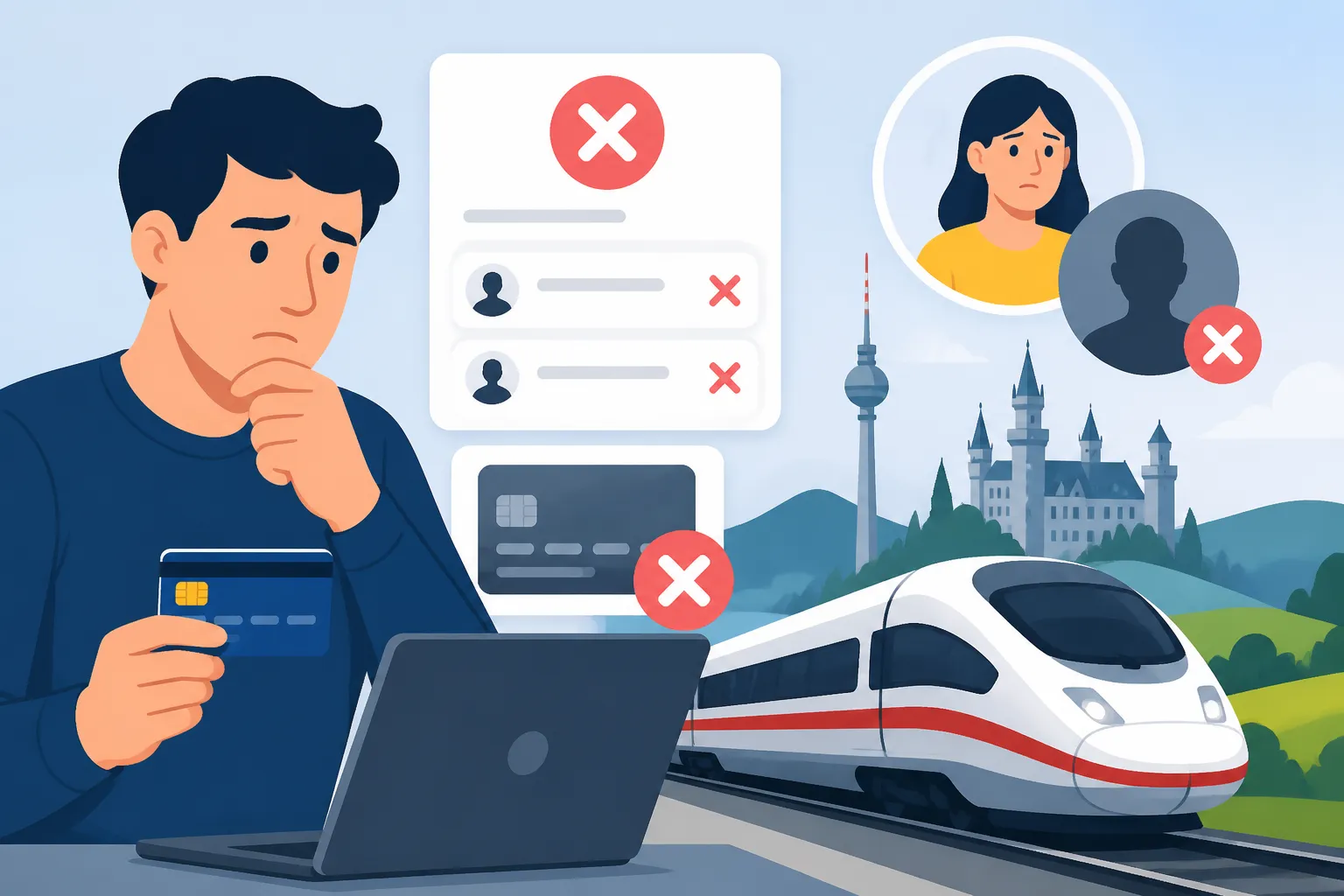
Booking German Trains From Abroad: Foreign Cards, Names, and Failures
Trying to book German train tickets from the comfort of your home country, only to be met with a frustrating "payment failed" message or a baffling German-only interface, is a rite of passage for many expats and visitors. It’s enough to make you throw your hands up in exasperation before you even pack your bags! This comprehensive guide will walk you through the common pitfalls of securing your train tickets from abroad, demystify the system, and introduce you to solutions that make the process smoother, especially with services like Omio.
Disclosure: This post may contain affiliate links. We may earn a commission at no extra cost to you if you make a purchase through these links. Read full disclosure.
The Perplexing Problem: Why Booking German Trains from Abroad Can Be a Headache
Ah, Germany. Land of efficiency, punctuality (mostly!), and… surprisingly complicated train ticket booking for those of us not already immersed in the system. Many expats and tourists quickly discover that what seems like a simple task can quickly devolve into a bureaucratic battle of wills, especially when you're trying to plan your journey from outside the country. It's not just you; it's a common hurdle, and understanding why it's so tricky is the first step to overcoming it.
The Dreaded Foreign Card Rejection
This is perhaps the single biggest source of frustration for anyone trying to book anything online in Germany from abroad. You’ve found the perfect connection on Deutsche Bahn (DB), you’re ready to pay, and then – Fehler! Error message. Your foreign credit card, which works perfectly fine everywhere else in the world, is suddenly deemed unacceptable. It’s not necessarily that your bank is declining it; often, it’s a system-level issue with the German payment gateways not recognizing or trusting foreign-issued cards, especially for transactions from outside the EU.
I've been there countless times myself. I remember trying to book a Sparpreis (saver fare) ticket from Berlin to Hamburg for an upcoming visit, only to have my perfectly valid American credit card rejected repeatedly on the DB website. It's a maddening loop, especially when those cheaper tickets are slipping away with each failed attempt. This isn't just an inconvenience; it can actively prevent you from accessing the best deals, forcing you into more expensive last-minute purchases or alternative travel plans once you arrive. You might even find yourself calling a German friend or family member, begging them to book it for you with their German card, which is hardly ideal.
Navigating German Naming Conventions and Ticket Types
Once you get past the payment hurdle, or even before it, you're faced with the labyrinthine world of German train tickets. The sheer number of options can be overwhelming, and understanding the nuances is crucial to avoid paying too much or ending up on the wrong train. You have your high-speed ICE trains, your regional RE and RB trains, and then the different fare categories: Flexpreis, Sparpreis, and Super Sparpreis.
Flexpreis tickets offer maximum flexibility, allowing you to use any train on your chosen route on the specified day, often including a refund option. Great, but pricey. Then there are the Sparpreis and Super Sparpreis tickets, which are significantly cheaper but come with strict conditions: they are usually tied to a specific train and time, and cancellation or changes are either impossible or incur high fees. Missing your Sparpreis train often means your ticket is invalid for the next one, forcing you to buy a brand new, expensive Flexpreis ticket on the spot. It’s enough to make your head spin, and trying to decipher all this in a foreign language adds another layer of stress.
Language Barriers and Website Frustrations
Even with some English options, the official Deutsche Bahn website can be a beast for non-German speakers. Key details, obscure terms, or error messages might only appear in German, leaving you guessing. While the general booking flow might be available in English, diving into the nitty-gritty of conditions, special offers, or less common routes can quickly lead you into a German-only rabbit hole. This isn't a criticism of DB; it's a reality of interacting with a national service in its native language.
Beyond the language itself, the user interface can sometimes feel less intuitive than what you might be used to from booking platforms in your home country. Pop-up messages, slightly confusing navigation, or a general lack of clarity on what information is really needed can add to the feeling of being an outsider struggling with the system. It’s like standing in line at the Bürgeramt (citizen's office), only virtually. This barrier isn't just about translating words; it's about understanding the underlying logic and expectations of a different digital ecosystem.
Unpacking Your Options: Where to Buy Train Tickets for Germany
So, with the difficulties laid bare, what are your actual options for securing those elusive train tickets? Thankfully, there's more than one way to skin this cat, and some methods are significantly less painful than others for international travelers. Understanding these avenues is key to a smooth journey.
Deutsche Bahn's Official Channels (and their quirks)
The most obvious place to start is Deutsche Bahn itself. You can try their official website, bahn.de, or their mobile app, DB Navigator. Both offer comprehensive schedules, real-time information, and the full range of ticket options, including all the Sparpreis and Super Sparpreis deals. For those who are comfortable navigating German bureaucracy and payment systems, these are indeed the most direct ways to book.
However, as we've discussed, the website and app can be prone to foreign card rejections. Even if you manage to pay, you might find yourself needing to create a DB account, which can be another layer of hassle if you don't have a German address or mobile number. The DB Navigator app is fantastic once you're in Germany and have your tickets, but getting them into the app in the first place, especially if you had payment issues, can be a hurdle. It's a powerful tool, but one that sometimes feels like it was designed primarily for local residents. If you want to dive deeper into maximizing your savings with DB, you might find tips in a guide on High-Speed Trains in Germany ICE Deutsche Bahn Routes and Savings.
Third-Party Booking Platforms: A Lifesaver for Expats
This is where services like Omio truly shine as the hero for expats and international visitors. Platforms like Omio act as intermediaries, simplifying the booking process by aggregating travel options from various providers – including Deutsche Bahn – and offering a more internationally friendly interface and payment system. They understand the frustrations foreigners face and actively work to smooth them over.
Omio, for example, allows you to search for train tickets across Germany (and indeed, all of Europe) with ease. Crucially, they typically support a wider range of international credit and debit cards, as well as alternative payment methods like PayPal, Apple Pay, and Google Pay, which often bypass the direct payment issues encountered on the DB website. They translate complex German fare rules into clear, understandable English (or your preferred language), making it much easier to compare options like The Deutschland-Ticket and Regional Trains Explained and make informed decisions without needing a German dictionary open in another tab. This convenience and payment flexibility make Omio an absolute game-changer for anyone booking from abroad.
Buying Tickets Upon Arrival (The Last Resort)
If all else fails, or if you simply prefer to keep your options open, you can always purchase tickets directly at train stations in Germany. This involves using ticket machines (which usually offer English language options) or going to a Reisezentrum (travel center) for personal assistance. The benefit here is direct human interaction if you have questions, and the machines accept a variety of payment methods, including cash and most international cards.
However, there are significant downsides. Firstly, you will almost certainly pay a higher price. The cheapest Sparpreis and Super Sparpreis tickets often sell out far in advance, especially on popular routes. Buying last-minute Flexpreis tickets at the station can be substantially more expensive. Secondly, queues at the Reisezentrum can be long, particularly during peak travel times or holidays, eating into your valuable travel time. Lastly, not all smaller stations have a Reisezentrum, so you might be reliant on machines anyway. It's an option for emergencies or spontaneous travel, but not ideal for budget-conscious or pre-planned trips. For general advice on navigating Germany's extensive public transport, check out Using Deutsche Bahn Guide: Using Trains for City and Long-Distance Travel.
Making Your Purchase Painless: Tips and Tricks for Foreigners
Now that we know where to look, let's equip you with some insider tips to make the actual ticket purchase as smooth as possible, particularly when dealing with those notorious foreign card rejections and the nuances of the German system.
Getting Around Card Issues: Virtual Cards and Payment Gateways
The bane of many an expat's existence – the foreign card rejection – can often be circumvented. If you're persistently facing issues directly on the Deutsche Bahn website, your first port of call should be a third-party platform. Omio, as mentioned, is designed with international travelers in mind and typically has robust payment processing that accepts a wider array of cards and digital wallets. This often solves the problem instantly.
Alternatively, consider using services like PayPal, which creates a layer between your card and the merchant. Many German online retailers and even the DB website accept PayPal, and connecting your international card to your PayPal account can often bypass direct rejection from German payment gateways. Some expats also swear by virtual cards or specific digital banks (like Revolut or Wise) that offer Euro accounts or virtual cards. These often work seamlessly because they appear as local or European transactions to the German system. Planning your overall finances in Germany? Our guide on Money for Travel in Germany Cash Cards and ATMs has more helpful insights.
Understanding Different Ticket Fares
Deciphering the German fare structure is crucial for saving money. As a foreigner booking from abroad, your goal should almost always be to secure a Sparpreis or Super Sparpreis ticket if your travel dates and times are fixed. These are the cheapest options, often starting from as little as €17.90 for long-distance journeys. The catch, as discussed, is their inflexibility. They are valid only for the specific train, date, and time printed on them. If you miss your train, that ticket is usually void, and you'll need to buy a new one at the walk-up Flexpreis rate.
The Flexpreis offers full flexibility, allowing you to take any train on your route on your travel day. It's significantly more expensive, but if you have unpredictable plans or are prone to last-minute changes, it might be worth the peace of mind. For regional travel, you'll encounter Länder-Tickets (state-specific day passes) and the popular Deutschland-Ticket and Regional Trains Explained which is a fantastic monthly subscription for €49 allowing unlimited travel on regional trains and public transport across Germany. For long-distance trains, booking 2-3 months in advance on platforms like Omio is your best bet for snagging those coveted Sparpreis deals.
Navigating Seat Reservations and Passenger Names
Unlike some other European countries, a seat reservation (Sitzplatzreservierung) is not automatically included with your train ticket in Germany, especially for long-distance ICE trains, unless you purchase a Flexpreis ticket specifically with that option. For Sparpreis and Super Sparpreis fares, a seat reservation typically costs an extra €4.90 (as of my last check) per person per journey. While not mandatory, it's highly recommended, especially during peak travel times (Fridays, Sundays, public holidays) or on popular routes. Nothing's worse than dragging your luggage through crowded carriages, desperately searching for an empty spot!
When booking, ensure you enter passenger names exactly as they appear on your passport or ID. While train conductors rarely check ID against tickets on domestic routes, it's a good habit, and for international connections or if a conductor is particularly strict, discrepancies could cause issues. Omio makes this straightforward, guiding you clearly through the process of adding passengers and selecting seat reservations if desired. This attention to detail can prevent small but significant hiccups in your travel plans.
| Booking Platform | Ease of Foreign Payment | Language Support | Price Transparency | Flexibility of Tickets | Overall Expats Friendliness |
|---|---|---|---|---|---|
| Deutsche Bahn (bahn.de / DB Navigator) | Often problematic | Good (for main functions) | High | High | Moderate |
| Omio | Excellent | Excellent | High | High | Excellent |
| At the Station (Reisezentrum / Machine) | Good (cash/card) | Varies (machine vs staff) | Low (last-minute) | Varies | Moderate |
Beyond Booking: What to Expect on German Trains
Congratulations, you've successfully booked your German train ticket from abroad! Now, let's talk about what to expect once you're actually on the tracks. German train travel is generally very efficient and comfortable, but a few local customs and system quirks are good to know.
Understanding the German Train System
Germany boasts an impressive railway network primarily operated by Deutsche Bahn (DB). You'll encounter several types of trains:
- ICE (Intercity-Express): These are Germany's high-speed trains, connecting major cities rapidly. They are modern, comfortable, and usually the fastest option.
- IC/EC (Intercity/Eurocity): Long-distance trains that are slightly slower than ICEs but still connect cities. EC trains cross international borders.
- RE (Regional-Express): These trains connect larger towns within a region, making fewer stops than local trains.
- RB (Regionalbahn): The slowest regional trains, stopping at almost every station.
- S-Bahn (Stadtschnellbahn): Suburban rail networks found in major cities, functioning more like an express metro system. These are part of urban public transport.
Knowing the train type helps you understand travel times and comfort levels. For instance, you wouldn't typically take an RB for a cross-country journey, nor an ICE for a quick hop between two small villages. If you're exploring Germany's diverse geography, understanding Germany's Regions and Where to Go A Traveler's Overview can help you plan your train routes effectively.
Common Courtesy and Rules on Board
German trains are generally quiet and orderly. Passengers typically speak in hushed tones, especially in designated "Ruhebereich" (quiet zones) on ICE trains, where phone calls are discouraged. If you have a seat reservation, make sure you're in the correct coach and seat number. Electronic displays above each seat will usually indicate if a seat is reserved and for which segment of the journey. If it says "ggf. reserviert" (possibly reserved) or is empty, you're usually safe to sit there until a passenger with a reservation for that segment arrives.
Also, be mindful of your luggage. There's often ample space above seats or in designated luggage racks at the end of carriages, but avoid blocking aisles or emergency exits. Eating and drinking are perfectly acceptable on trains; many ICE trains even have a Bordrestaurant (restaurant car) or Bordbistro (bistro car) for refreshments. Finally, remember to keep your ticket accessible, either on your phone (e.g., in the Omio app or DB Navigator) or as a printout, as conductors will check it during your journey.
Dealing with Delays and Cancellations
Even in Germany, trains can be delayed or cancelled. It's a reality of travel everywhere. Deutsche Bahn provides real-time updates through station announcement boards, the DB Navigator app, and their website. If you've booked through Omio, you might also receive updates directly to your email or via the Omio app, which can be incredibly helpful for managing unforeseen circumstances.
For significant delays (e.g., 60 minutes or more), you are typically entitled to partial refunds or rebooking options. If you bought a Flexpreis ticket and your train is severely delayed, you might even be able to take an alternative route or a different train, sometimes even switching to an earlier or later high-speed train if your original connection was regional. With Sparpreis tickets, the rules are stricter, but if the delay causes you to miss a connection or arrive significantly late, DB usually allows some flexibility. The key is to speak to a conductor or visit a Reisezentrum for guidance. Keeping an eye on Emergency Numbers in Germany Calling 112 Poison Control and More is always wise for any travel situation, though less likely to be needed for train delays.
Why Omio is Your Best Bet for German Train Travel
For expats and tourists navigating Germany's transport landscape, Omio isn't just another booking website; it's genuinely a comprehensive solution that mitigates many of the specific pain points foreign travelers encounter. From initial booking frustrations to mid-trip adjustments, Omio streamlines the journey.
Seamless Booking with International Payment Options
The single most significant advantage of Omio for international users is its robust support for a wide array of international payment methods. While Deutsche Bahn might reject your foreign credit card, Omio usually sails through with options like Visa, MasterCard, American Express, PayPal, and even local payment methods popular in various countries. This alone saves countless headaches and ensures you can actually purchase the ticket you want, when you want it, without resorting to asking a local friend for help or waiting until you arrive in Germany.
Beyond payment, Omio's interface is designed for global users. You can search in multiple languages, including perfect English, and all the confusing German terms for ticket types, conditions, and station names are clearly explained. This makes comparing options incredibly straightforward, allowing you to confidently choose between different fare types and understand their implications without fear of misinterpretation. It's truly a breath of fresh air compared to wrestling with a partially translated national railway site.
Multilingual Support and Clear Information
Another major benefit is Omio's commitment to multilingual support. Not only is the website and app available in numerous languages, but their customer service is also equipped to assist you in English, which can be a lifesaver if you encounter any issues with your booking or need to make changes. This level of support is invaluable when you're in a foreign country and dealing with unexpected travel hiccups.
Omio also excels at presenting information clearly and concisely. It aggregates results from different train operators, as well as buses (like FlixBus, which we discuss in Long-Distance Buses in Germany FlixBus and Networks) and even flights, allowing you to compare travel times, prices, and comfort levels all in one place. This transparency makes decision-making much simpler, especially when you're trying to figure out the most efficient or economical way to get from A to B.
Comparing Options Across Different Transport Modes
One of Omio's most powerful features for travel planning in Germany (and Europe) is its ability to compare trains, buses, and flights side-by-side. For many routes within Germany, especially shorter to medium distances, a bus might be significantly cheaper than a train, albeit slower. For longer distances, a budget flight might occasionally beat the train on price, although often with more hassle. Omio lays out all these options for you, complete with estimated travel times and prices.
This means you’re not limited to just Deutsche Bahn's offerings. If train tickets for a particular route are prohibitively expensive or sold out, Omio will automatically show you viable bus alternatives, potentially saving your trip or your budget. This holistic approach to travel planning ensures you always get the best overview, making Omio an indispensable tool for both short-term visitors and long-term expats looking to explore Germany and beyond efficiently and affordably. Don't forget, for overall travel comfort and peace of mind, it's wise to consider Travel Insurance for Trips to and Within Germany.
Disclaimer
Please note that while I strive to provide accurate and up-to-date information, travel regulations, prices, and booking system functionalities can change. Always verify the latest details directly with the service providers or official sources before making final arrangements. This guide offers general advice for informational purposes and should not be considered legal or professional counsel.