Moving to Germany from Canada: East vs West Coast Container Costs
Oh, the joy of packing up your entire life in Canada and shipping it halfway across the world to Germany! I remember the sheer panic of staring at mountains of boxes, then at shipping quotes that seemed to fluctuate more wildly than the Canadian dollar. One of the biggest curveballs for many expats is realizing just how much your starting point in Canada dictates the final cost of moving your belongings. This guide is here to untangle the complexities of shipping containers from Canada's East vs. West Coast to Germany, and introduce you to a smart way to simplify the entire process with Sirelo.
Disclosure: This post may contain affiliate links. We may earn a commission at no extra cost to you if you make a purchase through these links. Read full disclosure.
The Cross-Atlantic Container Conundrum – Why Your Canadian Address Matters
Moving your home across the Atlantic isn't as simple as dropping a parcel in the mail. The sheer vastness of Canada means that your departure port significantly impacts the logistics, transit time, and, ultimately, the cost of getting your cherished possessions to your new German abode. Whether you're waving goodbye from the Pacific coast or the Atlantic seaboard, understanding the underlying shipping mechanisms is your first step to a successful move.
Decoding International Container Shipping: FCL vs. LCL
When you're looking at international shipping, you'll quickly encounter the terms FCL and LCL, and understanding them is crucial for your budget and timeline. FCL stands for Full Container Load, meaning you're essentially booking an entire container – usually a 20ft or 40ft unit – exclusively for your belongings. This is ideal if you have a full household to move, or if you simply prefer the peace of mind that comes with your items not being consolidated with other shipments. While it might sound more expensive, for larger moves, the per-item cost can be quite efficient, and it often leads to faster, more predictable transit times as there's less handling involved.
On the other hand, LCL means Less than Container Load. This option is perfect for smaller moves, like if you're a student, a single professional, or simply don't have enough belongings to fill an entire container. With LCL, your possessions are consolidated with other people's shipments in the same container, and you only pay for the space (cubic meters) that your items occupy. While this can be a more cost-effective solution for lighter loads, be prepared for slightly longer transit times as the container needs to be fully loaded, shipped, and then unloaded and sorted at the destination port.
Beyond the choice of FCL or LCL, several other factors play into the base cost. The specific size of the container (20ft being common for 1-2 bedroom homes, 40ft for larger family homes), the total volume and weight of your items (especially critical for LCL pricing), current fuel surcharges, and even the time of year you choose to move can all sway the final price. Peak moving seasons or periods of high global shipping demand can see prices creep up, so planning ahead is always wise.
Canada's Geographical Divide: East Coast vs. West Coast Ports
Canada is a massive country, stretching from the Atlantic to the Pacific, and this geographical reality creates a "great divide" when it comes to international shipping logistics. What might seem like a straightforward journey on a map becomes a complex network of ground and sea transport, heavily influenced by your starting point.
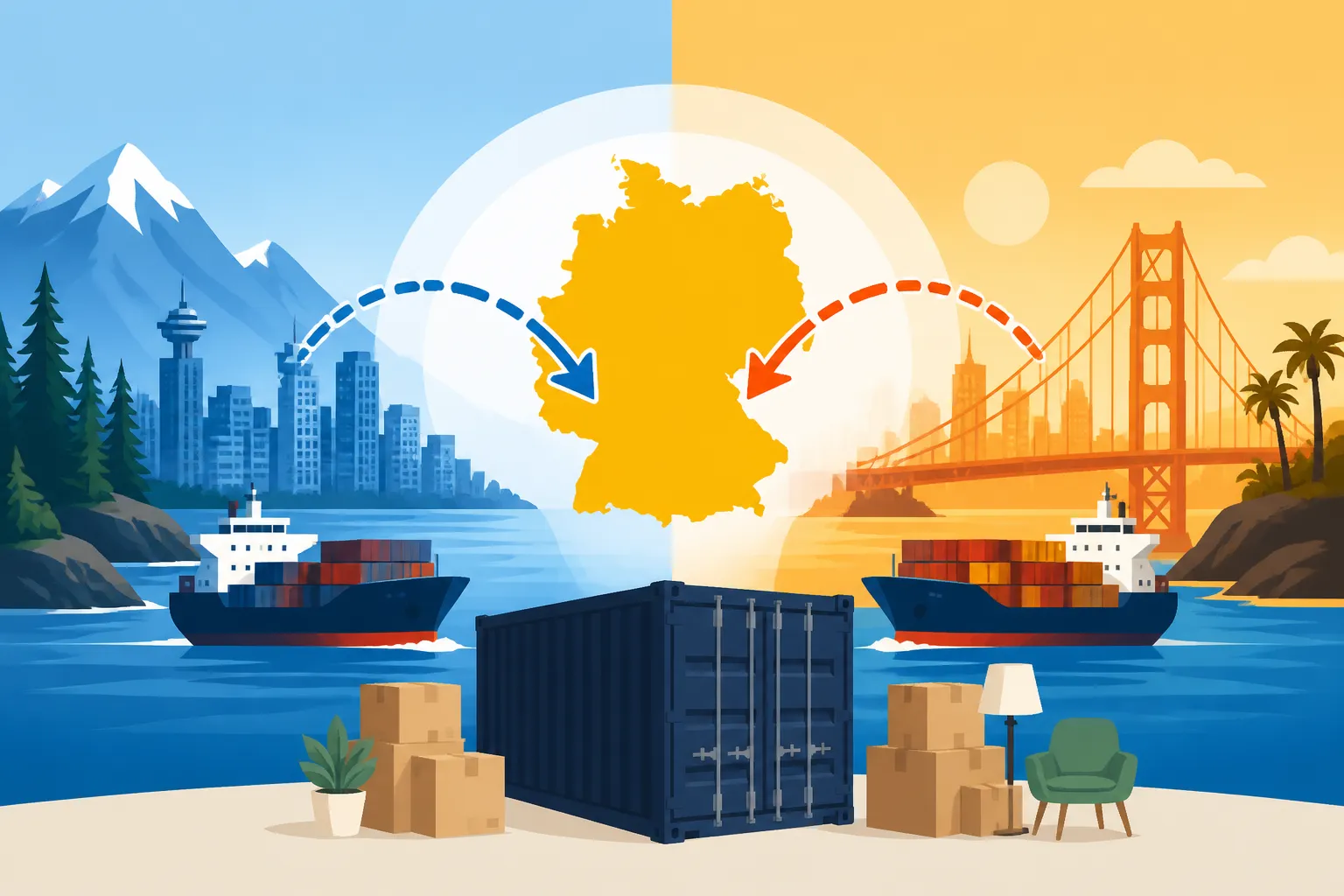
Imagine you're shipping your belongings from a vibrant city like Vancouver. Your container faces one of two primary routes to reach Germany. It can either embark on a long, often multi-week, journey south through the Panama Canal and then across the Atlantic, which is a significant detour. More commonly, it will travel thousands of kilometers eastward across Canada by rail, making its way to an East Coast port like Montreal or Halifax before it even sets sail for Europe. This added leg of intermodal transport – rail across Canada – tacks on considerable time, fuel costs, and handling fees.
Contrast this with a departure from a bustling East Coast port. Cities like Montreal, with its direct access to the St. Lawrence Seaway, or Halifax, a major Atlantic hub, offer much more direct access to the transatlantic shipping lanes. These routes are generally shorter, more frequent, and often involve fewer logistical intermediaries before your container is well on its way to a German port like Hamburg or Bremerhaven. This directness isn't just about speed; it's about reducing the overall complexity and, often, the price tag.
East Coast Canada to Germany – Direct Routes and Initial Savings
If your Canadian adventure begins on the eastern side of the country, you're generally looking at a more streamlined path to Germany. The geographical advantage of being closer to Europe makes a tangible difference in both transit times and the bottom line. It's not a magic bullet, but it certainly smooths out some of the initial kinks in the international moving process.
Advantages of Eastern Canadian Departures
One of the most appealing benefits of departing from Canada's East Coast is the significantly reduced geographical distance to Europe. This isn't just a minor detail; it translates directly into shorter sailing times across the Atlantic. Instead of weeks traversing the entire North American continent by land or making a lengthy detour through a canal, your container can often be loaded onto a vessel heading directly to major European port hubs like Hamburg in Germany, Rotterdam in the Netherlands, or Antwerp in Belgium. These ports are well-connected to Germany's internal rail and road networks, ensuring relatively efficient onward transportation once your goods land.
This proximity and more direct routing can also have a positive impact on your overall moving costs. While international shipping is inherently expensive, the reduced transit distances and often fewer intermediate handling steps (no long cross-country rail journey, for example) can lead to more favorable base freight charges. This is particularly true if you’re utilizing FCL (Full Container Load) shipping, where the entire container sails from your origin port without needing consolidation. Lower fuel costs and potentially less administrative coordination between different transport modes also contribute to these savings.
Beyond just cost, the predictability and often quicker turnaround are huge stress-reducers. Knowing that your belongings are on a more direct path can make coordinating your arrival in Germany, finding temporary accommodation, and timing the delivery of your household goods much less of a headache. When you're dealing with the myriad of tasks involved in an international move, every bit of certainty helps.
Estimated Costs and Factors from Halifax or Montreal
When planning your move from East Coast Canada, understanding the cost components is essential. Your quote will typically break down into ocean freight, terminal handling charges at both the origin and destination ports, customs clearance fees, and the final drayage (trucking) from the German port to your new home. Don't forget potential local collection fees if your mover needs to pick up your packed items from your specific address in Canada.
For a hypothetical move from an East Coast port like Halifax or Montreal to a major German port, you might expect a 20ft container (FCL) to cost anywhere from CAD 4,000 to CAD 8,000 for the core ocean freight and port charges. This estimate doesn't typically include services like professional packing, comprehensive marine insurance, or the final leg of inland transport within Germany, which will add to the total. If you opt for LCL (Less than Container Load) for a smaller shipment, costs are generally calculated per cubic meter (CBM), often starting from CAD 500 to CAD 1,000+ per CBM for shipments ranging from 5 to 10 cubic meters.
It's crucial to remember these figures are just estimates and can fluctuate wildly based on global shipping demand, fuel prices, and the specific services you choose. To give you a clearer picture, here's a rough comparison:
| Shipping Type | Origin (Canada East Coast) | Destination (Germany Port) | Estimated Base Cost (CAD) | Estimated Transit Time |
|---|---|---|---|---|
| LCL (per CBM) | Montreal / Halifax | Hamburg / Bremerhaven | $500 – $1,000+ | 4-6 weeks |
| 20ft Container (FCL) | Montreal / Halifax | Hamburg / Bremerhaven | $4,000 – $8,000 | 3-5 weeks |
| 40ft Container (FCL) | Montreal / Halifax | Hamburg / Bremerhaven | $6,000 – $12,000 | 3-5 weeks |
These baseline costs provide a starting point. To get precise figures that reflect your specific needs, cargo volume, and chosen services, it's absolutely essential to get multiple, detailed quotes. That's where a service like Sirelo can truly make a difference by connecting you with reputable movers offering transparent pricing.
West Coast Canada to Germany – Navigating the Longer Haul
Moving from Canada's West Coast to Germany presents a different set of logistical challenges compared to an East Coast departure. The sheer distance and the geographical barriers mean that your belongings are in for a longer, potentially more complex journey, which inevitably impacts both time and cost.
Challenges and Longer Journeys from Western Canada
The most significant challenge for shipments originating from Western Canada, such as Vancouver or Prince Rupert, is overcoming the vast Canadian landmass itself. Your container has two main options to reach the Atlantic for its European voyage. The first, and often most practical, is a long trans-Canadian rail journey to an East Coast port. This journey alone can take days, even weeks, depending on rail line congestion, weather conditions, and scheduling. The second, less common route, involves a far longer sea voyage south, navigating through the Panama Canal, and then turning eastward across the Atlantic. Both of these options dramatically increase the total travel distance and, consequently, the transit time.
These extended routes inherently lead to increased transit times, often adding several weeks to the overall delivery schedule compared to East Coast departures. When you're eagerly awaiting your furniture and personal items, an extra two to four weeks can feel like an eternity. Moreover, longer transit routes increase the potential for delays. Rail congestion, unexpected weather events across the continent or at sea, or even issues at the Panama Canal can all throw a wrench into carefully planned schedules, causing frustration and requiring flexibility on your end.
Higher fuel surcharges are also an undeniable factor. The greater distances covered, whether by rail or sea, mean more fuel consumption, and those costs are naturally passed on to the consumer. Furthermore, the increased logistical coordination involved – moving from truck to train to ship, potentially through multiple ports – contributes to elevated handling fees and more administrative layers. All these elements combined mean you're often looking at a more expensive and less predictable move from Western Canada.
Cost Implications and Specifics from Vancouver
When you're shipping from a West Coast city like Vancouver, the cost structure includes significant additional charges that East Coast movers might not face. The most substantial of these is the inland freight cost to transport your container across Canada. Moving a 20ft container by rail from Vancouver to, say, Montreal, can easily add an extra CAD 2,000 to CAD 4,000 or even more to your bill, and that's before it even gets on the ocean vessel. This effectively means you're paying for a significant domestic move before your international one truly begins.
Considering these added complexities, the hypothetical cost ranges for shipping from Vancouver are notably higher. For a 20ft container (FCL), you might be looking at CAD 6,000 to CAD 12,000+ just for the combined rail and ocean freight to a German port. A 40ft container, naturally, would be even higher. For LCL shipments, the per-cubic-meter rates will also reflect the longer journey and additional handling, possibly starting from CAD 800 to CAD 1,500+ per CBM. These figures underscore the considerable financial difference based on your Canadian origin.
It's vital to stress that these costs are highly variable and subject to change based on current market conditions, fuel prices, and the specific services included in your quote. Given this variability and the added layers of complexity for West Coast moves, seeking multiple, detailed quotes is not just recommended, it's practically mandatory. A platform like Sirelo can be incredibly helpful here, as it allows you to easily compare options from various reputable movers, ensuring you get a comprehensive understanding of the costs and the different routes available for your specific needs. This transparency is key to navigating the more complex, longer haul from Western Canada.
Understanding All the Costs – Beyond Just Freight
Shipping your belongings across an ocean is a monumental task, and the total cost of your move involves much more than just the "freight" portion. Many expats are caught off guard by the array of additional fees and administrative hurdles that can significantly inflate the final bill. Being aware of these elements upfront will help you budget more accurately and avoid unwelcome surprises.
Unpacking Hidden Fees and Administrative Headaches
International moving is rarely a flat-rate affair. Be prepared to encounter a myriad of supplementary charges that can quickly add up. These often include essential, but unexpected, fees such as port security charges, which are mandatory at most international terminals. You’ll also typically see various documentation fees for processing customs papers, bills of lading, and other required international transit forms. Currency exchange surcharges can pop up if the moving company or port deals in a different currency than your initial quote. Perhaps most jarring are demurrage or detention charges; these are daily fees if your container isn't cleared from the port within a specified free period, often due to paperwork delays or unforeseen customs inspections.
Crucially, you need to understand the implications of German import duties and Value Added Tax (VAT). Germany, as part of the EU, has strict regulations. While your personal household goods (items you’ve owned and used for at least six months and intend to use in Germany) are typically eligible for duty-free import, the bureaucratic hurdles to claim this exemption are significant. You’ll need impeccable paperwork demonstrating your residency status and your intent to establish a long-term home in Germany (usually for at least 12 months). Failure to provide correct or complete documentation, or if customs officers suspect a commercial import, can result in substantial duties and VAT being levied on the declared value of your goods. For a deep dive into these regulations and what you need to prepare, make sure to check out Moving Your Belongings to Germany: Customs Duties and Tax-Free Imports for New Residents.
Furthermore, beyond shipping, consider the ancillary administrative costs. This could involve getting certain official documents attested or translated. For instance, if you need to provide certified copies of birth certificates, marriage licenses, or academic transcripts for German authorities, you might incur costs for Apostilles and Certified Translations for German Immigration. These aren't shipping fees, but they are very real components of your total relocation budget and often overlooked until the last minute.
The Value of Comprehensive Moving Services
When you're getting quotes for your move, pay close attention to the scope of services included, as this profoundly influences the final price and your overall moving experience. A "door-to-door" service, while typically the most expensive upfront, offers the greatest convenience. It means the moving company handles everything from packing your items at your Canadian home, loading them onto the container, managing ocean freight, navigating customs clearance on both ends, and finally, delivering and potentially unpacking your belongings at your new German address. This option minimizes your personal logistical burden, which can be a huge relief during such a stressful time.
Alternatively, you might opt for "port-to-port" or "door-to-port" services. These are generally cheaper because they require you to take on more of the logistical responsibility. For instance, with port-to-port, you'd arrange for your packed items to be delivered to the Canadian port and then pick them up yourself from the German port, handling all customs formalities and onward transport in Germany. While this saves money, it demands significant local knowledge, time, and effort, which can be particularly daunting if you're new to Germany and not yet familiar with local transport and customs procedures.
Finally, never, ever skip discussing insurance. Your possessions are traversing thousands of kilometers, exposed to various risks, from rough seas to handling mishaps. While movers typically carry some basic liability, it’s often minimal and tied to weight, not value. Comprehensive marine insurance provides robust protection against loss or damage during transit, giving you invaluable peace of mind. Always get a clear explanation of insurance options and coverage from your chosen mover; it's an investment that can prevent significant financial heartache down the line.
Choosing Your Moving Champion: Why Sirelo is an Expat's Best Friend
The thought of packing up your entire life, navigating international logistics, and somehow finding a trustworthy company to handle your most precious belongings can be utterly overwhelming. It's a journey filled with potential pitfalls, and choosing the right moving partner is arguably one of the most critical decisions you'll make.
The Stress of Sourcing Reliable International Movers
Let's be honest, trying to find a reliable international moving company on your own can feel like trying to find a needle in a haystack, blindfolded, while juggling. The internet is flooded with options, but how do you discern the reputable, experienced movers from the fly-by-night operations? You're often bombarded with inconsistent quotes that make no sense, vague terms and conditions, and the ever-present fear of hidden charges that will pop up only when your container is already halfway across the ocean. The anxiety of whether your grandmother's antique dresser will actually arrive intact, or if your entire life's possessions will be held hostage by some unexpected fee, is enough to make anyone want to just sell everything and start fresh. But you shouldn't have to make such a drastic compromise simply because the process of finding a mover is so opaque and stressful.
You might spend hours sifting through online reviews, calling different companies, repeating your inventory countless times, and still feel completely in the dark about whether you're getting a fair price or a reliable service. This isn't just a minor inconvenience; it's a significant source of stress during an already incredibly demanding period of your life. Every expat I've spoken to has a story – good or bad – about their move, and the common thread is that the moving company played a huge role in shaping that experience. You need a solution that cuts through the noise and provides clarity, transparency, and competitive options without adding more work to your already overflowing plate.
This intense pressure to find the perfect mover, coupled with the often-daunting costs involved, is precisely why a trusted, centralized platform becomes not just useful, but essential. You need a reliable source that takes the guesswork out of vetting companies and comparing offers, allowing you to focus on the myriad of other tasks involved in settling into your new life in Germany.
Sirelo: Your Trusted Gateway to Seamless German Relocation
This is truly where Sirelo steps in as the hero of your international moving story. Instead of enduring the headache of slogging through countless websites, making endless phone calls, and repeating your inventory to every single potential mover, Sirelo acts as your intelligent intermediary. It connects you with a network of pre-vetted, reputable international moving companies that specifically specialize in moves to Germany from places like Canada. It’s a single, user-friendly point of contact that brings the best, most relevant options directly to you, saving you countless hours and immense frustration.
The true magic of Sirelo lies in its ability to quickly and efficiently provide you with up to five free, no-obligation quotes from these different moving companies. Imagine having a personalized comparison chart at your fingertips, allowing you to easily weigh not just the prices, but also the specific services included, the estimated transit times, and the insurance options offered by each provider. This level of side-by-side comparison empowers you to make an informed decision with confidence, taking the heavy lifting and the guesswork entirely out of finding the right partner for your move. You can scrutinize each offer, ask targeted questions, and choose the company that best aligns with your budget and needs, whether you're eyeing a full-service door-to-door move or a more hands-on port-to-port option.
Using Sirelo helps ensure you get a transparent breakdown of costs, significantly reducing the chances of encountering those nasty, unexpected fees at the German port that can derail your budget and add immense stress. They understand the intricate complexities of international moves, from ensuring your import duties and VAT are handled correctly to navigating the optimal shipping routes from either the East or West Coast of Canada. When you're ready to secure your move and want to compare quotes from trusted professionals, visit Sirelo to kickstart your journey with unparalleled peace of mind and confidence. This platform acts as your personal moving assistant, ensuring you have all the necessary information and options at your fingertips to make the best possible decision, regardless of whether your container begins its journey from the bustling docks of Montreal or the scenic shores of Vancouver.
Preparing for Your German Life – Beyond the Boxes
While the logistics of shipping your belongings are undeniably critical, a successful move to Germany involves much more than just getting your boxes from point A to point B. Thoughtful preparation for life in your new country, even while your container is still at sea, will pay dividends in reducing stress and helping you settle in quickly.
Streamlining Your Shipment: What to Keep, What to Leave
Before you even begin the quest for shipping quotes, take a long, honest look at your possessions. Moving internationally is the perfect, albeit sometimes brutal, excuse to declutter and significantly downsize. Remember that shipping costs are directly tied to the volume and weight of your items, so the less you send, the less you'll pay. Ask yourself tough questions: Do you really need that old sofa, or could it be more practical (and perhaps stylish) to buy a new one in Germany? Are there items that hold sentimental value but are easily replaceable? Sell, donate, or gift items that don't make the cut – you'll thank yourself later when you see the final shipping invoice.
Once you’ve decided what’s coming with you, create a detailed inventory. This isn't just for your sanity when unpacking; it’s an absolutely vital document for customs declarations and, crucially, for any insurance claims should something go awry. Go room by room, item by item, and be as specific as possible. Don't just write "kitchen items"; list "set of 6 dinner plates," "coffee maker," etc. If you're shipping from Canada, Canadian customs will also appreciate a clear list, and German customs will demand one. This meticulousness will save you immense headaches down the road.
Finally, be acutely aware of what items are prohibited or restricted from import into Germany or the wider EU. This isn't just about illegal substances or firearms; it can extend to certain types of plants, animal products, unpasteurized dairy, or even some over-the-counter medicines that might be readily available in Canada but restricted in Germany. Ignorance is not bliss in customs; it leads to costly delays, potential fines, or even confiscation of your items. Always check the latest regulations well in advance of packing to ensure your belongings will clear customs without issue.
The All-Important German Bureaucracy – First Steps on Arrival
Once your precious container is somewhere on the high seas, your focus needs to shift decisively to establishing your life in Germany. One of the absolute first administrative tasks you'll face upon arrival, usually within two weeks of moving into a permanent (or even temporary) address, is registering your address. This process, known as The Anmeldung: Registering Your Address in Germany, is the foundational brick of almost all subsequent bureaucratic steps in Germany. Without it, you cannot open a bank account, sign up for a mobile phone contract, officially start a job, or even receive your tax ID. It's truly non-negotiable and should be high on your priority list.
Finding a place to live, even if it's just short-term accommodation while your container is in transit and you search for a permanent spot, is crucial. The German rental market, particularly in popular cities like Berlin, Munich, or Frankfurt, can be incredibly competitive. Therefore, it's wise to explore Short-Term Accommodation in Germany: Options for Your First Weeks well before you land. Having a temporary base allows you to comfortably search for a longer-term rental. Getting your Housing in Germany: Renting, Buying, and Finding Your Home as an Expat ducks in a row early, including understanding local rental practices and what landlords typically require, will save you a lot of stress.
Don't underestimate the power of being connected and comfortable from day one. As soon as you have an address, prioritize getting your Internet and Mobile Phone Plans in Germany: Getting Connected Fast sorted, and understand How to Set Up Electricity in a German Apartment and other utilities. These essential services will make your initial adjustment much smoother. Furthermore, having a realistic grasp of the Cost of Living in Germany: Budgeting Guide for Expats will help you manage your finances during those crucial first few months as you adapt to German prices and payment systems. The more prepared you are for these practicalities, the less daunting the transition will be.
Disclaimer
This article is for general informational purposes only and does not constitute professional advice. Laws, prices and regulations vary by location and change over time. Consult a qualified professional for guidance on your specific situation.