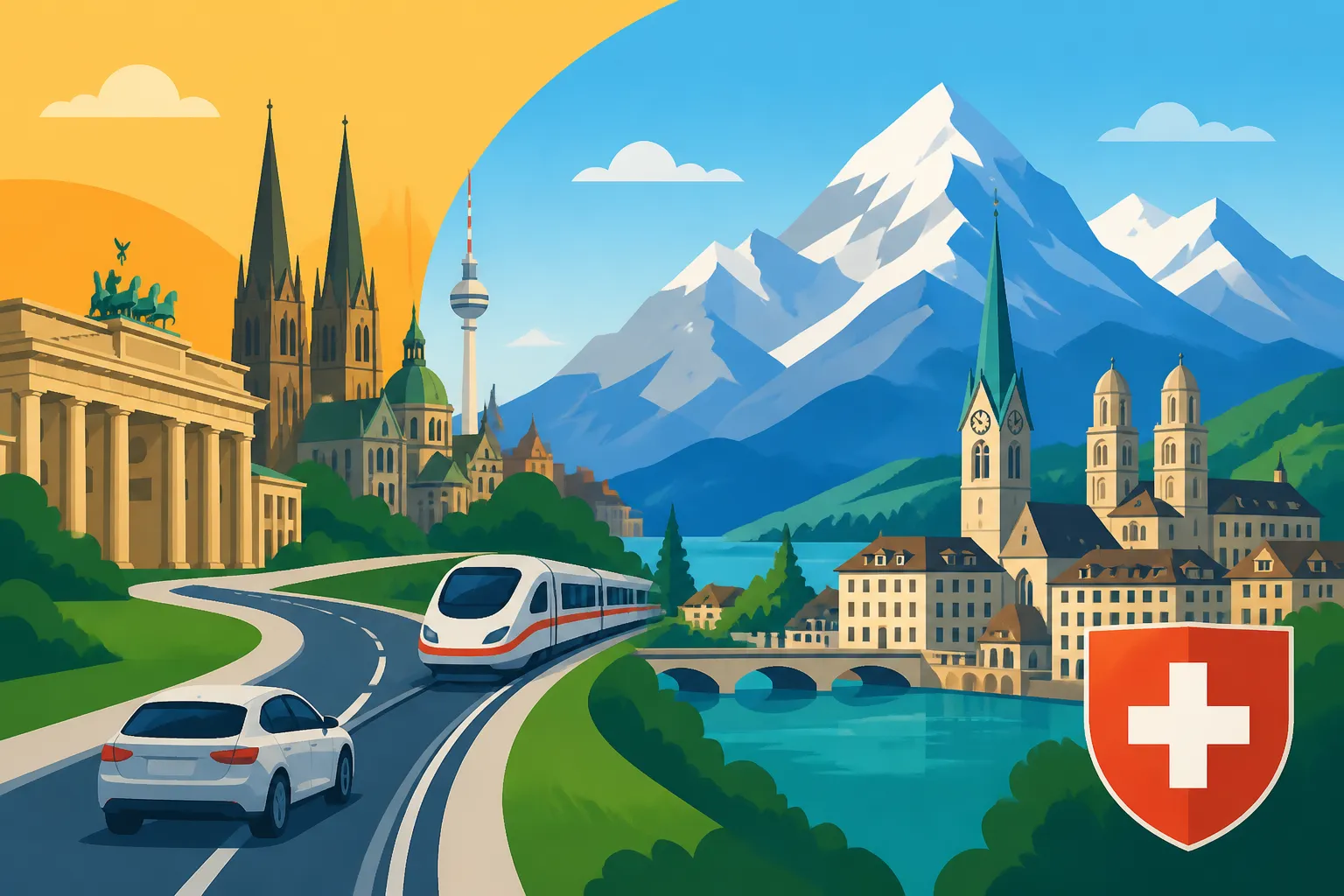
Germany to Switzerland: Basel, Zurich, and the Southern Routes
Crossing borders can often feel like stepping into a labyrinth of unfamiliar rules and travel options, especially when you're moving from one vibrant European country like Germany to another, like Switzerland. The unique considerations, from differing currencies to distinct transport systems, can make planning a trip seem daunting. But don't you worry, my dear expat friend! This guide is here to untangle the complexities, offering a deep dive into the most popular and practical routes from Germany into Switzerland, focusing on key destinations like Basel and Zurich, as well as the breathtaking southern regions. We'll explore how to make your journey as smooth and stress-free as possible, and yes, we'll talk about how handy tools like Omio can truly simplify the entire process.
Disclosure: This post may contain affiliate links. We may earn a commission at no extra cost to you if you make a purchase through these links. Read full disclosure.
Why Cross the Border from Germany to Switzerland?
Germany and Switzerland are neighbors, but they offer distinct flavors of European life. Many of us expats in Germany find ourselves drawn to Switzerland for a change of scenery, whether it's for a weekend city break, a business trip, or an alpine adventure. The transition from the bustling German cities or tranquil villages to the pristine landscapes and cosmopolitan hubs of Switzerland is often just a short train or bus ride away.
The Allure of Swiss Cities from Germany
Swiss cities beckon with a unique blend of efficiency, natural beauty, and cultural richness. For those of us living in Germany, these urban gems are often the first points of contact when venturing south.
Basel: Art, Culture, and a Gateway
Basel, often referred to as Switzerland’s cultural capital, is an incredibly accessible city from southern Germany, perched right on the Rhine River at the famous "Dreiländereck" (three-country corner) where Germany, France, and Switzerland meet. It's a fantastic first stop for anyone coming from places like Freiburg, Karlsruhe, or even further north like Frankfurt. Basel boasts an impressive array of world-class museums, including the Kunstmuseum Basel and the Fondation Beyeler, making it a paradise for art lovers. Imagine spending a crisp autumn day wandering through its charming Old Town, then popping into a gallery before enjoying a traditional Swiss meal by the river. It's close enough for a day trip, yet rich enough for a longer stay. For German residents, it feels like a familiar yet distinctly different European city, offering a gentle introduction to Swiss life without feeling too overwhelming.
Zurich: Financial Hub Meets Lakeside Charm
Ah, Zurich! It’s often known as a global financial powerhouse, but don't let that fool you into thinking it's all suits and skyscrapers. Zurich is genuinely stunning, nestled on the northern tip of Lake Zurich, with the Limmat River flowing through its heart. It’s a city where you can go from a high-powered business meeting to a leisurely swim in the lake within minutes. The city offers an incredible quality of life, with beautiful parks, a lively cultural scene, and excellent shopping. From Germany, especially cities like Stuttgart or Munich, Zurich is a prime destination for a weekend escape. You can explore the upscale Bahnhofstrasse, climb the Lindenhof hill for panoramic views, or simply relax by the lake. For many, Zurich represents the quintessential Swiss experience – organized, beautiful, and with a subtle charm that reveals itself upon closer inspection. The ease of access, particularly by train, makes it a highly desirable destination.
Southern Switzerland: Alps, Lakes, and Leisure
Beyond the immediate border cities, the southern regions of Switzerland unfold into a dramatic tapestry of towering Alps, crystal-clear lakes, and charming villages. These areas are a magnet for those seeking outdoor adventures or serene relaxation.
Mountain Escapes and Scenic Routes
If your idea of a perfect getaway involves crisp mountain air, stunning vistas, and perhaps some hiking or skiing, then southern Switzerland is calling your name. From Germany, you can relatively easily access regions like the Bernese Oberland, home to iconic peaks like the Eiger, Mönch, and Jungfrau, or the breathtaking Engadin Valley with St. Moritz. The journey itself can be part of the adventure, as Swiss trains are famous for their scenic routes. Imagine chugging along through verdant valleys, past cascading waterfalls, and up into the snow-capped peaks. These mountain escapes offer a complete contrast to city life, a chance to truly disconnect and immerse yourself in nature’s grandeur. Whether you're planning a strenuous hike up to an alpine hut or a gentle stroll around a picturesque mountain lake, the options are endless.
Lakeside Relaxation and Italian Influence
Further south, particularly towards the Italian border, Switzerland reveals a completely different character. Think palm trees, Mediterranean temperatures, and charming lakeside towns. Ticino, the southernmost canton, is a prime example. Here, you'll find cities like Lugano and Locarno, nestled by beautiful lakes, offering a taste of dolce vita with a Swiss twist. The architecture, cuisine, and even the pace of life here feel distinctly Italian, yet you still benefit from Swiss efficiency and infrastructure. It’s a fantastic region to visit if you're craving some sunshine and a relaxed atmosphere. The journey from Germany to these southern lakes often involves connecting through major Swiss hubs, but the reward of sipping an espresso by Lake Lugano, surrounded by mountains, is well worth the travel.
Navigating the German-Swiss Border: What Expats Need to Know
While Germany and Switzerland are geographically close, they operate under different international agreements, which can sometimes trip up unsuspecting expats. Understanding these distinctions is crucial for a hassle-free journey.
Border Formalities and Customs Schengen vs. Non-EU
One of the biggest misconceptions for travelers from Germany to Switzerland is the idea that because both are in Europe, border crossings are non-existent, just like within the Schengen Area. This isn't entirely true, and it's a frustration many expats encounter.
Passport/ID Checks and Residence Permits
Switzerland is part of the Schengen Area, which means that for most EU/EFTA citizens and those holding a Schengen visa or residence permit from a Schengen country (like Germany), routine passport checks at the land border are generally abolished. However, this is where many people get caught out: border guards still have the right to conduct random checks. I've personally been on a train that was stopped for passport checks, and it's not uncommon, especially on routes into major Swiss cities. Always, always carry a valid passport or national ID card. For non-EU citizens residing in Germany, your German residence permit (Aufenthaltstitel) is your key to seamless travel within the Schengen zone, which includes Switzerland. Just make sure it's valid and keep it with your passport. If you're traveling by train, especially on an ICE from Germany to Switzerland, you might not even notice the border crossing, but don't assume there won't be a check. It’s better to be prepared than to face an unexpected delay or, worse, an issue with immigration. For a deeper understanding of short-stay travel, you might want to look into the intricacies of the Schengen Visa for Germany: Short-Stay Visa Requirements and Tips.
Goods, Duties, and Restrictions
This is another area where many people get surprised. While Germany and Switzerland share a border, Switzerland is not part of the EU Customs Union. This means there are still customs regulations for bringing goods across the border. If you’re just going for a day trip and bringing back a souvenir or two, it’s unlikely to be an issue. However, if you're carrying certain quantities of alcohol, tobacco, or even specific food items (especially meat and dairy), there are limits. Exceeding these limits can result in duties or even confiscation. For instance, if you're driving, don't assume you can fill your boot with cheaper German groceries without potential repercussions. It's always a good idea to check the current Swiss customs regulations online before you travel, especially if you're planning on purchasing anything substantial. Random checks do happen, and it's always better to declare if you're unsure.
Currency and Language Differences
These might seem obvious, but for new expats, they can be subtle sources of friction.
Swiss Franc vs. Euro and Debit Cards
Unlike Germany, which uses the Euro, Switzerland operates with the Swiss Franc (CHF). While some larger shops and tourist spots, especially near the border or in major cities, might accept Euros, they'll usually give you change in Swiss Francs, often at an unfavorable exchange rate. It's much better to either exchange some cash beforehand, withdraw CHF from an ATM in Switzerland, or rely on card payments. Most major credit and debit cards (Maestro, V-Pay, Visa, Mastercard) are widely accepted, especially in cities. However, don't be surprised if smaller shops or rural establishments prefer cash, much like parts of Germany. It's a good habit to carry some Swiss Francs with you, just in case. When it comes to managing your money while traveling, remember that Money for Travel in Germany: Cash, Cards, and ATMs also applies to your planning for trips just across the border.
German Dialects, French, and Italian
While German is one of Switzerland's official languages, the Swiss German dialects (Schwyzerdütsch) can be quite different from Standard German (Hochdeutsch) spoken in Germany. It’s often unintelligible to German speakers, especially to newcomers. Don't be surprised if you struggle to understand conversations, even if you're fluent in German! However, most Swiss people, particularly in urban areas and tourist zones, are perfectly capable of speaking and understanding Standard German. They often switch without hesitation if they hear you speaking Hochdeutsch. Beyond the German-speaking cantons, you'll find French spoken in the west (like Geneva and Lausanne) and Italian in the south (Ticino). English is also widely spoken, especially among younger generations and in hospitality. So, while your German skills will certainly help, be prepared for linguistic diversity.
Your Best Bet for Travel: Trains, Buses, or Cars? (Highlighting Omio)
When it comes to crossing the German-Swiss border, you've got a few solid options, each with its own perks and quirks. The key, often, is finding the right balance of convenience, speed, and cost, and that’s where Omio truly shines by letting you compare all these modes in one place.
The Convenience and Comfort of Train Travel (Focus on Omio for booking)
For many, train travel is the undisputed champion for cross-border journeys, especially between Germany and Switzerland. It's generally the fastest, most comfortable, and often the most scenic option.
Direct Routes and Scenic Journeys (ICE, EuroCity)
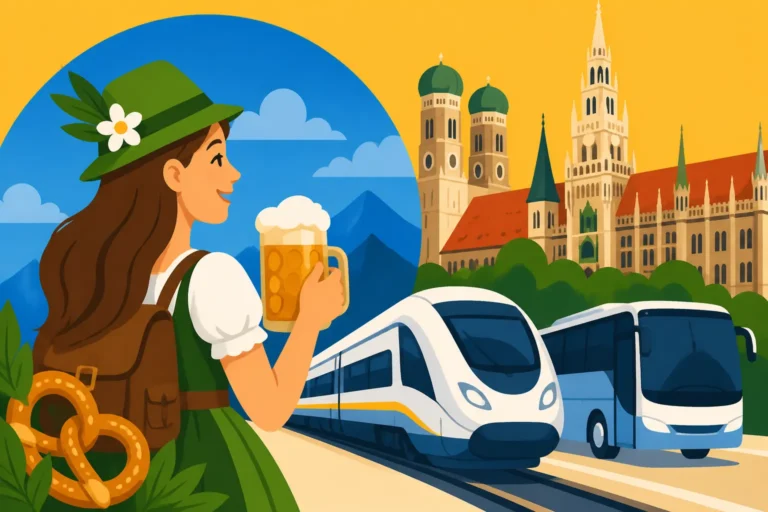
Deutsche Bahn (DB) and Swiss Federal Railways (SBB) work seamlessly together, offering a fantastic network of connections. You can hop on a high-speed ICE train from major German cities like Frankfurt, Stuttgart, or Munich, and find yourself in Basel or Zurich in just a few hours. These trains are comfortable, offer Wi-Fi, and let you sit back and enjoy the changing landscape without the stress of driving or navigating. The journey south through the Black Forest, for instance, or along Lake Constance, can be absolutely breathtaking. The EuroCity (EC) trains also connect various cities, providing another reliable option. What’s more, there are frequently promotions and special fares if you book in advance, making these sometimes pricey tickets more affordable. To maximize savings and efficiency, it's worth delving into High-Speed Trains in Germany (ICE): Deutsche Bahn Routes and Savings.
Booking with Ease: Omio's Advantage for Rail
This is where Omio becomes your best friend. Instead of navigating separate websites for Deutsche Bahn and SBB, which can sometimes be a bit of a headache with different interfaces and language settings, Omio pulls all the information together. You can easily compare train times, prices, and routes from your departure point in Germany to your Swiss destination. Say you're in Stuttgart and want to get to Zurich – just punch it into Omio, and it'll show you all the available train connections, often highlighting the fastest or cheapest options. The platform is incredibly user-friendly, making the booking process smooth and transparent. It even allows you to see different fare types, like flexible or saver tickets, side-by-side, so you can make an informed decision based on your travel needs and budget. For an expat still getting their bearings, this kind of consolidated, easy-to-use booking system, offered by Omio, is a lifesaver.
Budget-Friendly Bus Options (Mention Omio for comparison)
While trains are fast, they can sometimes be expensive, especially if you're booking last-minute. This is where buses step in as a truly budget-friendly alternative.
FlixBus and Other Providers
FlixBus is the dominant player in long-distance bus travel across Europe, and they offer numerous connections from various German cities to key destinations in Switzerland, including Basel, Zurich, and even Lucerne. The fares are often significantly cheaper than train tickets, making it an attractive option for students or those traveling on a tighter budget. Yes, the journey might take a bit longer, and comfort levels can vary, but modern FlixBuses usually come equipped with Wi-Fi and power outlets, allowing you to catch up on work or entertainment. Other smaller bus operators also exist, but FlixBus tends to have the most comprehensive network. For more information on intercity travel via bus, you can also check out Long-Distance Buses in Germany: FlixBus and Networks.
Comparing Cost vs. Time via Omio
Again, Omio is invaluable here. When you search for your route on Omio, it won't just show you train options; it'll also pull up bus connections from providers like FlixBus. This allows for a direct, side-by-side comparison of travel time versus cost. You can quickly see, for example, that a train might get you from Munich to Zurich in 4 hours for €60, while a bus takes 6 hours but only costs €25. This transparency empowers you to choose the option that best suits your priorities. Maybe you're not in a rush and want to save money, so the bus is perfect. Or perhaps you need to get there quickly for a meeting, and the train's speed, despite the higher price, is worth it. Omio removes the guesswork, presenting all the relevant information at your fingertips.
Driving from Germany to Switzerland
For some, the freedom of the open road is unbeatable, especially if you're traveling with family, a lot of luggage, or planning to explore more remote areas of Switzerland.
Vignette Requirements and Road Rules
If you plan to drive, be aware that Switzerland requires a vignette (road tax sticker) for using its motorways (Autobahnen and Autostrassen). Unlike Germany's toll-free Autobahnen, you can't just drive across the border. The annual vignette costs CHF 40 (around €40-45 depending on the exchange rate) and is valid for a calendar year. You can buy it at border crossings, petrol stations, or online before you travel. Driving without one on a Swiss motorway will lead to a hefty fine! Also, be mindful of speed limits – they are strictly enforced, and Swiss fines can be significantly higher than in Germany. Parking can also be expensive and tricky in Swiss cities. If you're considering renting a car for your trip, remember to mention it to the rental company that you intend to drive into Switzerland, as they might have specific insurance or cross-border fees. For general guidance on driving in Germany, which shares many rules with Switzerland, you might find Renting a Car and Driving on the Autobahn helpful.
Car Rentals and Cross-Border Considerations
If you're renting a car in Germany, ensure your rental agreement allows for cross-border travel into Switzerland. Most major rental companies (like Sixt, Europcar, Hertz, Avis) will permit this, but it’s always wise to confirm and inquire about any additional charges or specific insurance coverage. Some rental cars might even come with a Swiss vignette already affixed, especially if rented near the border, but don't assume – always check. While driving offers flexibility, consider the cost of fuel, parking, and the vignette, which can quickly add up, especially for shorter trips where public transport might be more economical.
Here’s a quick comparison of your travel options:
| Travel Mode | Average Travel Time (e.g., Stuttgart to Zurich) | Estimated Cost Range (one-way) | Convenience Level | Key Considerations | Booking Platform |
|---|---|---|---|---|---|
| Train | 3 – 4 hours | €30 – €80 (saver/flex) | High | Fastest, most comfortable, scenic routes, generally reliable. Can be expensive if booked last-minute. | Omio, Deutsche Bahn, SBB |
| Bus | 5 – 7 hours | €15 – €40 | Medium | Most budget-friendly, longer travel times, less comfort than train, Wi-Fi usually available. Good for flexible travelers. | Omio, FlixBus |
| Car | 3 – 4 hours (driving time) | Fuel + Vignette + Parking | High (flexibility) | Ultimate flexibility, ideal for exploring rural areas, travel with heavy luggage. Requires a Swiss vignette (€40/year), high fuel/parking costs, strict speed limits. | Rental car companies |
When in doubt, fire up Omio. It’s genuinely the simplest way to see all these options laid out clearly, allowing you to compare train and bus journeys, prices, and travel durations from your current location in Germany to any Swiss city, helping you make the most informed decision.
Key Routes from Germany to Switzerland: Basel, Zurich, and Beyond
Understanding the main arteries connecting Germany to Switzerland is essential for planning your trip. Depending on your starting point in Germany and your final Swiss destination, different routes and transport hubs will be most efficient.
Journey to Basel: Germany's Closest Swiss Neighbor
Given its location, Basel is arguably the easiest Swiss city to reach from many parts of Germany, especially the southwest.
From Freiburg, Karlsruhe, and Frankfurt
If you're living in or traveling from Freiburg im Breisgau, you're practically a stone's throw from Basel. The regional trains (S-Bahn and RegioExpress) from Freiburg Hauptbahnhof can get you to Basel Badischer Bahnhof (the German-managed station in Basel) or Basel SBB (the main Swiss station) in under an hour. It's a really popular and quick cross-border commute. From Karlsruhe, the journey is also very straightforward, often involving direct ICE or Intercity (IC) trains that connect Karlsruhe Hbf directly to Basel SBB in about 1.5 to 2 hours. Further north, from Frankfurt am Main, the connections are excellent. High-speed ICE trains run frequently from Frankfurt Hauptbahnhof straight to Basel SBB, with journey times typically around 2.5 to 3 hours. These routes are well-served, making Basel an ideal first stop or even a day trip destination for German expats. Booking these tickets via Omio simplifies the process immensely, as it handles the cross-border ticketing and currency conversion for you, presenting prices in Euros for your convenience.
Basel SBB and the Tri-Border Region
Basel SBB is the main international railway station in Basel and a crucial hub for connections throughout Switzerland and into France. It's a beautifully organized station, typical of Switzerland, and provides excellent onward connections. The fact that Basel sits in the tri-border region means it's incredibly well-connected, making it not just a destination but a fantastic gateway if you plan to explore more of Switzerland or even pop over to the French Alsace region. Navigating the station is simple, and from there, you can easily access local public transport (trams and buses) to explore the city itself.
Direct Routes to Zurich: The Swiss Economic Heart
Reaching Zurich directly from Germany is also quite convenient, with excellent high-speed connections from several major German cities.
From Stuttgart, Munich, and Berlin
For those in Stuttgart, Zurich is one of the most natural and well-connected international destinations. Direct EuroCity (EC) trains link Stuttgart Hauptbahnhof to Zurich Hauptbahnhof in approximately 3 to 3.5 hours. These trains are comfortable and offer a relaxing journey. If you're starting from Munich, which is closer to Switzerland's eastern side, you also have reliable direct EuroCity connections to Zurich, with journey times typically around 4 to 4.5 hours. From further afield, like Berlin, the journey becomes longer, usually requiring a change in either Stuttgart or Mannheim. A train journey from Berlin Hauptbahnhof to Zurich Hauptbahnhof typically takes between 7 to 8 hours, still very manageable given the distance. When planning these routes, especially those with connections, using Omio is highly recommended. It streamlines the search, displays all leg details, and allows for easy booking, ensuring you don't miss a beat (or a connection!). It's a prime example of how Omio acts as an all-in-one travel planner, taking the stress out of complex international itineraries.
Optimizing Your Journey with Omio
When looking at journeys to Zurich, especially from further points in Germany, you'll want to optimize for either speed or cost. Omio clearly lays out the options. You can filter by "fastest" to see the quickest routes, which often involve high-speed ICE or EuroCity trains, or by "cheapest" to find more budget-friendly bus alternatives. For example, a direct train from Stuttgart to Zurich might be quicker, but a FlixBus might save you a significant amount, albeit taking longer. Omio allows you to weigh these trade-offs visually, making decision-making a breeze. It’s also helpful for checking different departure times and finding early bird discounts, which are often available for longer train journeys to Switzerland.
Southern Gems: Reaching Lucerne, Interlaken, and Geneva
Once you've arrived in a major Swiss hub like Basel or Zurich, the rest of Switzerland opens up with excellent internal connections.
Connecting Journeys to Alpine Destinations
From Zurich or Basel, reaching iconic alpine destinations like Lucerne or Interlaken is straightforward thanks to Switzerland's world-renowned railway system. Lucerne, with its stunning lake and Chapel Bridge, is often just an hour away by direct train from Zurich. Interlaken, the gateway to the Bernese Oberland and famous for its adventure sports, is typically a 2-hour journey from Bern (which itself is easily reachable from Basel or Zurich). For these onward journeys, the Swiss Federal Railways (SBB) are incredibly efficient and punctual. You can even use Omio to plan and book these internal Swiss legs of your journey, maintaining that single-platform convenience. This is particularly useful for longer trips that involve multiple train changes. Planning a trip that might include Day Trips and Weekend Getaways Across Germany can often lead to cross-border thoughts, and knowing how to continue your journey into the Alps is key.
Planning Complex Routes through Omio
For destinations like Geneva, located in the French-speaking part of Switzerland, the journey from Germany is longer and often involves passing through Zurich or even making a change in France (like Strasbourg or Paris) if coming from Western Germany. A direct train from Zurich to Geneva takes about 3 hours. If you're traveling from say, Hamburg, to Geneva, it's a significant journey that could involve multiple trains and potentially an overnight stay. This is precisely where Omio becomes indispensable for planning. You can enter your full origin and destination, and Omio will present you with the most logical, efficient, and cost-effective multi-leg journeys, whether they combine trains, buses, or even short flights (though for Germany-Switzerland, flights are rarely quicker due to airport transit times). It simplifies what would otherwise be a complicated puzzle of timetables and different operators.
Practical Tips for a Smooth Cross-Border Trip
Beyond the tickets and routes, there are several practical considerations that can make your journey from Germany to Switzerland a breeze or a burden.
Timing Your Travel and Avoiding Peak Times
Just like anywhere else, avoiding the busiest travel periods can save you headaches and often money.
Rush Hour and Holiday Travel
Swiss trains, while efficient, can get very busy during peak commuter hours (early mornings and late afternoons on weekdays), especially on routes connecting major cities like Basel to Zurich. If you have the flexibility, try to travel mid-day or on weekends (though weekends can also be busy with leisure travelers). Similarly, major German and Swiss public holidays can lead to fully booked trains and buses, and increased traffic if you're driving. Always check for upcoming holidays in both countries when planning your trip. Booking well in advance through Omio is not only smart for securing your preferred seat but also for potentially getting better prices, especially during these busy periods. A good understanding of German Public Holidays: How They Affect Life and Work can help you plan better.
Checking Schedules with Omio
The beauty of Omio is its real-time data. You can pull up live schedules and even see potential delays, which is incredibly useful for planning. If you're worried about a tight connection, you can check its punctuality history right there. For multi-leg journeys, knowing that you can track all segments in one place, like on Omio, provides peace of mind. It allows you to adjust your plans if necessary, perhaps by opting for a slightly earlier or later departure to avoid a known bottleneck.
Money, Mobile, and Essentials
A few quick checks before you go can prevent common expat travel woes.
Forex, Roaming, and Packing Smart
As mentioned, while Euros might be accepted in some Swiss places, having some Swiss Francs or relying on card payments is better. For mobile data, remember that while Germany is in the EU (meaning no roaming charges within the EU), Switzerland is not. Check your German mobile phone contract for international roaming charges in Switzerland. Many providers offer short-term international data packages that are far more cost-effective than standard roaming rates. Alternatively, consider getting a local Swiss eSIM or a physical SIM card if you're staying for an extended period. Mobile Data and eSIMs for Travel in Germany discusses similar issues that apply to cross-border travel. Pack versatile layers, as mountain weather can be unpredictable, even in summer. Don't forget comfortable walking shoes!
Travel Insurance Considerations
While your German public or private health insurance generally covers emergencies within the EU/Schengen area, it's always wise to double-check its coverage for Switzerland specifically. Switzerland has a high-quality but expensive healthcare system. Many expats opt for supplementary Travel Insurance for Trips to and Within Germany that extends to non-EU countries like Switzerland, providing extra peace of mind for medical emergencies, trip cancellations, or lost luggage. It’s a small investment that can save you a lot of hassle and money should something unexpected happen.
All in all, traveling from Germany to Switzerland is an enriching experience, offering a blend of cultural exploration and natural beauty. With a little planning and the right tools, like the comprehensive search and booking capabilities of Omio, your cross-border adventure will be smooth, enjoyable, and entirely stress-free.
Disclaimer
Please note that travel regulations, particularly those concerning visas, customs, and health, can change rapidly. While this guide provides up-to-date information at the time of writing, it is always advisable to check the latest official guidelines from German and Swiss authorities before planning your trip. This article is for informational purposes only and does not constitute legal or professional advice.