Interrail and Eurail in Germany: Reservation Fees and Whether It Works Here
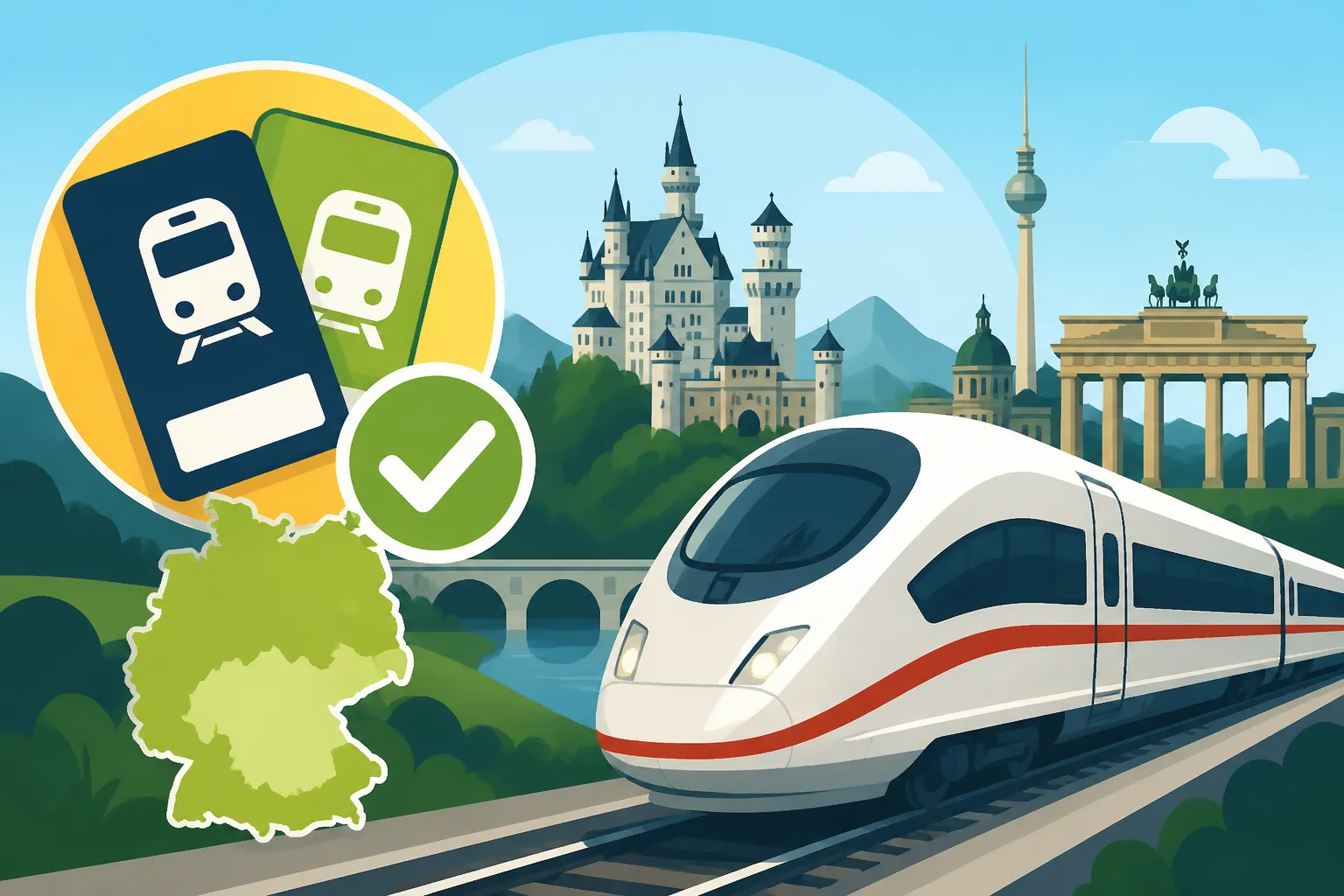
Oh, the romantic allure of zipping through Europe on a train, right? You picture yourself gazing out at rolling German hills, a Eurail or Interrail pass clutched in hand, ready for spontaneous adventures. Then reality hits, usually when you try to book that first high-speed train, and you’re met with a cryptic message about mandatory reservations and extra fees. Believe me, I've been there, staring blankly at the Deutsche Bahn website, wondering why a simple train journey feels like cracking the Enigma code. This guide is here to cut through the confusion, helping you understand how Interrail and Eurail passes truly work in Germany, particularly when it comes to those sneaky reservation fees, and how you can simplify the entire process.
Disclosure: This post may contain affiliate links. We may earn a commission at no extra cost to you if you make a purchase through these links. Read full disclosure.
The Lure and the Reality of Interrail/Eurail in Germany
Germany's vast and efficient train network, run primarily by Deutsche Bahn (DB), is a fantastic way to explore the country. From the bustling metropolises to charming medieval towns, trains can get you almost anywhere. For many travelers, especially those embarking on a grand European adventure, an Interrail or Eurail pass seems like the ultimate ticket to freedom. But, as with many things in Germany, there's a layer of bureaucracy and specific rules that can turn that dream into a head-scratching headache if you're not prepared.
What Are Interrail and Eurail Passes?
First, let's clear up the basics. Essentially, Interrail and Eurail passes are the same product, just marketed to different demographics. If you're a European resident (EU citizen or official resident), you typically go for an Interrail Pass. If you're from outside Europe, the Eurail Pass is your go-to. Both allow you to travel on participating train networks across Europe for a set number of days within a validity period.
You'll find various types of passes:
- Global Passes: Cover travel in multiple European countries.
- One Country Passes: Focus on unlimited travel within a single country for a specified duration.
- Continuous Passes: Offer unlimited travel for a consecutive period (e.g., 15 days, 1 month).
- Flexi Passes: Give you a set number of travel days to use within a larger window (e.g., 7 days of travel within a 1-month period).
The idea is simple: buy a pass, hop on a train, and explore. However, Germany's rail system, while incredibly efficient and extensive, has its own quirks that pass holders need to navigate.
Germany's Rail Network: A Double-Edged Sword for Pass Holders
Germany boasts one of the most advanced and punctual rail networks in the world. The ICE (Intercity-Express) trains are the superstars, whisking you between major cities like Berlin, Munich, Hamburg, and Frankfurt at impressive speeds. Then you have the IC (Intercity) and EC (Eurocity) trains, which also offer comfortable long-distance travel, and a dense network of regional trains (RE, RB, S-Bahn) connecting smaller towns and urban areas.
For a pass holder, this extensive network is both a blessing and a potential curse. On one hand, you have incredible flexibility to reach almost any corner of the country. Want to take a Day Trip to Potsdam From Berlin? No problem. Fancy exploring the Rhine Valley: Castles, Wine, and River Towns? You're covered.
However, the "curse" comes in the form of reservations. Unlike some other European countries where you can genuinely just hop on any train with your pass, Germany's high-speed and long-distance services often require or strongly recommend reservations, especially during peak travel times. This is where the frustration starts for many expats and tourists, as what seems like an all-inclusive pass suddenly demands an extra step and an extra fee. It feels like getting a "flat rate" phone plan, only to find out you pay extra for every text message. Navigating this, and finding easy ways to manage it, is crucial. That’s why tools like Omio can be incredibly helpful, as they cut through the noise and show you exactly what's needed.
Decoding Reservation Fees for German Trains
The concept of a "reservation fee" might seem counterintuitive if you've already bought an expensive pass that promises unlimited travel. But in Germany, it’s a reality you need to understand and budget for. These fees aren't just about guaranteeing you a seat; they're sometimes about guaranteeing you a spot on a particular train at all.
The Mandatory Reservation Conundrum
When you travel on German trains with an Interrail or Eurail pass, you'll encounter two types of "reservations":
- Optional Seat Reservations: For most long-distance trains (ICE, IC, EC), booking a seat is not mandatory for pass holders within Germany. You can simply board with your valid pass and find any unreserved seat. These seats are marked with small digital displays above them showing the route segments for which they are reserved. If it's blank or shows "ggf. freigegeben," it's usually free. However, if you’re travelling on a popular route, especially during rush hour, weekends, or public holidays, relying on finding a free seat can lead to a stressful journey standing in the aisle. I've personally spent many hours squashed between luggage, wishing I'd just paid the few extra euros for a guaranteed spot.
- Mandatory Train-Specific Reservations: This is the critical part. While optional for most domestic ICE/IC/EC trains, reservations are mandatory for all night trains (e.g., ÖBB Nightjet) and many international high-speed connections that either start or end in Germany. These aren't just seat reservations; they secure your passage on that specific train, and without one, your pass is not considered valid for that service. This means if you're planning on using your pass to venture from, say, Berlin to Vienna, or overnight from Munich to Rome, you absolutely must secure a reservation in advance. Failure to do so could result in being denied boarding or having to purchase a full-price ticket on the spot, plus a penalty.
The cost for these reservations is typically quite modest, especially when compared to the price of a full-fare ticket. For a 2nd class seat reservation on an ICE, IC, or EC train, you're usually looking at €4.90. For 1st class, it's €5.90. Night train reservations vary more widely depending on whether you want a seat, couchette, or sleeper.
How Much Do Reservations Cost and Where to Get Them?
Let's break down the typical costs and methods for securing those all-important reservations:
Typical Reservation Fees (per person, per train segment for domestic Germany):
| Train Type | Class | Cost (approx. in EUR) | Mandatory? | Notes |
|---|---|---|---|---|
| ICE, IC, EC | 2nd Class | €4.90 | No (but highly recommended for comfort/peace of mind) | Mandatory for some international routes originating/ending in Germany |
| ICE, IC, EC | 1st Class | €5.90 | No (but highly recommended for comfort/peace of mind) | Mandatory for some international routes originating/ending in Germany |
| Nightjet (ÖBB) | Seat | €14 – €30 | Yes | Prices vary by route and demand |
| Nightjet (ÖBB) | Couchette | €30 – €60 | Yes | Prices vary by route and demand |
| Nightjet (ÖBB) | Sleeper | €70 – €150+ | Yes | Prices vary by route and demand |
| TGV, Thalys (Intl.) | 2nd/1st Class | €10 – €30 | Yes | Often have limited pass holder allocations |
Note: These prices are illustrative and can change. Always check current information.
Where to Book Your Reservations:
- Deutsche Bahn (DB) Website/App: This is the official source. You can book reservations directly through the DB Navigator app or the bahn.de website. The process can be a bit clunky, especially for pass holders, as you need to specifically select "seat-only reservation" or navigate the "global pass" options. Sometimes the English translation isn't perfect, and the sheer number of options can be overwhelming.
- DB Travel Centers (Reisezentrum): At major train stations, you'll find DB travel centers. Here, you can speak to a real person, which is great if you have complex travel plans or language barriers. Be prepared for potentially long queues, especially at peak times.
- Ticket Machines: Some DB ticket machines allow you to book seat-only reservations, but the interface can be tricky if you're not familiar with it.
- Omio: This is where Omio really shines as a core solution for international travelers. Omio simplifies the booking process for pass holders significantly. Instead of sifting through complex DB menus, Omio allows you to search for your desired route, indicate that you're a pass holder, and then easily see which trains require reservations and book them directly. It’s a clean, user-friendly interface that aggregates options, including those from DB, making the whole process much less painful. Think of it as a translator and facilitator, ensuring you don't miss those critical mandatory bookings. For those who find dealing with German Language and Everyday Communication for Visitors challenging, Omio is a godsend in English.
Is an Interrail/Eurail Pass Worth It for Germany?
Deciding whether a pass is truly economical for your trip to Germany is a common dilemma. It's not a straightforward "yes" or "no" answer, as it heavily depends on your travel style, duration, and how far in advance you plan your journeys.
Weighing the Costs: Pass vs. Point-to-Point Tickets
Germany's train system offers excellent advance purchase discounts, known as Sparpreis (saver fare) and Super Sparpreis (super saver fare). If you book far enough in advance (sometimes up to 6 months), you can snag tickets for long-distance ICE journeys for as little as €17.90 or €21.90. This makes a significant difference when comparing costs.
Let's consider a few hypothetical scenarios:
Scenario 1: The Spontaneous Explorer
- Traveler: You arrive in Germany with no fixed itinerary, deciding on the fly to go from Berlin to Munich, then to Hamburg, and perhaps a few more cities, all within a week.
- Pass Option: A 7-day Flexi Pass within one month for Germany costs around €200-€300 (prices vary by age/flexibility). Add ~€5 per reservation for 4-5 long-distance trips, so €20-€25 in reservations. Total: €220-€325.
- Point-to-Point Option: Booking last-minute tickets for Berlin-Munich-Hamburg-etc. will likely cost €80-€150 per segment. Total could easily exceed €400-€600.
- Conclusion: For spontaneous, extensive travel, the pass is often the clear winner, even with reservation fees.
Scenario 2: The Planner
- Traveler: You know exactly which 3 cities you want to visit over a week and you're booking 2-3 months in advance. (e.g., Berlin to Frankfurt, then Frankfurt to Cologne, then Cologne to Hamburg).
- Pass Option: Same pass cost, €220-€325.
- Point-to-Point Option: With Super Sparpreis tickets, you might find each segment for €21.90 – €39.90. Total: €66 – €120.
- Conclusion: For planned, fewer long-distance journeys, point-to-point tickets bought in advance can be significantly cheaper than a pass. Here, using Omio is invaluable, as it lets you easily compare these options side-by-side, showing you both the pass reservation cost and the direct ticket price, so you can make an informed decision instantly.
Scenario 3: Short Regional Hops
- Traveler: You're staying in one region, say Bavaria, and want to do lots of local trips, like Munich to Garmisch-Partenkirchen, or exploring the Black Forest: Villages, Trails, and Cuckoo Clocks.
- Pass Option: A One Country Pass for Germany. Cost might be similar to a Global Flexi Pass for a few days.
- Alternative: Consider a Regional Trains and the Deutschland-Ticket Explained. For €49 a month, you get unlimited travel on all local and regional public transport nationwide. If you're sticking to regional trains and buses, this is often the most cost-effective option by far. It doesn't cover high-speed ICE trains, but for exploring a region, it's brilliant.
- Conclusion: The Deutschland-Ticket often beats an Interrail/Eurail pass for purely regional travel within Germany.
| Feature | Interrail/Eurail Pass (Germany) | Point-to-Point Tickets (DB) | Deutschland-Ticket (Regional) |
|---|---|---|---|
| Ideal For | Extensive, spontaneous long-distance travel, multi-country trips | Planned, fewer long-distance trips; budget-conscious planners | Extensive regional travel within Germany |
| Cost Basis | Upfront pass cost + reservation fees | Price per individual journey | Fixed monthly fee |
| Flexibility | High for travel days; reservations may be required/recommended | Low (tied to specific train/time) | High for regional travel |
| Reservation Req. | Yes for night/international; recommended for ICE/IC | No (seat reservation optional extra) | No (not available for regional trains) |
| Coverage | ICE, IC, EC, Regional trains, some buses/ferries | All DB trains | All regional trains, buses, U-Bahn, S-Bahn, trams |
| Best Saved By | Omio for easy booking, avoiding last-minute high fares | Booking 2-6 months in advance | Frequent regional trips, local transport |
The Convenience Factor and Flexibility
Beyond pure cost, the "feel" of using a pass is a big part of its appeal.
Pros of a Pass:
- Flexibility: You don't have to commit to specific departure times weeks in advance, which is great for spontaneous detours or if your plans change. This is the romantic ideal of train travel.
- Simplicity (once you're past reservations): Once you understand the reservation rules, you have a feeling of freedom. Just show your pass, and off you go.
- Cost Savings for High-Mileage Travelers: If you plan on covering a lot of ground with many long-distance journeys, the pass will almost certainly save you money compared to buying full-price tickets on the day of travel.
Cons of a Pass:
- Reservation Hassle: This is the main one. The need to understand and book reservations, even if optional, adds a layer of planning. Missing a mandatory reservation or failing to get one on a busy train can cause stress. This is where Omio can truly turn the tide, making the reservation part feel less like a chore and more like a simple add-on to your pass.
- Limited Value for Short Trips: If you're only making one or two long-distance journeys, or mostly sticking to local travel, a pass is unlikely to be cost-effective.
- Train Capacity: Even with a pass, if a train is fully booked (especially high-demand routes or international services with limited pass-holder allocations), you might not be able to get a reservation, meaning you can't take that specific train.
Ultimately, an Interrail or Eurail pass can be a fantastic way to experience Germany and Europe, offering a sense of freedom and adventure. However, to truly make it "work" in Germany, you need to understand the nuances of the reservation system. Leveraging digital tools like Omio for checking routes and booking those necessary reservations can transform a potentially frustrating experience into the smooth, exciting journey you imagined.
Practical Tips for Using Your Pass in Germany
So, you've decided to go with an Interrail or Eurail pass for your German adventure. Excellent! Now let’s talk about how to make the most of it, specifically how to handle those reservations and what to expect on your journey.
Planning Your Journey and Making Reservations Seamlessly
The key to a stress-free experience in Germany with your pass lies in smart planning. While the passes offer flexibility, a little foresight goes a long way, especially for popular routes or during peak travel times.
- Map Out Your General Route: Even if you're aiming for spontaneity, have a rough idea of your main destinations and the order you want to visit them. This helps you figure out how many travel days you'll need and for which segments you might want to consider reservations. For example, if you're thinking of visiting a few cities in Bavaria, you might plan to use your pass for the long haul to Munich, then switch to a Bayern Ticket (a regional pass) for local exploration, then back to your pass for the next big jump.
- Identify High-Speed & Popular Routes: Assume that any journey on an ICE, especially between major hubs like Berlin-Frankfurt, Munich-Hamburg, or any route involving Cologne, will be busy. Weekends, German Public Holidays: How They Affect Life and Work, and school holidays are always peak times. These are the journeys where an optional seat reservation is highly recommended, even if not mandatory.
- Check for Mandatory Reservations: For international connections and night trains, it's non-negotiable. Always check well in advance whether your specific train requires a mandatory reservation. Don't leave this to the last minute!
- Use Omio to Your Advantage: This is where Omio becomes your best friend. Instead of wrestling with the DB website, open Omio, input your start and end points, and specify that you have a "rail pass." Omio will then show you the available connections and clearly indicate which ones require reservations. You can filter results, book the reservations directly within the app, and even compare the cost of a pass reservation against a regular point-to-point ticket if you're still on the fence. It's an all-in-one platform that brings simplicity to an otherwise complex system. It also means you can easily see what tickets are available for your Day Trips and Weekend Getaways Across Germany without having to visit multiple websites.
- Book Reservations in Advance: For mandatory reservations, book as soon as your travel dates are firm. For recommended seat reservations, booking a few days to a week in advance is usually sufficient, but for very popular routes or times, booking further ahead is safer.
On-Board Experience and What to Expect
Once you've got your pass and your reservations sorted (thanks, Omio!), here’s what to expect when you step onto a German train.
- Ticket Checks: Conductors on German trains are diligent. Have your Interrail/Eurail pass ready (either the digital pass on the app or your physical pass) and any associated seat reservations. They will check both. For digital passes, make sure your phone is charged and you're logged in!
- Seat Markings: As mentioned, seats on ICE/IC/EC trains have small electronic displays above them. These indicate if a seat is reserved for a particular segment (e.g., "München – Berlin"). If the display is blank, or says "ggf. freigegeben" (potentially free), it means the seat is currently unreserved for your current segment. If you don't have a reservation, look for these. If you do have a reservation, sit in your assigned seat – it will be clearly marked on your reservation ticket.
- Luggage: German trains are generally spacious, with overhead racks for smaller items and dedicated luggage areas at the end of each carriage for larger bags. Be mindful of others and keep aisles clear.
- Food and Drink: Most long-distance trains have a Bordrestaurant (restaurant car) or Bordbistro (bistro car) offering snacks, drinks, and sometimes hot meals. You can also bring your own food and drinks, of course.
- Connectivity: Mobile Data and eSIMs for Travel in Germany are readily available, and most ICE trains offer free Wi-Fi, though quality can vary. Don't rely solely on train Wi-Fi for critical tasks.
- Etiquette: Germans value quiet and order, even on trains. Keep noise levels down, especially in designated "Ruhebereich" (quiet zones). Always be punctual for your train – German trains are usually on time, and they won't wait for you!
Using an Interrail or Eurail pass in Germany is an incredible adventure, allowing you to immerse yourself in the country’s diverse landscapes and vibrant cities. Just remember that the key to unlocking this freedom efficiently is understanding the reservation system and leveraging smart tools. With Omio as your digital travel companion, you can easily manage those potentially tricky bookings, allowing you to focus on the journey itself. So, go forth and explore, my fellow traveler, and let those German trains whisk you away!
Disclaimer
Please remember that travel regulations, train schedules, and pricing structures for passes and reservations can change. Always check the official websites of Deutsche Bahn, Interrail, Eurail, and Omio for the most current and accurate information before planning and booking your journeys. This guide is based on general knowledge and typical experiences and should be used for informational purposes only.