What to Do When You’re Sick in Germany and Don’t Have a Doctor Yet
Falling ill in a new country is stressful, especially if you have not registered with a local physician yet. This guide explains exactly how to access immediate medical care in Germany, obtain necessary sick notes, and navigate emergency hotlines effectively without a dedicated doctor.
Disclosure: This post may contain affiliate links. We may earn a commission at no extra cost to you if you make a purchase through these links. Read full disclosure.
Immediate Steps for Finding Care Without a Registered Doctor
Utilizing Open Consultation Hours Offene Sprechstunde
If you wake up sick and need to see a general practitioner (Hausarzt) immediately, your best option is to utilize the open consultation hours. By law, doctors participating in the statutory health insurance system must offer specific times during the week known as the Offene Sprechstunde. During these designated hours, patients can walk into the clinic without a prior appointment.
However, you must be prepared to arrive very early. Clinics operate on a strict first-come, first-served basis during these windows, and the waiting room often fills up before the doors even open. When you arrive at the reception desk, politely explain your symptoms and provide your electronic health card. Be prepared for a wait of several hours, as the doctor will fit walk-in patients between their scheduled appointments. If you are unfamiliar with how primary care works in this country, our guide on Finding a Doctor in Germany: How to Choose a Hausarzt provides excellent context on building long-term medical relationships for the future.
Booking Appointments via Doctolib and the 116117 Hotline
If you are too ill to sit in a waiting room for hours, digital booking tools are incredibly useful. Platforms like Doctolib allow you to search for general practitioners in your specific postal code and filter for doctors who speak English. You can frequently find last-minute cancellation slots for the same or the next day, allowing you to secure a firm appointment time even without being an established patient.
If digital platforms yield no results, you can call the nationwide medical appointment service at 116117. This service is operated by the National Association of Statutory Health Insurance Physicians (KBV). The operators can assist you in finding a local doctor who has immediate availability for acute illnesses. While the phone service is primarily in German, the 116117 website offers an English-language patient navigator tool to help you assess the urgency of your symptoms and direct you to the appropriate medical facility.

Telemedicine and Pharmacy Solutions
Getting Digital Sick Notes and Consultations
In Germany, if you are an employee and miss more than three consecutive days of work, you must legally provide your employer with an official sick note (Arbeitsunfähigkeitsbescheinigung or AU). Depending on your contract, you might even need this note from day one. If you do not have a registered doctor to visit in person, telemedicine is a highly effective, legally recognized alternative. Platforms like TeleClinic or Kry allow you to speak with a licensed German physician via video call within minutes.
These virtual doctors can assess your symptoms, provide medical advice, and issue a digital sick note (eAU) directly to your health insurance provider, ensuring your salary is protected during your recovery.
While recuperating at home, you might want to rely on familiar international wellness products to ease your symptoms. Expats frequently use platforms like iHerb to order their preferred vitamins, cold remedies, and natural supplements, which are often difficult to find in local German stores. Having these items delivered directly to your door is a massive relief when you are too sick to navigate a foreign supermarket.
The Role of the Apotheke in Initial Care
If your illness is mild, such as a standard head cold, a minor stomach upset, or seasonal allergies, a German pharmacy (Apotheke) should be your very first stop. German pharmacists are highly trained medical professionals who offer robust clinical advice for minor ailments. They can recommend powerful, pharmacy-only over-the-counter medications that you simply cannot buy in a regular grocery store or drugstore.
You can walk in without an appointment, explain your symptoms, and the pharmacist will provide targeted relief options. If they believe your condition is severe and requires a doctor’s intervention or prescription medication, they will explicitly tell you so. To understand the strict regulatory differences between retail drugstores and clinical pharmacies, read Pharmacies in Germany: Apotheke vs Drogerie Explained.
Handling Medical Emergencies Out of Hours
The Medical On Call Service Aerztlicher Bereitschaftsdienst
Medical issues rarely respect standard clinic hours. If you fall severely ill on a weekend, a public holiday, or late at night, a standard general practitioner’s office will be closed. In these non-life-threatening situations, you must contact the medical on-call service (Ärztlicher Bereitschaftsdienst) by dialing 116117.
This service connects you to a network of doctors on duty in your specific region. Depending on the severity of your condition and your mobility, the dispatcher will either direct you to the nearest open on-call clinic (Bereitschaftspraxis) or dispatch a mobile doctor directly to your home. This service ensures you receive professional medical care around the clock without unnecessarily overwhelming hospital emergency departments.
When to Visit the Emergency Room Notaufnahme
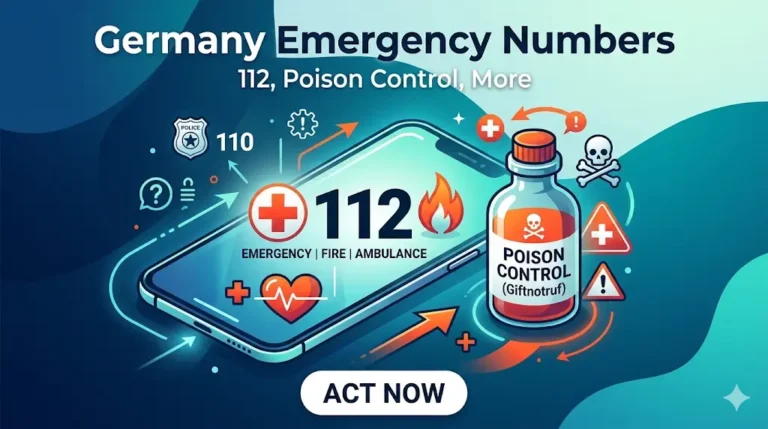
You should only visit a hospital emergency room (Notaufnahme) or dial the emergency ambulance number (112) for genuine, life-threatening emergencies. This includes severe chest pain, extreme shortness of breath, heavy uncontrolled bleeding, sudden loss of consciousness, or symptoms of a stroke.
Going to the hospital emergency room for a standard flu or a minor twisted ankle will result in massive, exhausting wait times. Hospitals strictly triage patients based on the immediate severity of their condition, meaning non-urgent cases are pushed to the back of the line. The emergency room is strictly for acute trauma and crisis intervention, not a substitute for a general practitioner.
Insurance and Payment Logistics for Walk Ins
Navigating Public and Private Coverage
Your experience seeking immediate care without a registered doctor will differ slightly based on your insurance tier. If you are covered by the statutory system, the process is seamless. You simply hand your electronic health card (Gesundheitskarte) to the receptionist at the open consultation or the on-call clinic. The billing is handled entirely behind the scenes between the doctor and your provider. You can review the specific benefits and mechanics of this coverage in Public Health Insurance gesetzliche Krankenkasse: What It Covers and Costs.
If you hold private health insurance, you will be treated as a private patient. The clinic will issue a physical paper invoice to your home address after your visit. You must pay this invoice yourself and subsequently submit it to your insurer for reimbursement. Because private patients generate fee-for-service revenue for clinics, you may occasionally find that clinics are slightly more willing to squeeze you in for a last-minute appointment. Expat-focused digital insurers like Ottonova offer intuitive mobile apps that make uploading and reimbursing these sudden medical invoices incredibly fast.
Paying Out of Pocket as a Tourist or Self Payer
If you are a tourist without a recognized European Health Insurance Card (EHIC), or a newly arrived expat waiting for your local policy to activate, you can still access any medical clinic in Germany. You simply declare yourself a self-payer (Selbstzahler). German medical costs for standard outpatient consultations are strictly regulated by a federal fee schedule (GOÄ) and are surprisingly affordable compared to the US or the UK. A standard consultation for a mild infection might cost between 30 and 60 euros.
If your medical emergency results in a larger, unexpected bill, managing the currency conversion from your home bank account can incur heavy fees. Utilizing a borderless financial platform like Wise allows you to pay these medical invoices at the real mid-market exchange rate, protecting your travel budget from hidden banking markups.
If you are planning a permanent move and need to secure compliant coverage to avoid paying out of pocket indefinitely, specialized expat brokers like Feather Insurance can help you navigate the complex German system and establish a safety net immediately. For a complete blueprint on setting up your life here, explore Healthcare in Germany: A Comprehensive Guide for Expats.
| Situation | Recommended Action | Contact Method | Expected Cost / Billing |
| Mild Cold or Minor Pain | Visit an Apotheke | Walk-in during business hours | Cost of medication only |
| Illness requiring sick note | Use telemedicine or Open Consultation | TeleClinic app / Walk-in | Handled via health insurance |
| Urgent issue Nights Weekends | Call Medical On-Call Service | Dial 116117 | Handled via health insurance |
| Life Threatening Emergency | Call Ambulance or Go to ER | Dial 112 | Handled via health insurance |
References
Primary sources official
- 116117.de Der Patientenservice: The official nationwide portal operated by the National Association of Statutory Health Insurance Physicians, detailing the medical on-call service and offering an English-language patient navigator. https://www.116117.de/de/englisch.php
- Kassenärztliche Bundesvereinigung KBV: The National Association of Statutory Health Insurance Physicians, providing official data on outpatient medical care and the Terminservice. https://www.kbv.de/kbv/about-us
Other helpful sources
- Make it in Germany: The official German government platform for international professionals, offering specific, practical checklists for navigating healthcare and medical emergencies as an expat. https://www.make-it-in-germany.com/en/living-in-germany/health-healthcare
Disclaimer
The information provided in this article is for general informational and educational purposes only and does not constitute professional medical, legal, or financial advice. German healthcare regulations, emergency response protocols, and insurance billing procedures are highly complex and subject to continuous legislative updates. The availability of English-speaking medical staff and specific telemedicine services will vary significantly based on your geographic location and exact insurance policy. Always consult directly with a qualified medical professional, dial 112 in a genuine life-threatening emergency, or speak with a certified insurance broker regarding your unique health needs and coverage options in Germany.