Oktoberfest Travel: Booking Trains and Buses Into Munich
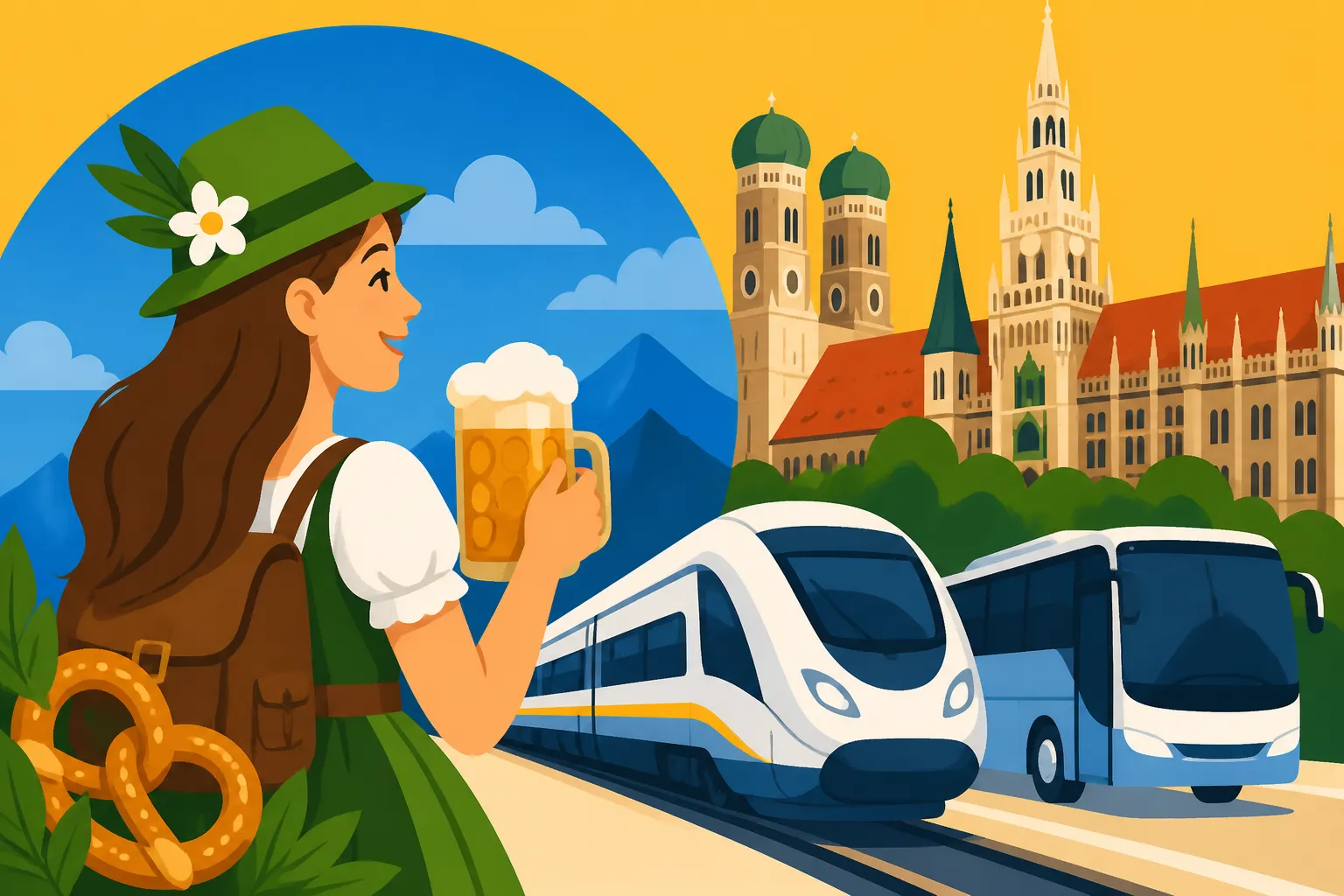
Oh, Oktoberfest! The very thought probably conjures up images of joyous beer halls, lederhosen, and dirndls, right? But for anyone who's ever tried to actually get to Munich during those magical weeks, you know the reality can be a bit more… let's say, challenging. It's a mad dash for accommodation and transport, often leaving even seasoned expats feeling overwhelmed. This guide is here to cut through that chaos, showing you how to confidently book your trains and buses into Munich, with a special focus on making your travel planning incredibly smooth using tools designed for just this kind of trip.
Disclosure: This post may contain affiliate links. We may earn a commission at no extra cost to you if you make a purchase through these links. Read full disclosure.
Navigating Oktoberfest Travel: Why Planning is Key
Let's be real, Oktoberfest isn't just an event; it's a phenomenon. Millions descend upon Munich each autumn, transforming the city into a vibrant, bustling hub. While the energy is intoxicating, it also means that spontaneous travel plans are often met with frustration, sold-out tickets, and sky-high prices. For us expats, or even just visitors, it's a stark reminder that Germany, for all its efficiency, can still present hurdles when demand skyrockets.
The Oktoberfest Rush: What to Expect
Imagine trying to get into a popular club on a Saturday night, but multiply that by a few million people and spread it across an entire city for two weeks. That's a little closer to the reality of Oktoberfest travel. Roads into Munich become congested, car parks are non-existent, and demand for taxis or ride-shares is astronomical. The main train station, München Hauptbahnhof, becomes a swirling vortex of arrivals and departures, and bus terminals are equally frenetic. You'll quickly realize that having your journey meticulously planned, down to the minute, isn't just a suggestion—it's practically a survival strategy. Hotels within the city limits often book up a year in advance, and even rooms further out require diligent searching. This intense demand naturally pushes up prices across the board, from your travel tickets to a simple pretzel.
Why Public Transport is Your Best Bet
Given the sheer volume of people and the logistical nightmare of driving and parking, public transport truly shines as the most sensible, and often the only, viable option for getting to Oktoberfest. Munich's public transport system is excellent, efficiently moving crowds from the main stations directly to the Theresienwiese, where the magic happens. Trying to navigate Munich's streets by car during this period is an exercise in futility and frustration. You'll spend more time looking for parking than enjoying your beer. Plus, let's be honest, if you're planning on enjoying the full Oktoberfest experience, driving is simply not an option. Taking a train or bus allows you to relax, soak in the atmosphere, and arrive stress-free, ready for the festivities. It removes the hassle of navigation, parking, and, crucially, allows everyone in your group to partake in the traditional Bavarian beverages responsibly.
Choosing Your Ride: Trains vs. Buses to Munich
When it comes to intercity travel in Germany, you generally have two excellent choices: trains and long-distance buses. Both have their merits, especially when heading to a high-demand event like Oktoberfest. Understanding the nuances of each can help you make an informed decision for your journey.
The German Rail Network: Deutsche Bahn for Oktoberfest
Ah, Deutsche Bahn. Germany's iconic rail network is known for its extensive reach, speed, and (usually) punctuality. For many, a train journey is the quintessential German travel experience.
Pros of taking the train:
- Speed: Especially on long-distance routes, Deutsche Bahn's ICE (Intercity-Express) trains can get you to Munich significantly faster than a bus. This means less travel time and more time enjoying the Wiesn.
- Comfort: Trains offer more space to move around, often have dining cars or bistros, and generally provide a more comfortable ride, particularly for longer journeys. You can stretch your legs, grab a coffee, or even catch up on some work if you're so inclined.
- Central Arrival: Trains typically arrive at München Hauptbahnhof, which is centrally located and well-connected to Munich's excellent local public transport network, including the U-Bahn lines that whisk you directly to the Oktoberfest grounds. You can find detailed information on getting around German cities, including the U-Bahn and S-Bahn, in our guide on Getting Around German Cities: U-Bahn, S-Bahn, Trams, and Buses.
- Scenic Routes: Some train routes offer breathtaking views of the German landscape, adding an extra dimension to your journey.
Cons of taking the train:
- Cost: Train tickets, especially for high-speed ICE connections, can be more expensive than bus tickets, particularly if you don't book well in advance. Last-minute tickets during Oktoberfest can be astronomically priced.
- Crowds: Expect trains to Munich during Oktoberfest to be absolutely packed. Securing a seat reservation is highly recommended, sometimes even mandatory, for a comfortable journey.
- Potential Delays: While generally reliable, Deutsche Bahn is not immune to delays, which can be particularly frustrating if you have connecting plans or limited time.
For those planning to travel by train, our article on How to Buy Deutsche Bahn Tickets and Save Money offers valuable insights into finding the best deals and understanding the booking process.
Long-Distance Buses: A Flexible Alternative
Over the past decade, long-distance buses, primarily operated by FlixBus, have become a hugely popular and budget-friendly alternative to trains in Germany. They offer a vast network and often connect cities that might require multiple train changes.
Pros of taking the bus:
- Affordability: Bus tickets are almost always cheaper than train tickets, especially if you book in advance. This can be a significant saving for budget-conscious travelers or groups.
- Flexibility: Bus routes often offer more departure times throughout the day and night, providing greater flexibility for your travel plans. They might also serve smaller towns or different arrival points in Munich, though the main terminal (Munich Central Bus Station, or ZOB) is still the most common.
- Direct Routes: For some city pairs, a direct bus might exist where a train route would involve a connection, potentially simplifying your journey.
- Luggage: Buses generally have a more generous luggage allowance included in the basic fare compared to budget train tickets which might charge extra for large bags.
Cons of taking the bus:
- Travel Time: Buses are generally slower than trains, especially when traffic is heavy (which it often is around Munich during Oktoberfest). Journey times can be significantly longer.
- Comfort: While modern buses are comfortable, they offer less space to move around compared to a train. Long journeys can feel a bit cramped.
- Traffic Dependence: Buses are susceptible to road traffic, meaning delays are more common and less predictable.
- Arrival Point: While the ZOB is well-connected, it's not quite as central as the Hauptbahnhof, potentially adding a few extra minutes to your onward journey to the Wiesn.
If you're leaning towards the bus, take a peek at our dedicated guide, Long-Distance Buses in Germany: FlixBus and Networks, for more insights into this mode of travel.
Here's a quick comparison to help you weigh your options:
| Feature | Train (Deutsche Bahn) | Bus (e.g., FlixBus) |
|---|---|---|
| Speed | Generally faster, especially ICE | Slower, subject to traffic |
| Comfort | More spacious, amenities (bistro, Wi-Fi), seat options | More compact, basic amenities (Wi-Fi often available) |
| Cost | Higher, significantly more expensive last minute | Lower, very budget-friendly with advance booking |
| Flexibility | Good frequency, but peak times sell out quickly | High frequency, often more route options, less prone to "sold out" |
| Arrival in Munich | München Hauptbahnhof (very central) | Munich Central Bus Station (ZOB – well-connected, but slightly less central) |
| Luggage | Standard allowance, extra for large items on some fares | Standard allowance included, reasonable fees for extra bags |
| Delays | Possible, but usually less severe than road traffic | More prone to delays due to traffic |
Your Go-To for Booking: Making Omio Your Oktoberfest Buddy
Now, imagine trying to compare all these train and bus options across multiple providers, often on separate, German-only websites. It's a headache, right? This is precisely where a platform like Omio becomes an absolute lifesaver, especially for us expats and tourists navigating the complexities of German travel. It aggregates all the major transport options into one easy-to-use interface, cutting through the bureaucratic red tape and language barriers that so often plague our lives here.
How Omio Simplifies Your Search
Omio (formerly GoEuro, you might remember it!) is designed to be your single source for planning European travel. Instead of jumping between Deutsche Bahn's website, then FlixBus, then perhaps another regional bus operator, Omio pulls all this information together. You simply input your departure and arrival cities (e.g., "Berlin" to "Munich") and your desired dates. What you get back is a clear, concise list of all available options: trains, buses, and yes, even flights, neatly organized by price, duration, and time.
This feature is incredibly powerful, particularly for a high-demand period like Oktoberfest. You can instantly see if taking an early morning bus is significantly cheaper than a mid-day train, or if a slightly longer train journey offers a better price. It allows you to make an informed decision based on your priorities—be it budget, speed, or comfort—without having to spend hours cross-referencing different sites. It truly democratizes the travel booking process, making it accessible even if your German isn't quite at the "negotiate a train ticket refund" level yet. It's a real game-changer for international travelers who are used to streamlined digital services.
Step-by-Step Booking with Omio
Using Omio is straightforward, even for first-timers. Let's walk through it, keeping our Oktoberfest journey in mind:
- Head to the Omio Website or App: You can access Omio via their website or download their user-friendly app, which is super convenient for booking on the go.
- Enter Your Route and Dates: In the search bar, type your departure city (e.g., "Hamburg") and your destination, "Munich". Crucially, select your Oktoberfest travel dates. Remember, flexibility with dates, even by a day or two, can sometimes yield significantly better prices.
- Compare Options: Once you hit search, Omio will present you with a comprehensive list of trains and buses. You'll see icons indicating the mode of transport (train, bus, plane), the operator (e.g., Deutsche Bahn, FlixBus), departure and arrival times, journey duration, and, most importantly, the price.
- Filter and Sort: This is where Omio's interface shines. You can apply filters to narrow down your results. Want only direct connections? There's a filter for that. Prefer the fastest option, regardless of price? Sort by "Duration." Looking for the cheapest ride? Sort by "Price." You can also filter by specific transport providers if you have a preference.
- Select Your Ticket: Click on the option that best suits your needs. Omio will then show you more details, including any changes required, specific station names, and sometimes even seating options or luggage policies.
- Enter Passenger Details: Fill in the names and dates of birth for all passengers.
- Payment and Confirmation: Proceed to payment. Omio supports various payment methods, including credit cards and PayPal, making it easy for international travelers. Once purchased, your tickets will be sent directly to your email and will also be accessible within the Omio app. Many German train and bus tickets these days come as e-tickets, which you can simply show on your phone.
Using Omio genuinely takes the stress out of the booking process. It ensures you’re not missing out on a better deal with another provider, and it presents everything in a language and format that's easy to understand. It’s an essential tool for navigating Germany’s complex travel landscape, particularly when planning a big trip like Oktoberfest. So, before you start dreaming of your next Weißwurst and Brezn, make sure you've sorted out your journey with Omio.
Practical Tips for a Smooth Oktoberfest Journey
Booking your travel is just the first step. To ensure your entire Oktoberfest journey is as smooth and stress-free as possible, there are a few more insider tips that I, a seasoned expat, can share. These are the kinds of lessons learned through firsthand experience (and maybe a few missed connections!).
When to Book and Why Early Birds Win
I cannot stress this enough: book your Oktoberfest travel as far in advance as humanly possible. Seriously. This isn't one of those "maybe I'll get a deal next week" situations. Oktoberfest is a global event, and tickets for trains and buses, especially on popular routes into Munich, start selling out and escalating in price months in advance.
Think about it: millions of people. Finite seats. If you wait until August to book for an Oktoberfest trip in September, you're not just looking at higher prices; you're looking at potentially no available direct connections at all. I've seen last-minute train tickets from Berlin to Munich for Oktoberfest weekends cost upwards of €150-200 one way, if you can even find them. In contrast, booking six months out could snag you a ticket for €30-50. This huge price difference applies to buses too. As soon as your Oktoberfest dates are firm, and you know you're heading to Munich, jump onto Omio and secure your tickets. Early birds don't just catch the worm; they catch the affordable, stress-free travel. This also goes for accommodation; finding a decent place to stay in Munich or the surrounding areas can be incredibly difficult if not booked well in advance. Check out our Accommodation in Germany: Hotels, Pensionen, and Hostels guide for broader advice on lodging options.
Making the Most of Your Trip to the Wiesn
Once your travel to Munich is sorted (thanks, Omio!), you'll want to ensure the rest of your experience is just as seamless.
- Arrive Early in Munich: If your travel plans allow, try to arrive in Munich a day before you plan to hit the Oktoberfest grounds. This gives you time to check into your accommodation, settle in, and get your bearings without feeling rushed.
- Navigate Munich's Local Transport: München Hauptbahnhof and ZOB are both excellent starting points for using Munich's local public transport, the MVV. The U-Bahn (underground metro) lines U4 and U5 go directly to the Theresienwiese station, which is right at the heart of Oktoberfest. Knowing how to use these systems will save you immense hassle. Look into day tickets or group tickets if you're traveling with friends, as they can be more cost-effective.
- Pack Smart: While it's tempting to bring all your finest dirndls and lederhosen, remember you'll be navigating crowded stations and potentially walking a fair bit. Pack light and efficiently. A small backpack is far easier to manage than a large suitcase in a packed train carriage. And definitely wear comfortable shoes!
- Stay Hydrated (and Pace Yourself): Oktoberfest is a marathon, not a sprint. With the excitement, it's easy to forget to drink water. Alternate your beer with water, and don't feel pressured to keep up with everyone else. Our Beer, Wine, and German Drinking Culture article delves deeper into the local customs.
- Safety First: Millions of people in one place mean vigilance is key. Keep an eye on your belongings, especially in crowded areas. Be aware of your surroundings, and know the emergency numbers (112 for general emergencies, 110 for police). It's always a good idea to have a plan for meeting up with friends if you get separated. Our guide on Staying Safe in Germany: Common-Sense Tips for Travelers has more general safety advice.
- Embrace the Atmosphere: Beyond the beer, Oktoberfest is a cultural experience. Engage with the locals, try the traditional food (like roasted chicken, giant pretzels, and Käsespätzle), and soak in the Bavarian hospitality. Don't be afraid to try some basic German phrases; a simple "Prost!" or "Danke schön" goes a long way. Our Oktoberfest in Munich: A First-Timer's Guide is packed with tips to truly immerse yourself.
Ultimately, getting to Oktoberfest should be part of the adventure, not a cause for stress. With smart planning, booking well in advance using tools like Omio, and keeping these practical tips in mind, you're all set for an unforgettable experience. So go on, secure your tickets with Omio, and get ready for the most incredible folk festival in the world!
Disclaimer
The information provided in this guide is for general informational purposes only and does not constitute professional advice. While we strive to keep the information up-to-date and accurate, transport schedules, prices, and regulations in Germany can change frequently, especially around major events like Oktoberfest. Always check the latest information directly with transport providers or through booking platforms like Omio before making any travel arrangements. We cannot be held responsible for any inaccuracies or changes that may occur.