Christmas Markets, Easter, and Bruckentage: Germany’s Worst Weeks to Book Late
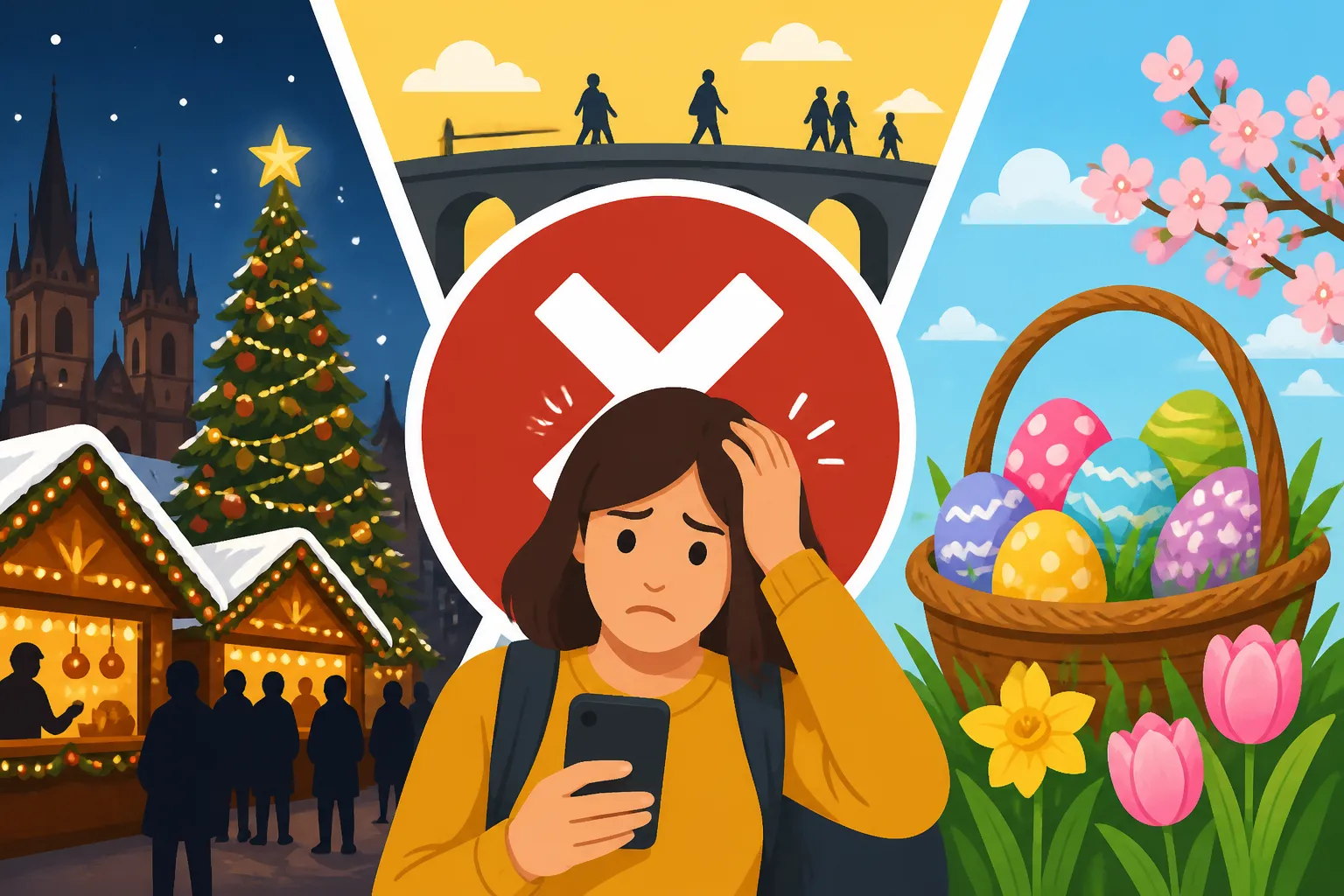
You've just settled into life in Germany, maybe even snagged a great apartment, and now you're itching to explore this beautiful country. But then come the holidays – Christmas markets, Easter, those glorious Brückentage – and suddenly, what seemed like a simple train ride becomes a frantic search for anything that isn't fully booked or astronomically priced. This guide is here to commiserate with that pain and arm you with the insider knowledge to navigate Germany's busiest travel periods like a seasoned pro, ensuring you don't miss out on the magic.
Disclosure: This post may contain affiliate links. We may earn a commission at no extra cost to you if you make a purchase through these links. Read full disclosure.
The Christmas Market Rush: Glühwein, Gifts, and Gridlock
Ah, German Christmas markets. The very thought conjures images of twinkling lights, the comforting scent of Glühwein and roasted almonds, and the joyous murmur of crowds. They are, without a doubt, a highlight of the German winter experience, drawing millions of visitors every year – both locals and tourists from across the globe. But this popularity comes at a price, especially if you're not planning ahead.
When Germany Turns Festive: Peak Dates and Destinations
The Christmas market season typically kicks off in the last week of November and runs right up until December 23rd, sometimes even Christmas Eve in larger cities. During these four weeks, Germany transforms into a winter wonderland, with countless cities and towns hosting their unique markets. Think about the iconic ones: the Christkindlesmarkt in Nuremberg, steeped in history and tradition; the Striezelmarkt in Dresden, Germany's oldest Christmas market; the charming markets spread across Cologne, with its stunning cathedral backdrop; or the myriad of options in Berlin, from traditional to trendy.
The sheer volume of people flocking to these destinations is staggering. Families on school holidays, international tourists on festive trips, and locals enjoying an evening out all converge on these picturesque towns. This means that accommodation, particularly in the most sought-after cities, can be completely booked solid months in advance. Imagine planning a romantic getaway to Rothenburg ob der Tauber, only to find every single hotel room within a 50km radius gone by October. It's a real and often disheartening scenario. Even getting a seat on a train can feel like winning the lottery.
Why Booking Early is Your Only Salvation
If you have your heart set on experiencing the magic of German Christmas markets, "booking early" isn't just a suggestion; it's practically a commandment. Let's talk about trains first. Deutsche Bahn's high-speed ICE trains and even regional services operate with finite seating. As soon as those popular dates in December are released, the cheaper "Sparpreis" and "Super Sparpreis" tickets vanish into thin air. You're left with the full-flex price tickets, which can easily be two or three times the cost, or no tickets at all for direct routes. I've personally seen folks scramble at the train station, frantically trying to piece together a journey with multiple regional connections, turning a two-hour trip into a four-hour odyssey because they waited too long.
Then there's accommodation. Many popular hotels and guesthouses around famous Christmas markets start taking reservations a full year in advance. By late summer or early autumn, prime spots are often completely gone. Even if you do find something, you'll be paying a significant premium for the last-minute availability. The stress of trying to find a place to lay your head after a long day of market hopping can seriously detract from the festive cheer. This is where a tool like Omio becomes invaluable. It allows you to check and compare train, bus, and even flight options side-by-side well in advance, giving you the best chance at securing those coveted early-bird prices and ensuring you actually reach your desired Christmas market destination without a hitch. By planning ahead with Omio, you can secure your travel before the rush hits.
Easter in Germany: A Time for Family and Travel
Beyond the tinsel and twinkling lights, Easter holds a significant place in the German calendar. It's not just a religious observance; it's a deeply ingrained tradition for family gatherings and, perhaps more importantly for travelers, a chance for a much-needed extended break.
The Long Weekend Phenomenon: Easter Dates and Activities
Easter in Germany brings with it a delightful "long weekend" that kicks off with Good Friday (Karfreitag) and stretches through Easter Monday (Ostermontag). Both are official public holidays, meaning many people get four days off, sometimes even five if they take off the Thursday before Easter. These days are typically marked by family visits, often involving long drives or train journeys to reunite with loved ones scattered across the country. But it's also a popular time for mini-breaks. With the first whispers of spring in the air, many Germans seize the opportunity for a getaway, be it to the sunny coasts of the North Sea or Baltic Sea, the picturesque mountains of Bavaria, or even a quick hop to a neighboring European city.
The traditions around Easter are lovely – beautifully decorated Osterbäume (Easter trees), the hunt for chocolate eggs hidden by the Osterhase (Easter bunny), and elaborate family meals. But behind this idyllic facade lies a significant surge in travel demand. Everyone, it seems, has the same idea: take advantage of those extra days off. This collective desire to travel turns major transport routes and popular tourist destinations into veritable hotspots of activity, making spontaneous travel a tricky proposition.
Transportation and Accommodation Challenges Around Easter
Just like during the Christmas market season, Easter presents its own unique set of logistical headaches for travelers. Deutsche Bahn, the national train operator, often runs a reduced service schedule on public holidays, which can compound the problem of already high demand. Trains and long-distance buses like FlixBus become incredibly busy, and securing a seat, especially a comfortable one, without booking well in advance can be a Herculean task. I remember one Easter trying to get from Berlin to Munich last minute, and the only train I could find involved a standing ticket in the aisle – not exactly relaxing for a six-hour journey.
Roads, particularly the Autobahns leading to popular holiday regions, also become notorious for traffic jams. If you're planning to rent a car, prepare for potential delays and highly competitive pricing. Hotels and holiday apartments in popular spots – whether it's a spa town in the Black Forest or a lakeside retreat in Bavaria – fill up rapidly, and prices reflect this heightened demand. Again, this is where planning saves the day. Using a platform like Omio several months out allows you to survey the landscape of available trains, buses, and even internal flights across various providers. This way, you can compare routes, prices, and travel times, securing the best options before they become scarce and expensive. Seriously, don't wait until a few weeks before Easter; your wallet and your sanity will thank you.
Brückentage: Maximizing Holiday Time (and Travel Chaos)
Now, let's talk about the unsung heroes (or villains, depending on your planning skills) of German holiday travel: the Brückentage. These "bridge days" might not be as internationally famous as Christmas markets, but they are a central pillar of German holiday culture and a significant factor in domestic travel patterns.
What Exactly Are Brückentage?
A Brückentag (literally "bridge day") is a weekday that falls between a public holiday and a weekend. Germans, being quite savvy about maximizing their time off, often take these one-day bridging holidays to create an extended, four-day weekend. Imagine a Thursday that's a public holiday; many people will take off the Friday (Brückentag) to enjoy a long weekend until Sunday. This phenomenon is a well-established tradition and has a massive impact on travel within the country.
Common Brückentage revolve around holidays such as Ascension Day (Christi Himmelfahrt) in May (always a Thursday), German Unity Day (Tag der Deutschen Einheit) on October 3rd (which often creates a long weekend if it falls on a Thursday or Tuesday), and sometimes Corpus Christi (Fronleichnam) in Catholic-majority states (also a Thursday). Depending on the year and the specific federal state, other holidays like Reformation Day (Reformationstag) or All Saints' Day (Allerheiligen) can also lead to Brückentag opportunities. Everyone knows about them, everyone plans around them, and everyone tries to leverage them for a mini-vacation.
The Impact on Travel Infrastructure
The collective decision of millions of people to take a Brückentag and go on a short trip creates an enormous, concentrated surge in travel demand that can quickly overwhelm infrastructure. Airports see a spike in domestic and short-haul European flights, while train stations become absolute beehives of activity. Long-distance train services, even with added capacity, can become standing room only, and the cheapest tickets disappear faster than you can say "Frühbucherrabatt!" (early booking discount).
Roads and Autobahns, especially those leading to popular holiday regions like the Bavarian Alps, the Baltic Sea coast, or even neighboring countries like Austria, France, or the Netherlands, experience heavy traffic jams. What would normally be a leisurely two-hour drive can easily turn into a four- or five-hour crawl. Even accommodation in popular Kurorte (spa towns), nature resorts, or charming small towns that are usually sleepy can become surprisingly scarce and expensive. If your heart is set on a specific hiking trail or a quiet wellness weekend, waiting until the last minute for a Brückentag trip is a recipe for disappointment. Omio really shines here, allowing you to quickly compare whether a train, bus, or even a short flight is the better (and available) option during these highly volatile travel spikes. It's a lifesaver for seeing all your choices at once.
The Grim Reality of Booking Late: High Costs and Limited Options
Let's face it: none of us enjoy paying more than we have to, and nobody likes being left with the scraps. But that's precisely the grim reality you face when you decide to book your German holiday travel last minute during peak seasons like Christmas, Easter, or those popular Brückentage.
Sky-High Prices: Accommodation and Transport
The most immediate and painful consequence of booking late is the price gouging. When demand far outstrips supply, providers know they can charge a premium, and they absolutely will. For train tickets, Deutsche Bahn operates on a dynamic pricing model. The coveted "Sparpreis" or "Super Sparpreis" tickets – which offer substantial savings, sometimes 50% or more – are limited in number and vanish rapidly. By the time you're looking a few weeks or even days before a major holiday, you'll be left with only the most expensive "Flexpreis" tickets. This isn't just a slight increase; it can mean paying €80 for a ticket that would have cost €20 if booked three months prior. It feels like getting fleeced, and frankly, it is.
The same applies to accommodation. Hotels, guesthouses, and vacation rentals in popular destinations see their rates skyrocket. A room that might cost €70 on a regular Tuesday in February could easily be €200 or more during a Christmas market weekend or an Easter holiday. You might find yourself having to stay much further out from your desired location, incurring additional travel time and costs, or compromising significantly on quality just to find any place to sleep. Nobody wants their holiday budget blown before they even arrive at their destination.
Sold Out Experiences and Exhausted Patience
Beyond the financial hit, there's the equally frustrating reality of simply running out of options. Imagine trying to book a specific train to Nuremberg for its world-famous Christmas market, only to find every single seat sold out. Or perhaps you're hoping for a peaceful Easter retreat in the Bavarian Alps, but every cozy cabin and charming hotel is completely booked. You then find yourself on endless online searches, refreshing pages, trying different dates, considering obscure connections, and slowly watching your enthusiasm drain away.
This frantic last-minute scramble can turn what should be an exciting travel planning experience into an exercise in pure frustration and exasperation. I've had friends end up driving hundreds of kilometers or even canceling their plans entirely because they couldn't find suitable transport or accommodation at any price point. It can take a real emotional toll. If you're forced to book last minute, flexibility becomes key – being open to odd travel times, less direct routes, or staying in a different town and commuting. But honestly, it's far better to avoid this nightmare altogether. Using Omio early on can help prevent this dire scenario by showing you all available options from multiple providers, enabling you to secure your preferred tickets and accommodation long before the panic sets in. It truly is the essential tool for avoiding the chaos.
Your Strategy for Stress-Free German Holiday Travel (Omio to the Rescue!)
Navigating the bustling travel periods in Germany might seem like a daunting challenge, but with the right strategy and tools, you can absolutely enjoy your festive and holiday breaks without the typical stress. The key, my friends, is planning, and I cannot stress this enough.
Plan Ahead Like a Pro: The Early Bird Gets the Train Ticket (and Hotel Room)
This isn't just a quaint saying; it's the golden rule of German holiday travel. For major holidays like Christmas, Easter, and even those highly sought-after Brückentage weekends, you should ideally be looking to book your travel and accommodation at least 3 to 6 months in advance. I know, it sounds like a lot, but believe me, it pays off in spades. This gives you access to the best prices, the widest selection of options, and the peace of mind that comes with knowing your plans are locked in.
Set up calendar reminders or travel alerts for when tickets typically go on sale. For Deutsche Bahn, long-distance tickets are usually released about six months in advance. For Christmas market visits, consider traveling during the week if possible, or opting for the weekend before Advent officially starts, if your schedule allows, to avoid the absolute peak crowds and prices. Another savvy move: if a public holiday creates a Brückentag and a long weekend, sometimes traveling on the actual public holiday itself (e.g., Christmas Day or Easter Sunday) can be slightly less chaotic than the days immediately before or after, as people are often already at their destinations. Always check school holiday schedules for the specific federal states you plan to visit, as these can also trigger local travel surges.
Leverage Omio for Seamless Planning and Booking
This is where Omio truly becomes your best friend. As an expat, you're already juggling enough new bureaucracy; don't let travel planning add to it. Omio simplifies the entire process by allowing you to compare and book tickets for trains, buses, and even flights across different providers, all in one place and with an English interface. This is a massive advantage when dealing with multiple German and European transport companies, each with their own booking systems and language quirks.
Here’s why Omio is your go-to solution:
- Comprehensive Comparison: Instead of hopping between Deutsche Bahn, FlixBus, and various airline websites, Omio gathers all the options for your desired route and dates. You can instantly see if a bus is cheaper than a train, or if a short flight is unexpectedly available and more convenient. This is especially crucial during peak times when traditional routes might be sold out.
- Real-time Availability & Pricing: Omio provides up-to-the-minute information on ticket availability and pricing. This is critical when those budget-friendly "Sparpreis" train tickets are disappearing fast or when hotels are rapidly booking up. You'll know immediately what's still out there.
- Ease of Use: The platform is incredibly user-friendly, translating what can be a complex German booking process into a straightforward, multi-lingual experience. No more struggling with Abfahrt and Ankunft or deciphering complicated German terms.
- Direct Booking: Once you've found your ideal option, you can book directly through Omio, often receiving e-tickets that eliminate the need for paper printouts (though sometimes a physical ticket is still required by some operators, so always double-check the booking details).
- Customer Support: Should you encounter any issues, Omio often provides support, which is a huge relief when you're far from home and facing a potential travel hiccup.
By using Omio early in your planning process, you essentially arm yourself with the best possible information to make informed decisions and secure your travel arrangements before the masses descend. It's the smartest way to ensure you actually get to experience the enchanting Christmas markets, enjoy a relaxing Easter break, or make the most of those well-deserved Brückentage without the headache of last-minute stress.
So, go ahead and explore Germany! Just remember to use Omio to plan ahead, and those tricky holiday travel times will be nothing but smooth sailing. You can book your next adventure with Omio and experience Germany hassle-free.
| Holiday Period | Typical Dates | Peak Travel Impact | Recommended Booking Window (via Omio) |
|---|---|---|---|
| Christmas Markets | Late November – Dec 23rd | Extremely High Demand (Trains, Hotels, Buses) | 4-6 months in advance |
| New Year's Eve (Silvester) | Dec 30th – Jan 1st | High Demand (Hotels, Flights, Party Tickets) | 4-6 months in advance |
| Easter | Good Friday – Easter Monday (Varies yearly) | High Demand (Trains, Buses, Coastal/Mountain Hotels) | 3-5 months in advance |
| Ascension Day (Christi Himmelfahrt) | Thursday in May (Varies yearly) | Moderate-High Demand (Short trips, Brückentag) | 2-3 months in advance |
| Corpus Christi (Fronleichnam) | Thursday in June (Varies yearly, regional) | Moderate-High Demand (Short trips, Brückentag) | 2-3 months in advance |
| German Unity Day (Tag der Deutschen Einheit) | October 3rd | Moderate-High Demand (Long weekends, Brückentag) | 2-3 months in advance |
| Whitsun (Pfingsten) | Pentecost Sunday – Whit Monday (Varies yearly) | High Demand (Family visits, short trips) | 2-3 months in advance |
Planning your trips to Germany during these festive and celebratory periods requires foresight. Whether you're navigating the Deutsche Bahn Guide: Using Trains for City and Long-Distance Travel for your Christmas market spree or looking into Accommodation in Germany: Hotels, Pensionen, and Hostels for an Easter retreat, early booking is paramount. Understanding German Public Holidays: How They Affect Life and Work will give you an edge, especially when considering Long-Distance Buses in Germany: FlixBus and Networks as an alternative to trains. Remember, tickets for High-Speed Trains in Germany (ICE): Deutsche Bahn Routes and Savings are always a hot commodity, so knowing How Early Should You Book ICE Trains in Germany? is critical. For broader adventures, consider exploring Festivals, Holidays, and Traditions in Germany and remember that Omio can help you compare across various transport modes to get you to those Christmas Markets and Festive Germany destinations. Even for shorter hops, knowing Getting Around German Cities: U-Bahn, S-Bahn, Trams, and Buses can be a lifesaver, and Omio helps make sure you get there. Don't forget to look into Travel Insurance for Trips to and Within Germany for any unexpected bumps in the road.
Disclaimer
The information provided in this guide is intended for general informational purposes only and does not constitute professional advice. While we strive to keep the content up-to-date and accurate, travel regulations, public holiday dates, and booking policies can change frequently. Always verify current information with official sources and specific travel providers like Omio before making any travel plans or financial decisions. We are not responsible for any losses or damages incurred as a result of relying on this information.