Where to Stay in Nuremberg and Bamberg: Franconian City Bases
Oh, the joy of planning a trip to Germany! You've picked two absolute gems in Franconia: Nuremberg and Bamberg. But let's be real, once you start diving into where to actually stay, the options can feel overwhelming, can't they? Fear not, fellow traveler. This guide is here to cut through the noise and help you pinpoint the perfect base for your Franconian adventure, whether you're seeking historic charm, bustling city life, or a quiet, beery haven, and we’ll show you how Booking.com is your best friend in this journey.
Disclosure: This post may contain affiliate links. We may earn a commission at no extra cost to you if you make a purchase through these links. Read full disclosure.
Why Nuremberg and Bamberg Make the Perfect Franconian Duo
First things first: you've made an excellent choice by focusing on these two. They offer such a delightful contrast, yet both are quintessential Franconian experiences. It's like picking between two delicious, distinct types of German beer – why not have both?
The Charms of Nuremberg: History and Urban Buzz
Nuremberg, or Nürnberg as the locals call it, is a city with a truly weighty history, from its days as a Free Imperial City of the Holy Roman Empire to its darker association with the Nazi rallies and subsequent trials. But don't let the weight of the past deter you; modern Nuremberg is a vibrant, resilient, and utterly charming place to visit. When you walk through the reconstructed Altstadt (Old Town), you're not just seeing buildings, you're seeing centuries of stories.
You've got the imposing Imperial Castle (Kaiserburg) perched majestically above the city, offering incredible panoramic views. Then there's the bustling Hauptmarkt, home to the famous Christmas Market (Christkindlesmarkt) and, year-round, a place where you can grab a delicious Nürnberger Rostbratwurst from a street vendor. The city is big enough to have all the amenities you could wish for – fantastic public transport, a diverse culinary scene, and plenty of shopping. It feels like a proper, bustling European city, but one that still holds onto its historical heart. For anyone looking to truly experience city life combined with deep historical roots, Nuremberg is a fantastic base.
Bamberg's Fairytale Allure: UNESCO and Unique Beer Culture
Just a short train ride north, Bamberg is like stepping into a different world entirely. This isn't a city that was heavily bombed in WWII; its medieval and Baroque architecture has largely remained intact, earning it UNESCO World Heritage status. It's often referred to as the "Rome of Franconia" because it's built on seven hills, though it feels more like a fairytale village than a sprawling metropolis.
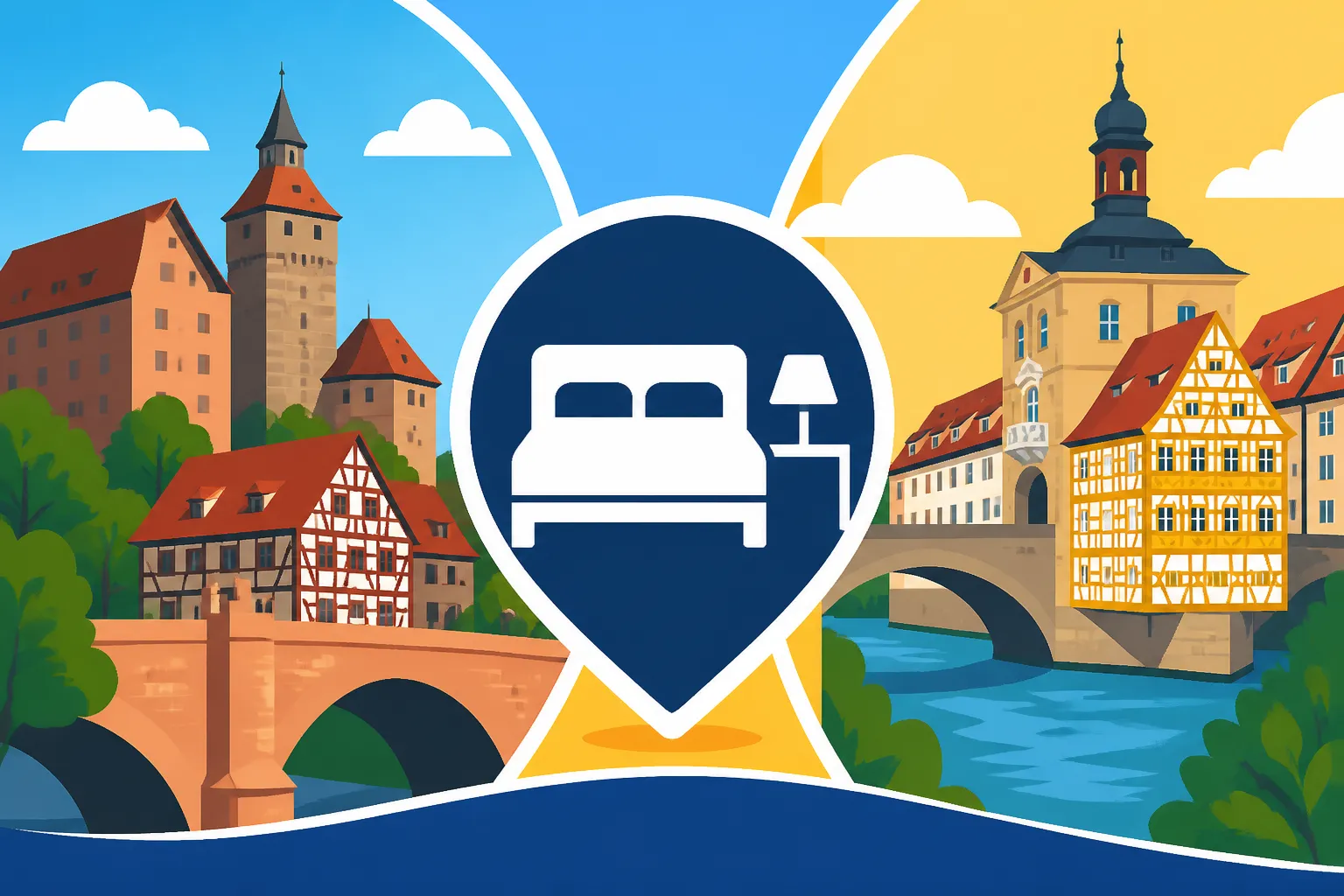
Imagine half-timbered houses leaning over the Regnitz River, the old Town Hall (Altes Rathaus) literally built in the middle of a bridge, and charming cobblestone streets just begging to be explored. Bamberg is famous for its unique smoked beer (Rauchbier), and the city's numerous breweries and beer cellars are an integral part of its identity. It's a place where time seems to slow down, encouraging you to linger, savor, and soak it all in. If you're looking for picturesque beauty, a relaxed pace, and a truly unique cultural experience, Bamberg is your spot. It's the kind of place that sticks with you long after you've left.
Nuremberg: Decoding the Best Neighborhoods for Your Stay
Choosing where to lay your head in Nuremberg can make a huge difference to your trip. Do you want to be right in the thick of it, or prefer something a little quieter? Maybe you're on a budget, or perhaps you're seeking a hip, local vibe. This is where Booking.com truly shines, letting you filter by neighborhood, price, and even specific amenities to find your perfect match.
Altstadt (Old Town): The Heart of History and Convenience
Staying in Nuremberg's Altstadt (Old Town) is, for many, the quintessential Nuremberg experience. This area is enclosed by the massive medieval city walls and is where most of the major attractions are concentrated. Think of it: you step out of your hotel and you're immediately surrounded by history – the Kaiserburg, the Hauptmarkt, St. Lorenz Church, and countless charming lanes.
Pros of staying in the Altstadt:
- Unbeatable Location: You're literally steps away from everything. Most sights are within easy walking distance, and the main train station (Hauptbahnhof) is right on the southern edge, making day trips a breeze.
- Atmosphere: Especially in the evenings, when the day-trippers have left, the Altstadt takes on a magical, historical glow. You'll find traditional Franconian restaurants, cozy Weinstuben (wine taverns), and lively pubs.
- Walkability: You won't need public transport much if your focus is the historical center.
Cons of staying in the Altstadt:
- Crowds and Noise: During peak tourist season or events like the Christmas Market, the Altstadt can get very busy and noisy, especially around the main squares.
- Price: Accommodation here is generally more expensive than in other parts of the city.
- Parking: If you're driving, parking can be a nightmare and costly.
Within the Altstadt itself, you'll find a mix of boutique hotels tucked into historic buildings, more modern chain hotels, and traditional guesthouses. Booking.com allows you to filter specifically for "Altstadt" to really narrow down those charming, central options. Just imagine sipping your morning coffee overlooking a medieval courtyard – that's the Altstadt magic!
St. Lorenz and St. Sebald: Lively and Picturesque
These aren't separate neighborhoods per se, but rather the two halves of the Altstadt, divided by the Pegnitz River. Historically, these areas had different demographics and functions, but today they both offer a similar, highly desirable Old Town experience.
- St. Lorenz is on the south side of the Pegnitz. It's home to the impressive St. Lorenz Church, the Handwerkerhof (Craftsmen's Yard) with its quaint shops, and a vibrant shopping street scene. It tends to feel a bit more bustling and commercially active.
- St. Sebald is on the north side, dominated by St. Sebald Church and leading up to the Imperial Castle. This side often feels a little more historic and residential in parts, with narrower lanes and traditional Franconian architecture. It’s also home to Albrecht Dürer’s House.
Both areas offer excellent access to attractions, dining, and shops. The beauty is that they're just a few bridges apart. On Booking.com, while you might search for "Nuremberg Old Town," pay attention to the exact street address or use the map feature to see if your chosen spot is closer to the river or up towards the castle, depending on your preference for a quieter or more central spot within the Altstadt.
Gostenhof: Trendy, Artistic, and More Local
If the historical center feels a bit too polished or touristy for your taste, or if you're looking for something with a more contemporary, local vibe, then Gostenhof is your answer. Located just west of the Altstadt, Gostenhof has undergone a transformation in recent years, evolving into Nuremberg's bohemian and artistic quarter.
Pros of staying in Gostenhof:
- Authentic Atmosphere: You'll find independent cafes, quirky boutiques, art galleries, vintage shops, and a diverse culinary scene with international flavors. It feels genuinely local and less geared towards tourists.
- Vibrant Nightlife: Gostenhof boasts some of the city's coolest bars and live music venues, making it a great choice for those who enjoy evening strolls and a lively atmosphere without the tourist crowds.
- Affordability: Accommodation here, including apartments and boutique hotels, can be more budget-friendly than in the Altstadt.
Cons of staying in Gostenhof:
- Distance from Main Sights: While still walkable or a short tram ride to the Altstadt, you won't be right on the doorstep of the castle.
- Less "Traditional" German Feel: If you're specifically seeking the medieval postcard experience, Gostenhof offers something different.
Gostenhof is perfect for younger travelers, artists, or anyone who enjoys exploring a city's emerging cultural scene. It's easily accessible by public transport (tram lines 6 and 8, U-Bahn U1 from Gostenhof station) and offers a different perspective on Nuremberg. When searching on Booking.com, you can often find "Gostenhof" as a filter or pinpoint it on the map to discover its unique offerings.
Südstadt and Around the Main Station: Practicality and Connectivity
For those prioritizing convenience, transport links, and potentially a lower price point, the areas just south of the Altstadt, particularly around the Hauptbahnhof (Main Station) and extending into the Südstadt, are excellent options.
Pros of staying in Südstadt/Main Station Area:
- Superb Transport Links: The Hauptbahnhof is a major hub for regional and intercity trains, as well as Nuremberg's U-Bahn (subway), S-Bahn (city train), and tram lines. This makes it incredibly easy to get around Nuremberg and embark on day trips across Franconia.
- Budget-Friendly: You'll generally find more affordable chain hotels and larger accommodation options here compared to the Altstadt.
- Direct Access: If you're arriving by train, you can often walk directly to your hotel.
Cons of staying in Südstadt/Main Station Area:
- Less Charm: This area is more functional and modern, lacking the historical ambiance of the Altstadt or the bohemian flair of Gostenhof.
- Busy Environment: Train stations are always busy, and while safe, it's not the quietest or most picturesque area.
This area is ideal for business travelers, those planning extensive day trips, or budget-conscious explorers who don't mind a short walk or tram ride into the historical center. Booking.com's map view is invaluable here, allowing you to quickly spot hotels with excellent proximity to the Hauptbahnhof for maximum connectivity.
Bamberg: Choosing Your Cozy Franconian Home Base
Bamberg's charm is undeniable, but just like Nuremberg, where you stay can enhance or detract from your experience. Its smaller size means fewer distinct neighborhoods, but the differences are still significant. Using Booking.com to zero in on the precise location and type of lodging will be a lifesaver.
Innere Insel (Inner Island) & Domberg: UNESCO Core
This is the beating heart of Bamberg's UNESCO World Heritage site, encompassing the areas around the Old Town Hall, Little Venice, and up to the Cathedral. Staying here means you're living inside the postcard.
Pros of staying in the UNESCO Core:
- Unrivaled Atmosphere: You're surrounded by Bamberg's most iconic sights. Every stroll feels like walking through a living museum.
- Central Location: All major attractions, restaurants, and shops are within incredibly easy walking distance.
- Picturesque Views: Many hotels offer stunning views of the river, old bridges, or historic buildings.
Cons of staying in the UNESCO Core:
- Higher Prices: This is prime real estate, so expect to pay a premium for accommodation.
- Crowds: During the day, especially, these areas are bustling with tourists.
- Limited Vehicle Access: Much of the Innere Insel is pedestrian-friendly, meaning car access (and parking) can be tricky or non-existent for some properties.
- Noise: Depending on your specific location, street noise from restaurants and tourists can be a factor.
Here, you'll find charming historic hotels, guesthouses with bags of character, and sometimes even apartments in renovated medieval buildings. If your dream is to wake up to the sound of church bells and step directly into a fairytale, this is where you want to be. Search on Booking.com for locations specifically within the Innere Insel or Altstadt to capture this essence.
Bergstadt (Hilly Town): Authentic Charm and Views
Climbing up from the Innere Insel, you reach the Bergstadt, the hilly part of Bamberg where the Imperial Cathedral, New Residence, and Michaelsberg Abbey are located. This area offers a slightly different, more serene vibe.
Pros of staying in the Bergstadt:
- Stunning Views: Many properties higher up offer breathtaking views over the entire city. Imagine watching the sunset over Bamberg's rooftops!
- Quieter Atmosphere: Generally, it's a bit more residential and peaceful than the bustling Innere Insel, especially in the evenings.
- Authentic Feel: You'll find more traditional guesthouses (Gasthöfe) and family-run hotels, often with a more personal touch. It feels less tourist-centric.
- Traditional Pubs: Hidden among the winding streets are some wonderful, traditional Bamberg pubs where locals gather.
Cons of staying in the Bergstadt:
- Hills: As the name suggests, it's hilly! Be prepared for uphill walks, which can be challenging for those with mobility issues or heavy luggage.
- Slightly Further from Riverfront: While still very central, you'll have a bit more of a walk to reach the "Little Venice" area or the shops along the river.
The Bergstadt is perfect for travelers who appreciate tranquility, magnificent vistas, and a slightly more authentic experience, even if it means a bit more effort. Booking.com will help you pinpoint those specific properties with a view or those tucked away on the charming, less-trafficked streets.
Wunderburg & Gaustadt: Brewery Culture and Local Life
For the true beer enthusiast or those seeking a more local, less touristy experience, venturing slightly outside the immediate city center into neighborhoods like Wunderburg or Gaustadt can be incredibly rewarding.
Pros of staying in Wunderburg/Gaustadt:
- Brewery Hub: Wunderburg is particularly famous for being home to iconic breweries like Schlenkerla and Spezial, offering the freshest Rauchbier right from the source. Gaustadt also has its share of traditional breweries and pubs.
- Local Immersion: These are working-class neighborhoods with a strong sense of local community. You'll find traditional bakeries, butchers, and local shops.
- More Affordable: Accommodation here is typically more budget-friendly than in the UNESCO core.
- Authentic Food & Drink: Enjoy traditional Franconian cuisine and, of course, beer, in unpretentious, local establishments.
Cons of staying in Wunderburg/Gaustadt:
- Further Out: You'll need to walk or use public transport (buses are efficient) to reach the main historical sights.
- Less "Pretty": These areas are less picturesque than the Altstadt, focusing more on practical living.
- Limited Hotel Options: You might find more guesthouses and private apartments rather than large hotels.
These areas are a fantastic choice for a return visit, for those on a tighter budget, or for anyone whose primary goal is to dive deep into Bamberg's renowned beer culture. Searching on Booking.com and using the map feature will clearly show you the proximity of different properties to your favorite breweries or the city center.
Making Your Decision: Nuremberg or Bamberg as Your Primary Base?
This is the million-dollar question for many travelers to Franconia! Both cities are excellent, but they offer distinct advantages as a primary base for your explorations.
The Nuremberg Advantage: Central Hub for Exploration
Choosing Nuremberg as your main base offers significant strategic advantages, especially if you plan to explore a wider swathe of Franconia or other parts of Bavaria.
Why Nuremberg shines as a base:
- Major Transport Hub: Nuremberg's Hauptbahnhof is one of Germany's largest and most important train stations. This means excellent connections to almost anywhere in Germany, including high-speed ICE trains. Day trips to places like Munich, Regensburg, Würzburg, and, of course, Bamberg itself, are incredibly easy and frequent. Check out the guide on How to Buy Deutsche Bahn Tickets and Save Money to plan your adventures from here.
- More Diverse Offerings: As a larger city, Nuremberg simply has more of everything: more shopping options, a broader range of restaurants (from traditional Franconian to international gourmet), more diverse nightlife, and a wider array of museums and cultural events.
- Longer Stays are Easier: With more variety in activities and amenities, Nuremberg can comfortably sustain a longer visit without feeling repetitive. You'll find a greater selection of accommodation types too, catering to different budgets and styles.
- Better for English Speakers: As a larger, more international city, you're likely to find more English-speaking staff in hotels, restaurants, and shops, which can ease some of the initial expat anxiety.
Nuremberg is the ideal base if you envision a dynamic trip with lots of day excursions, and you appreciate the energy and variety of a larger city at the end of your exploring days. It's a great base for families or those who want endless options.
The Bamberg Charm: Immersive Fairytale Experience
If your vision of a German vacation is less about rapid-fire exploration and more about soaking in a unique, historic atmosphere, then Bamberg is a fantastic primary base.
Why Bamberg delights as a base:
- Unique Atmosphere: There's truly nowhere quite like Bamberg. Its intact medieval and Baroque core, the river cutting through it, and the pervasive beer culture create an atmosphere of unparalleled charm. Staying here means you're constantly immersed in this special ambiance.
- Smaller, More Intimate: Bamberg is very walkable, and you can easily explore most of its key sights on foot in a day or two. It has a slower pace, which many find incredibly relaxing.
- Deep Dive into Culture: If you're passionate about beer, history, or simply strolling through beautiful, quiet streets, Bamberg offers an incredibly rich, focused experience. It’s perfect for those who enjoy taking their time.
- A "Home Away From Home" Feel: Many of Bamberg's accommodations are smaller, family-run guesthouses, which can offer a more personal and cozy feeling than a larger city hotel.
Bamberg works beautifully as a base if your focus is primarily on the city itself and perhaps one or two very local excursions. It's perfect for couples, those seeking a romantic getaway, or travelers who prefer a relaxed pace and a deep dive into one particular culture.
How Booking.com Simplifies Your Choice
Honestly, the biggest challenge in choosing between these two cities (or picking a neighborhood within them) is sifting through all the options. This is precisely where Booking.com becomes indispensable. Its comprehensive filtering system allows you to:
- Filter by Location: Directly choose "Nuremberg Old Town," "Gostenhof," or "Bamberg Inner Island." You can even zoom in on the map to properties closest to a specific landmark or brewery.
- Compare Properties Side-by-Side: Easily check prices, availability, amenities, and guest reviews for similar properties in different areas or cities.
- Read Real Reviews: The user reviews on Booking.com are a goldmine of information, giving you insights into everything from noise levels to bed comfort, helping you make an informed decision beyond just photos.
- Diverse Property Types: Whether you’re looking for a luxury hotel, a quaint guesthouse, a modern apartment, or a budget-friendly hostel, you’ll find it all on Booking.com.
- Check Accessibility: Filter for features like wheelchair access, which can be crucial in historic areas.
Using Booking.com is like having a personal travel agent who instantly knows all the best spots and can help you tailor your stay to your exact needs, making the whole planning process so much smoother.
Essential Tips for Booking Your Franconian Stay
Once you’ve decided on your city and neighborhood, a few more practical tips can make your booking experience seamless and ensure a fantastic trip.
Booking Smart: Timing, Flexibility, and Cancellations
Germany, and especially popular Franconian cities like Nuremberg and Bamberg, can get busy, particularly during peak tourist seasons (summer, Christmas market season, major festivals).
- Book in Advance: For the best selection and prices, try to book your accommodation several months in advance, especially if you're traveling during a major event like the Nuremberg Christkindlesmarkt or Bamberg's Sandkerwa. Last-minute bookings might leave you with fewer options and higher prices.
- Look for Flexible Cancellation: Life happens, and plans change. When booking on platforms like Booking.com, always pay attention to the cancellation policy. Many properties offer free cancellation up to a certain date, which provides invaluable peace of mind. This flexibility can be a game-changer if you need to adjust your itinerary.
- Consider Mid-Week Stays: If your schedule allows, traveling during the week can sometimes yield better rates and fewer crowds than weekend stays.
What to Look for in Reviews (Beyond the Stars)
Star ratings are a good starting point, but the real insights come from reading actual guest reviews. Don't just skim the overall score; dig deeper into the comments.
- Location Specifics: Do reviews mention the location being quiet or noisy? Is it truly walkable to the sights, or do people complain about the distance?
- Cleanliness: This is often a non-negotiable for most travelers, so pay close attention to comments about the cleanliness of rooms and common areas.
- Staff Friendliness/Helpfulness: Good customer service can elevate your entire stay. Look for mentions of staff going above and beyond.
- Breakfast Quality: If breakfast is important to you, check if guests praise or criticize the breakfast offerings. In Germany, a good breakfast can really set you up for a day of exploring.
- Amenities Accuracy: Do guests confirm that the Wi-Fi works well, or that the air conditioning (a luxury in older German buildings!) is effective?
- Language Barrier: Especially in smaller towns, if you don't speak German, check if previous guests noted English-speaking staff.
Booking.com's detailed review sections, often broken down into categories like "location," "cleanliness," and "staff," make it easy to quickly get a sense of what matters most to you.
Transportation Considerations from Your Base
Your accommodation's proximity to public transport will greatly impact your ease of movement.
- Train Station Access: If you plan many day trips (e.g., from Nuremberg to Bamberg, or vice-versa), staying near the Hauptbahnhof in either city is a huge advantage. Both Nuremberg and Bamberg have excellent train connections. You can find out more about Getting Around Germany: Trains, Buses, Flights, and Car Hire.
- Local Public Transport (VGN): Both cities are part of the VGN (Verkehrsverbund Großraum Nürnberg) network, which covers trains, trams, and buses. Familiarize yourself with the network. In Nuremberg, the U-Bahn (subway) is fantastic; in Bamberg, buses are the main local transport if you're venturing beyond walking distance.
- Parking: If you're driving, always check if your chosen accommodation offers parking and what the cost is. Parking in city centers, especially in historic areas like Bamberg's Innere Insel, can be extremely limited and expensive. Sometimes, it’s best to park slightly outside and use public transport. Consider if Car-Sharing and Ride-Sharing in Germany: Alternatives to Owning a Car might be a better option for certain journeys.
- Cycling: Both cities are cycle-friendly. In Bamberg, a bike can be a great way to explore, but remember those hills! Nuremberg has good cycling paths too.
Nuremberg vs. Bamberg: Choosing Your Primary Base
Here’s a quick comparison to help you weigh your options:
| Feature | Nuremberg (as primary base) | Bamberg (as primary base) |
|---|---|---|
| City Vibe | Bustling, urban, historic, larger, diverse | Fairytale, medieval, quaint, intimate, focused on beer/history |
| Main Attractions | Imperial Castle, Hauptmarkt, Museums, WWII history | Cathedral, Old Town Hall, Little Venice, Michaelsberg Abbey, breweries |
| Transport Hub | Excellent (major ICE/regional hub), U-Bahn, S-Bahn, tram | Good (regional train hub), bus network |
| Day Trip Access | Extensive (Munich, Regensburg, Würzburg, Bamberg) | Good (Nuremberg, smaller Franconian towns) |
| Dining Options | Wide variety, international cuisine, traditional Franconian | Primarily traditional Franconian, strong focus on brewery food |
| Nightlife | Diverse bars, clubs, cultural venues | Cozier pubs, beer cellars, more relaxed |
| Shopping | Extensive, modern department stores, boutiques | Smaller, more local shops, artisan crafts |
| Atmosphere | Vibrant, energetic, more modern amenities | Picturesque, romantic, charming, slower-paced |
| Best For | First-time visitors to Germany, those planning multiple day trips, families, urban explorers | Couples, beer enthusiasts, those seeking an immersive fairytale experience, return visitors |
Ultimately, whether you choose Nuremberg or Bamberg as your primary base depends entirely on your travel style and priorities. If you love variety, excellent transport links, and a buzzing city life with deep historical roots, Nuremberg is probably your best bet. If you dream of cobblestone streets, half-timbered houses, unique beer, and a slower, more intimate pace, then Bamberg will capture your heart.
And remember, no matter which you choose, Booking.com is your ultimate resource for finding the perfect place to call home during your incredible Franconian adventure. Happy travels!
Disclaimer
Please note that while I strive to provide accurate and up-to-date information, travel requirements, local regulations, and business operations in Germany can change. Always verify information with official sources or directly with service providers before making travel plans or financial commitments. This guide is for informational purposes only and does not constitute professional advice.