Do People Speak English in Germany’s Tourist Areas?
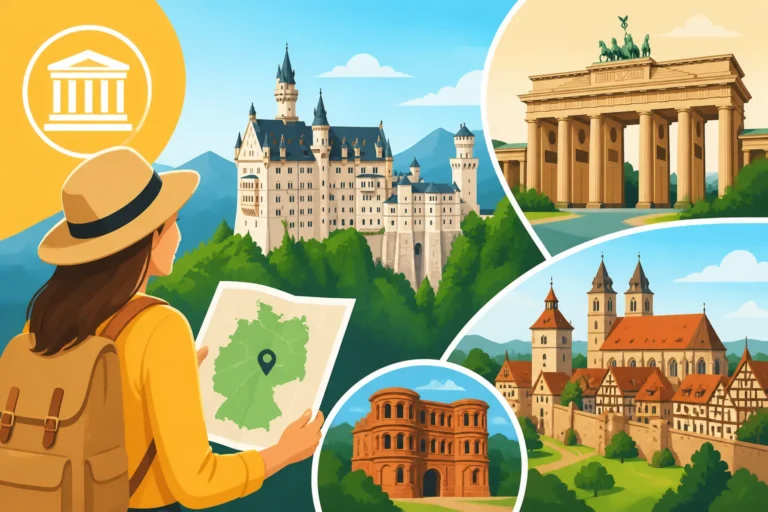
Stepping off the plane at Frankfurt or Berlin, many travelers feel a sudden knot in their stomach: what if I cannot communicate? This guide dives deep into the reality of English proficiency across Germany, helping you navigate everything from metropolitan hubs to tiny Bavarian villages so you can explore with confidence, even if your German is currently non-existent.
Disclosure: This post may contain affiliate links. We may earn a commission at no extra cost to you if you make a purchase through these links. Read full disclosure.
English Proficiency in Major Cities and Tourist Hubs
When you are planning your trip, the first thing to realize is that Germany is not a monolith. If your itinerary is packed with names like Berlin, Munich, Hamburg, or Frankfurt, the short answer is a resounding yes: people speak English. In these international crossroads, English is often the unofficial second language. I remember my first week in Berlin, wandering through Mitte; I was almost disappointed by how rarely I had to use my struggling German because every barista and waiter responded to my "Guten Tag" with a perfect, "Hello, what can I get for you?"
The Metropolitan Bubble
In the large cities, the density of English speakers is incredibly high. This is especially true in the service industry. Most staff in hotels you might find on Booking.com are required to be fluent in English to accommodate the diverse range of international guests. You will find that in Berlin for First-Time Visitors: Neighborhoods and Highlights, the international vibe is so strong that you might hear more English, Spanish, or Turkish on the street than German. This metropolitan bubble is a safety net for tourists, ensuring that you can navigate museums, trendy cafes, and shopping districts with almost zero linguistic friction.
However, do not let this bubble fool you into thinking the entire country is the same. While the youth in these cities are often nearly bilingual due to school requirements and American pop culture, the older generation may still struggle or feel shy about their English skills. In a city like Frankfurt, which is a global financial hub, English is the language of business. You can walk into almost any high-end restaurant or retail store and expect high-level communication. It makes the initial transition into the country much softer than you might expect.
The Generational and Professional Gap
It is a common sight to see a group of university students chatting away in a mix of "Denglish" (German and English), but the person operating the local bakery or the person cleaning the train station platform might have a different background. German school systems have prioritized English for decades, but for those who grew up in the former East Germany before the fall of the Wall, Russian was often the primary foreign language taught in schools. This creates a fascinating but sometimes challenging generational and geographic divide.
When you are Getting Around German Cities: U-Bahn, S-Bahn, Trams, and Buses, you will notice that digital displays and automated announcements are increasingly bilingual. However, if there is a sudden technical fault and the driver makes a frantic announcement over a crackly speaker, it will almost certainly be in German. In these moments, do not panic. Look for a younger person with headphones or someone who looks like a student; they are usually more than happy to translate the chaos for a confused traveler. This helpfulness is a staple of the local culture once the initial "hard shell" of German directness is breached.
Navigating Specific Tourist Scenarios
While general street English is common, the level of English you encounter varies wildly depending on the specific "service" you are using. If you are booking a structured experience through GetYourGuide, you are almost guaranteed an English-speaking guide who has been vetted for their communication skills. These structured environments are designed for the international market, so the "language barrier" is effectively non-existent.
The Hospitality and Accommodation Experience
Hotels, particularly those catering to international tourists, are the gold standard for English in Germany. From the front desk to the concierge, you will likely find staff who speak better English than some people back home. When looking for places to stay on Booking.com, you can often check reviews specifically for "English-speaking staff" to give yourself that extra layer of comfort. It is not just about the language, but the cultural understanding that these professionals bring to the table.
In smaller guesthouses (Gasthäuser) or pensions in the countryside, the situation shifts. You might encounter an elderly owner who speaks "Standard German" and perhaps a few words of English. This is where your Survival German for Travelers: Key Phrases to Learn First becomes your best friend. Even if you only know how to say "The key, please" (Der Schlüssel, bitte), the effort is immensely appreciated. It turns a potentially awkward transaction into a moment of human connection.
Transportation and Booking Logistics
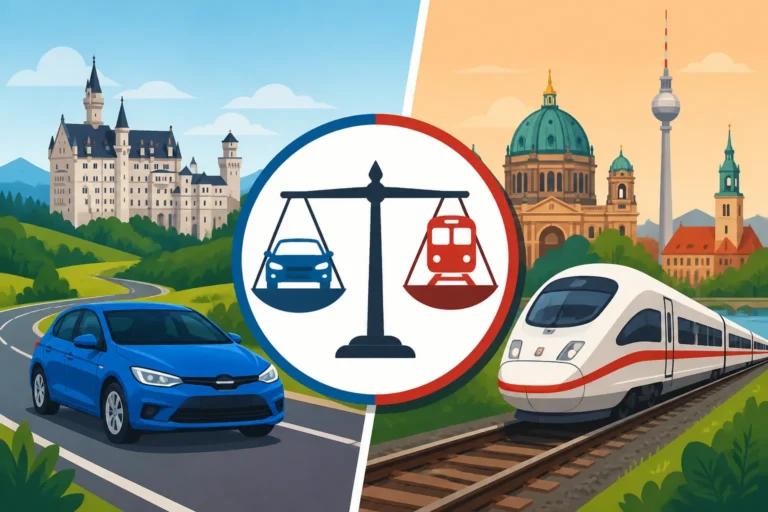
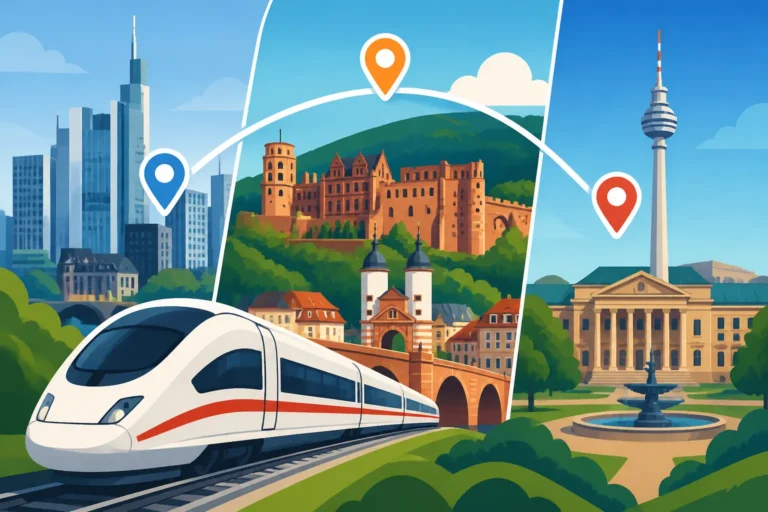
Germany’s transport system is a marvel of engineering, but it can be a labyrinth of bureaucracy. Platforms like Omio are a lifesaver here because they allow you to book your trains and buses in English, avoiding the sometimes confusing German-only interfaces of older local ticket machines. If you are trying to figure out How to Buy Deutsche Bahn Tickets and Save Money, using an English-friendly aggregator can prevent those "I think I just bought a monthly pass for a bike instead of a ticket for myself" moments that I certainly experienced in my early days.
At the major train stations (Hauptbahnhof), the "Service Point" desks always have at least one English speaker. They are used to dealing with tourists who are lost, have missed connections, or are confused by the platform numbers. However, keep in mind that "directness" is a German trait. An English-speaking attendant might give you a very short, factual answer that feels rude to an American or British ear. It isn't rudeness; it's efficiency. They are simply providing the information you asked for without the fluff.
| Location Type | English Level | Best Strategy |
|---|---|---|
| Major Cities (Berlin, Munich) | Very High | Direct English is usually fine. |
| Tourist Landmarks/Castles | High | Staff are trained for international crowds. |
| Small Rural Villages | Low to Moderate | Use translation apps and basic phrases. |
| Public Transport Offices | Moderate | Use apps like Omio to book ahead. |
| Local Pharmacies (Apotheke) | High | Pharmacists are highly educated and usually speak English. |
The Regional Divide: Where English Starts to Fade
As an expat who has explored the deep corners of the Black Forest and the rugged coast of the North Sea, I can tell you that the "English safety net" starts to fray the further you get from the Autobahn. Germany is famous for its "Mittelstand"—the small and medium-sized businesses that are often located in rural areas. In these charming, half-timbered towns, the local butcher or the person running the local "Kiosk" might only speak German.
Deep Bavaria and the Black Forest
In regions like Upper Bavaria or the deep Schwarzwald (Black Forest), the local dialect can be thick even for native German speakers. While younger people in these areas still learn English in school, they might not use it often and may feel "rusty" or embarrassed to speak it. This is where you might encounter the "No English" response, followed by a very helpful attempt at sign language.
When you are exploring these areas, perhaps on a tour you found via GetYourGuide, your guide will be your bridge. But if you venture out on your own, remember that Cash vs Card in Germany: What Visitors Should Know is a vital piece of info, as rural areas are not only less likely to speak English but also less likely to take your credit card. Being prepared with both "Groschen" (coins) and a few basic nouns will save you more stress than a dictionary ever could.
East vs. West Dynamics
There is still a lingering linguistic shadow from the Cold War. In parts of Eastern Germany, outside of the tourist magnets like Dresden or Leipzig, English proficiency among the older generation (50+) is statistically lower than in the West. If you find yourself in a small town in Brandenburg or Saxony, don't be surprised if the "older" locals seem a bit more hesitant when approached in English.
In these situations, a smile and a "Sprechen Sie Englisch?" (Do you speak English?) goes a long way. It is far more polite than just launching into an English sentence. It acknowledges that you are in their country and asks for their help, rather than demanding it. This small cultural nuance can turn a cold shoulder into a warm, albeit mimed, conversation about the best local hiking trails.
Strategies for a Stress-Free English-Speaking Trip
You do not need to be fluent to have a wonderful time in Germany, but you do need to be strategic. The goal is to minimize the "high-stakes" linguistic moments where a misunderstanding could cost you time or money. By using the right tools and having the right mindset, you can navigate the country like a pro.
Leveraging Technology and English-Friendly Platforms
The digital age has made traveling in Germany significantly easier. I always tell visiting friends to download their maps offline and use tools like Omio for all their regional travel. It keeps your tickets in one place and ensures the terms and conditions are in a language you actually understand. Similarly, Booking.com allows you to filter for specific amenities and communicate with hosts via a translation-friendly interface before you even arrive.
When you are actually on the ground, don't be afraid to use your phone. Google Lens is magic for translating menus in a traditional Brauhaus. While you should definitely learn How to Order at a Restaurant in German Without Stress, sometimes the "Special of the Day" is written in a cursive script that defies even native speakers. A quick scan with your phone can tell you if you're ordering pork knuckle or veal liver.
The Power of "Polite German"
The most important thing I have learned as an expat is that Germans value effort. Even if your pronunciation is terrible, starting an interaction with "Hallo" and ending with "Danke" (Thank you) changes the dynamic. If you find yourself needing to ask a complex question, start with: "Entschuldigung, mein Deutsch ist nicht gut. Sprechen Sie Englisch?" (Excuse me, my German is not good. Do you speak English?).
This approach works wonders. It shows respect for the local culture and usually results in the other person revealing that their English is actually quite excellent. They just didn't want to be the one to start the conversation in a foreign language. Understanding Polite German: Du vs Sie for Visitors is also helpful, though as a tourist, you will almost always be forgiven for using the wrong form of "you." The key is the intent behind the words.
Dining and Social Etiquette
Restaurants are often the place where travelers feel the most pressure. In big cities, menus are almost always available in English. In smaller towns, you might get a puzzled look. If you follow German Dining Etiquette: Eating Out, Tipping, and Table Manners, you will know that you usually seat yourself in casual places and wait to be seated in fancier ones.
When it comes to paying, the waiter will often ask "Zusammen oder getrennt?" (Together or separate?). If you don't understand the question, they will usually resort to English or just point at the bill. This is one of those universal "tourist moments" that happen every day in Germany. Don't sweat it. Just have your cash or card ready and follow the lead of the person serving you. Most Germans in the tourist sector are incredibly patient as long as you are not being loud or demanding.
Essential Tips for the Non-German Speaker
- Download Offline Maps: You cannot always rely on free Wi-Fi in German cities.
- Use English Booking Sites: Use Omio for trains and Booking.com for stays to ensure you understand the fine print.
- Carry a "Cheat Sheet": Keep a small card with your hotel address and emergency phrases in German.
- Learn the "Sign Language" of the Bakery: Pointing is perfectly acceptable in a "Bäckerei" where the names of the pastries are twenty letters long.
- Trust the Youth: If you are truly stuck, look for someone under the age of 30. Their English is almost guaranteed to be functional.
- Book English Tours: Use GetYourGuide to ensure your historical context doesn't get lost in translation.
In the end, Germany is one of the most English-friendly countries in Europe. While the language sounds "harsh" to some, the people are generally eager to help international visitors. By combining a few basic phrases with reliable English-speaking services and a bit of cultural empathy, you will find that the language barrier is more like a small hurdle that you can easily hop over.
Disclaimer
The information provided in this guide is for informational purposes only. While every effort has been made to ensure the accuracy of the details provided, language proficiency and service availability can change based on location, season, and individual circumstances. Always verify critical travel information and local regulations before your trip.