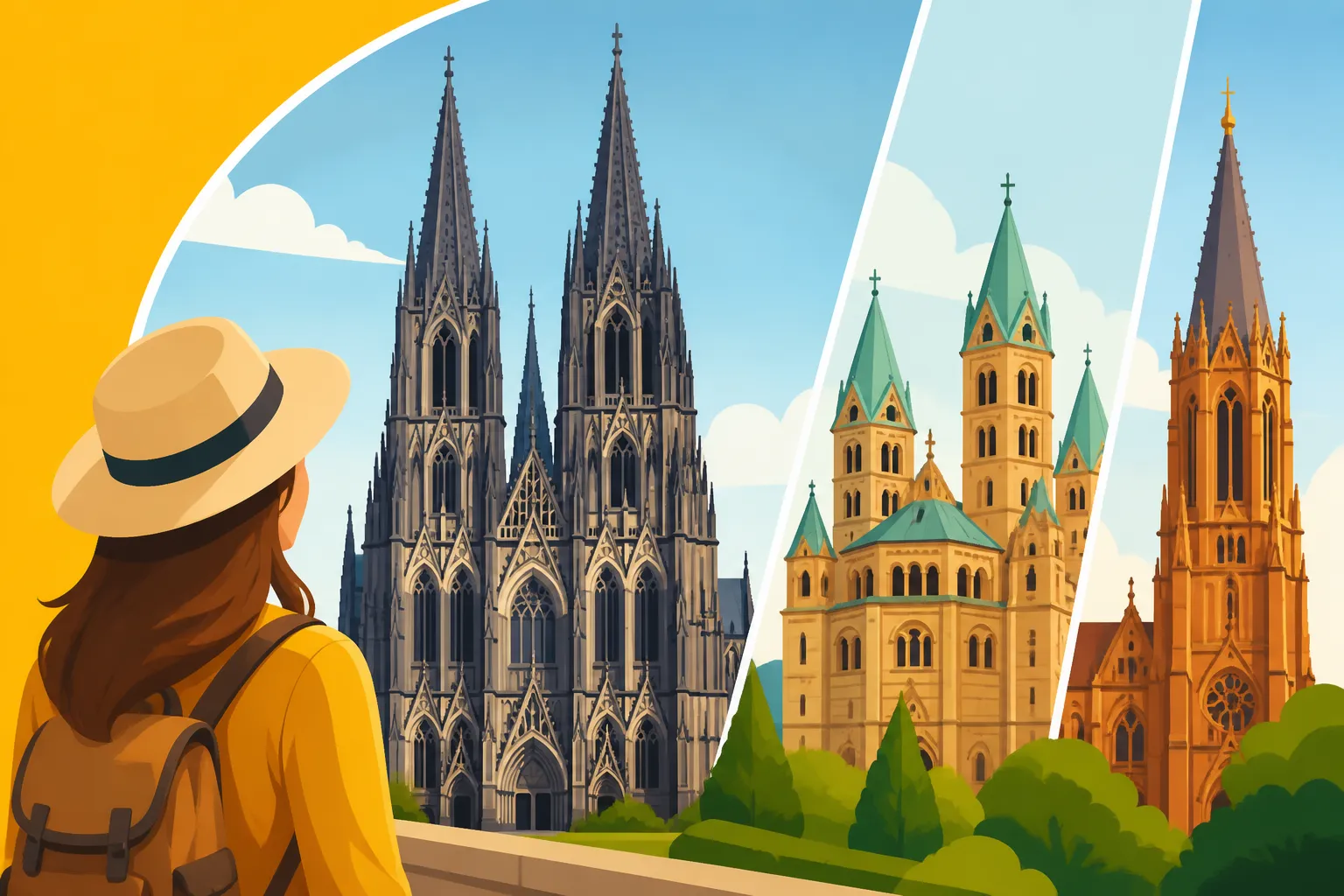
How to See Germany’s Best Cathedrals
Oh, the sheer grandeur and weighty history of Germany's cathedrals! As an expat who's often felt overwhelmed by the sheer scale of German bureaucracy, I can tell you that planning a trip to see these architectural marvels can feel like another bureaucratic hurdle. You want to soak in the history, marvel at the stained glass, and feel that sense of awe, but where do you even begin with so many incredible structures dotting the landscape? This guide is here to cut through the confusion and give you the real lowdown on how to discover some of Germany's most breathtaking cathedrals, from the globally famous to the wonderfully ancient, helping you plan your pilgrimage with ease and a genuine sense of adventure.
Disclosure: This post may contain affiliate links. We may earn a commission at no extra cost to you if you make a purchase through these links. Read full disclosure.
Why German Cathedrals Are More Than Just Buildings
Germany's cathedrals aren't just pretty faces. They are living, breathing testaments to centuries of faith, power, artistry, and often, incredible human resilience. Standing before them, you don't just see stone and glass; you feel the echoes of emperors, pilgrims, and countless generations of townspeople who lived under their shadows. They tell stories of ambition, devotion, and sometimes, utter devastation and miraculous rebirth. For an expat like me, they offer a profound insight into the very soul of this country.
A Journey Through History and Architecture
When you start looking at German cathedrals, you'll quickly realize you're embarking on a crash course in European architectural history. Many of these churches began their lives in the Romanesque period, characterized by their thick walls, rounded arches, and a certain stoic, fortress-like quality that speaks of an earlier, more turbulent age. Think of the massive, imposing structure of Speyer Cathedral, which just radiates this ancient power. Then, as the centuries rolled on, the Gothic style swept through, pushing churches ever higher, filling them with light through enormous stained-glass windows, and adorning them with intricate flying buttresses and spires that seem to defy gravity. Cologne Cathedral is, of course, the quintessential example, a staggering symphony in stone that leaves you craning your neck in disbelief.
But the story doesn't end there. You'll also find elements of Baroque opulence, particularly in southern Germany, where interiors burst with gold leaf, frescoes, and dramatic sculptures, reflecting a different era's artistic and spiritual fervor. These structures have survived wars, fires, and the march of time, often being rebuilt, renovated, and added to, creating a fascinating patchwork of styles that tells its own chronological tale. Walking through these spaces, you can almost trace the evolution of German craftsmanship and aesthetic ideals right before your eyes, offering a tangible connection to the past that few other buildings can.
Spiritual Sanctuaries and Cultural Hubs
Beyond their architectural splendor, German cathedrals have always been, and largely remain, profound spiritual sanctuaries. They're not just tourist attractions; they are active places of worship where communities gather for mass, celebrations, and quiet contemplation. For many Germans, these cathedrals are intrinsic to their regional identity, symbols of their hometown's heritage and pride. Think of the collective gasp of relief when Cologne Cathedral stood tall amidst the rubble of World War II, a beacon of hope for a devastated city.
But their role extends far beyond religious services. Many cathedrals are vibrant cultural hubs, hosting world-class organ concerts, classical music performances, and art exhibitions that draw people from all walks of life. The acoustics in these grand spaces are often incredible, making a concert inside a cathedral an unforgettable experience. They house priceless relics, intricate altarpieces, and centuries of religious art that offer deep insights into German and European artistic traditions. Whether you're seeking a moment of peace, an appreciation for sacred art, or simply a connection to a profound historical narrative, these cathedrals offer a unique gateway into the heart of German culture and its enduring spirit.
Must-Visit Cathedrals Across Germany
Alright, let's get down to the brass tacks: which cathedrals absolutely must you see? This is where the choices get tough, but as an old hand, I’ve got some personal favorites that consistently blow people away. Each one offers a distinct piece of Germany’s soul, a story carved in stone and light.
Cologne Cathedral (Kölner Dom) – The Iconic Gothic Masterpiece
You simply cannot talk about German cathedrals without starting with the Kölner Dom. It dominates the skyline of Cologne in a way few other buildings dominate a city. This colossal Gothic cathedral, a UNESCO World Heritage site, took over 600 years to build – yes, you read that right, six centuries! Its twin spires soar over 157 meters high, making it one of the tallest churches in the world and an absolutely breathtaking sight, especially as you step out of the Hauptbahnhof and it suddenly looms before you. The sheer scale of it is overwhelming, and it's almost impossible to get it all in one photograph.
Inside, the vastness of the nave is astonishing, lined with stained glass windows that bathe the interior in a kaleidoscopic light. The Shrine of the Three Kings, believed to hold the relics of the Magi, is a golden sarcophagus of immense beauty and historical importance. Don't skip climbing the 533 steps of the South Tower – it's a leg workout, but the panoramic views over Cologne and the Rhine are utterly spectacular and worth every single stair. You can also explore the treasury, which houses an incredible collection of medieval artifacts. Being so centrally located right next to the main train station, it’s incredibly easy to access, making it a perfect starting point for your cathedral explorations.
Speyer Cathedral (Speyerer Dom) – Romanesque Grandeur
Heading south along the Rhine, you'll discover Speyer Cathedral, another UNESCO World Heritage site that offers a stark contrast to Cologne's Gothic extravagance. This is the largest Romanesque church in the world, and it exudes a powerful, grounded majesty. Built in the 11th century by the Salian dynasty, it was the burial place of Holy Roman Emperors for centuries. When you step inside, you’re transported back to a time of emperors and knights, with its robust architecture and powerful sense of history.
What truly makes Speyer special is its crypt – the largest Romanesque crypt in Germany. It’s a beautifully preserved space where you can descend and stand before the tombs of eight Holy Roman Emperors and German kings, including Henry III and Henry IV. It’s a humbling, almost eerie experience, connecting you directly to a pivotal period in European history. The cathedral's exterior, with its four towers and domes, is incredibly imposing, standing proudly by the Rhine. Speyer itself is a charming old town, perfect for a leisurely stroll after your visit. You can easily reach Speyer via regional trains, often changing in Mannheim or Ludwigshafen.
Aachen Cathedral (Aachener Dom) – Charlemagne's Legacy
If you’re interested in really ancient history, Aachen Cathedral is a non-negotiable visit. This is one of Germany’s oldest cathedrals and another UNESCO site, built by Charlemagne himself in the late 8th century as his palace chapel. For over 600 years, it was the coronation church for 30 German kings and 12 queens, making it an incredibly significant historical site. Stepping into the Palatine Chapel, the central octagonal structure, you're immediately struck by the Byzantine-influenced mosaics and the sheer antiquity of the place. You're walking on ground where Charlemagne himself walked and worshipped.
The cathedral houses Charlemagne's throne, a remarkably simple marble seat that belies the immense power once wielded from it. Also within its walls is the famous treasury, one of the most important ecclesiastical treasuries in northern Europe, containing masterpieces like the Lothar Cross and the bust of Charlemagne. This place is steeped in legend and historical weight. Aachen is well-connected by train, and its location near the borders of Belgium and the Netherlands makes it a fascinating cross-cultural destination.
Ulm Minster (Ulmer Münster) – Soaring Heights
Moving further south into Baden-Württemberg, you’ll find the Ulm Minster, which, while technically a minster and not a cathedral (it was never a bishop's seat), is too spectacular to leave off this list. It boasts the tallest church spire in the world, reaching an incredible 161.5 meters! This late Gothic masterpiece is a testament to human ambition and engineering. The spire was only completed in the late 19th century, after centuries of construction, culminating in a spectacular, needle-like peak.
Climbing the 768 steps to the top of the spire is an absolute must if you have the stamina. The views from the top, especially on a clear day, stretch across Ulm, the Danube, and even to the Alps in the distance – it’s genuinely breathtaking. Inside, the sheer height of the nave is awe-inspiring, and the intricate wood carvings in the choir stalls are masterpieces of medieval art. Ulm is a lovely city on the Danube, easily accessible by train and often combined with a trip through Bavaria.
Berlin Cathedral (Berliner Dom) – Neo-Renaissance Splendor
In the heart of Germany's vibrant capital, Berlin, stands the Berliner Dom. This cathedral offers a different flavor from its older, more traditional cousins. It’s a grand Protestant cathedral built in a stunning Neo-Renaissance and Baroque style, completed in 1905. It might not have the millennia of history like Aachen or Speyer, but its sheer opulence and scale are undeniable. During WWII, it was heavily damaged but has since been meticulously restored to its former glory.
The interior is lavish, with intricate mosaics, gilded ornaments, and the magnificent Sauer organ, which is often used for concerts. You can also visit the Hohenzollern Crypt, the burial site for members of the Prussian royal family, which contains nearly 100 sarcophagi. And for an amazing perspective, make sure to climb the 270 steps to the dome’s exterior walkway for fantastic panoramic views of Museum Island, the Lustgarten, and the Berlin cityscape. It’s an easy stroll from many of Berlin’s key attractions, making it a perfect addition to a city trip. If you're staying in the capital, consider planning a full day around its cultural offerings using resources like Best Day Trips From Berlin for nearby excursions.
Bamberg Cathedral (Bamberger Dom) – Imperial Romanesque & Gothic Fusion
In the heart of the UNESCO World Heritage city of Bamberg, this stunning cathedral offers a unique blend of Romanesque and Gothic architecture, reflecting centuries of construction and adaptation. With its four imposing towers, Bamberg Cathedral is an unmistakable landmark. Inside, you'll encounter some truly remarkable treasures, including the enigmatic Bamberg Rider, a medieval equestrian statue whose identity remains a mystery, and the tombs of Emperor Henry II and Empress Kunigunde.
Another fascinating aspect is the tomb of Pope Clement II, the only papal tomb north of the Alps, underscoring Bamberg's historical significance within the Holy Roman Empire. The city itself is incredibly picturesque, with its charming old town, canals, and half-timbered houses, making the cathedral visit part of a larger, delightful cultural experience. Bamberg is easily accessible by train and well worth the journey, especially if you appreciate cities that feel like stepping back in time.
Practicalities of Your Cathedral Hopping Adventure
Venturing out to see these magnificent structures requires a bit of planning, especially if you’re trying to squeeze in multiple locations. But honestly, that’s half the fun of exploring Germany – figuring out the logistics, which, surprisingly, are often quite smooth thanks to excellent infrastructure.
Planning Your Route and Transport
Germany’s strength lies in its incredible public transport network, especially the Deutsche Bahn (DB) trains. If you’re aiming to visit several cathedrals, I highly recommend grouping them geographically. For instance, Cologne and Aachen are relatively close in the Rhine-Ruhr region, while Speyer and Ulm are further south, potentially combinable with a trip into Bavaria. Berlin stands alone, but offers plenty of other historical sites.
For inter-city travel, the high-speed ICE trains are comfortable and efficient, but regional trains are often more budget-friendly and connect smaller towns. Services like Omio can be a real lifesaver for easily comparing train, bus, and even flight options, allowing you to book tickets in English and see all your transport choices in one go. And don't forget the incredible value of the Deutschland-Ticket if you're planning extensive regional travel – it's a game-changer for budget-conscious explorers. Renting a car also gives you flexibility, especially if you want to explore more rural areas or combine cathedral visits with stops along scenic routes like the Romantic Road. For more detailed advice, you should definitely check out our guide on Getting Around Germany: Trains, Buses, Flights, and Car Hire.
Accommodation and Guided Experiences
When you’re planning your visits, choosing the right base is key. For each cathedral city, there are plenty of options, from cozy Pensionen to modern hotels. I always find Booking.com to be incredibly useful for finding accommodation close to the city centers or train stations, making it easy to reach the cathedrals by foot or a short public transport ride. Booking in advance, especially for popular cities or during peak seasons, is always a good idea to secure better rates and locations.
To really delve into the history and hidden stories of these cathedrals, I often recommend looking into guided tours. Websites like GetYourGuide offer a range of experiences, from specific cathedral tours to broader city walking tours that incorporate the church as a highlight. A good guide can bring the stones to life, pointing out architectural details, historical anecdotes, and artistic symbolism you might otherwise miss. Sometimes, even just picking up an audio guide at the cathedral entrance can vastly enrich your visit. For finding suitable places to stay, you might want to read up on Accommodation in Germany: Hotels, Pensionen, and Hostels.
Respectful Visits and Photography
German cathedrals are active places of worship, so it’s essential to remember a few etiquette points. Always dress respectfully; while there isn't a strict dress code enforced at the door, it's generally appreciated if shoulders and knees are covered. Keep your voice down, especially during services. If a service is underway, try to enter and exit quietly, and avoid walking through the main aisles. Photography is usually allowed, but sometimes flash photography is forbidden, and there might be restrictions on taking photos during services or of specific exhibits in treasuries. Always look for signage, and if in doubt, ask a staff member. Remember, these are sacred spaces first and tourist attractions second. A deeper dive into cultural norms can be found in our article on German Etiquette: Do’s and Don’ts in Social and Professional Settings.
Beyond the Big Names: Hidden Gems and Regional Delights
While the major cathedrals are incredible, Germany is also home to countless other stunning churches and minsters that offer equally profound experiences, often with fewer crowds. Don’t be afraid to venture off the well-trodden tourist path a little; you might just discover your own personal favorite.
Trier Cathedral (Trierer Dom) – Germany’s Oldest Church
Located in Germany's oldest city, Trier, the Trierer Dom holds the incredible distinction of being the country's oldest church, with parts dating back over 1700 years to Roman times. This is truly a place where history resonates from every stone. Originally built upon a Roman palace, it incorporates fascinating elements from various epochs, from its Romanesque core to Gothic and Baroque additions. It’s a UNESCO World Heritage site, not just for its age but for its continuous architectural evolution.
The most revered relic here is the Holy Tunic, said to be the seamless robe worn by Jesus before his crucifixion. While rarely displayed, its presence speaks to the cathedral’s immense spiritual significance over the centuries. Exploring Trier Cathedral is like peeling back layers of time, revealing the city’s imperial and religious past. When you’re in Trier, you're surrounded by Roman gates, baths, and amphitheatres, making the cathedral a centerpiece in a city brimming with ancient history.
Regensburg Cathedral (Regensburger Dom) – Bavarian Gothic Jewel
For a taste of pure, soaring Gothic architecture in Bavaria, head to Regensburg Cathedral. This is one of the most significant Gothic cathedrals in Bavaria and a highlight of the UNESCO World Heritage city of Regensburg. Unlike many other cathedrals that feature a mix of styles, Regensburg Cathedral largely maintains its consistent High Gothic design, giving it a remarkably unified and elegant appearance. Its twin spires, completed only in the 19th century, pierce the sky with grace.
Inside, the light pouring through its stunning stained-glass windows, some dating back to the 13th century, is truly mesmerizing. The famous Regensburger Domspatzen, one of the oldest and most renowned boys' choirs in the world, perform here, and if you can catch a service or concert, it's an unforgettable acoustic experience. The city of Regensburg, nestled on the Danube, is incredibly charming, with its narrow alleyways, old bridge, and vibrant atmosphere, perfect for exploring before or after your cathedral visit. You could easily combine this with a wider tour of the region as outlined in our Bavaria for Travelers: Munich, the Alps, and Beyond guide.
Magdeburg Cathedral (Magdeburger Dom) – Early Gothic Pioneer
In eastern Germany, Magdeburg Cathedral stands as a pioneer. It's considered the first Gothic cathedral built on German soil, marking a significant architectural shift from the Romanesque style. Its construction began in 1209, and you can see the early influences of French Gothic design, pushing towards greater height, light, and decorative elements. This impressive structure is the burial place of Otto the Great, the first Holy Roman Emperor, whose tomb lies within the cathedral.
The cathedral's interior is breathtaking, with its towering nave, intricate sculptures, and beautiful cloisters. The combination of its historical importance as a pioneering Gothic structure and its spiritual significance makes it a compelling visit. It’s a testament to the spread of architectural ideas and the evolving craftsmanship of medieval Europe. Magdeburg might not be on everyone's initial travel list, but for those seeking a deeper dive into Germany's architectural heritage, it's a truly rewarding stop.
| Cathedral Name | Location | Primary Architectural Style(s) | Key Highlight | Accessibility (Train) |
|---|---|---|---|---|
| Cologne Cathedral | Cologne | High Gothic | Tallest twin spires, Shrine of the Three Kings | Excellent (Hauptbahnhof) |
| Speyer Cathedral | Speyer | Romanesque | Largest Romanesque church, Imperial Crypt | Good (Regional trains) |
| Aachen Cathedral | Aachen | Carolingian, Gothic | Charlemagne's Palatine Chapel, Coronation Church | Good |
| Ulm Minster | Ulm | Gothic | World's tallest church spire (climbable) | Good |
| Berlin Cathedral | Berlin | Neo-Renaissance, Baroque | Impressive dome views, Hohenzollern Crypt | Excellent (Central Berlin) |
| Bamberg Cathedral | Bamberg | Romanesque, Gothic | Bamberg Rider, Papal tomb, Four towers | Good |
| Trier Cathedral | Trier | Romanesque, Gothic (Roman roots) | Germany's oldest church, Holy Tunic, Imperial connection | Good |
| Regensburg Cathedral | Regensburg | High Gothic | Pure Gothic design, Stained glass, Domspatzen choir | Good |
| Magdeburg Cathedral | Magdeburg | Early Gothic | First Gothic on German soil, Otto the Great's tomb | Good |
Remember, each of these magnificent structures offers a profound journey through German history, art, and faith. Take your time, look up, and let their stories unfold around you. Happy cathedral hopping!
Disclaimer
The information provided in this guide is intended for general informational purposes only and does not constitute professional advice. While we strive to ensure accuracy and provide up-to-date information, circumstances and regulations in Germany can change. We recommend verifying details with official sources, travel authorities, and relevant institutions before making any travel plans or decisions. Travel requirements, opening hours, and access conditions for cathedrals may vary, so always check the latest information directly with the respective sites or local tourism boards.