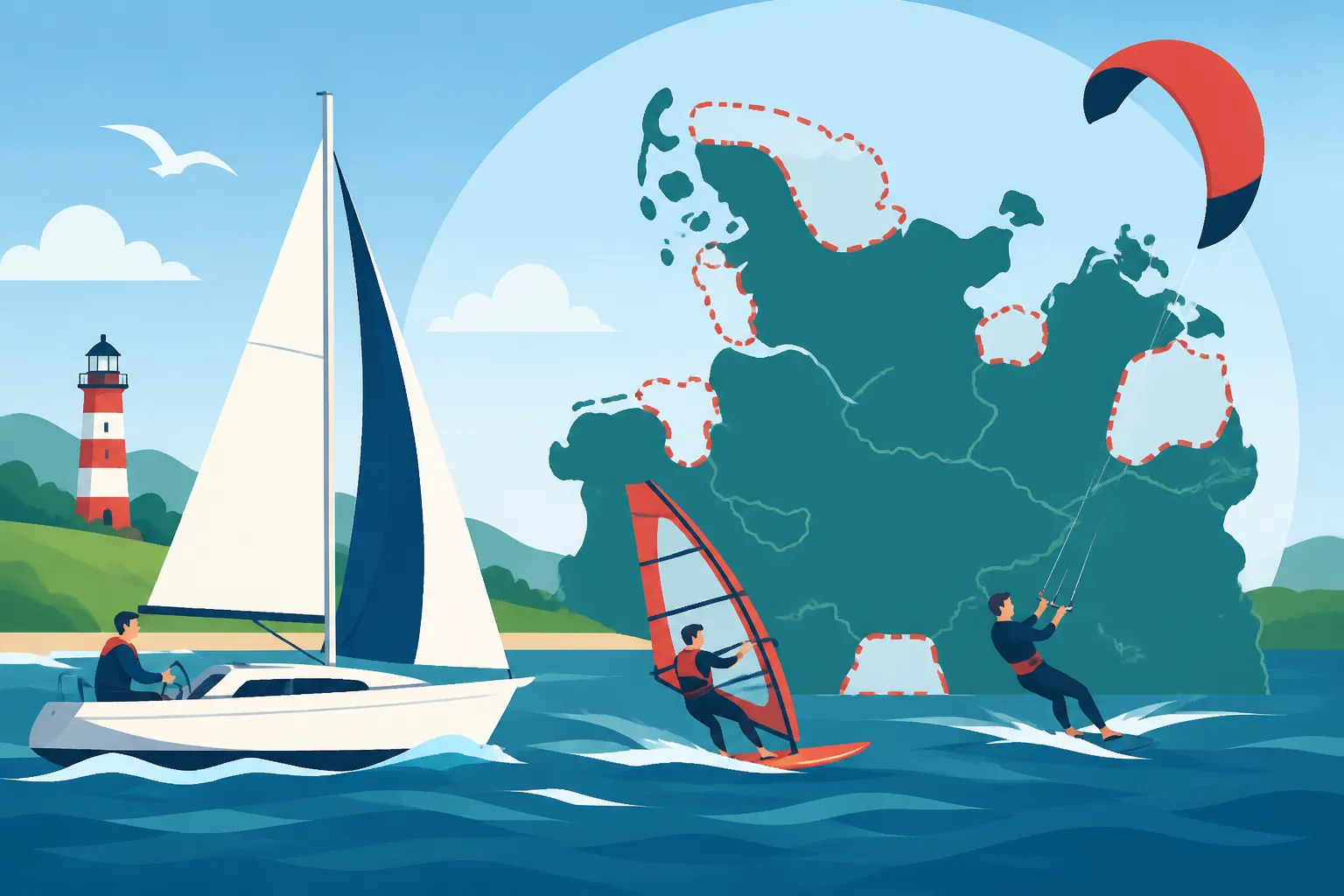
Sailing and Watersports in Northern Germany: Coverage Gaps to Check
The thrill of catching the wind in your sails or paddling across a serene lake in Northern Germany is truly unparalleled. It's one of the absolute joys of living here, offering an incredible escape from the daily grind. But let's be honest, when you're caught up in the excitement of planning your next adventure on the water, the last thing on your mind is often what happens if things go sideways. Most of us expats come here, get our basic health and liability insurance sorted, and feel like we're covered for everything. Yet, the reality for watersports enthusiasts is that standard insurance often leaves significant, sometimes dangerous, coverage gaps. This guide is here to shed light on those often-overlooked risks and introduce you to a smart, flexible solution that ensures your water escapades remain worry-free, no matter how ambitious they get.
Disclosure: This post may contain affiliate links. We may earn a commission at no extra cost to you if you make a purchase through these links. Read full disclosure.
The Irresistible Call of Northern Germany's Waters and the Unseen Risks
Northern Germany, with its sprawling coastlines along the North and Baltic Seas, and its enchanting network of inland lakes and rivers, is a veritable paradise for anyone with a passion for watersports. From the seasoned sailor to the curious paddleboarder, there's an endless array of opportunities to immerse yourself in the aquatic beauty of this region. But beneath the surface of all that fun and freedom lie potential hazards that can turn a dream day into a financial nightmare if you're not properly prepared.
Coastal Charms and Inland Escapes: A Watersports Haven
Imagine the crisp sea air filling your lungs as you glide across the Baltic Sea near Fehmarn, one of Germany's sunniest islands, a renowned spot for kitesurfing and windsurfing. Or perhaps you envision yourself navigating the intricate waterways of the Mecklenburg Lake District, home to the vast Müritz lake, perfect for sailing, kayaking, and stand-up paddleboarding. Even closer to urban centers, lakes like the Steinhuder Meer near Hanover offer fantastic conditions for various activities. These regions aren't just scenic; they're playgrounds that attract thousands of watersports enthusiasts every year, both locals and expats alike. The sheer variety means you can try your hand at almost anything – dinghy sailing, yachting, surfing the North Sea waves, sea kayaking along rugged coastlines, or leisurely canoeing on a tranquil river. The freedom is intoxicating, and it’s precisely why so many of us fall in love with living here.
However, with that freedom comes a degree of risk. It's not about being a spoilsport; it's about being a realist. The elements can be unpredictable, equipment can fail, and even the most experienced individuals can make a misjudgment. A sudden gust of wind, an unexpected wave, a submerged object, or even another watersports participant can lead to accidents. While German emergency services are excellent (remember 112 for emergencies!), the costs associated with specialized rescue operations, medical treatment, or even liability claims can quickly escalate beyond what your standard insurance might cover. It's a common oversight, one that many only discover when it's unfortunately too late.
The "It Won't Happen to Me" Trap: Overlooking the Obvious
It’s human nature, isn't it? We tend to believe that serious accidents only happen to "other people." We're careful, we're experienced, we know what we're doing. And most of the time, that's absolutely true! But even a minor mishap on the water can have surprisingly significant consequences in Germany.
Consider a scenario: you're kitesurfing along the coast of Usedom, feeling the rush, when a sudden shift in wind causes you to lose control, resulting in a twisted ankle. Or perhaps you're sailing on the Plauer See and, due to a moment's lapse, your boom swings unexpectedly, hitting a fellow crew member. What if your rented stand-up paddleboard drifts away in a current and gets damaged beyond repair? These aren't catastrophic events, but they're certainly inconvenient and costly. Your usual German health insurance will, of course, cover your medical treatment, but what about the ambulance specifically dispatched for a watersports incident? What about the rescue boat that brings you back to shore? And the really big one: what if your actions inadvertently cause damage to someone else's expensive yacht or, worse, injure another person? These are the moments when the "it won't happen to me" mindset clashes with the very real and very German insistence on accountability and comprehensive coverage. This is precisely why many active expats are turning to flexible solutions like SafetyWing.
Unpacking the Coverage Gaps in Standard German Insurance
When you move to Germany, one of the first things you tackle is getting your insurance sorted. You likely have your public health insurance (or private, if you're eligible), and probably the ever-important personal liability insurance (Haftpflichtversicherung). You might even have some form of household contents insurance (Hausratversicherung). And for daily life, these are absolutely essential and provide a solid foundation. But for the dedicated watersports enthusiast, relying solely on these can be a risky gamble, as their coverage often has specific exclusions or limitations for high-risk activities.
German Health Insurance: Good, But Not Always Enough
Let's be clear: having good health insurance in Germany, whether it's public (like TK, AOK, Barmer) or private, is non-negotiable. It covers your doctor visits, hospital stays, and medication. For many common accidents, it's a lifesaver. However, the nuances come into play when watersports are involved.
While your health insurance will generally cover the medical treatment for an injury sustained during watersports, it might not cover everything surrounding the incident. For instance, if you require a specialized mountain rescue or water rescue operation, particularly one involving private services or unique equipment, your standard health insurance may not cover the full cost. Some policies might have clauses excluding "dangerous sports" or requiring specific add-ons that most people don't think to get. You'll typically be covered for the broken bone or stitches, but not necessarily the expensive journey back from a remote area on a specialized rescue vessel. This is a common pitfall. For instance, if you have a serious incident out on the North Sea and require a helicopter evacuation, the initial medical care might be covered, but the transport costs from the scene to the hospital could be partially or entirely on your dime if your policy isn't specific enough. This is where a robust travel medical insurance designed for nomads and active individuals, such as SafetyWing, steps in to fill these potential gaps, ensuring you're covered from the moment an incident occurs. For a deeper dive into the German healthcare system, check out our guide on Healthcare in Germany: A Comprehensive Guide for Expats.
The Haftpflicht Dilemma: Are You Truly Liable-Proof?
The personal liability insurance (Haftpflichtversicherung) is often touted as the most important insurance in Germany, and for good reason. It covers damages you accidentally cause to other people or their property. If you bump into someone and break their glasses, or if your dog bites someone (heaven forbid!), this insurance has your back. However, when it comes to watersports, the picture gets a little murkier.
Many standard Haftpflicht policies exclude or limit coverage for certain watersports, especially those deemed "high-risk" or involving motor vehicles (like jet skis). Even for non-motorized activities like sailing, kitesurfing, or kayaking, there can be specific clauses. For example:
- Damage to rented equipment: If you rent a sailboat, a paddleboard, or even just a wetsuit and accidentally damage it beyond wear and tear, your standard liability might not cover the cost of replacement or repair. This is a massive point, as many watersports enthusiasts often rent gear.
- Injury to third parties during a specific sport: While it might cover general injuries, if you accidentally injure another person while engaged in a specific watersport (e.g., your kite lines accidentally cut someone, or your kayak collides with another person's boat), the
Haftpflichtpolicy might argue that this falls under a special risk not covered by the basic policy. - Professional or competitive activities: If you participate in watersports competitively or even as a semi-professional, most standard
Haftpflichtpolicies will explicitly exclude coverage.
So, while your Liability Insurance (Haftpflicht): The Most Important Insurance in Germany? is crucial, don't assume it's a blanket solution for your watersports adventures. This is where you need to scrutinize the small print or, better yet, choose an insurance that explicitly understands and covers these risks. The peace of mind that comes from knowing you're fully covered, even if you accidentally cause a minor fender-bender on the water, is invaluable.
SafetyWing: Your Go-To for Watersports Peace of Mind in Northern Germany
This is where finding the right kind of insurance becomes critical. As an expat, you need flexibility, clear terms, and coverage that genuinely understands your lifestyle, especially if that lifestyle involves an active pursuit of watersports. This is precisely why SafetyWing has become such a popular choice among digital nomads and expats in Germany and beyond. It’s designed for the modern traveler and long-term resident who doesn’t want to be bogged down by rigid, conventional insurance policies that often overlook specific needs.
Comprehensive Coverage for the Active Adventurer
What makes SafetyWing stand out for watersports enthusiasts in Northern Germany? It's their approach to travel medical insurance that extends far beyond just basic health coverage. Think of it as a safety net that is genuinely tailored for those who embrace an active, mobile lifestyle.
Here’s how SafetyWing specifically addresses the typical coverage gaps for watersports:
- Watersports Injury Coverage: Unlike many traditional policies, SafetyWing often includes coverage for injuries sustained during a wide range of recreational sports and activities, including many watersports. This means if you have that kitesurfing mishap or kayaking tumble, your medical expenses, including emergency room visits, hospital stays, and even prescription medications, are covered. You won't have to worry about your German health insurance balking at certain "dangerous" clauses.
- Emergency Medical Evacuation: This is a crucial one for watersports. If you're out on the open sea or a remote lake and need urgent medical attention that requires specialized transport to the nearest appropriate medical facility, SafetyWing covers the costs. This could mean a helicopter lift from a distant island or a special boat transfer from a tricky location.
- Travel Interruption & Delay: While not directly watersports-related, unexpected issues can certainly impact your plans. If your watersports trip is cut short or delayed due to unforeseen circumstances, SafetyWing offers coverage that can help mitigate financial losses.
- Personal Liability Option: Many SafetyWing plans also offer personal liability coverage, which can be essential if you accidentally cause damage to someone else's property or injure a third party while participating in a covered activity. This is the explicit, active-lifestyle-friendly version of
Haftpflichtcoverage that many standard German policies might lack for watersports incidents. This means if you ding a rented dinghy or cause an accident with another surfer, you’re often covered. - Flexibility and Ease of Use: One of the biggest frustrations for expats dealing with German bureaucracy is the paperwork and rigid structures. SafetyWing is designed to be incredibly flexible. You can buy it online, extend it easily, and it's built for those who might travel in and out of Germany, or even just around Europe for other adventures. This contrasts sharply with the often-cumbersome process of applying for and managing traditional German insurance policies. For someone constantly on the go or someone whose visa status might change, this flexibility is a godsend.
Instead of navigating complex German insurance terms or trying to find obscure add-ons, SafetyWing offers a straightforward, inclusive package that gives you the confidence to enjoy Northern Germany's waters without a lingering worry about what-ifs. It really is an ideal solution for many who are still figuring out the nuances of Understanding German Medical Bills: Decoding Private Invoices and Co-Pays or Insurance Reimbursement: How to Claim Money Back (for Private Insurance).
Hypothetical Horrors (Averted by SafetyWing)
Let’s run through a couple of quick scenarios to illustrate just how useful SafetyWing can be:
Scenario 1: Kitesurfing Calamity near Sankt Peter-Ording
You're catching some epic waves off the North Sea coast, a popular spot for kitesurfing. Suddenly, a freak gust pulls you hard, you tumble, and your expensive kite smashes into another kitesurfer's board, causing significant damage. At the same time, you've taken a nasty fall and suspect a dislocated shoulder.
- Without SafetyWing: Your German health insurance covers your shoulder, but the damaged kiteboard and potential injury to the other surfer? Your standard
Haftpflichtmight claim specific watersports are excluded. You're looking at potentially thousands in damages and medical bills for the other person, all out of your own pocket. - With SafetyWing: Your dislocated shoulder is covered for medical treatment. Crucially, the personal liability aspect of SafetyWing (if you've opted for it) would likely step in to cover the damage to the other person’s board and any injury they sustained. You get medical care, and your financial burden from the accident is largely managed.
Scenario 2: Sailing Scrape on the Müritz
You’ve rented a small yacht for a week to explore the Mecklenburg Lake District. Enjoying the calm waters, you misjudge a turn and accidentally graze another anchored boat, causing a small but noticeable scratch to its hull. No one is hurt, but paint repair on a boat is never cheap.
- Without SafetyWing: Your
Haftpflichtmight be ambiguous about rented vessels or recreational boating. The rental company might also charge you excessively for the damage. - With SafetyWing: The liability component of your SafetyWing plan would likely cover the repair costs to the other boat, protecting you from a hefty bill and potential disputes with the boat owner or rental company.
These examples highlight that it's not always about life-threatening situations, but also about the common, costly mishaps that can easily occur during watersports. SafetyWing offers a sensible, flexible, and specifically designed solution that fits the adventurous expat life in Germany.
Practical Steps and Safety Considerations for Watersports
Beyond getting your insurance squared away with a reliable provider like SafetyWing, there are plenty of other practical tips to ensure your watersports experiences in Northern Germany are as safe and enjoyable as possible. Being prepared means understanding both the legal and practical aspects of your chosen activity.
Safety First, Always!
German culture places a high value on rules and safety, and watersports are no exception. Adhering to local regulations and exercising common sense are paramount.
- Check the Weather: This might seem obvious, but conditions on the North and Baltic Seas, and even large inland lakes, can change rapidly. Always check marine forecasts, wind warnings, and local weather updates before heading out. German weather services are generally very reliable.
- Know Your Limits: Don't overestimate your abilities, especially in unfamiliar waters or with new equipment. Take lessons from certified instructors if you're trying a new sport. There are countless reputable watersports schools along the coasts and at major lakes.
- Proper Equipment: Always use appropriate safety gear, including life vests (which are mandatory for many activities and advisable for all), helmets for surfing/kitesurfing, and suitable wetsuits for colder waters. Ensure all equipment, especially rented gear, is in good working order.
- Local Rules and Regulations: Different bodies of water have different rules. Some areas might have speed limits for motorboats, restricted zones for certain activities, or specific navigation rules for sailors. Always familiarize yourself with these before you launch. Information is usually available from local harbors, rental shops, or tourist information centers.
- Never Go Alone (If Possible): Especially for activities like sailing, kayaking, or paddleboarding in open waters, it’s always safer to go with a buddy or inform someone of your planned route and estimated return time. A personal emergency beacon or waterproof phone is also a good idea. For those exploring remote areas, knowing about Emergency Numbers in Germany: Calling 112, Poison Control, and More is absolutely vital.
- Learn Basic German Terminology: While many watersports operators in tourist areas speak English, knowing some basic German commands, safety terms, and medical phrases can be incredibly helpful in an emergency. Consider investing in some Learning German: Top Language Schools and Resources for Expats.
Getting Your Gear and Getting Started
Whether you're a seasoned pro bringing your own equipment or a beginner looking to dip your toes, Northern Germany has you covered.
- Renting vs. Buying: For newcomers or those trying a new sport, renting is an excellent option. Most popular watersports destinations will have rental shops for anything from paddleboards and kayaks to small sailboats and windsurfing gear. This allows you to try before you commit to buying expensive equipment. If you decide to buy, check out local second-hand markets (Flohmärkte) or online platforms like eBay Kleinanzeigen for good deals, or specialized shops in larger cities like Hamburg or Rostock. Remember, if you do buy, make sure your insurance, especially your SafetyWing plan, covers your equipment against damage or theft, if that's a concern.
- Finding English-Friendly Schools: Many watersports schools in popular tourist areas cater to an international clientele and offer lessons in English. A quick online search for "Kitesurfschule Fehmarn English" or "Segelschule Müritz English" should yield results.
- Transporting Equipment: If you own your gear, consider how you’ll transport it. Germany’s excellent infrastructure means you can often get large items by train, especially with regional connections, or by car. Familiarize yourself with Getting Around Germany: Trains, Buses, Flights, and Car Hire if you're planning a multi-location trip.
Watersports Insurance Coverage Comparison
To put it into perspective, here's a quick look at how typical German insurance options might stack up against a specialized policy like SafetyWing when it comes to watersports in Northern Germany:
| Coverage Aspect | Standard German Public Health (GKV) | Standard German Private Health (PKV) | Standard Personal Liability (Haftpflicht) | SafetyWing (Travel Medical + Liability) |
|---|---|---|---|---|
| Medical Treatment for Injury | Generally Yes | Generally Yes | No | Yes (specifically for active sports) |
| Emergency Evacuation/Rescue | Varies (often limited) | Varies (can be add-on) | No | Yes (including specialized rescue) |
| Damage to Rented Equipment | No | No | Often Excluded / Limited | Yes (if liability option included) |
| Injury to Third Party | No (but covers their medical if they have GKV/PKV) | No (but covers their medical if they have GKV/PKV) | Varies (often excludes specific watersports) | Yes (if liability option included) |
| Damage to Third Party Property | No | No | Varies (often excludes specific watersports) | Yes (if liability option included) |
| Flexibility / Ease of Use | Low (rigid contracts, complex admin) | Medium (more options, but still complex) | Medium | High (online, flexible, expat-focused) |
| Global Coverage | Limited (EHIC for EU) | Often has international options | Usually worldwide | Yes (worldwide, with home country limits) |
Disclaimer: This table is a general overview. Specific policy details will vary greatly for each individual German insurance plan. Always check your specific contract terms. SafetyWing's coverage is subject to its specific terms and conditions, and options chosen.
It’s clear that while your foundational German insurances are crucial for daily life, they often lack the specialized coverage needed for watersports adventures. This is where a solution like SafetyWing provides a tailored, seamless safety net, allowing you to fully embrace the watersports lifestyle Northern Germany has to offer without unnecessary financial stress. For additional security, especially if you plan extensive trips, you might also want to look into specific Travel Insurance for Expats: When and How to Use It.
Disclaimer
The information provided in this article is for general guidance and informational purposes only and does not constitute financial, legal, or medical advice. While we strive to provide accurate and up-to-date information, circumstances can change, and individual situations vary. It is essential to consult with a qualified insurance advisor or legal professional in Germany to assess your specific needs and ensure you have appropriate coverage. We are not liable for any decisions made based on the information presented here.