Is Germany Still a Cash Society? Payment Trends
Standing at a Berlin bakery counter trying to buy a pretzel with a foreign credit card, only to receive a death glare, is a universal expat rite of passage. I once had to abandon a full grocery cart because the checkout terminal aggressively rejected my Visa. This guide decodes Germany’s stubborn cash culture, its fragmented payment systems, and current trends.
Disclosure: This post may contain affiliate links. We may earn a commission at no extra cost to you if you make a purchase through these links. Read full disclosure.
The Deep Roots of German Cash Culture
When you relocate to Europe’s largest economy, you logically expect a hyper-modern, digitized financial utopia. The reality is that stepping into Germany often feels like stepping back into the late 1990s regarding daily consumer payments. Understanding why Germans fiercely protect their physical cash is the absolute first step to avoiding daily public frustrations and navigating your new life smoothly.
Privacy and the German Debt Aversion
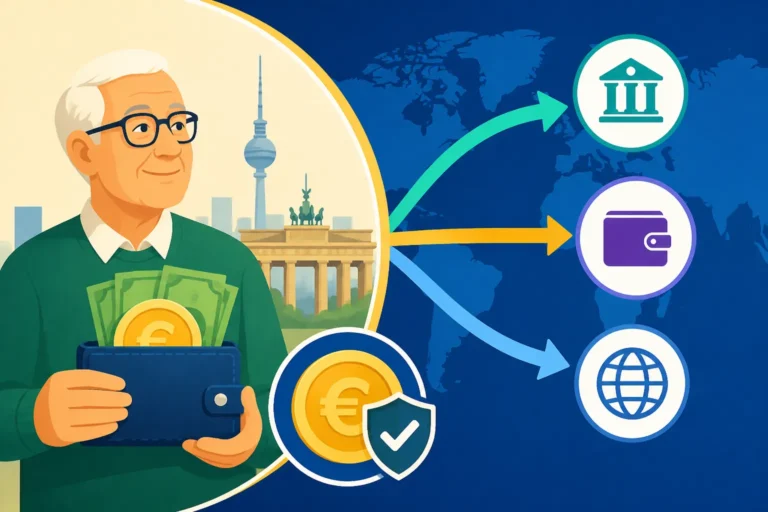
Germans have a profound cultural attachment to privacy (Datenschutz). For many locals, paying with cash ensures that no corporation, bank, or government entity can track their daily habits, diet, or whereabouts. A digital payment leaves a permanent data trail on a server, while a physical euro coin leaves nothing but a paper receipt in your pocket. In a country with a complex 20th-century history involving state surveillance, this desire for financial anonymity is deeply respected and fiercely protected.
Beyond privacy, there is a heavily ingrained cultural aversion to debt. In the German language, the word for debt (Schulden) is directly derived from the root word for guilt (Schuld). Paying with cash is utilized as a strict, physical budgeting mechanism. You cannot accidentally spend money you do not physically hold in your hand. This prevents the rampant consumer credit card debt commonly seen in North American and British societies.
Recent studies confirm this enduring preference. According to the Deutsche Bundesbank’s 2023 study on payment behavior, physical cash still accounts for 51 percent of all transactions at points of sale. While this is a drop from 58 percent in 2021, it remains the most frequently used means of payment by transaction volume. When expats first try to calculate their budget, realizing they must constantly track and withdraw physical cash to cover daily incidentals is a major adjustment, a reality deeply explored in Cost of Living in Germany: Breakdown of Expenses (Rent, Food, Transport).
The Enduring ‘Nur Bargeld’ Economy
As an expat, the phrase “Nur Bargeld” (Cash Only) will quickly become your worst enemy. You must learn to actively scan for these small, handwritten signs taped to the cash registers of local bakeries, late-night corner stores (Spätis), street food stalls, and even established, sit-down neighborhood restaurants.
The reasoning behind these signs is largely economic rather than just cultural stubbornness. Small business owners in Germany operate on tight margins, and they intensely resent the merchant processing fees charged by international credit card companies. To them, giving up two to three percent of a transaction to a foreign banking conglomerate is completely unacceptable. Therefore, they simply refuse to upgrade their payment terminals to accept anything other than domestic debit networks or pure, untraceable cash.
Furthermore, the robust local tipping culture heavily favors physical coins, a unique social dynamic mapped out in Tipping and Service Charges in Germany: Who and How Much to Tip. If you try to pay a six-euro tab with a smartwatch tap and verbally add a tip, you will likely be met with an exasperated sigh and pointed toward the nearest ATM. Waitstaff prefer cash tips so they can pocket them immediately at the end of their shift rather than wait for digital payroll distributions at the end of the month.
Post-Pandemic Payment Shifts and Monopolies
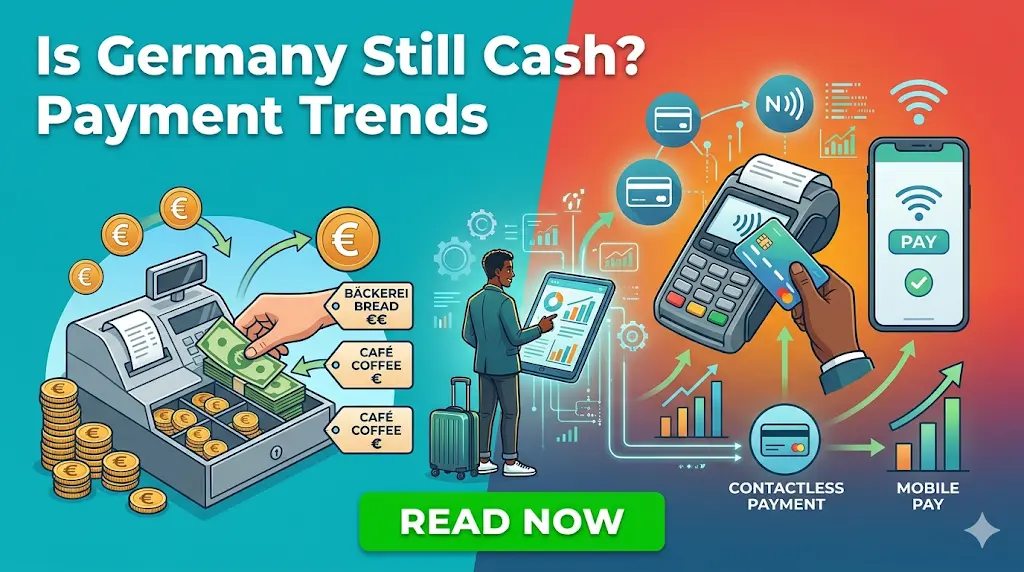
While cash is undoubtedly king, cards and digital payments are not entirely useless. The global pandemic dramatically accelerated the acceptance of contactless payments, but the system relies on a uniquely domestic framework that actively locks out newly arrived foreigners who try to rely on their home-country bank cards.
The Rise of Contactless and Digital Wallets
Before 2020, offering to pay with a card for anything under ten euros was considered a massive social faux pas. Cashiers would loudly sigh, roll their eyes, and begrudgingly dust off a hidden terminal. The pandemic forced a massive societal shift. Bakeries and butchers hung up plexiglass shields and begged customers to use contactless payments for hygiene reasons. This temporary shift permanently normalized digital payments for smaller amounts, breaking a decades-old psychological barrier.
The data reflects this shift. The Bundesbank notes that mobile payments via smartphones and smartwatches have tripled in recent years, now accounting for 6 percent of all transactions. Apple Pay and Google Pay have undeniably gained significant traction among younger demographics in metropolitan hubs like Berlin, Munich, and Hamburg.
However, as the urgency of the pandemic faded, many independent small business owners quietly unplugged their card terminals and reverted to cash, citing those unbearable merchant processing fees. Relying purely on smartphone payments is still a dangerous game in Germany. If you wander out of the corporate retail bubble and into an independent neighborhood, your digital wallet quickly becomes useless. Navigating the unpredictable success rate of mobile tapping is a daily challenge explored in Paypal, Apple Pay, Google Pay in Germany: Digital Wallets Usage.
The Girocard vs. Credit Card Divide
If a German store does accept cards, you will almost always see a red and blue logo that says “Girocard” (formerly known as the EC-Karte). This is Germany’s domestic debit card network. It is entirely separate from the global Visa or Mastercard networks that expats are accustomed to using.
The Girocard system is a brilliant piece of domestic financial engineering designed to keep costs phenomenally low for German merchants. Because the transactions are processed locally and bypass the massive American Visa and Mastercard duopoly, the fees charged to the store owner are fractions of a cent per transaction. This is why a small local pharmacy can afford to let you pay for a three-euro pack of aspirin with a card, as long as you are using a Girocard.
If you try to insert your foreign debit or credit card into a Girocard-only terminal, the machine will reject it instantly with an angry beep. The cashier will often look at you with genuine confusion, failing to understand why your shiny metal foreign bank card does not work. This causes immense frustration for expats who assume their globally recognized cards will work everywhere. Learning how to read the terminal logos and decoding the resulting transaction codes on your monthly ledger is a vital skill mapped out in Understanding German Bank Statements: Fees and Transactions Explained.
| Payment Method | Acceptance Level | Typical Use Case | Merchant Fees |
| Physical Cash (Bargeld) | Universal (100%) | Bakeries, Spätis, Flea Markets | Zero |
| Girocard (EC-Karte) | Extremely High | Supermarkets, Pharmacies, Retail | Very Low |
| Visa / Mastercard | Moderate | Corporate Chains, Hotels, Gas Stations | High |
| Digital Wallets (Apple/Google) | Moderate | Anywhere Visa/Mastercard is accepted | High |
Smart Payment Strategies for Expats
Surviving the German payment paradox requires a hybrid approach. You must carry physical cash while simultaneously establishing a local digital banking footprint that bypasses exorbitant foreign transaction fees.
Securing a Functional Local Account
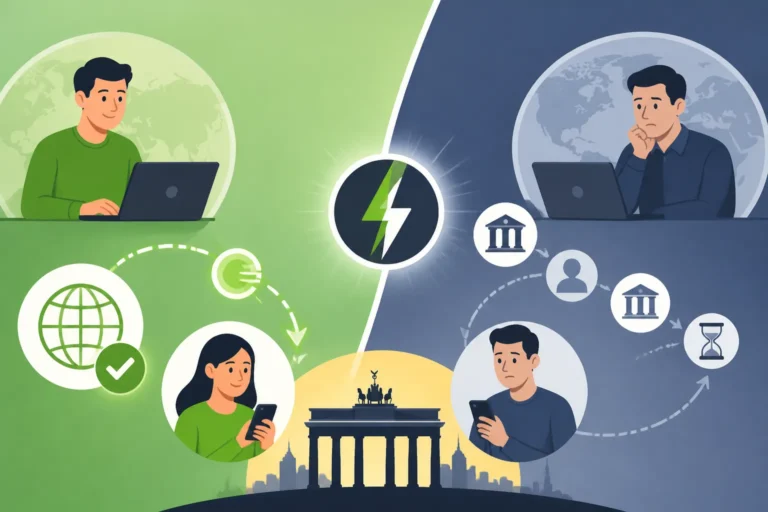
Traditional German banks, such as the local Sparkasse or Volksbank, heavily promote the Girocard, but opening an account with them requires navigating a massive bureaucratic wall. They will demand in-person appointments, charge monthly maintenance fees simply to keep the account open, and mail your PIN codes to your physical address over the course of two weeks. You do not have the luxury of waiting two weeks to access your funds.
A far superior strategy is utilizing modern mobile-first options. Opening an account with N26 gives you a fully recognized German IBAN and a widely accepted digital debit card. Because N26 verifies your identity digitally using just your passport, you can bypass the traditional paperwork paradox entirely.
Furthermore, because N26 understands the unique cash needs of the German market, they integrate a feature called Cash26. This allows you to generate a barcode on your smartphone and withdraw or deposit physical cash directly at the checkout registers of thousands of German supermarkets. This seamlessly bridges the gap between digital banking and the stubborn German cash culture. Getting this localized infrastructure running is a lifeline analyzed deeply in Mobile Banking Apps in Germany: N26, Revolut, and More.
Bypassing High Withdrawal and Exchange Fees
If you are arriving from a non-Eurozone country, the currency exchange trap is the most silent killer of your expat budget. The worst financial mistake an expat can make is pulling physical euros out of a German ATM using a debit card issued in their home country. Traditional foreign banks will hit you with a flat international ATM withdrawal fee, plus a hidden exchange rate markup of 3 to 5 percent via Dynamic Currency Conversion (DCC).
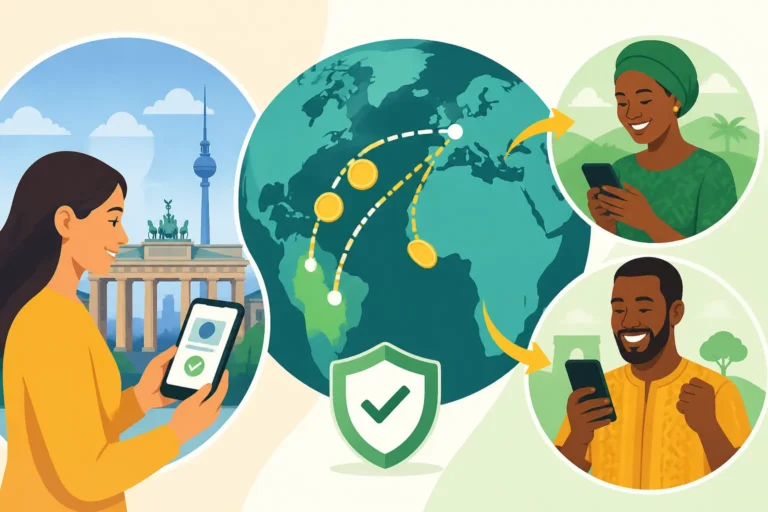
To fund your new German cash-heavy life without losing capital to banking spreads, you must intercept the exchange process. The smartest method is to use Wise to move your home country savings into Germany. By setting up a transfer through Wise, you convert your foreign currency into euros at the real mid-market exchange rate for a tiny, transparent upfront fee.
You can then route those fully converted euros directly into your localized checking account, allowing you to withdraw physical cash domestically without triggering predatory international ATM fees. Managing these cross-border liquidity flows efficiently is critical when securing your apartment deposits, a complex process covered in Moving Money to Germany: Declaring Savings and Large Transfers. For a broader view on managing dual financial lives without paying double fees, review Cross-Border Banking: Managing Your Home Country Account While in Germany.
Investing the Cash You Don’t Spend
Once you adapt to the cash-and-card dual economy, your daily financial operations will stabilize. You will instinctively know exactly when to pull out your digital card at the supermarket and when to hand over physical coins at the bakery.
When this happens, you must ensure that your surplus capital does not simply stagnate. Because cash is so culturally dominant, many expats fall into the trap of leaving vast sums of uninvested euros in a daily spending account or literally holding it in a safe at home. Leaving your surplus cash uninvested exposes you to inflation and limits your long-term financial security. However, using local German brokers often limits your geographic mobility if you ever decide to leave the country.
The veteran expat strategy involves aggressively moving surplus cash out of daily circulation into a globally compliant platform. By opening a brokerage account with Interactive Brokers, you physically separate your long-term wealth from your daily German spending habits. Interactive Brokers allows you to funnel your excess euros into diversified global ETFs with incredibly low execution fees, bypassing the rigid restrictions of domestic German banks. Because it provides localized European tax reporting, it keeps your investments compliant with the local tax authorities while ensuring your life savings are compounding on a global scale. Protecting this surplus wealth while navigating local residency laws is a sophisticated strategy detailed in Taxing Worldwide Income: How Germany Taxes Foreign Income and Assets. To explore building a portfolio that outperforms local inflation, review Should You Invest in German or International Stocks? Diversifying as an Expat.
References
Primary sources (official)
- Deutsche Bundesbank – Payment Behaviour in Germany in 2023: The official central bank study tracking the societal shift between cash and cashless payments, detailing the exact market share of physical banknotes versus debit and mobile transactions. https://www.bundesbank.de/en/publications/reports/studies/payment-behaviour-in-germany-in-2023-934896
- European Central Bank – SPACE Study 2024: A comprehensive survey analyzing the payment attitudes of consumers in the euro area, documenting the persistent use of cash at physical points of sale and the gradual shift toward digital alternatives. https://www.ecb.europa.eu/stats/ecb_surveys/space/html/ecb.space2024~19d46f0f17.en.html
Other helpful sources
- Stripe – How to Accept Payments in Germany: An in-depth industry guide aimed at merchants explaining the systemic dominance of the Girocard network and why international credit cards frequently face low acceptance rates across the country. https://stripe.com/resources/more/payments-in-germany-an-in-depth-guide
Disclaimer
The information provided in this article is for general informational and educational purposes only and does not constitute professional financial or legal advice. Retail payment acceptance, including the availability of terminals for Visa, Mastercard, and digital wallets, varies drastically by region and individual merchant policy in Germany. Utilizing foreign credit cards or performing international ATM withdrawals may incur significant dynamic currency conversion (DCC) costs and foreign transaction fees depending on your home country bank’s specific Terms and Conditions.