Wise vs Sparkasse and Deutsche Bank: Fees for Foreign Residents
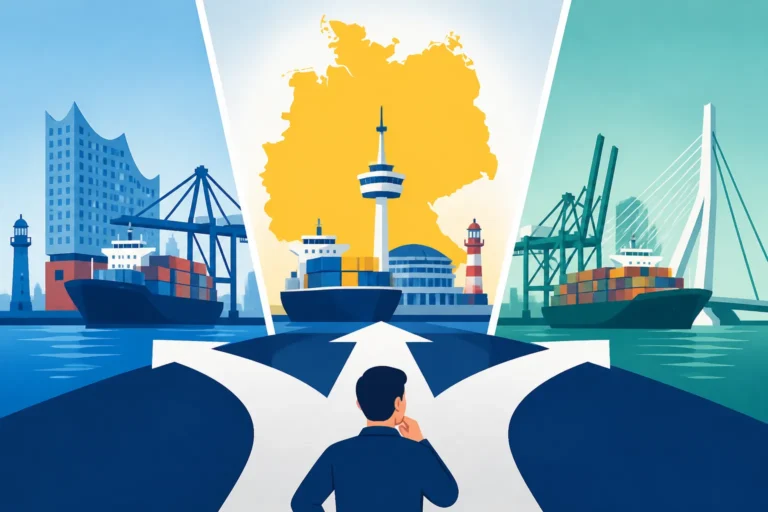
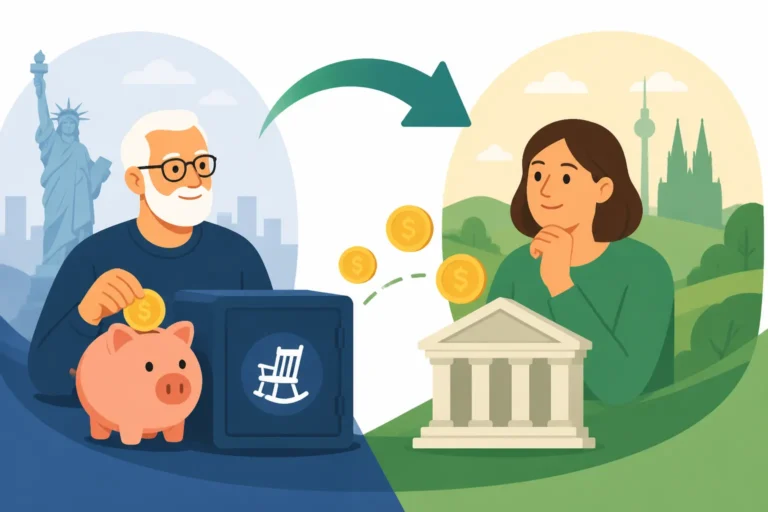
Navigating the financial landscape in Germany can feel like trying to solve a Rubik's Cube blindfolded, especially when you're fresh off the plane and still grappling with German bureaucracy. Between deciphering cryptic bank statements and wincing at unexpected transfer fees, many foreign residents find themselves utterly frustrated by traditional German banks. This guide cuts through the confusion, offering a deep dive into how popular fintech solutions like Wise stack up against established players such as Sparkasse and Deutsche Bank, focusing specifically on the fees that impact expats the most.
Disclosure: This post may contain affiliate links. We may earn a commission at no extra cost to you if you make a purchase through these links. Read full disclosure.
The Expat's Financial Predicament in Germany: Why Traditional Banks Fall Short
When you first arrive in Germany, getting your finances in order is a top priority. You need a place to receive your salary, pay your rent, and manage your daily expenses. Naturally, many expats gravitate towards well-known German banks. But what often starts as a sensible decision can quickly turn into a headache as you uncover the nuances, and frankly, the often-higher costs, associated with traditional banking here. It's a journey many of us have taken, and it’s rarely smooth.
The Pain Points of Traditional Banking for Foreigners
Let's be honest, setting up your life in Germany comes with a steep learning curve, and the banking sector is no exception. For foreign residents, the initial hurdles often include language barriers – trying to understand complex financial terms in German is a challenge even for those with good language skills. Imagine signing a contract you don't fully comprehend, or trying to query a charge when the bank staff might not be fluent in English. It's a situation that breeds anxiety and can make you feel incredibly vulnerable.
Then there's the sheer bureaucracy. Traditional German banks often demand a mountain of paperwork, including your Anmeldung (address registration) and potentially a SCHUFA credit report, before they'll even consider letting you open an account. For those just arriving, obtaining these documents can be a circular problem: you need a bank account to get paid, but you need a registered address to get a bank account, and sometimes you need to show proof of funds in a bank account for your visa! It's enough to make anyone want to pull their hair out. The lack of transparency in fees, especially for anything involving international transactions, is another significant pain point. You might see one fee advertised, only to find several smaller, less obvious charges later on. This ambiguity makes budgeting a nightmare and leaves many expats feeling nickel-and-dimed.
A Quick Look at Sparkasse and Deutsche Bank: What They Offer (and Don't)
When we talk about traditional banking in Germany, Sparkasse and Deutsche Bank often come to mind. They represent two different, yet equally ingrained, facets of the German financial system.
Sparkasse is a network of publicly owned savings banks. They are deeply regional, with each Sparkasse operating independently, serving its local community. This means your Sparkasse account in Berlin might have slightly different terms and conditions than one in Munich. Their strength lies in their extensive branch network, which can be reassuring for those who prefer face-to-face interaction. You can walk into a branch, speak to a person, and get assistance – provided you speak German, of course. For many long-term residents, especially those in smaller towns, Sparkasse is seen as a reliable, if somewhat conservative, choice. They offer standard current accounts (Girokonto), savings accounts, credit cards, and often advice on loans or mortgages. However, their digital offerings have historically lagged behind, and their international services can be quite expensive and cumbersome, not really tailored for the globally mobile expat.
Deutsche Bank, on the other hand, is Germany's largest private bank and a major international player. It boasts a broader range of services, including investment banking, wealth management, and a more robust online presence compared to some Sparkasse branches. For expats, Deutsche Bank might seem more appealing due to its international reputation and the assumption of better English support. They offer various account types, including those marketed to international clients, and typically provide more advanced credit card options and international transfer capabilities. While their services are generally more modern than Sparkasse, they still operate within the traditional banking framework, often coming with higher fees for certain services and less flexibility when it comes to multi-currency management compared to newer fintech solutions. Both banks are pillars of the German financial system, but their structure and fee models are fundamentally different from what many expats, especially those from outside the EU, might be used to.
Deep Dive into Fees: International Transfers and Everyday Banking
Ah, fees. The bane of every expat's existence. It's not just the visible charges that sting, but the insidious, often hidden costs that eat away at your hard-earned money. Understanding these fees is crucial for making an informed decision about where to manage your finances in Germany. When you're constantly sending money home, receiving payments from international clients, or simply using your card abroad, these costs can add up alarmingly fast.
Unpacking International Transfer Fees: The Hidden Costs
This is where many traditional banks, including Sparkasse and Deutsche Bank, truly fall short for international residents. When you send money abroad or receive funds from outside the SEPA (Single Euro Payments Area), you're typically hit with a combination of charges:
- Fixed Transfer Fees: Both Sparkasse and Deutsche Bank will charge a fixed fee for outgoing international transfers. This fee can range from a few euros to upwards of €30 or even more, depending on the amount, destination country, and how quickly you want the transfer to arrive. These fixed fees apply regardless of the exchange rate, making smaller transfers particularly uneconomical.
- Percentage Fees: Some international transfers might also incur a percentage fee on top of the fixed fee, especially for larger amounts or transfers to less common currencies. This can make a significant dent in your transferred sum.
- Marked-up Exchange Rates: This is the most common and often least transparent hidden cost. When you send money in one currency and it needs to be converted into another, traditional banks rarely offer you the real mid-market exchange rate (the one you see on Google). Instead, they add their own markup, essentially profiting from the currency conversion. This markup can be anywhere from 1% to 5% or even more, and because it's baked into the exchange rate, it's hard to spot at first glance.
Let's imagine you need to send €1,000 from your Sparkasse or Deutsche Bank account to a family member in the USA. You might be quoted a €15 fixed fee. Sounds okay, right? But then, when that €1,000 is converted to USD, the bank might use an exchange rate that's 2-3% worse than the actual market rate. On €1,000, that's an additional €20-€30 lost in the conversion, bringing your total "fee" for the transfer to €35-€45. It's frustrating because it's not always upfront.
This is where Wise truly shines as the hero for international residents. Wise operates on a different model. They charge a small, transparent upfront fee for each transfer, which is clearly displayed before you confirm the transaction. Crucially, Wise uses the real mid-market exchange rate. This means you always get the most favorable exchange rate, without any hidden markups. So, that same €1,000 transfer to the USA would cost you a fraction of what traditional banks charge, often saving you significant amounts over time. For anyone regularly dealing with international money movements, the savings with Wise can be substantial, making it a critical tool in your financial toolkit.
Everyday Banking Fees: Account Maintenance, Cards, and Withdrawals
Beyond international transfers, traditional banks in Germany often levy other fees that impact your daily budget. These might seem small individually, but they certainly add up over the course of a year.
- Account Maintenance Fees (Kontoführungsgebühren): Many current accounts (Girokonto) at Sparkasse and Deutsche Bank come with a monthly fee. While some basic accounts might be free for students or for customers meeting certain deposit requirements, it's common to pay anywhere from €3 to €10 per month just to have an account open. This is simply the cost of doing business with them. If you're a new expat, trying to budget for every expense, this regular deduction can feel unnecessary, especially when free alternatives exist.
- Debit and Credit Card Fees: While a basic debit card (Girocard/EC-Karte) usually comes with your current account, fancy credit cards (Visa, Mastercard) often have annual fees, sometimes starting from €30-€50 per year. These fees might be waived for the first year or for customers with high income, but for many expats, they're just another recurring cost.
- ATM Withdrawal Fees: Within Germany, using your own bank's ATMs or partner networks (like Sparkasse's vast network or Deutsche Bank's Cash Group) is usually free. However, withdraw cash from another bank's ATM, and you might be charged a fee of a few euros. More critically, when you use your German debit or credit card outside the Eurozone, you'll almost certainly incur foreign transaction fees (typically 1-3% of the transaction value) and potentially additional ATM withdrawal fees from both your bank and the local ATM operator.
Now, let's look at Wise. With a Wise account, you don't typically pay monthly maintenance fees. Opening an account is free. While there might be a small one-time fee to order your Wise debit Mastercard, it generally has no annual fees. For ATM withdrawals, Wise offers a generous monthly allowance of free withdrawals (e.g., up to €200 or two withdrawals per month, though this can vary by region and current policy), after which a small fee applies. Crucially, when you spend money in a different currency with your Wise card, it automatically converts your funds using the real mid-market exchange rate with only a tiny, transparent conversion fee if you don't already have that currency in your account. This makes spending abroad and managing international finances incredibly cost-effective.
| Feature / Bank | Wise | Sparkasse (Example) | Deutsche Bank (Example) |
|---|---|---|---|
| Account Opening Fee | Free | Free (Basic) | Free (Basic) |
| Monthly Account Fee | Free | €3 – €10+ (Varies by region/package) | €0 – €10+ (Often conditional) |
| Debit Card Fee | Small one-time fee for physical card | Free (Girocard included) | Free (Girocard included) |
| Credit Card Annual Fee | N/A (Wise offers a debit Mastercard) | €30 – €70+ (Optional) | €30 – €120+ (Optional) |
| International Transfers | Low, transparent fee at mid-market rate | High fixed fees + exchange rate markup | High fixed fees + exchange rate markup |
| Multi-Currency Account | Yes (10+ local account details) | No (Primarily EUR) | Limited (Some international accounts exist, but often with fees) |
| Foreign Transaction Fees | Very low/transparent conversion fee | 1-3% + ATM fees abroad | 1-3% + ATM fees abroad |
| English Support | Excellent (App, Website, Customer Service) | Limited (Varies by branch, not guaranteed) | Decent (Website, some customer service) |
| Ease of Opening | Fully online, quick, remote verification | In-person appointment, extensive documents, can be slow | Online/in-person, extensive documents, can be slow |
| Branch Network | None (Digital-only) | Extensive local branches | Moderate number of branches |
Note: Fees are illustrative and can vary based on specific account types, regional Sparkasse banks, and promotions.
The Convenience Factor: Accessibility, Features, and User Experience for Expats
Beyond the hard numbers of fees, the day-to-day convenience and user experience play a massive role in how smoothly your financial life runs in Germany. For expats, this often boils down to how accessible the service is, how well it supports a multi-national lifestyle, and how easy it is to navigate in a foreign language.
Branch Networks vs. Digital-First Approach
Traditional banks like Sparkasse and Deutsche Bank have long prided themselves on their extensive branch networks. For some, walking into a physical branch and speaking to a human being (even if the conversation is a bit broken due to language barriers) provides a sense of security and trust. If you have a complex query, need to deposit cash frequently, or simply prefer traditional banking, these branches are there. Sparkasse, with its local focus, has an almost ubiquitous presence across Germany, making it easy to find an ATM or a counter for basic services. Deutsche Bank also maintains a significant number of branches in major cities.
However, for a generation of expats accustomed to digital convenience, the need for a physical branch is rapidly diminishing. This is where Wise (formerly TransferWise) excels. As a digital-first platform, Wise operates entirely online and through its award-winning mobile app. There are no physical branches, which means no queues, no appointment booking for basic services, and no navigating the German Schalter (counter) system. This digital model allows Wise to cut overhead costs, directly contributing to its lower fees. For tech-savvy expats who manage everything on their smartphone, a digital solution like Wise offers unparalleled ease and speed. You can open an account, send money, and manage your finances from anywhere in the world, often in minutes.
Multi-Currency Accounts and International Versatility
The typical German current account from Sparkasse or Deutsche Bank is primarily designed for Euro transactions. While they can facilitate international transfers, as we've discussed, it's often an expensive add-on, not a core feature. Managing multiple currencies within these traditional bank accounts can be a complex and costly endeavor. You usually don't get foreign currency accounts unless you're a high-net-worth client, and even then, the options might be limited and come with significant fees.
This is a critical area where Wise fundamentally transforms the expat banking experience. The Wise Multi-Currency Account is purpose-built for people living international lives. It allows you to hold, send, and receive money in over 50 currencies, all within one account. The real game-changer is the ability to get local bank account details in 10 different currencies, including EUR, GBP, USD, CAD, AUD, and more. This means you can receive payments in US dollars, for example, directly into your Wise account as if you had a local US bank account, without incurring any international transfer fees. This is revolutionary for freelancers paid in foreign currencies, or for those who still have financial ties back home. It simplifies receiving foreign salaries, managing international investments, or even just keeping an emergency fund in your home currency, all at the real exchange rate. For anyone who deals with money across borders regularly, the value of this feature alone makes Wise an incredibly compelling option.
User Experience, English Support, and Transparency
Perhaps one of the most significant frustrations for expats dealing with traditional German banks is the inconsistent English support. While Deutsche Bank, being an international institution, generally has better English-language resources online and some staff might be bilingual, it's by no means guaranteed, especially in smaller branches. Sparkasse, with its local focus, often has even less English support; you might find yourself relying on Google Translate or a German-speaking friend. Deciphering official bank letters (which are almost always in German) can be a headache, leading to missed deadlines or misunderstandings about crucial financial matters.
Wise, on the other hand, was built from the ground up with international users in mind. Its entire platform – website, mobile app, and customer support – is available in excellent English, along with many other languages. The user interface is intuitive, clean, and designed for ease of use. Every step of a transaction is clearly explained, and perhaps most importantly, all fees and exchange rates are displayed upfront, before you commit to anything. This level of transparency is incredibly refreshing for expats who've grown tired of deciphering cryptic charges and navigating unfamiliar language. The clear communication and ease of use significantly reduce the stress associated with managing your money internationally. For those grappling with the nuances of Understanding Your German Payslip: Gross vs Net Salary Explained or just trying to navigate everyday life, having a banking partner that speaks your language and simplifies financial processes is invaluable.
Security and Regulation: Trusting Your Money in a New Country
When you're dealing with your hard-earned money, especially in a foreign country, security and trust are paramount. It's natural to wonder about the safety of your funds, whether they're held by a century-old institution or a relatively newer fintech company. Both traditional banks and modern financial platforms operate under strict regulations, but their frameworks and how they protect your money can differ.
German Bank Guarantees and Regulatory Framework
Traditional German banks like Sparkasse and Deutsche Bank are regulated by BaFin (the Bundesanstalt für Finanzdienstleistungsaufsicht), Germany's financial supervisory authority, and by the European Central Bank (ECB). This means they operate under a robust and well-established regulatory framework designed to protect consumers.
Crucially, all deposits held in German banks are protected by the German Deposit Protection Scheme (Einlagensicherung). This scheme guarantees your deposits up to €100,000 per customer, per bank, in the event that the bank goes bankrupt. For most individual customers, this provides a strong sense of security, knowing that their savings are insured. Sparkasse, being part of a public-sector banking group, also benefits from an additional institutional protection scheme that aims to prevent any of its members from becoming insolvent in the first place, offering an extra layer of security. Deutsche Bank, as a private bank, falls under the general deposit protection. This strong safety net is a significant advantage for traditional banks and is often a reason why many long-term residents and even some expats choose to keep their primary savings there. When considering your overall Money Matters in Germany: Complete Financial Guide for Expats, understanding these protections is key.
Wise's Regulatory Status and Security Measures
Wise is not a traditional bank, but it is a regulated financial institution. In Europe, Wise is regulated as an Electronic Money Institution (EMI) by the National Bank of Belgium (NBB) and operates under the relevant EU directives. This means it's held to very high standards for financial conduct, security, and consumer protection. Globally, Wise is regulated by various authorities in every country it operates in, including the Financial Conduct Authority (FCA) in the UK, FinCEN in the US, and many others, depending on the region. This extensive global regulation ensures that Wise adheres to strict rules wherever it offers services.
So, how does Wise protect your money if it's not a traditional bank with deposit insurance? Instead of using deposit protection schemes, Wise employs a method called "safeguarding." This means that customer funds are kept entirely separate from Wise's operational funds. Your money isn't lent out for investments or other bank activities; it's held in secure, low-risk financial institutions. For example, Euro funds are typically held at reputable banks in the Eurozone, and USD funds in the US. In the unlikely event that Wise were to go out of business, your safeguarded funds would be returned to you, as they are legally distinct from the company's assets. While it's a different mechanism than traditional deposit insurance, safeguarding provides a very high level of protection.
For expats, it's important to understand this distinction. While Wise might not offer the same type of deposit guarantee as a traditional bank, its robust regulatory compliance across multiple jurisdictions and its safeguarding model ensure a very secure environment for your funds. The company's transparency extends to its security practices, offering peace of mind to users who often deal with complex international financial transactions.
Making the Right Choice: Who is Wise for, and Who Might Stick with Traditional Banks?
Deciding on the best banking solution in Germany isn't a one-size-fits-all situation. Your ideal choice will depend heavily on your personal financial habits, your comfort with digital services, and your specific needs as an expat. Both Wise and traditional German banks like Sparkasse and Deutsche Bank offer distinct advantages, but they cater to different priorities.
When Wise Shines Brightest for Expats
Let's cut to the chase: Wise is an absolute game-changer for many expats, especially those with dynamic international financial lives. It truly shines in scenarios where you're frequently interacting with money across borders.
- Frequent International Transfers: If you're regularly sending money home, supporting family abroad, or receiving payments from international clients, Wise will save you a significant amount of money in fees and unfavorable exchange rates. Its transparent, mid-market rate system is unparalleled in the market. Many expats find Transferring Money Internationally: Cheapest Ways to Send Money Abroad is made effortless with Wise.
- Receiving Income in Multiple Currencies: Freelancers, digital nomads, and those working for international companies who get paid in currencies other than EUR will find the Wise Multi-Currency Account invaluable. Being able to receive USD, GBP, or other currencies directly into your Wise account with local details, and then convert it to EUR at the real exchange rate, dramatically simplifies financial management and cuts costs.
- Digital-First Users: If you're comfortable managing your finances entirely through an app or website and rarely need a physical branch, Wise offers a seamless, intuitive, and fast user experience. It's built for the modern, mobile individual.
- Prioritizing Transparency and Low Fees: If hidden charges and opaque exchange rates are your pet peeves, Wise's commitment to upfront pricing and the real exchange rate will be a breath of fresh air. You always know exactly what you're paying.
- Easy Access to Local Bank Details in Other Countries: For expats who travel frequently, maintain financial ties to their home country, or need to send money to family abroad using local payment methods, Wise's ability to provide local bank details in multiple countries is a standout feature. It allows you to operate almost like a local in various financial ecosystems.
Ultimately, Wise empowers expats to manage their money globally with minimal hassle and maximum savings, truly making it the hero solution for international transactions and multi-currency management.
Scenarios Where Traditional Banks Still Have a Niche
While Wise has carved out a significant space, traditional German banks like Sparkasse and Deutsche Bank still hold a vital role for certain expat needs, especially for those settling down for the very long term or requiring specific services.
- Complex Financial Advice and Large Loans: If you're looking to buy a house in Germany and need a mortgage, or require complex financial planning advice, traditional banks with their dedicated advisors (though often German-speaking) are typically the go-to. While some online brokers also assist expats with mortgages, the direct, in-person consultation for large financial commitments is often found at banks. For this, it helps to understand How to Get a Mortgage as a Foreigner in Germany.
- Heavy Cash Users: While Germany is slowly transitioning, it remains a heavily cash-dependent society in many areas. If you frequently need to deposit or withdraw large amounts of cash, a bank with a physical branch network and ATMs (like Sparkasse) will be more convenient. Wise, being digital-only, doesn't offer direct cash deposit services.
- Comfort with Traditional Banking: Some individuals, especially older expats or those less comfortable with purely digital platforms, might prefer the familiarity and perceived security of a traditional bank. The presence of physical branches and the assurance of the German deposit protection scheme can provide peace of mind that a digital-only service cannot replicate for everyone.
- Integrating with Local Systems: For receiving your salary, paying rent via Dauerauftrag (standing order), and setting up direct debits for utilities, a local German bank account (Girokonto) is still the standard. While Wise offers a German IBAN, some older or smaller German institutions might occasionally have issues with non-traditional bank IBANs for direct debits, although this is becoming rarer as fintech evolves. For this reason, many expats combine both: a traditional German bank account for local necessities and Wise for all international transactions and multi-currency needs.
Practical Steps: Setting Up Your Accounts
Getting your finances sorted is one of the very first things you'll do when you move to Germany, right after registering your address. It can feel daunting, but breaking it down makes it manageable. You'll quickly see how different the experiences are for a digital service like Wise versus a traditional German bank.
Opening a Wise Account: A Smooth Digital Experience
One of the biggest advantages of Wise for new arrivals is how incredibly simple and fast it is to open an account. There's no need for an in-person appointment, no long queues, and typically, you don't even need a German address (Anmeldung) to get started – although having one will naturally make things smoother for your overall life in Germany.
The process is straightforward:
- Visit the Wise Website or Download the App: Head over to the Wise platform on your computer or smartphone.
- Sign Up: You'll need to provide your email address, create a password, and usually confirm your phone number.
- Verify Your Identity: This is a crucial step for any financial institution. Wise will typically ask you to upload a photo of your passport or national ID card, and often to take a selfie or a short video of yourself for biometric verification. This entire process can usually be completed online within minutes, and verification is often very quick.
- Fund Your Account: Once verified, you can deposit funds using a debit card, credit card, or bank transfer to activate your account and start using its features.
- Order Your Debit Card (Optional): If you want a physical Wise debit Mastercard, you can order one for a small one-time fee, and it will be mailed to your chosen address (German or otherwise).
The entire process is designed for global citizens and is exceptionally user-friendly, with full English support at every step. This quick and digital onboarding makes Wise an ideal solution for getting your finances moving even before you've fully settled in or completed your Anmeldung: Registering Your Address in Germany.
Navigating the Traditional Bank Account Opening Process
Opening an account with a traditional German bank like Sparkasse or Deutsche Bank is a different beast entirely. It's often a more formal, in-person affair that requires more paperwork and patience.
- Gather Your Documents: You'll typically need your valid passport or national ID card, proof of address (your Meldebescheinigung from your Anmeldung), your German tax ID (Steuer-ID), and sometimes proof of income or a student enrollment certificate. If you haven't completed your address registration yet, you'll hit a wall with most traditional banks.
- Make an Appointment: While you might walk into a Sparkasse and sometimes get lucky, it's generally advisable to make an appointment, especially at Deutsche Bank branches or if you require English-speaking staff. This can sometimes involve a waiting period.
- In-Person Verification: The German banking system often requires a PostIdent or VideoIdent process. PostIdent means you take your documents to a post office, and a postal worker verifies your identity. VideoIdent is an online video call verification, which some banks offer as an alternative to in-person branch visits, but it can still be more cumbersome than Wise's in-app verification.
- Deciphering the Application: While major banks like Deutsche Bank might have English-speaking staff or English forms, many Sparkasse branches will conduct the entire process in German. Be prepared for a lengthy discussion about account types, fees, and conditions, all in German. This is where a German-speaking friend or a good dictionary comes in handy.
- Waiting for Your Cards: After approval, your Girocard and potentially a credit card will be mailed to your registered address in separate envelopes for security reasons, often several days apart.
As you can see, the process for traditional banks can be significantly more time-consuming and bureaucratic. For a new expat, it can be a source of considerable stress. This is often why many start with a digital solution, and then perhaps open a traditional account later for specific needs. If you need a comprehensive guide, How to Open a Bank Account in Germany as a Newcomer has all the details.
Seamlessly Integrating Wise into Your German Financial Life
The beauty of a modern financial service like Wise is that it doesn't have to be an either/or choice. Many savvy expats use Wise in conjunction with a traditional German bank account to get the best of both worlds. This hybrid approach often proves to be the most efficient and cost-effective way to manage your money in Germany.
Here’s a common strategy:
- Use a German Bank for Local Essentials: Have your salary paid into your Sparkasse or Deutsche Bank Girokonto. This account can then be used for direct debits for rent, utilities, and your German health insurance premiums (which is crucial, as you can read more about in Health Insurance Premiums: How Much You’ll Pay Per Month and Why). It integrates seamlessly with German payment systems and provides that local, institutional presence if needed.
- Use Wise for International Transactions and Spending: For all your cross-border needs, Wise becomes your go-to. Transfer money from your German bank account to your Wise account (often for free or very low cost within the SEPA area). From Wise, you can then:
- Send money internationally at the real exchange rate.
- Receive foreign currency payments without fees.
- Spend money abroad using your Wise debit card with transparent conversion fees.
- Hold different currencies for travel or future use.
- Potentially use the Wise German IBAN for some local direct debits if it's accepted (most modern institutions accept it, but do double-check).
By using both, you leverage the local integration and deposit protection of a German bank while harnessing the low costs, transparency, and international versatility of Wise. This strategy allows you to optimize your finances, reduce fees, and navigate your expat life with greater ease and confidence.
Disclaimer
Please note that the information provided in this guide is for general informational purposes only and does not constitute financial or legal advice. Fees, terms, and conditions of financial institutions, including Wise, Sparkasse, and Deutsche Bank, can change. It is always recommended to check the most up-to-date information directly with the respective providers and consult with a qualified financial advisor for personalized advice regarding your specific situation in Germany.