Living in Düsseldorf: Expat Guide to the Rhine-Ruhr Metro Area
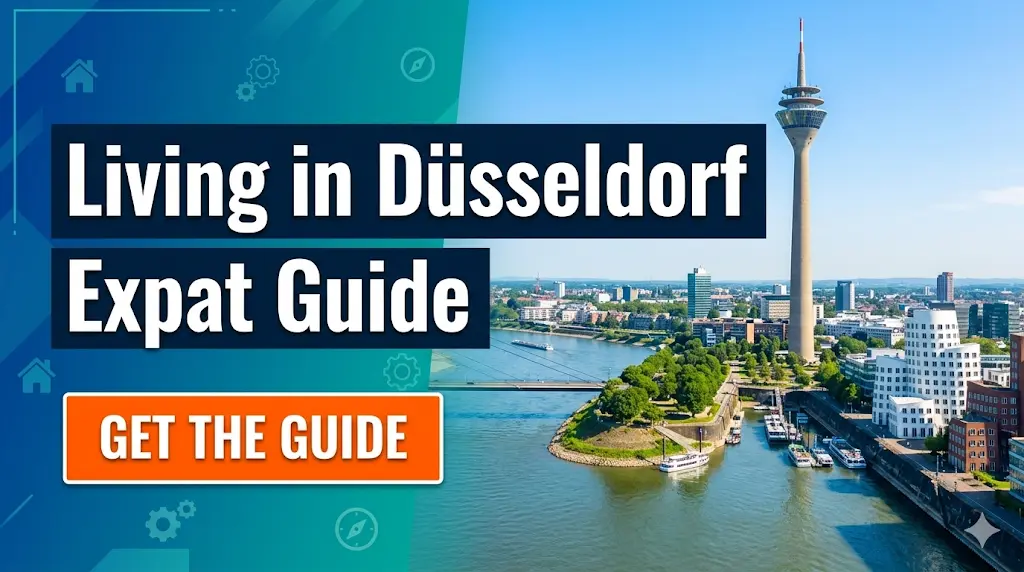
Arriving in a new city and realizing you cannot even open a basic bank account without a permanent address is a terrifying administrative loop. I spent my first month in Düsseldorf completely paralyzed by the rental market’s insistence on a local credit score I simply did not possess. This guide breaks down the housing crisis, affluent neighborhoods, and dynamic lifestyle of Germany’s fashion capital so you can establish yourself smoothly.
Disclosure: This post may contain affiliate links. We may earn a commission at no extra cost to you if you make a purchase through these links. Read full disclosure.
The Düsseldorf Housing Market Elegance and Expense
The Intense Competition and High Rent Costs
Düsseldorf consistently ranks as one of the most desirable, and subsequently most expensive, cities to live in Germany. As the capital of North Rhine-Westphalia (NRW) and a massive hub for international business, fashion, and advertising, the city acts as a magnet for highly paid professionals. This dense concentration of capital creates a hyper-competitive, deeply frustrating housing market for newcomers. The competition for a standard flat, particularly anywhere near the city center or the affluent western banks of the Rhine, is so fierce that you will regularly see lines of fifty people stretching down the street for a single fifteen-minute viewing.
Landlords in Düsseldorf are notoriously risk-averse. To even be considered by a local property management company (Hausverwaltung), your application dossier must be flawless. You will need a perfect SCHUFA (credit score), three months of local payslips, a permanent employment contract, and a certificate from your previous landlord proving you owe no rent. For an expat who has just stepped off the plane without a German financial footprint, competing against double-income German executives feels like an insurmountable hurdle. The sheer speed at which properties are rented means you must treat the housing search as a highly strategic, full-time job.
Furthermore, you must be prepared for the financial reality of the deposit (Kaution). German law allows landlords to charge up to three months of “cold rent” (the rent excluding utilities) upfront as a security deposit. In a city where a modest one-bedroom apartment can easily cost over a thousand euros, you must have significant liquid capital ready to transfer the moment a lease is signed. To survive this initial bloodbath and learn how to assemble a winning application folder from scratch, studying the strategies in Finding an Apartment in Germany: Best Websites and Tips for Expats is an absolute necessity before you even begin browsing the local portals.
The Shock of the Unfurnished German Apartment
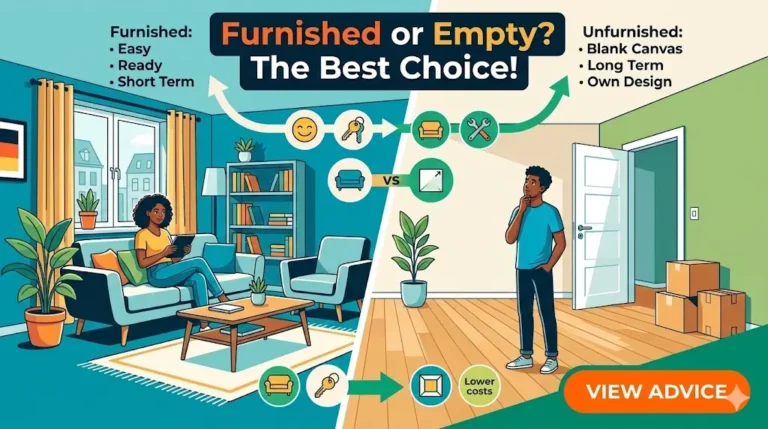
A devastating realization for many expats relocating to the Rhine-Ruhr region is the strict German interpretation of an “unfurnished” apartment. If you manage to sign a standard, long-term lease in a neighborhood like Pempelfort or Bilk, you are typically renting a bare, echoing concrete box. There are no light fixtures on the ceilings, no closets in the bedrooms, and, most shockingly, absolutely no kitchen. You are entirely responsible for purchasing, transporting, and installing the entire kitchen block—including the sink, oven, countertops, and cabinets—at your own considerable expense.
For an international professional arriving on a two- or three-year corporate contract, investing five to ten thousand euros into a custom-built kitchen that you might have to rip out or sell at a massive loss when you leave makes zero financial sense. Because of this absurd logistical hurdle, the most effective survival strategy is to bypass the permanent market initially. Booking a mid-term, fully equipped flat through Wunderflats allows you to walk into a ready-made home with high-speed internet, pots in the cupboards, and a bed to sleep in. This shields you from the immediate trauma of appliance shopping while jetlagged.
This approach buys you the essential time needed to pass your work probation and physically explore the city’s districts before committing to a massive financial undertaking. When you finally transition to a permanent, unfurnished flat, ordering your heavy power tools, light fixtures, and basic plug-in appliances from Amazon Germany is the fastest way to make a bare Düsseldorf shell livable without hauling heavy boxes on the tram. For a deeper understanding of how these setup costs factor into your overall budget, analyzing the breakdowns in Household Bills in Germany: Understanding Nebenkosten and Monthly Costs is highly recommended.
Navigating the Anmeldung Catch-22
The most infuriating administrative loop in Düsseldorf, and indeed all of Germany, is the Anmeldung (address registration) catch-22. To legally exist in the country, open a standard German bank account, secure a tax ID number, or even get a local mobile phone contract, you must present a certificate proving you are officially registered at a local address. However, to secure a long-term apartment to register at, landlords will demand a local bank account and a German credit history. You are completely paralyzed before you even begin.
Securing an appointment at the local citizen’s office (Bürgerbüro) is a battle in itself. Appointments are often booked out weeks in advance. A crucial local insider tip is that the city releases canceled appointments online every morning between 7:00 AM and 8:00 AM. You must be at your computer, aggressively refreshing the portal, to secure a same-day slot. Once you get the appointment, you must present a Wohnungsgeberbestätigung—a confirmation form signed by your actual landlord. If you are staying in an illegal, under-the-table sublet found on Facebook, the sublessor cannot provide this document, leaving you in bureaucratic limbo.
This administrative nightmare is another primary reason why managed housing platforms are so valuable for your initial landing. Utilizing Wunderflats guarantees that you are entering a legally compliant rental agreement where the landlord provides the mandatory confirmation paperwork on your move-in day.
Neighborhood Guide Where to Drop Anchor
Stadtmitte and Pempelfort for Central Vibrancy
Düsseldorf is often affectionately described by its residents as a “village” because of its highly manageable size and deeply distinct neighborhoods. If you want to be in the absolute center of the action, Stadtmitte (the city center) and neighboring Pempelfort are the premier destinations. Stadtmitte is the commercial beating heart of the city, housing the famous Königsallee (the “Kö”), a high-end luxury shopping boulevard lined with a picturesque canal and ancient chestnut trees. Living here means unparalleled access to retail, international corporate offices, and major transit hubs.
Directly adjacent to the north is Pempelfort, which is widely considered one of the most desirable, trendy, and densely populated districts in the city. It perfectly balances urban energy with residential charm. The streets are lined with independent boutiques, highly rated international restaurants, and vibrant cafes. Nordstraße acts as the main artery of the neighborhood, providing everything from organic supermarkets to cozy neighborhood pubs.
Because of their incredible convenience and vibrant lifestyle, the vacancy rates in Stadtmitte and Pempelfort are practically zero, and the rents are exceptionally high. These areas are heavily favored by young, high-earning expats and singles who want a highly walkable lifestyle without the need for a car. If you prioritize a bustling neighborhood feel over quiet, suburban streets, these central districts are unparalleled.
Oberkassel and Niederkassel for Riverside Luxury
If you cross the Rhine River to the western bank, the atmosphere of the city shifts dramatically. Oberkassel is Düsseldorf’s undisputed luxury district. It was largely spared from destruction during World War II, meaning it boasts an incredible, unbroken landscape of massive, immaculately preserved Jugendstil (Art Nouveau) architecture. The streets are wide, deeply quiet, and incredibly safe. The district offers stunning, panoramic views of the city skyline across the river, particularly from the expansive Rhine meadows (Rheinwiesen) that serve as the neighborhood’s massive front lawn.
Just north of Oberkassel lies Niederkassel, which shares the same affluent, family-friendly atmosphere but is uniquely characterized by its massive Japanese influence, including the presence of the EKO-Haus of Japanese Culture, complete with a traditional Buddhist temple and gardens. Both of these western districts are deeply popular with established expat families, corporate executives, and diplomats.
The cost of living on this side of the river is astronomical. Because these neighborhoods are heavily favored by affluent expats and corporate relocation agencies, the available rental stock is often handled exclusively by premium brokers. Many transitioning families use Wunderflats to secure upscale, family-sized interim housing in Oberkassel while they search for a permanent historic villa.
Bilk and Flingern for Creative and Student Energy
For expats seeking a balance between urban convenience and a more alternative, creative, or budget-conscious atmosphere, Bilk and Flingern are fantastic alternatives to the polished center. Bilk, located to the south, is heavily defined by the presence of the Heinrich Heine University. It pulses with a lively, youthful student energy. The area around Bilker Kirche and the Lorettostraße is packed with affordable eateries, vintage clothing stores, and bustling bars. Bilk also offers excellent access to green spaces like the Volksgarten, making it highly livable for young professionals.
Flingern, located to the east, has undergone a massive wave of gentrification over the last decade. Historically a working-class industrial area, Flingern-Nord has transformed into the city’s hipster and creative epicenter. The neighborhood is celebrated for its urban street art, cutting-edge art galleries, and independent designer boutiques. It feels slightly grittier and more authentic than the manicured streets of Pempelfort.
Rents in Bilk and Flingern are generally more approachable than in Oberkassel or Stadtmitte, though they are rising rapidly due to their surging popularity. These districts provide a strong sense of local community, making them excellent locations to practice your German and implement the integration strategies found in Making Friends in Germany: Social Tips for Expats.
| Neighborhood | Primary Vibe | Average Rent Cost | Target Expat Demographic |
| Stadtmitte | Highly commercial, bustling, luxury retail | Very High | Corporate singles, retail professionals |
| Pempelfort | Trendy, vibrant cafe culture, walkable | High | Young professionals, social expats |
| Oberkassel | Elite luxury, historic architecture, quiet | Astronomical | Executives, wealthy expat families |
| Bilk | Student energy, lively, green spaces | Medium to High | University staff, young expats, students |
| Flingern-Nord | Creative, gentrified, independent boutiques | Medium to High | Artists, creatives, trend-conscious expats |
| Niederkassel | Family-friendly, affluent, Japanese influence | Very High | Established families, cultural enthusiasts |
Working in the Rhine-Ruhr Economic Powerhouse
The Corporate Landscape and International Business
Düsseldorf is not just an isolated city; it is the economic anchor of the massive Rhine-Ruhr metropolitan region, which encompasses over eleven million people. The city’s economy is incredibly diverse, stepping far beyond traditional German manufacturing. It is a premier European hub for telecommunications, hosting the headquarters of giants like Vodafone and Ericsson. Furthermore, it is the fashion and advertising capital of Germany, home to hundreds of creative agencies and massive international trade fairs (Messe Düsseldorf) that draw millions of global business travelers annually.
What makes Düsseldorf uniquely attractive to expats is its status as the premier location for foreign direct investment, particularly from Asia. The city is home to the European headquarters of over 400 Japanese companies, as well as a rapidly growing number of Chinese and South Korean corporations. This deep international corporate integration means that the professional environment is highly outward-looking, and global business standards are the norm rather than the exception.
If your primary goal in moving to Germany is to maximize your earning potential and accelerate your corporate career in a highly globalized environment, Düsseldorf provides an incredibly fertile ground. The salaries are highly competitive, designed to attract elite talent to the region. However, understanding how to budget these high salaries against the local premium is critical, making a review of Cost of Living in Germany: Budgeting Guide for Expats an essential step in your career planning.
Navigating the English-Speaking Job Market
Because of the massive concentration of multinational corporations and foreign headquarters, Düsseldorf boasts a highly robust English-speaking job market. In the telecommunications, digital marketing, and international logistics sectors, it is entirely common for the internal working language of a company to be exclusively English. For a highly skilled technical or corporate expat, securing a lucrative job here without speaking a word of German is frequently achievable.
However, this creates a comfortable, yet ultimately dangerous, “English Bubble.” While you might successfully navigate your forty-hour workweek entirely in English, your upward mobility within traditional German firms will be severely capped if you do not learn the local language. German managers place a massive premium on integration and the ability to negotiate with domestic clients in their native tongue.
Furthermore, the English bubble shatters the moment you leave the office. When you receive a complex tax document, when you need to call a local plumber, or when you are negotiating a private lease, German is absolutely mandatory.
Office Culture and the German Work-Life Balance
The corporate culture in Düsseldorf seamlessly blends the strict, traditional German dedication to efficiency with a slightly more relaxed, cosmopolitan flair. You are expected to adhere to traditional business etiquette: strict punctuality is non-negotiable, meetings are highly structured and agenda-driven, and communication is famously direct and entirely devoid of superficial padding.
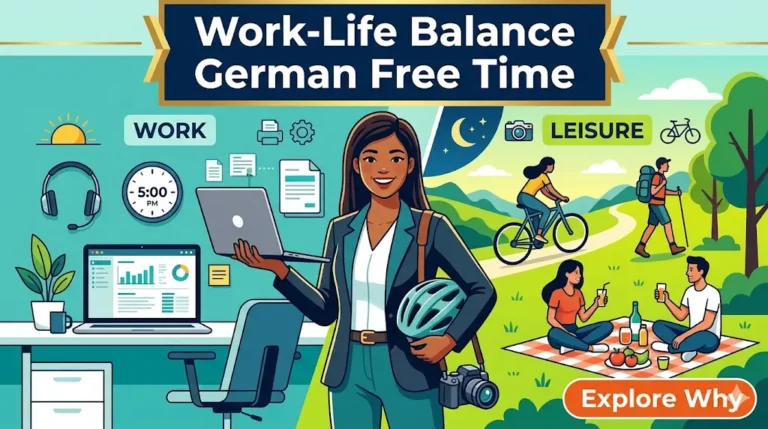
However, the German reverence for the work-life balance (Feierabend) is fiercely protected. Unlike the grueling, eighty-hour workweeks often celebrated in London or New York finance hubs, professionals in Düsseldorf work intensely while on the clock but physically and mentally disconnect the moment they leave the office. You are not expected to answer emails on a Sunday afternoon, and taking your full 28 to 30 days of legally mandated paid vacation is actively encouraged by management.
Lifestyle, Culture, and the Japanese Connection
Little Tokyo and the Asian Influence
One of the most extraordinary and unexpected cultural features of Düsseldorf is its status as the home to the third-largest Japanese community in Europe (after London and Paris). Over 8,000 Japanese nationals live in the city, creating a profound, deeply authentic cultural footprint that defines the local lifestyle.
The epicenter of this community is the area around Immermannstraße, affectionately known as “Little Tokyo.” This is not a tourist trap; it is a highly functional, deeply integrated neighborhood serving the local Japanese corporate population. Here, you will find arguably the best, most authentic ramen and sushi restaurants on the European continent, alongside traditional Japanese bakeries (selling melon pan and matcha pastries), massive Asian supermarkets, and specialized bookstores.
This cultural blending elevates the culinary scene of the entire city. Expats from all over the world flock to Immermannstraße on weekends, creating hour-long lines outside legendary ramen shops like Takumi and Naniwa. Furthermore, the city hosts the annual Japan-Tag (Japan Day), a massive cultural festival along the Rhine promenade that draws hundreds of thousands of visitors and culminates in a spectacular Japanese fireworks display, highlighting the deep mutual respect between the local and international communities.
The Altstadt: The Longest Bar in the World
In stark contrast to the quiet elegance of Oberkassel or the international flair of Little Tokyo is the historic Altstadt (Old Town). Geographically small, measuring roughly half a square kilometer, the Altstadt is famously dubbed the “longest bar in the world” (Längste Theke der Welt). It is densely packed with over 260 bars, traditional breweries, pubs, and clubs, all standing shoulder-to-shoulder along narrow cobblestone streets.
The lifeblood of the Altstadt is Altbier, a dark, top-fermented beer that is strictly unique to Düsseldorf. Drinking Altbier in a traditional brewery like Uerige or Füchschen is governed by specific, unwritten rules. The waiters (Köbes) will aggressively and automatically replace your empty small glass with a full one without asking, marking your coaster with a pencil to keep a running tab. You must physically place your coaster on top of your glass to signal that you are finished.
This deep-rooted beer culture fuels a fierce, centuries-old rivalry with the neighboring city of Cologne (which brews the lighter Kölsch beer).
Fine Arts, Fashion, and Weekend Escapes
Beyond the beer and the boardrooms, Düsseldorf possesses a deeply sophisticated, globally recognized arts scene. The prestigious Kunstakademie Düsseldorf (Arts Academy) has produced some of the world’s most famous contemporary artists, including Joseph Beuys and Gerhard Richter. The city is saturated with world-class museums, cutting-edge galleries, and a highly active, heavily subsidized theater and opera culture.
Because of its geographical positioning, the city also serves as an incredible basecamp for exploring Europe. You are located just a short train ride away from the Netherlands and Belgium. Locals frequently cross the border for weekend trips to Amsterdam or Maastricht.
When the weather permits, the lifestyle shifts heavily outdoors. The Rhine embankment promenade (Rheinuferpromenade) is the city’s ultimate social catwalk. On a sunny Sunday, it is packed with locals strolling, cycling, and sitting at outdoor cafes watching the massive cargo ships navigate the river. It is an incredibly high quality of life, provided you know how to build a social circle to share it with.
Navigating Transport and Regional Logistics
The Rheinbahn and VRR Network
Owning a car in central Düsseldorf is an expensive and often unnecessary liability. Parking is severely limited, and the city is highly walkable. Fortunately, the local transit authority (Rheinbahn) operates an incredibly dense, highly functional network of subways (U-Bahn), streetcars (Straßenbahn), and buses that connect every corner of the city.
Because Düsseldorf is part of the massive Rhine-Ruhr metropolitan area, its local transit is deeply integrated into the broader Verkehrsverbund Rhein-Ruhr (VRR) network. This means you can seamlessly take a regional S-Bahn train to neighboring cities like Essen, Dortmund, or Cologne. However, the VRR ticketing system, which is based on complex, concentric regional zones, can be incredibly confusing for newcomers.
Plainclothes ticket inspectors are ruthless, and if you are caught without a properly validated ticket, you will face an immediate, non-negotiable €60 fine.
DUS Airport and International Connectivity
The single greatest logistical advantage of living in Düsseldorf is its massive international airport (DUS). As the third-largest airport in Germany, it serves as the primary intercontinental hub for the entire state of North Rhine-Westphalia. Uniquely, the airport is located just a ten-minute train ride from the central station (Hauptbahnhof).
For expats whose jobs require constant global travel, or those who want the freedom to fly back to their home countries on a Friday evening without agonizing, multi-hour layovers, this proximity is invaluable. You can finish work in Stadtmitte at 17:00, hop on the S-Bahn, and easily make a 19:00 direct flight to almost anywhere on the globe. This unparalleled connectivity is a primary reason why major international corporations choose to base their European headquarters here rather than in more isolated German cities.
Cycling Infrastructure and the Weather Reality
Düsseldorf is remarkably flat, making it an excellent city for cycling. A massive portion of the population commutes by bike year-round. The city is continuously expanding its network of dedicated bike lanes, and cycling along the Rhine or through the massive Hofgarten park is a daily joy when the weather permits.
However, cycling in the Rhineland comes with extreme weather challenges. The climate is heavily maritime; winters are rarely defined by crisp, beautiful snow, but rather by relentless, gray, horizontal rain and bone-chilling dampness. If you plan to commute by bike, you must entirely abandon fashion for function. Biking through a winter rainstorm requires intense dedication and highly specialized gear.
You cannot rely on a standard umbrella or a cheap plastic poncho. You must invest heavily in waterproof panniers, high-visibility reflective gear, heavy-duty mudguards, and blindingly bright LED bike lights to combat the dark winter mornings. Proactively ordering these heavy-duty cycling essentials and thermal base layers from Amazon Germany before the autumn hits ensures you arrive at the office dry and safe.
References
Primary sources (official)
- Landeshauptstadt Düsseldorf (Official City Portal in English): https://www.duesseldorf.de/int
- Düsseldorf Airport (DUS) Official Site: https://www.dus.com/en
Other helpful sources
- Visit Düsseldorf (Official Tourist Website): https://www.visitduesseldorf.de/en
- Expatica – Where to live in Düsseldorf: https://www.expatica.com/de/moving/location/living-in-dusseldorf-100934/
Disclaimer
The housing market conditions, living costs, and cultural observations detailed in this guide are based on widespread expat experiences and the current realities of residing in Düsseldorf and the broader Rhine-Ruhr region. Rent prices, VRR transit zones, and bureaucratic procedures are highly volatile and subject to constant change by local authorities. Always verify current visa requirements, municipal registration laws, and rental agreements directly through the official duesseldorf.de service portal before finalizing your relocation budget or signing legally binding lease contracts.