Living in Dortmund: Guide to Life in Germany’s Westphalia Region
Arriving in Dortmund expecting to see endless gray smokestacks, only to find a surprisingly green city, is a common expat shock. However, the real shock comes when you realize the local housing competition is fierce and the bureaucracy is just as dense as in Berlin or Munich. I spent my first month sleeping on an air mattress because I vastly underestimated how difficult it is to furnish an empty local apartment. This guide breaks down Dortmund’s neighborhoods, transit networks, and housing market to streamline your relocation to the Ruhrgebiet.
Disclosure: This post may contain affiliate links. We may earn a commission at no extra cost to you if you make a purchase through these links. Read full disclosure.
The Reality of Relocating to the Ruhrgebiet
When most people think of moving to Germany, they picture the medieval castles of Bavaria or the pulsing techno clubs of Berlin. Dortmund, located in the heart of the North Rhine-Westphalia (NRW) region, offers an entirely different, incredibly grounded expat experience. It is a working-class city undergoing a massive modern transformation.
Bypassing the Glamour for Genuine Affordability
If you are moving here, you are likely bypassing the glamour of the traditional expat hubs for genuine, mathematical affordability. Berlin and Munich have become notoriously hostile to newcomers, with rents skyrocketing and hundreds of applicants fighting over tiny studios. Dortmund remains one of the last major German cities where you can secure a spacious, comfortable apartment without sacrificing half of your monthly salary to a landlord.
This affordability fundamentally alters your quality of life. Because your baseline expenses are lower, the pressure to constantly hustle diminishes. You will notice that balancing your Cost of Living in Germany: Breakdown of Expenses (Rent, Food, Transport) is far less stressful here compared to southern Germany. A lower cost of rent means your disposable income stretches much further, allowing you to actually enjoy the cultural offerings of the city, dine out at local pubs, and save for international travel.
Furthermore, Dortmund offers a highly authentic, unpretentious German lifestyle. The locals, known for their direct but deeply warm “Ruhrpott” mentality, are extremely loyal. While they might seem gruff initially, it is much easier to break out of the English-speaking expat bubble here than in highly transient cities. You are not just a passing tourist; if you make an effort to integrate, the community embraces you.
The Shift from Steel and Coal to Tech and Education
Historically, Dortmund was the beating heart of Germany’s coal, steel, and brewing industries. However, the city has successfully navigated a massive structural transformation. Today, it is a leading center for medium-sized businesses, logistics, and cutting-edge digital services. The heavy industry has largely moved out, replaced by green spaces and technology parks.
A massive driver of this shift is the Technische Universität Dortmund (TU Dortmund) and the surrounding technology centers. As one of the largest IT university locations in the country, the city is a magnet for young, international tech talent. The local start-up scene is booming, heavily supported by the city’s master plan for innovation. This means that English is increasingly becoming the working language in many local corporate offices, lowering the barrier to entry for international professionals who are still mastering their German grammar.
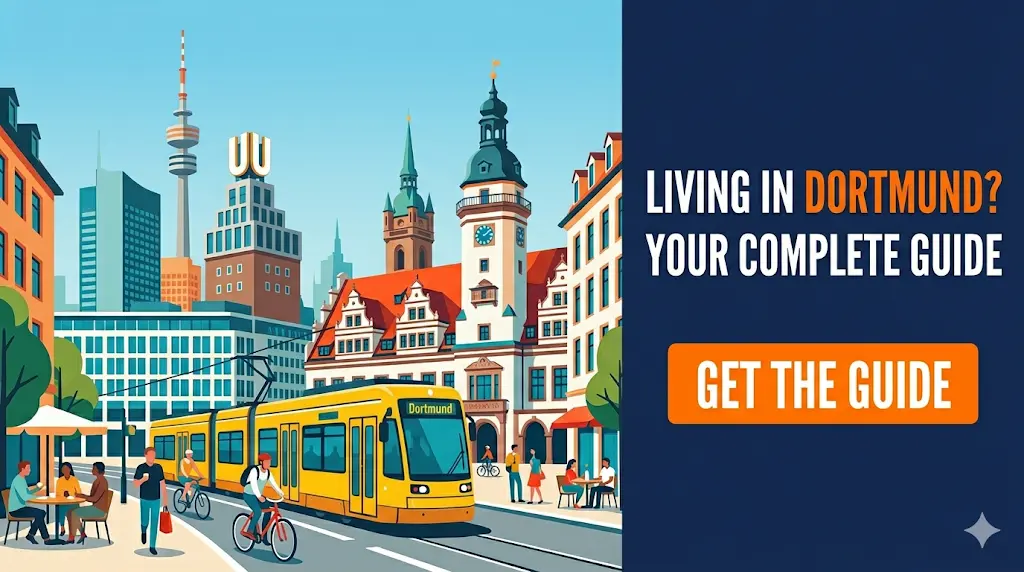
This shift also physically reshaped the city. Former industrial wastelands have been converted into stunning recreational zones, the most famous being the Phoenix-See. What was once a massive steel plant in the Hörde district is now an artificial lake surrounded by luxury apartments, tech offices, and vibrant promenades. This visual contrast between the gritty industrial past and the highly polished technological future defines the modern Dortmund experience.
Navigating the Dortmund Housing Market
Despite being cheaper than the traditional expat hubs, finding an apartment in Dortmund still requires navigating the notoriously rigid and unforgiving German real estate system. You must approach the housing hunt with a meticulous strategy, especially if you are newly arrived.
The Unfurnished Apartment Trap
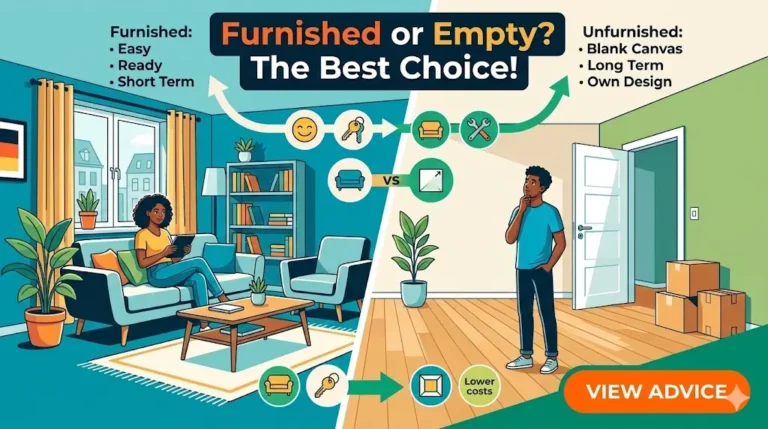
Perhaps the biggest shock for expats moving to Dortmund is the traditional concept of the unfurnished German apartment. When you sign a standard long-term lease, “unfurnished” does not just mean there is no sofa or bed. It almost always means there are no light fixtures, no closets, and absolutely no kitchen. You are entirely responsible for buying and installing your own cabinets, sink, oven, and appliances before you can even cook a meal.
Dealing with a completely empty apartment upon arrival is a logistical nightmare. Buying a kitchen locally requires waiting weeks for delivery and installation, leaving you relying on expensive takeout. This is why many expats immediately pivot to ordering their heavy electronics and essential home goods through Amazon Germany. Using Amazon Germany ensures that bulky items like microwaves, vacuum cleaners, and essential cookware are delivered straight to your door within days. It saves you immense physical strain and lets you build your home piece by piece without having to rent an expensive local moving van to haul appliances across the city.
However, even outfitting the basics takes time. If you do not have a car, wrestling a flat-pack wardrobe onto a crowded Dortmund tram is an experience you only want to endure once. Relying on digital delivery infrastructure like Amazon Germany for your heavy lifting is an essential survival tactic during your first exhausting weeks of settling in.
Securing Your Anmeldung with Temporary Housing
Before you can even sign a long-term lease, you face the ultimate bureaucratic catch-22: German landlords are fiercely risk-averse. To secure an apartment, you must present a flawless dossier, which includes a local bank account and a pristine local credit report (Schufa). But you cannot get a bank account or a Schufa without a registered address, and you cannot register an address without a landlord’s signature.
To bridge this impossible gap, veteran expats universally recommend booking temporary, fully furnished housing for your first few months. By booking a temporary apartment through Wunderflats, you completely bypass the empty-apartment shock and the immediate demand for a Schufa record. You can walk in with just your suitcase, immediately have a working kitchen and Wi-Fi, and take your time hunting for a long-term lease without the crushing pressure of sleeping on an air mattress.
Most importantly, Wunderflats guarantees that the properties listed provide the legally required landlord confirmation letter (Wohnungsgeberbestätigung). You need this specific piece of paper to legally register your address at the local citizens’ office (Bürgeramt). Securing this document quickly allows you to finalize your localized status and process the vital paperwork outlined in German Bureaucracy 101: Understanding the Anmeldung, Schufa, and Tax ID without unnecessary delays.
Top Expat Neighborhoods Decoded
Dortmund is a massive, sprawling city composed of highly distinct neighborhoods (Viertel), each offering a radically different lifestyle. Choosing the right district will define your daily commute, your social life, and your integration experience.
| Neighborhood | Primary Vibe | Average Rent Level | Best Suited For |
| Kreuzviertel | Historic, trendy, cafe-heavy | High | Young professionals, couples |
| Kaiserstraßenviertel | Quiet, architectural, central | Moderate to High | Families, established expats |
| Hörde (Phoenix-See) | Modern, tech-focused, waterfront | High | Tech workers, executive expats |
| Saarlandstraßenviertel | Bustling, commercial, practical | Moderate | Pragmatic expats, commuters |
| Nordstadt | Gritty, multicultural, student-heavy | Low | Budget-conscious students, artists |
Kreuzviertel and Kaiserstrassenviertel The Premium Zones
If you ask any local where the trendiest part of Dortmund is, they will instantly point you to the Kreuzviertel. Located just south of the city center, this neighborhood survived the wars largely intact. It is defined by stunning Altbau (pre-war) architecture, tree-lined streets, and a massive density of independent coffee shops, pubs, and boutique stores. It feels incredibly vibrant and is highly sought after by young professionals and international expats. The downside is that competition for apartments here is fierce, and rents are the highest in the city (excluding the lakefront).
Slightly east of the center lies the Kaiserstraßenviertel. This area offers a similar level of historic architectural charm but is significantly quieter and more residential than the Kreuzviertel. It is the prime destination for expat families who want a safe, serene environment with excellent local amenities while remaining within walking distance of the central shopping district. Families relocating here often prioritize proximity to good schools and parks, an essential dynamic when managing the logistics of Bringing Your Family to Germany: The Family Reunification Visa.
Saarlandstrassenviertel and Hoerde The Contrasting Hubs
The Saarlandstraßenviertel sits just south of the Kreuzviertel and acts as a bustling, highly practical commercial artery. It lacks the historic charm of its northern neighbor but compensates with immense convenience. The street is lined with supermarkets, bakeries, and essential services. Rents here are slightly more moderate, making it a fantastic choice for pragmatic expats who prioritize a short commute and easy access to daily necessities over cobblestone aesthetics.
Hörde, specifically the area around the Phoenix-See, offers a completely different reality. As mentioned, this is the modern, gleaming tech hub of the city. Apartments here are hyper-modern, featuring floor-to-ceiling windows, smart home technology, and waterfront balconies. It is heavily populated by international executives and tech talent. Because these modern apartments often feature large terraces, many expats use Amazon Germany to order customized patio furniture and outdoor grills, turning their lakefront balconies into the ultimate summer hosting spaces. Living here feels completely removed from the historical and industrial grit of the broader Ruhrgebiet.
Nordstadt The Budget Friendly Transition Zone
North of the central train station lies the Nordstadt. This is the most fiercely debated neighborhood in Dortmund. It is gritty, intensely multicultural, and visually rougher than the southern districts. Historically the landing zone for immigrant workers, it has faced structural and social challenges for decades.
However, the Nordstadt is also undergoing a slow, organic transformation fueled by the local student population and artists priced out of the south. The area around the local harbor (Hafen) has become a hotspot for alternative nightlife and creative spaces. Rents here are the cheapest in the city by a massive margin. If you are a young student or a highly budget-conscious expat willing to navigate a more chaotic urban environment, the Nordstadt offers incredibly cheap, massive apartments. It is a neighborhood of raw contrasts, demanding street smarts but rewarding residents with a deeply authentic, multicultural community.
Infrastructure and Daily Commuting
One of the greatest advantages of living in Dortmund is its integration into one of the largest and most dense public transportation networks in Europe. You absolutely do not need to own a car to live comfortably here.
Mastering the VRR Transit System
Dortmund’s local transit is operated by DSW21, but it falls under the massive umbrella of the Rhine-Ruhr Public Transport Association (VRR). The VRR is the tariff association that dictates the tickets and zones for the entire region. The local network consists of the U-Bahn (underground/light rail), an extensive bus network, and the regional S-Bahn trains.
Expats quickly adapt to purchasing a monthly transit subscription, or the highly popular Deutschlandticket, which provides unlimited access to all local and regional transport across the country for a flat monthly fee. The U-Bahn system efficiently connects the outer suburbs to the city center, and trams run frequently. Managing these recurring monthly transit subscriptions requires a reliable local bank account, a process deeply explored in Understanding German Bank Statements: Fees and Transactions Explained.
Dortmund is also investing heavily in climate-friendly mobility, creating new, comfortable cycle paths and two-way cycle lanes around the inner-city Wallring. Biking is becoming increasingly popular. If you plan to commute by bike, you can quickly order a reliable U-lock, waterproof panniers, and visibility gear through Amazon Germany to ensure you are safely equipped for the notoriously rainy Westphalian autumns.
Regional Connectivity across North Rhine Westphalia
Living in Dortmund means you are living in the massive Rhein-Ruhr metropolitan region, a continuous urban sprawl containing over 10 million people. The regional connectivity is staggering. From the Dortmund Hauptbahnhof (Central Station), you have immediate, high-speed access to neighboring mega-cities.
You can reach Bochum in 10 minutes, Essen in 20 minutes, and the international corporate hub of Düsseldorf in under an hour. This connectivity makes Dortmund an incredible basecamp. You can easily live in the affordable, green neighborhoods of Dortmund while commuting daily to a higher-paying corporate job in Düsseldorf or Cologne. Furthermore, you are less than two hours away from the Dutch border, allowing for effortless weekend trips to the Netherlands. Juggling the financial complexities of living and working across these massive regional and international borders is an advanced expat skill detailed in Moving Money to Germany: Declaring Savings and Large Transfers.
Settling In and Surviving German Bureaucracy
The physical move and the apartment hunt are only half the battle. Integrating into the local bureaucratic fabric of Dortmund presents significant challenges that require immense patience and proactive planning.
The Amt fuer Migration and Local Hurdles
Dealing with the local immigration office, which in Dortmund was recently restructured and renamed from the Ausländerbehörde to the Amt für Migration (Office for Migration), is arguably the most stressful aspect of living here. As the city has grown its international student and tech populations, the municipal offices have struggled with massive processing backlogs.
Securing an appointment to renew a visa or pick up your electronic residence permit can take months. The online booking portals are frequently full, and the staff are legally obligated to conduct official business in German. Attempting to navigate complex visa extensions without a German-speaking friend or a professional relocation consultant is incredibly risky. You must ensure your paperwork is flawlessly prepared before you arrive, as misunderstanding the required documents can lead to devastating rejections, a risk heavily detailed in Understanding the Different Types of German Visas and Residence Permits.
If you are using Wunderflats for your initial relocation, their platform often provides localized administrative guides and streamlined documentation that makes your first municipal registration far less painful. Additionally, whenever dealing with municipal offices, you must be prepared to prove your health insurance compliance; determining your strategy beforehand is vital, as explained in Public vs Private Health Insurance in Germany: Which is Right for You?.
Building a Social Life Around Football and Nature
In Dortmund, football is not just a sport; it is a religion. The city is home to Borussia Dortmund (BVB), one of the most famous and passionately supported football clubs in the world. On match days, the entire city turns yellow and black. Even if you do not care about football, attending a match at the Signal Iduna Park and standing near the legendary “Yellow Wall” is a mandatory cultural initiation. It is the absolute fastest way to bond with your local neighbors and break the ice with German colleagues.
Beyond the stadium, Dortmund is incredibly green. Nearly half of the city’s municipal area consists of waterways, woodland, agriculture, and green spaces. The Westfalenpark is a massive, stunning park near the city center that hosts festivals, concerts, and flea markets throughout the summer. The Rombergpark botanical garden offers a massive, quiet escape from the urban noise.
To combat early loneliness, you must actively seek out communities. The expat community in Dortmund is smaller and less consolidated than in Berlin, meaning you have to work harder to find your people. Joining a local sports club (Verein), attending language exchange nights at the university, or simply becoming a regular at a pub in the Kreuzviertel are the most authentic ways to integrate. Do not wait for the city to cater to you; you must throw yourself into Dortmund’s deeply authentic, hardworking culture to truly make it your home.
References
Primary sources (official)
- Stadt Dortmund (Official City Portal): The municipal government’s official English-language portal providing essential information on local registration, the Amt für Migration, and the Smart City innovation initiatives. https://smartcity.dortmund.de/english/
- Verkehrsverbund Rhein-Ruhr (VRR): The official public transportation authority for the entire Rhine-Ruhr region, detailing ticketing zones, the Deutschlandticket, and regional train schedules. https://www.vrr.de/en/tickets-fares/ticket-overview/
Other helpful sources
- Make it in Germany – North Rhine-Westphalia: The federal government’s official guide highlighting the economic sectors, living conditions, and international community growth specifically in the state of NRW. https://www.make-it-in-germany.com/en/living-in-germany/discover-germany/german-states/north-rhine-westphalia
Disclaimer
The information provided in this article is for general informational and educational purposes only and does not constitute professional legal, tax, real estate, or immigration advice. Housing markets and rental prices in Dortmund are subject to rapid change, and navigating the German real estate system requires careful review of all legal contracts (Mietvertrag). German bureaucracy, including the mandatory address registration (Anmeldung) and interactions with the Amt für Migration, is governed by strict local and federal laws that must be adhered to without exception. Always consult a certified professional for specific legal or financial matters.