Dental Care in Germany: Coverage, Costs, and Zahnzusatzversicherung
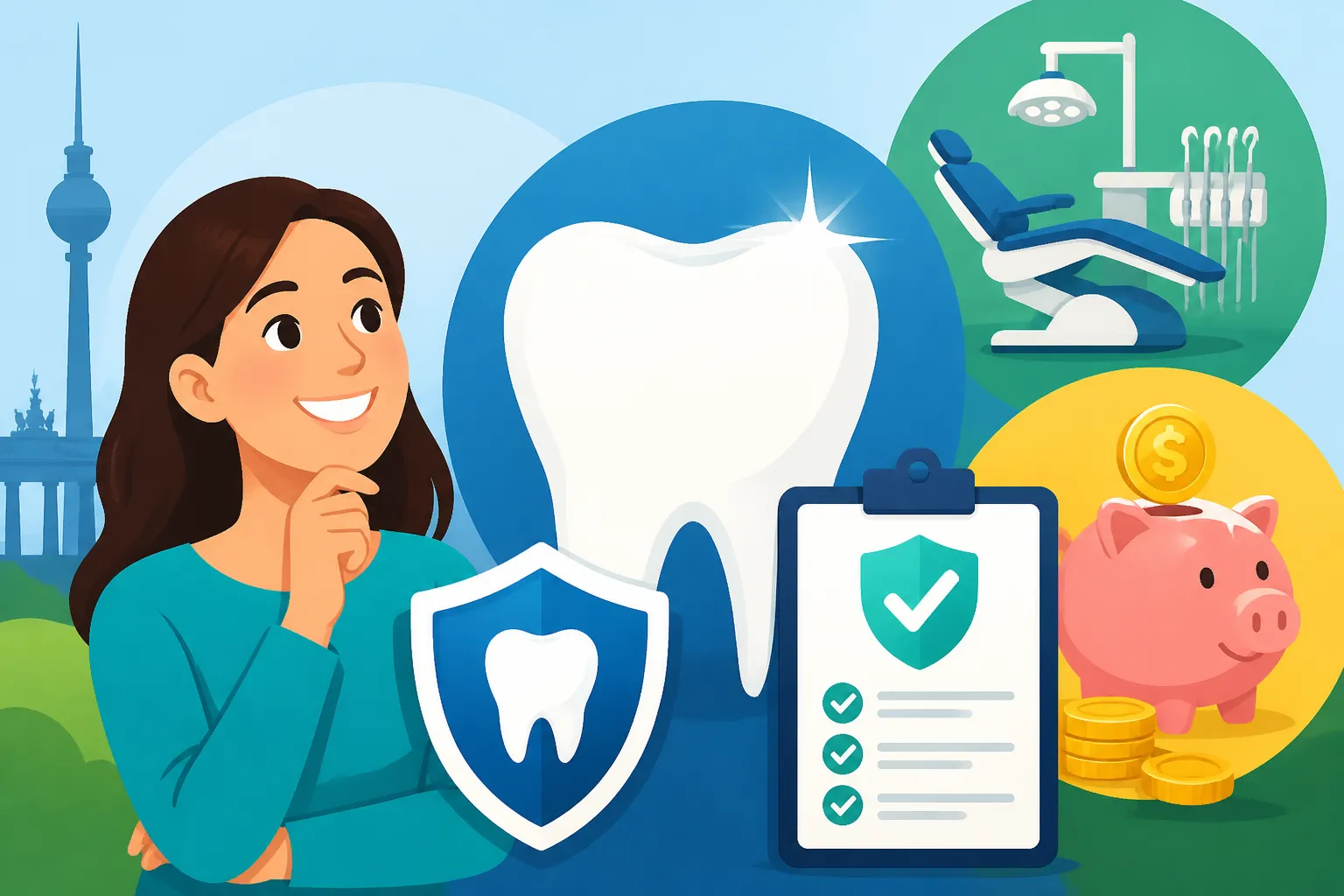
Most expats arrive in Germany under the impression that their monthly health insurance contributions guarantee them a Hollywood smile without a single out-of-pocket cent. I remember sitting in a sterile treatment room in Berlin-Mitte, mouth propped open, while my dentist explained that a simple ceramic crown would cost me nearly a thousand euros despite my "full" coverage. This guide solves the confusion surrounding dental care by breaking down public limitations, private advantages, and why supplemental insurance is a non-negotiable for your wallet.
Disclosure: This post may contain affiliate links. We may earn a commission at no extra cost to you if you make a purchase through these links. Read full disclosure.
The Reality of Public Dental Coverage in Germany
If you are one of the millions of residents enrolled in a statutory Krankenkasse, you are likely used to the ease of just handing over your plastic card at a doctor's office. However, when it comes to dental care, that card only gets you so far. The German public system operates on a principle known as "sufficient, appropriate, and economical" care. In plain English, this means the government will pay for you to not be in pain, but they aren't interested in paying for you to look like a movie star.
The Concept of Sufficient and Economical Care
The statutory framework defines what is medically necessary to maintain basic function. If you have a cavity in a molar, the insurance covers a standard amalgam filling. If you want a tooth-colored composite filling that blends in with your natural enamel, you will be handed an invoice for the price difference. This applies to almost everything beyond basic check-ups. To truly understand the scope, you should look into Public Health Insurance (gesetzliche Krankenkasse): What It Covers and Costs to see how dental fits into the broader medical landscape.
When you opt for "standard" care, the insurance pays a fixed subsidy (Festzuschuss). For example, if you need a crown, the Krankenkasse calculates what a standard metal crown costs and gives you about 60% of that amount. If you choose a high-end porcelain crown instead, the subsidy stays the same, and you cover the massive remaining balance. This is why many expats find themselves browsing Dental Insurance in Germany: Do You Need Extra Coverage for Teeth? after their first real dental emergency.
The Mandatory Bonus Booklet
One of the most uniquely German aspects of dental care is the Bonusheft (Bonus Booklet). This is a small paper booklet where your dentist stamps every annual check-up. If you can prove five consecutive years of check-ups, your insurance subsidy for major work (like bridges or crowns) increases. If you hit ten years, it goes up even more.
I learned the hard way that losing this booklet or skipping just one year resets your progress to zero. For a newcomer, this feels incredibly bureaucratic and frustrating, but it is the system's way of rewarding preventative care. Even if your teeth feel perfect, go once a year just for that stamp. It could save you thousands down the line when age eventually catches up with your molars.
Standard Treatments and GKV Limitations
Under public insurance, you are entitled to two check-ups per year and one removal of tartar (Zahnsteinentfernung). However, do not confuse this with a professional cleaning. A professional cleaning (PZR) involves deep scaling, polishing, and airflow treatments that the public insurance generally does not cover. You will likely pay between 80 and 150 EUR for this out of your own pocket. Understanding Navigating Medical Care in Germany: Doctors, Hospitals, and Pharmacies can help you distinguish between what is a standard "check-up" and what is considered a "private service" in a German clinic.
Breaking Down Out of Pocket Costs for Common Procedures
The shock of German dental pricing usually comes when you move from preventative care to restorative work. Because dentists in Germany are allowed to charge according to a scale called the GOZ (Gebührenordnung für Zahnärzte), the price can vary wildly depending on the complexity of the case and the materials used.
Professional Tooth Cleaning PZR
Most German dentists will recommend a professional cleaning twice a year. While some public insurers offer a small "wellness" rebate of 40 or 60 EUR, the vast majority of the cost falls on you. This is one of the primary reasons expats look for supplemental insurance. Providers like Feather Insurance offer plans that cover these cleanings entirely, often paying for themselves through these two annual appointments alone.
If you are a freelancer, these costs can add up quickly. Managing your health expenses is a huge part of Health Insurance for Freelancers and Self-Employed: Navigating the System, as you don't have an employer splitting the bill for your premiums or your dental add-ons.
Fillings and Root Canals
For a standard filling in a visible tooth (your front teeth), the public insurance will usually cover a tooth-colored composite. But for your back teeth, they only cover amalgam (silver). If you want composite in the back, expect to pay an extra 60 to 120 EUR per tooth.
Root canals are even more complex. The public insurance only pays if the tooth is considered "savable" under very specific criteria. If the root canal requires advanced technology like microscopes or specialized measuring devices to ensure success, the dentist will charge you privately for those "extra" steps. Without supplemental insurance, a single root canal can easily cost you 300 to 500 EUR out of pocket.
Major Prosthetics Crowns Bridges and Implants
This is where the costs become life-altering. An implant in Germany typically costs between 2,000 and 3,500 EUR. The public insurance subsidy for an implant is usually only about 300 to 500 EUR, because they technically only pay for a "bridge" (the cheaper alternative).
| Service | Public Insurance (GKV) Coverage | Supplemental Insurance (e.g., ottonova) | Average Expat Out-of-Pocket |
|---|---|---|---|
| Annual Check-up | 100% Covered | 100% Covered | 0 EUR |
| Professional Cleaning | 0% – 40% (varies) | 100% Covered | 80 – 150 EUR |
| Composite Filling | Covered (Front Only) | 100% Covered | 60 – 120 EUR |
| Root Canal (Advanced) | Partially Covered | 90% – 100% Covered | 300 – 600 EUR |
| Dental Implant | ~15% – 20% | 80% – 100% Covered | 1,500 – 2,500 EUR |
Zahnzusatzversicherung: Is it Worth the Hype?
You will hear the word Zahnzusatzversicherung (supplemental dental insurance) constantly in expat circles. It is not just marketing fluff; it is a defensive financial strategy. Because the gap between what the state provides and what modern dentistry costs is so wide, these plans act as a bridge.
Waiting Periods and Why They Matter
One of the biggest mistakes I see expats make is waiting until their tooth hurts to buy insurance. Most traditional German insurance plans have a Wartezeit (waiting period) of three to eight months. If you sign up today and try to get a crown tomorrow, they will reject the claim.
However, newer, expat-friendly companies have changed the game. Feather Insurance and ottonova often offer plans with no waiting periods, though they still won't cover "active" cases. If a dentist has already documented that you need a bridge in your medical records, you cannot buy insurance today to cover that specific bridge. You must secure coverage while your teeth are healthy.
Pre-existing Conditions and Missing Teeth
When you apply for dental insurance, you will often be asked how many "missing" teeth you have (excluding wisdom teeth). If you have three or more missing teeth that haven't been replaced by bridges or implants, your premium will be higher, or you might be rejected.
Some digital insurers like ottonova provide a very transparent interface to declare these issues. They might still cover you but with a "limit" on how much they pay out during the first few years. This is common practice and is much better than being completely uninsured when an old filling eventually fails. For those on more comprehensive plans, Private Health Insurance in Germany: Benefits, Costs, and Eligibility often includes superior dental coverage as a standard feature, making a separate supplemental policy unnecessary.
Analyzing the 80% vs 100% Coverage Tiers
When choosing a plan, you will see different percentages. A "100%" plan means the insurer covers everything the public insurance doesn't, leaving you with a 0 EUR bill. An "80%" plan is cheaper monthly but means you still pay a small portion. Personally, I recommend the 90% or 100% tiers. The difference in monthly premium is usually the cost of one fancy coffee, but the difference in a 3,000 EUR implant bill is 600 EUR.
The Administrative Side: Appointments and Paperwork
Navigating a German dental office requires a bit of cultural adaptation. It is not just about the medical procedure; it is about the "Heil- und Kostenplan" (HKP).
Getting Your Heil- und Kostenplan Approved
Before any major work begins, your dentist will hand you a multi-page document filled with codes and euro signs. This is the Heil- und Kostenplan. You must send this to your Krankenkasse before the treatment starts. They will stamp it to confirm how much of the "standard" subsidy they will pay.
If you have supplemental insurance, you also need to send it to them. Digital-first companies make this incredibly easy. With ottonova or Feather Insurance, you usually just snap a photo of the document and upload it to an app. They will give you a "performance promise" so you know exactly how much they will reimburse you before you sit in the chair. This eliminates the "bill-shock" that ruins many expats' months.
Finding an English-Speaking Dentist in Germany
If your German is still at the "A1" level, trying to discuss the nuances of a root canal is terrifying. Many dentists in major cities like Berlin, Munich, and Frankfurt speak excellent English, but they don't always advertise it on their front door.
Using resources like Finding English-Speaking Doctors: Resources and Tips for Expats is essential. When you call, specifically ask if the dentist speaks English, as sometimes the receptionist might not, but the doctor does. You can also look for the "Empfehlung" (recommendation) stickers from Jameda, which is the German version of Zocdoc or Yelp for doctors. More details on booking can be found in our guide on Going to the Dentist in Germany: How to Book and What’s Covered by Insurance.
Specialized Dental Care for Families and Students
The dental needs of a 22-year-old university student are vastly different from a family of four with two teenagers needing braces. Germany treats these groups differently within the insurance system.
Orthodontics for Children
For parents, the big question is always braces. Public insurance only pays for braces if the child’s misalignment is classified as "KIG 3, 4, or 5." If it is KIG 1 or 2 (meaning it's more of an aesthetic issue than a functional one), the insurance pays nothing.
Even if the insurance does pay, you have to pay 20% of every invoice upfront. You only get that money back once the treatment is successfully completed years later. This is a significant financial burden. Supplemental plans specifically for children can cover the "extra" costs like invisible brackets or wires that don't hurt as much. For a deep dive into this, check out Braces and Orthodontics: What Parents Should Know (Coverage and Costs).
Dental Care on a Student Budget
If you are here on a student visa, money is likely tight. Public student insurance is relatively affordable, but it still has the same dental gaps. While you might feel invincible at 20, a chipped tooth from a bike accident or a sudden wisdom tooth infection can derail your semester's budget.
Students should look for low-cost supplemental options or ensure they have at least basic travel-style coverage if they are here for a short exchange. Health Insurance for Students in Germany: Affordable Options and Requirements explains how to balance these costs while living on a scholarship or part-time job income.
Top Supplemental Insurance Providers for Expats
There are dozens of providers in Germany, but three stand out for expats due to their English-language support, digital ease of use, and transparent pricing.
Feather Insurance
Feather is often the first stop for newcomers because their entire platform is in English. They act as a digital broker and provider that simplifies the "fine print" that usually trips people up. Their dental plans are tiered clearly, allowing you to choose between basic cleaning coverage and full-blown implant protection. Their claims process is famously simple—you just upload the bill and wait for the bank transfer.
ottonova
ottonova is a premium digital private insurer. Their dental supplemental plans are high-end, often covering up to 100% of high-tech treatments. If you value a slick app interface and a "concierge" feel to your insurance, they are the top choice. They are particularly good for professionals who want the best materials (like high-grade ceramic) without questioning the cost.
SafetyWing
While SafetyWing is primarily known for travel and nomad insurance, they are a vital mention for those in the "in-between" stage. If you are in Germany on a job-seeker visa or are just arriving and haven't settled into the public system yet, SafetyWing provides the emergency dental coverage you need so a toothache doesn't turn into a financial catastrophe. However, once you are a long-term resident, you should transition to a permanent German plan like those from Feather or ottonova.
Practical Tips for Your First Visit
To make your transition into the German dental system smoother, keep these three tips in mind. First, always ask for an "Alternative" quote. If a dentist gives you a quote for 2,000 EUR, ask what the "standard care" (Regelversorgung) option costs. Sometimes the difference is purely aesthetic.
Second, learn the vocabulary. Even if your doctor speaks English, the bill will be in German. Familiarize yourself with terms like Zahnreinigung (cleaning), Füllung (filling), and Zahnersatz (prosthetics). Keeping a Common German Medical Terms: A Mini Dictionary for Patients bookmarked on your phone can save you a lot of confusion at the reception desk.
Third, register with a "Hauszahnarzt" (regular dentist) early. Just like Finding a Doctor (Hausarzt) in Germany: How to Choose and Register, having a dentist who has your history on file makes emergency appointments much easier to get. Germans value "long-term relationships" with their service providers, and dentists are no exception.
Summary of the Expat Dental Strategy
To survive the German dental system without going broke, your strategy should be three-fold. Start by getting your Bonusheft and never missing an annual check-up to maximize your future state subsidies. Next, sign up for a Zahnzusatzversicherung like Feather or ottonova as soon as possible—ideally before you actually need it—to avoid waiting periods and exclusions. Finally, always get a Heil- und Kostenplan for any work over 200 EUR and get it approved by your insurer before the drill touches your tooth.
The system is complex, but it is also one of the highest-quality dental environments in the world. Once you handle the bureaucracy, you can rest easy knowing that your health—and your smile—is in good hands.
Disclaimer
This article provides a general overview of dental care and insurance in Germany for informational purposes only. Insurance regulations, coverage limits, and medical costs can change frequently. Always consult with a licensed insurance advisor or your health insurance provider to confirm specific policy details and eligibility. We are not medical professionals or legal advisors; for medical concerns, please consult a qualified dentist.