The SCHUFA Credit Score in Germany: How It Works
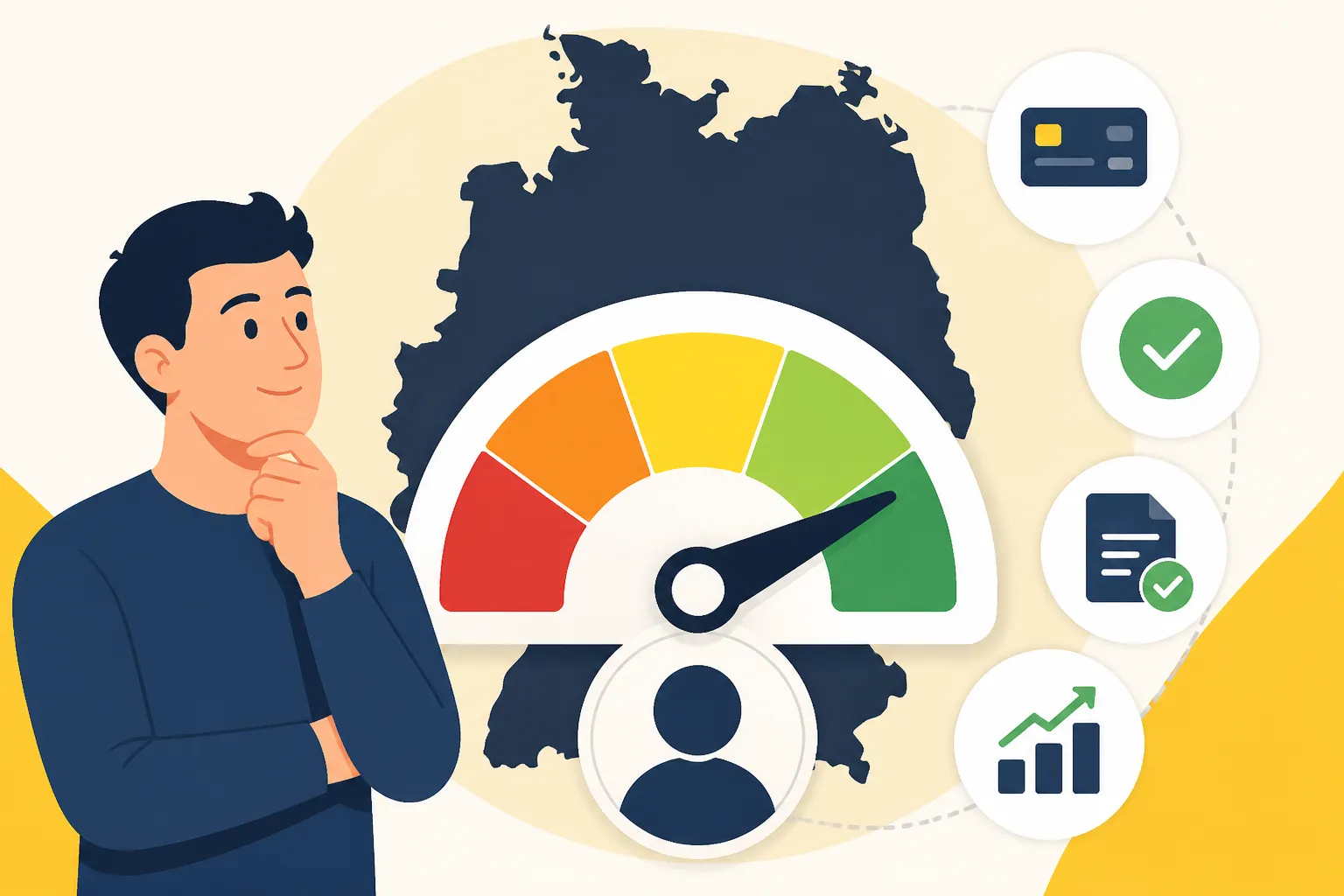
You found the perfect flat in Leipzig, the viewing went well, and then the landlord asks for your SCHUFA. You’ve been in Germany three weeks and earn a solid salary, yet your file is blank. This guide explains what the SCHUFA score is, how it is calculated, what it stores about you, how to check it, and how newcomers can build a strong one.
Disclosure: This post may contain affiliate links. We may earn a commission at no extra cost to you if you make a purchase through these links. Read full disclosure.
What SCHUFA Actually Is and Why Germans Care So Much
I still remember my first SCHUFA conversation. I was sitting in a cramped Hausverwaltung office in Frankfurt with every document I could think of: passport, employment contract, three payslips, and a reference letter from my previous landlord abroad. The property manager flipped through all of it, nodded politely, and asked, “Und die SCHUFA?” Nobody had told me that this one piece of paper could outweigh everything else in my folder.
If you come from a country with FICO scores or credit bureaus like Experian, the idea will feel half-familiar. The way it is used in Germany is different, though. It shows up in places you would never expect, and it starts from zero no matter how good your credit history was back home.
A Private Company, Not a Government Agency
SCHUFA stands for Schutzgemeinschaft für allgemeine Kreditsicherung, roughly “protective association for general credit security.” Despite the official-sounding name, SCHUFA Holding AG is a private company headquartered in Wiesbaden. It is not part of the Finanzamt, the Bürgeramt, or any ministry. It collects data from its contract partners, mainly banks, telecom providers, retailers, utilities, and debt collection agencies, and sells risk assessments back to those same businesses.
This matters because there is no legal duty for you to “have” a SCHUFA, and no authority automatically creates one for you when you arrive. Your file comes into existence when a SCHUFA partner reports something about you. For most newcomers that is the moment they open a bank account. Before that, you are simply invisible.
There are other credit agencies in Germany, such as Creditreform’s consumer arm and CRIF. In everyday life, though, SCHUFA dominates so completely that Germans use the word as a generic term, the way people say “Google it.” When someone asks for “die SCHUFA,” they almost always mean a credit report from this specific company.
Where Your SCHUFA Gets Checked in Daily Life
The obvious places are loans, mortgages, and credit cards. But SCHUFA also gets checked when you sign a mobile phone contract, apply for an apartment, order furniture on invoice, set up a contract with an energy supplier, lease a car, or open certain bank accounts. Online shops may run a quick check before offering you “Kauf auf Rechnung,” the option to pay after delivery.
I learned this the hard way when I tried to get a two-year phone contract in my second week. I was offered prepaid only. The salesperson wasn’t being rude. The system simply had nothing to go on. If you are facing the same thing, read Mobile Phone Contracts vs Prepaid: Which is More Cost-Effective in Germany? to see why starting on prepaid is often a sensible move anyway.
The rental market is where SCHUFA hurts the most. In competitive cities like Munich, Berlin, and Hamburg, landlords can receive dozens of applications for one flat. A clean SCHUFA certificate is one of the fastest ways for them to narrow down the pile. Our guide to SCHUFA and Documents Landlords Want in Germany covers the full application folder in detail.
How the SCHUFA Score Is Calculated
SCHUFA does not publish its exact formula, and that lack of transparency frustrates plenty of Germans too. What we do know is which kinds of data feed into the assessment and which kinds are deliberately excluded.
The Data SCHUFA Collects About You
Your SCHUFA file holds your basic personal data: name, date of birth, current address, and previous addresses. It also lists your financial relationships with SCHUFA partners. That includes current accounts, credit cards, loans, leasing contracts, mobile phone contracts, and buy-now-pay-later arrangements. For credit agreements it records the amount and the term, and it marks when they were paid off.
The file also logs inquiries. Each time a company requests your data, an entry appears. There is a crucial distinction here. An “Anfrage Kredit” is a formal credit application and can be visible to other partners. An “Anfrage Kreditkonditionen” is a request for loan conditions only, used when you are shopping around, and it does not affect your score. When comparing mortgage or loan offers, always ask the bank to make a conditions inquiry rather than a full credit inquiry.
Finally, the file records negative information. Examples include unpaid debts that went through a formal dunning process, debts handed to collection agencies under specific legal conditions, cards cancelled because of misuse, and public court records such as insolvency proceedings.
What SCHUFA Does Not Know
This surprises many people. SCHUFA does not store your income, your salary, your savings balance, your account transactions, your nationality, or your marital status. A senior engineer earning well above average and a student with a part-time job can have identical SCHUFA files if their contract histories look the same.
That is why landlords and banks always ask for payslips and contracts alongside your SCHUFA report. The score tells them whether you have kept your promises in the past. It does not tell them whether you can afford what you are asking for now.
SCHUFA also does not see your history abroad. Paying off a mortgage in Canada or carrying a perfect credit card record in the UK counts for nothing here. That feels deeply unfair, and I won’t pretend otherwise. It is simply how the system works.
Why a Blank File Hurts Newcomers
Germans who grew up here usually have years of quiet, positive entries: a youth savings account, a first phone contract, a student credit card. When you arrive, your file is either empty or very thin, and the scoring system treats limited data as uncertainty.
A thin file is not the same as a bad file. You have no negative entries, and that is genuinely good news. In practice, though, some automated systems at phone providers and online shops will turn you down simply because they lack data. Human decision-makers, such as a private landlord or a local Sparkasse advisor, tend to be more understanding once you explain that you have just arrived. That is one reason a personal cover letter in a rental application can make such a difference.
Positive and Negative Entries Explained
Most entries in a typical SCHUFA file are neutral or positive. The word “SCHUFA” sounds threatening, but for most people it mainly confirms reliability.
Everyday Entries That Work in Your Favour
Every contract you sign and handle properly builds your history. A current account opened and kept in good standing, a phone contract paid on time, a credit card cleared each month, a small installment loan for a laptop repaid as agreed: each of these adds evidence that you are reliable.
Stability counts too. Keeping one current account for years tends to look better than opening and closing accounts constantly. Staying registered at one address for a reasonable period helps, and so does having fewer short-term credit products rather than many. People who move often within Germany should make sure each move is registered properly, so SCHUFA’s address records stay accurate.
Negative Entries and How They Happen
A negative entry, called a “Negativmerkmal,” does not appear just because you paid a bill a few days late. For an unpaid claim to be reported, it normally has to be due, you must have received reminders, there has to be a waiting period, and you must not have disputed the claim. In practice, negative entries usually follow ignored letters rather than honest mistakes.
The classic expat scenario looks like this. You move out of a flat and forget to tell your old electricity provider. The final bill goes to your old address. Reminders follow, then a collection agency, and months later you discover an entry you knew nothing about. The fix is boring but effective. Set up mail forwarding with Deutsche Post when you move, update your address with every contract partner, and never ignore an envelope with “Mahnung” written on it.
| Entry Type | Example | Effect on Your Assessment | Typical Expat Trigger |
|---|---|---|---|
| Current account | Girokonto opened at a bank | Positive or neutral foundation | Opening your first German account |
| Credit inquiry | Formal loan application | Visible to partners, may weigh on score | Applying at several lenders at once |
| Conditions inquiry | Loan quote request | No effect on score | Comparing mortgage offers properly |
| Repaid loan | Installment loan marked as settled | Positive history | Financing furniture or electronics |
| Mobile contract | Postpaid plan with a provider | Positive when paid on time | First contract after a few months |
| Negative entry | Unpaid claim after reminders | Significant damage | Forgotten final bill after moving |
How to Check Your SCHUFA Report
The good news is that you have a legal right to see what SCHUFA holds about you, and you can get a copy at no cost.
The Free Data Copy Versus the Paid BonitätsCheck
Under Article 15 of the GDPR, known in German as DSGVO, you can request a free “Datenkopie” showing all the data SCHUFA stores about you. You can request it on SCHUFA’s website. Expect your identity to be verified, often by uploading ID or confirming your address. The full process is covered step by step in How to Get a Free SCHUFA Report in Germany.
SCHUFA also sells a paid product designed for third parties, usually called the BonitätsCheck. It is a shorter document showing only what a landlord needs to see, without your full contract list. Many landlords specifically ask for this format. Pricing and delivery options change, so check SCHUFA’s own page for current details. Some banks also offer integrated ways to get a rental certificate. To compare the routes, see How to Get a SCHUFA Certificate for Renting in Germany.
| Feature | Free Datenkopie | Paid BonitätsCheck |
|---|---|---|
| Purpose | Your personal overview of all stored data | Showing creditworthiness to landlords or others |
| Contents | Every entry, inquiry, and address record | Condensed summary for third parties |
| Cost | Free under GDPR | Paid product, check SCHUFA’s own page |
| Best use | Checking for errors, understanding your file | Rental applications |
| Share with landlord? | Not recommended, too much detail | Yes, this is what it is designed for |
Reading Your Report Without Panicking
Your first Datenkopie will probably be in German and full of terms like “Girokonto,” “Kreditkarte,” “Telekommunikationskonto,” and “Anfrage.” Do not panic at the inquiry list. Many inquiries are routine and have no effect on your score, especially conditions inquiries and inquiries linked to accounts you actually opened.
Go through the report section by section. Confirm that your personal details and addresses are correct. Then check that every listed contract is genuinely yours, and see that settled loans are marked as such. Finally, look closely for any Negativmerkmal. If the report is clean, file it away and get on with your life.
One warning for flat hunters. Scammers sometimes ask for a full SCHUFA Datenkopie plus a passport scan before any viewing, then use those documents for identity fraud. A legitimate landlord needs the condensed certificate, not your complete data copy. Our guide to Apartment Hunting Scams in Germany: Red Flags and How to Avoid Them shows how to spot these schemes.
Fixing Errors on Your File
Errors do happen. Common ones include a misspelled name that splits your history into two files, a debt that belongs to someone with a similar name, or a paid claim still showing as open. You have the right to have incorrect data corrected and unlawfully stored data deleted.
- Gather evidence, such as payment confirmations, bank statements, or written confirmation from the creditor that a claim is settled.
- Contact the company that reported the entry, since only they can confirm whether their report was wrong.
- Submit a correction request to SCHUFA as well, attaching your evidence, through their website or by post to Wiesbaden.
- Keep copies of everything, and note the dates you sent each request.
- Request a new Datenkopie afterward to confirm the change actually went through.
- If neither party responds properly, you can complain to the data protection authority responsible for SCHUFA, the Hessian commissioner for data protection, or ask a consumer advice centre (Verbraucherzentrale) for help.
Be patient but persistent. A friendly, documented written request usually works far better than angry phone calls.
Building a Solid SCHUFA as a Newcomer
You cannot speed up time, but you can make sure every month in Germany counts toward a healthy file.
Your First Months: The Foundation Steps
- Complete your address registration first, because nearly every German contract depends on it. See Registering Your Address (Anmeldung): Step-by-Step Guide if you haven’t done it yet.
- Open a German current account. Most banks, including online banks such as N26, typically report a new Girokonto to SCHUFA, which creates your file. The process is laid out in Opening a Bank Account in Germany: Step-by-Step for Newcomers.
- Move your salary, rent, and regular direct debits onto that account so it becomes your stable financial base.
- Once you have a few months behind you, consider a postpaid phone contract, paid by direct debit from your German account.
- Think about a credit card from your main bank, set to full monthly repayment so you never carry a balance. Credit Cards in Germany: How to Get One and Which to Choose explains the German approach, which differs a lot from the UK or US.
- Request your free Datenkopie after a few months to confirm everything is recorded correctly.
A practical note for anyone arriving with savings from home: it helps a landlord or bank advisor to see real funds in your German account. A transfer service like Wise is one common way to move money from a foreign account into your Girokonto in euros. The SCHUFA file won’t show the balance itself, but your bank statements will, and those often accompany a rental application.
Habits That Quietly Damage Your Score
The biggest trap for expats is the “multiple applications” mistake. You get rejected by one phone provider, try another the same afternoon, then a third, and suddenly your file shows a cluster of formal inquiries. Space out applications, and when you compare loans, insist on conditions inquiries.
Other quiet score-killers include:
- Opening many accounts and cards you don’t need.
- Using buy-now-pay-later services heavily.
- Letting contracts lapse into collections after you move.
- Ignoring yellow Deutsche Post envelopes, which often contain court or official documents with tight deadlines.
When you leave Germany or move flats, cancel contracts in writing and keep the confirmations. Germans love paperwork for a reason. Here, it actively protects you. For a longer list of score-friendly habits, read How to Improve Your SCHUFA Score in Germany.
Renting and Borrowing While Your File Is Thin
A thin file does not lock you out of housing. Compensate with a strong application folder: your employment contract, recent payslips, a Mietschuldenfreiheitsbescheinigung from any previous German landlord confirming you owe no rent, and a short personal letter explaining that you recently relocated. Some expats attach their Datenkopie summary page showing zero negative entries, though the condensed certificate is still preferable.
Freelancers face an extra hurdle because there are no payslips to show. Banks and landlords often ask for the income tax assessment, the Steuerbescheid, as proof of earnings. Getting your first German tax return filed promptly, whether with a Steuerberater or a guided online tool like Wundertax, means you have that assessment ready when a lender asks for it next to your SCHUFA report.
Mortgages are where a thin file shows most clearly. German banks usually want to see a stable employment history and a clean credit record, and some are more open to foreign applicants than others. If buying property is on your horizon, start building your SCHUFA early and read How to Get a Mortgage as a Foreigner in Germany: Tips to Improve Approval well before you start viewing properties. For the bigger picture on creating creditworthiness from scratch, All About SCHUFA: Building Credit as a Foreigner in Germany is a useful companion to this guide.
The SCHUFA system can feel cold and opaque at first, especially when your history abroad counts for nothing. Within a year of steady, unremarkable financial life in Germany, though, most expats find that the score they worried about has quietly turned into an asset.
Disclaimer
This article is for general informational purposes only and does not constitute professional advice. Laws, prices and regulations vary by location and change over time. Consult a qualified professional for guidance on your specific situation.