Beer Gardens and Beer Halls in Germany
Walking into a traditional German beer venue for the first time can feel surprisingly overwhelming. Between wooden benches crammed with strangers, loud conversations echoing off stone walls, and confusing rules about whether to order at the bar or wait for a server, foreigners often freeze up. This comprehensive guide breaks down the culture, etiquette, ordering systems, and unwritten social rules so you can confidently step into any beer garden or beer hall in Germany and enjoy yourself like a seasoned local.
Disclosure: This post may contain affiliate links. We may earn a commission at no extra cost to you if you make a purchase through these links. Read full disclosure.
The Essential Differences Between Beer Gardens and Beer Halls
Spatial Dynamics and Atmospheric Vibes
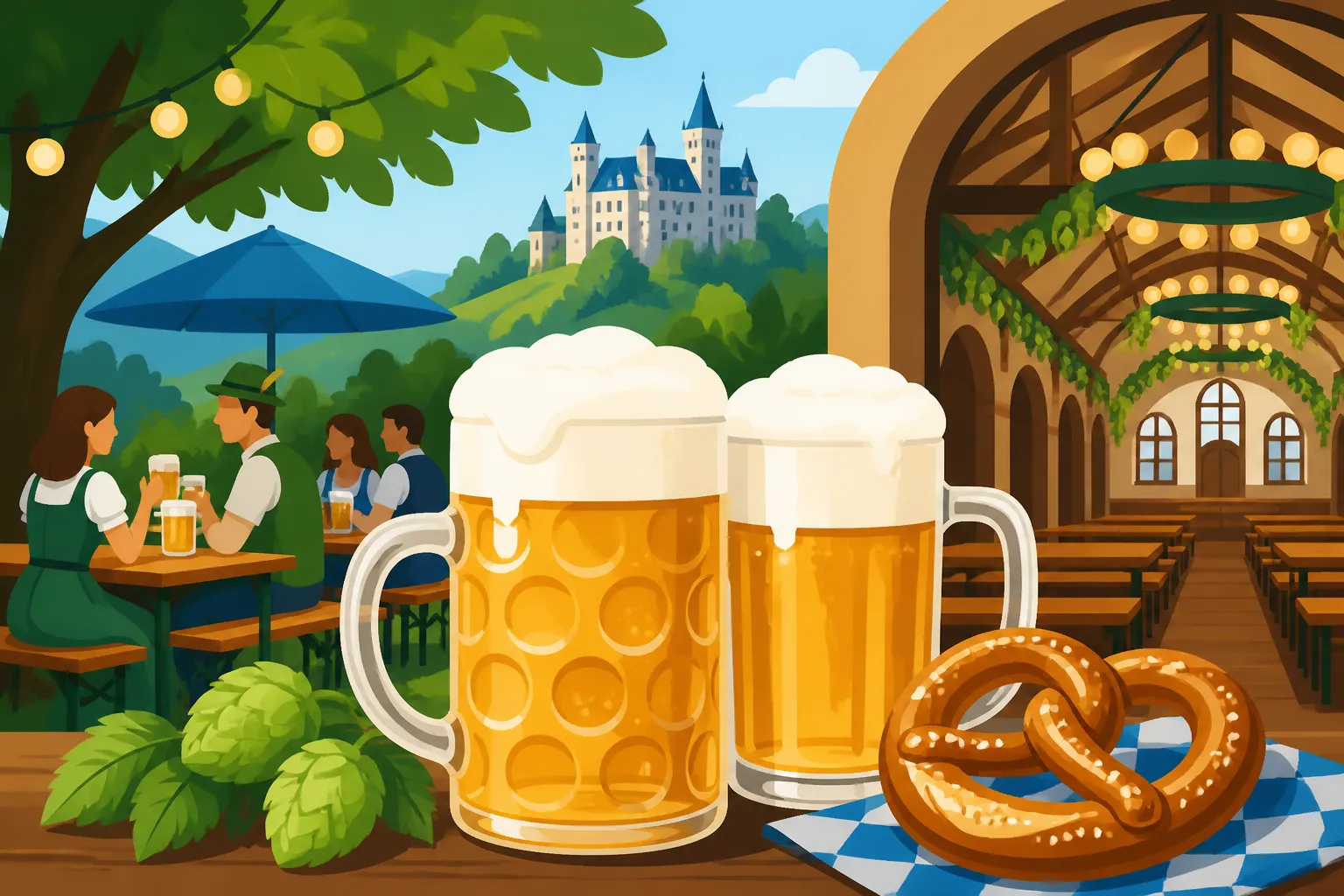
When you step inside a traditional beer hall, the sensory experience hits you immediately. High-vaulted ceilings, historic wood paneling, heavy timber tables polished smooth by decades of spilled brew, and the resonant hum of hundreds of people chatting create an energetic, warm environment. Brass bands often play regional folk music on elevated podiums while servers clad in traditional Dirndls and Lederhosen move briskly through tight aisles balancing half a dozen heavy glass mugs in each hand. The atmosphere inside a beer hall is cozy, boisterous, and deeply rooted in historical indoor gathering traditions.
In contrast, a beer garden is defined by its open-air, nature-infused setting. Traditional beer gardens feature wide open spaces laid with gravel rather than pavement or grass. The gravel serves a dual purpose: it absorbs spilled drinks and rainwater efficiently, and it keeps the ground cool. Above, massive chestnut trees expand their wide green canopies, providing essential shade during hot summer afternoons. The atmosphere in a beer garden is noticeably more relaxed and family-friendly. Children run around nearby playgrounds, dogs nap quietly under wooden benches, and the soft rustle of leaves mixes with the gentle clinking of glasses.
Seasonal Operations and Weather Factors
Because beer halls are fully enclosed indoor structures, they operate year-round without interruption. They serve as essential urban living rooms during the cold, dark German winter months when outdoor socializing comes to a halt. When snow falls outside, step into a hall to find steamy windows, hot savory meals, and an inviting warmth that encourages lingering over a slow drink for hours.
Beer gardens are intensely seasonal creatures. Most outdoor venues begin opening their gates in late April or early May, depending on the arrival of mild spring weather, and close down by mid-October. A sudden summer downpour can empty a beer garden in minutes, sending hundreds of patrons scrambling under awnings or indoor side-rooms. If you are traveling through Germany with an eye on the forecast, checking transport routes on Omio allows you to easily pivot your weekend plans between sunny Southern regions with open gardens and urban centers famous for historical indoor halls.
Regional Variations Across Germany
The concept of the beer garden is overwhelmingly associated with Bavaria, where strict state regulations actually define what constitutes a true legal Biergarten. In southern cities like Munich, Augsburg, and Nuremberg, the rules surrounding outdoor drinking venues are legally protected, preserving traditional features like shared wooden seating and food-bringing rights. The classic Bavarian beer garden is an institution built around community access.
As you head north or west, the nature of these venues evolves. In the Rhineland, particularly in cities like Cologne and Düsseldorf, indoor drinking life centers around the traditional brewery pub, known as a Brauhaus. Rather than vast communal halls, these are maze-like series of interconnected rooms where regional ale flows continuously. In northern hubs like Berlin and Hamburg, outdoor drinking venues lean into modern interpretations, ranging from urban beach bars along riverbanks to bohemian garden plots decorated with fairy lights, though classic Bavarian-style gardens still exist in city parks.
Navigating Etiquette and Unwritten Rules
Seating Rules and Tischordnung
The most common point of anxiety for newcomers is finding a place to sit. In both beer halls and beer gardens, seating is almost universally communal. You rarely wait to be seated by a host, nor should you expect to sit alone at a table built for eight people. If you see open spots at an occupied table, it is completely normal and expected to sit there, but you must observe basic etiquette first.
Before taking a seat, always point to the empty bench space and politely ask the occupants, “Ist hier noch frei?” (Is this spot free?). Nine times out of ten, they will nod and welcome you to sit. Once seated, you are under no obligation to engage in non-stop conversation, though a brief greeting is polite. However, pay close attention to small wooden or slate signs placed on certain tables marked Stammtisch. This indicates a table reserved exclusively for regular local patrons who have met at that exact spot for years or even generations. Never sit at a Stammtisch unless specifically invited by the regulars sitting there. To navigate these social subtle points smoothly, reading up on German Social Etiquette for Visitors: Greetings and Punctuality will give you a major confidence boost.
Ordering Drinks and Understanding Self-Service
Understanding how to get your drink depends heavily on where you are sitting. Indoor beer halls are almost always full-service areas. You sit down, wait for a server to come to your table, order your drink and food, and pay the server directly when you are ready to leave.
Outdoor beer gardens often operate under a dual system. A venue might be divided into a Bedienung (served) area and a Selbstbedienung (self-service) area. You can identify served sections by the presence of tablecloths on the wooden tables, cut flowers, or small menu stands. Bare wooden tables almost always indicate self-service. In the self-service area, you stand in a queue, pick up a wooden tray, collect your food and drinks from counter windows, and pay immediately at the register before carrying your tray back to your bench.
When ordering drinks in self-service gardens, you will often pay a small deposit, known as a Pfand, for your glass or ceramic mug. The cashier will hand you a small plastic token alongside your drink. Do not lose this token! When you return your empty glass to the wash station, handing back the plastic token along with your glass ensures your deposit is returned to you in cash. Remember to factor this process in when navigating Tipping in Germany: When, Where, and How Much, as tipping procedures differ between self-service registers and full-table service.
Bringing Your Own Food to the Table
One of the most remarkable and beloved cultural quirks of traditional Bavarian beer gardens is the legal right to bring your own picnic. According to historical Bavarian legislation established in the 19th century to protect small innkeepers from brewery competition, beer garden operators must allow guests to bring their own food to the outdoor self-service tables.
You can pack a cooler or picnic basket with sliced sourdough bread, fresh radishes, cold roast chicken, pretzels, and local cheeses like Obatzda. Spread out a small tablecloth, set out your feast, and enjoy an affordable afternoon outdoors. The absolute cardinal rule of this tradition is that you must purchase all your drinks from the beer garden. Bringing your own soft drinks, water, or beer is strictly forbidden and considered extremely offensive. If you prefer not to pack a picnic, the venue’s food counters sell rich local specialties; exploring German Regional Dishes Every Visitor Should Try will help you identify hot pork roast, sausages, and potato salads on the chalkboards.
Understanding German Beer Culture and Varieties
Bavarian Classics vs Northern Brews
The style of beer served depends entirely on the region you are visiting. In Munich and throughout Bavaria, the king of the beer garden is Helles, a crisp, straw-golden lager that is smooth, lightly malted, and incredibly easy to drink in large quantities. Bavarian venues also heavily feature Weißbier (wheat beer), served in tall, curving glass flutes that trap the beer’s fruity, aromatic foam top.
If you travel to Cologne, you will not find large liters of lager. Instead, the local culture revolves around Kölsch, a bright, top-fermented ale served exclusively in slender 0.2-liter glasses known as a Stange. In neighboring Düsseldorf, the regional pride is Altbier, a dark, copper-colored ale with a crisp, hoppy finish. For a deep dive into how these regional styles developed and where to sample them, check out our guide on German Beer Culture: Styles, Beer Gardens, and Breweries.
| Beer Style | Primary Region | Serving Size | Flavor Profile |
|---|---|---|---|
| Helles | Bavaria / South | 0.5L or 1.0L (Maß) | Balanced, malt-forward, crisp |
| Weißbier | Bavaria / South | 0.5L Flute | Fruity, clove notes, cloudy |
| Kölsch | Cologne / Rhineland | 0.2L Stange | Light, crisp, delicate top-ale |
| Altbier | Düsseldorf / Rhineland | 0.25L – 0.3L Glass | Copper color, dry, hoppy finish |
| Pils | Nationwide / North | 0.3L or 0.5L Glass | Golden, dry, bitter hop aroma |
Glassware and Serving Sizes
Foreigners visiting Bavaria are often shocked when they order a beer in a traditional garden and receive a heavy glass mug containing a full liter of liquid. This iconic liter mug is called a Maß (pronounced “mahss”, with a short ‘a’ sound). In most classic Bavarian beer gardens, a Maß of Helles is the standard serving size, though half-liter servings (Halbe) are usually available for wheat beers or upon request in served sections.
Carrying and drinking from a Maß requires a bit of technique. Rather than gripping the handle like a standard coffee mug—which strains your wrist due to the heavy weight—slide your hand entirely through the handle loop and cup the rounded glass body with your fingers, using your thumb over the top of the handle for stability. In northern regions, standard glass sizes shrink to 0.3 or 0.5 liters, allowing beer to stay colder longer in warmer weather.
Prost Etiquette and Eye Contact
Drinking beer in Germany comes with an absolute rule that every visitor must master: the toast. When drinks arrive at the table, nobody takes a sip until everyone has raised their glass for a collective toast. Lift your glass, bring it forward, and lightly clink the base of your glass against the base of everyone else’s glass at the table while saying “Prost!” or “Zum Wohl!”.
Crucially, you must make direct eye contact with each person as your glasses touch. According to German cultural folklore, failing to look the other person directly in the eye during a toast brings seven years of bad luck in the romance department. While it sounds like a lighthearted joke, locals take this custom surprisingly seriously. If you are sitting with a table of eight people, make the effort to look each individual in the eye as you clink. Brush up on table manners and social customs in our dedicated article on German Dining Etiquette: Eating Out, Tipping, and Table Manners.
Historic Beer Halls and Gardens Worth Visiting
Famous Bavarian Institutions
No conversation about German drinking halls is complete without mentioning the Hofbräuhaus am Platzl in Munich. Dating back to the late 16th century, this legendary hall features grand painted ceilings, a massive central courtyard, and long wooden benches where tourists and locals mingle seamlessly. While it can get noisy and crowded with tour groups, the historic energy inside is unmatched.
For a more authentic local scale in Munich, visit the Augustiner-Keller. Its beer garden is shaded by over one hundred massive chestnut trees and seats thousands of guests, serving ice-cold lager pulled directly from traditional wooden storage casks. Another spectacular option is the Königlicher Hirschgarten, recognized as the largest beer garden in the world, where you can sip a cold beverage right next to an expansive enclosed deer park. If you prefer structured exploration, booking a local historical food and beer walking tour through GetYourGuide is a great way to discover hidden historic cellars and learn about medieval brewing laws from local guides.
Modern Urban Spaces and Neighborhood Gems
Outside Bavaria, historic venues take on distinct regional flavors. In Berlin, head to Prater Garten in the Prenzlauer Berg district. Operating since the mid-19th century, Prater is Berlin’s oldest beer garden, offering a peaceful, green neighborhood oasis nestled between vibrant urban streets. It provides a marvelous slice of local life where residents gather after work to relax under soft strings of lights.
In Cologne, visiting Früh am Dom places you right in the shadow of the city’s breathtaking Gothic cathedral. Here, the service dynamic is famously unique: traditional waiters, called Köbes, wear traditional blue aprons and carry round metal trays laden with narrow glasses of Kölsch. A Köbes will continuously drop fresh glasses of beer on your table without you asking, marking a small pencil dash on your cardboard coaster for each drink served. They will only stop bringing fresh beer when you place your cardboard coaster flat on top of your empty glass.
When traveling across major urban centers to experience these distinct drinking spaces, reserving central accommodations on Booking.com ensures you can easily walk back to your room after a long evening out without worrying about late-night public transit schedules.
Practical Tips for Planning Your Visits
- Payment Methods: While modern restaurants in big cities widely accept plastic, many classic beer gardens and traditional self-service registers remain cash-heavy environments. Always carry enough paper cash and coins to pay for your drinks and glass deposits. Reviewing Cash vs Card in Germany: What Visitors Should Know will help you prepare your wallet before heading out.
- Closing Times and Noise Rules: Due to residential noise protections, open-air beer gardens often stop serving drinks around 10:00 PM and require patrons to clear out by 10:30 PM. Respect these boundaries, as venues face heavy fines for violating local quiet hours. Check out Quiet Hours and Sundays in Germany (Ruhezeit) to understand how local noise laws impact daily nightlife.
- Special Event Planning: During autumn, major festivals alter standard venue operations. If you are planning a trip specifically to experience high-energy festive halls, our guide on Oktoberfest in Munich: A First-Timer’s Guide offers essential advice on securing tent seats and navigating peak festival crowds.
Comparing Iconic German Drinking Venues
| Feature | Beer Garden | Beer Hall | Urban Brauhaus | Neighborhood Kneipe |
|---|---|---|---|---|
| Primary Setting | Outdoor / Gravel | Large Vaulted Hall | Historic City Pub | Small Corner Bar |
| Operational Season | April to October | Year-Round | Year-Round | Year-Round |
| Seating Arrangement | Communal Benches | Communal Long Tables | Mixed / Small Tables | Bar Counter / Booths |
| Food Rules | BYO Food Allowed | Venue Food Only | Venue Food Only | Light Snacks / None |
| Service Style | Mostly Self-Svc | Full Table Service | High-Speed / Köbes | Direct Counter / Svc |
Key Takeaways for Different Expat and Tourist Profiles
Selecting the right venue depends heavily on your group dynamic and personal preferences:
* Families with Young Children: Beer gardens are ideal. Children have space to walk around, dedicated playground corners are common, and bringing your own kid-friendly snacks prevents restaurant meltdowns.
* Solo Travelers: Both beer halls and beer gardens offer the best environment for solo expats looking to make friends. Because seating is communal, sitting at a busy table automatically places you next to friendly locals and fellow travelers.
* Large Groups of Friends: Beer gardens accommodate big groups best, as you can easily slide benches together in self-service areas without needing complex advance dining reservations.
Seasonal Traditions and Special Events
Beyond the standard summer garden season, German drinking venues undergo fascinating seasonal transformations. In early spring—usually around March—Bavarian beer halls celebrate Starkbierzeit (Strong Beer Season). Historic breweries tap rich, dark, double-bock beers originally brewed by monks to sustain themselves during Lenten fasts. These events feature lively comedy speeches, traditional music, and heavy wooden steins filled with potent, malty brews.
In late autumn and winter, many outdoor beer gardens transition into cozy holiday spaces. Gravel grounds are cleared to make room for wooden market stalls serving warm Glühwein (mulled wine), roasted chestnuts, and hot sausages. Understanding these seasonal rhythms allows you to experience authentic local traditions no matter what month of the year you choose to travel. You can check GetYourGuide to reserve seasonal brewery access passes or guided festival tastings, while using Omio to easily coordinate regional train travel between Munich, Cologne, and Berlin as you explore Germany’s diverse drinking heritage.
Disclaimer
This article is for general informational purposes only and does not constitute professional advice. Laws, prices and regulations vary by location and change over time. Consult a qualified professional for guidance on your specific situation.