How to Use Public Toilets When Traveling in Germany
Oh, the age-old expat struggle, or even just the traveler's momentary panic: "Where in the name of Gott can I find a public toilet in Germany, and will it cost me an arm and a leg?" It's a fundamental human need that quickly becomes a logistical puzzle when you're in a new country. Forget the glamour of castles and Biergartens for a moment; this guide is here to walk you through the practical, sometimes quirky, and often paid world of German public conveniences, ensuring your bladder never dictates your travel plans.
Disclosure: This post may contain affiliate links. We may earn a commission at no extra cost to you if you make a purchase through these links. Read full disclosure.
The "Pay Toilet" Phenomenon and Why It's Normal Here
One of the first things that catches many newcomers off guard in Germany is the ubiquitous "pay toilet." In many countries, you might expect public restrooms to be freely available, or at least only charge a token amount in very specific circumstances. Here, it’s practically the norm, and for a good reason – it's all about hygiene and upkeep. German standards for cleanliness are notoriously high, and maintaining a clean, well-stocked public toilet requires staff, supplies, and constant attention.
Why the Pfennig is Dead But the Fee Isn't
Back in the day, you'd drop a 50 Pfennig coin (the old German currency) into a slot. Now, with the Euro, you’ll typically encounter fees ranging from €0.50 to €1.00, occasionally even more. This isn't a scam or a tourist trap; it's the operational cost. Many facilities, especially at train stations, large department stores, and highway rest stops (Autobahnraststätten), are managed by private companies or dedicated attendants. These attendants, often referred to as "Klofrauen" or "Klomänner," work tirelessly to keep things spotless. They earn their wages, and the fee contributes to that, as well as to cleaning supplies and maintenance. Think of it as investing in a pleasant and hygienic experience, rather than stumbling into something regrettable!
The idea is that if you pay a small fee, the facilities will be well-maintained, clean, and stocked with essentials like toilet paper and soap – which isn't always a given in free public restrooms elsewhere. It’s part of the German efficiency mindset: if it's important, it’s worth maintaining properly, and that costs money. So, while it might feel unusual at first, you'll quickly appreciate the high standards.
Understanding the Damentoilette and Herrentoilette
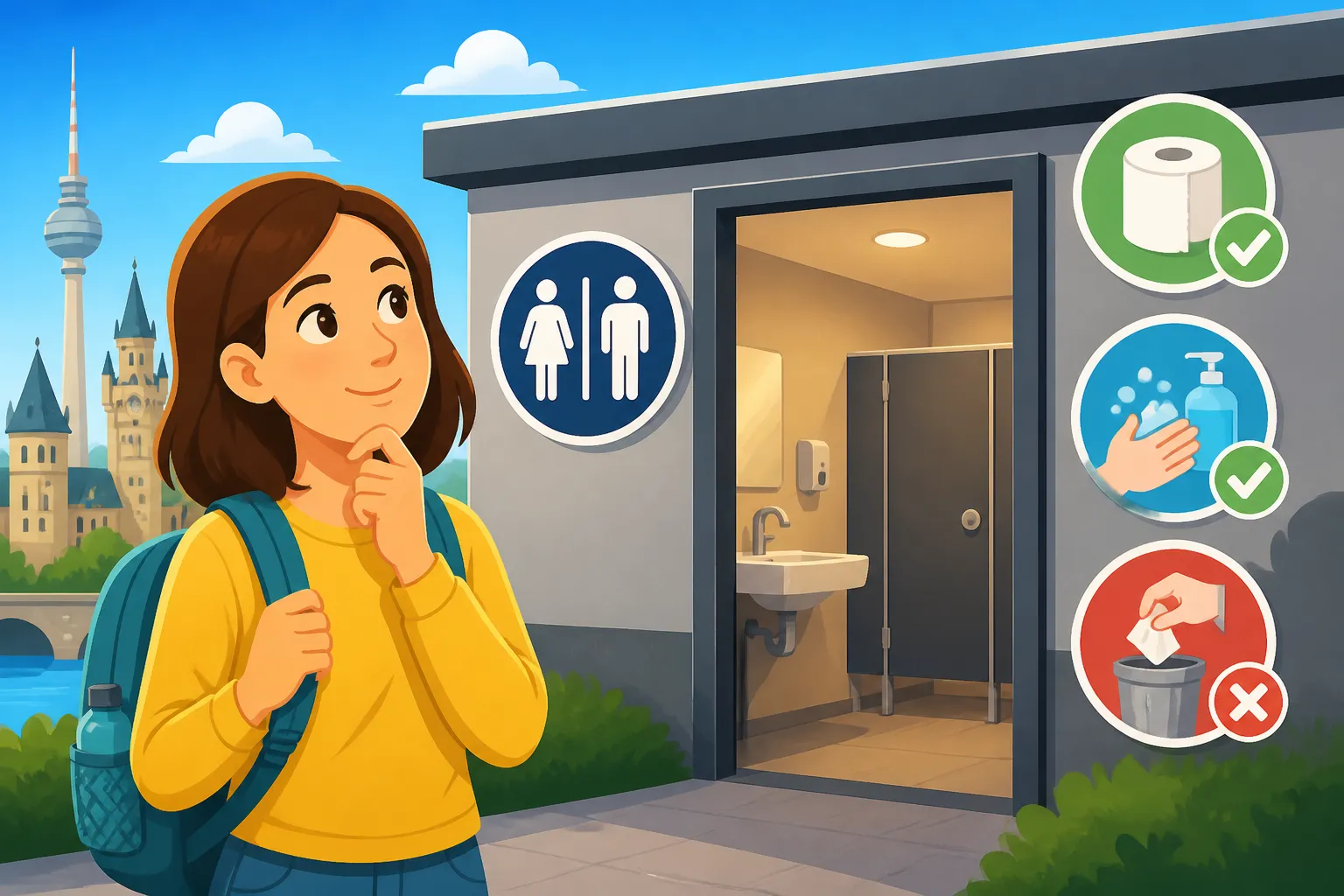
When you're frantically searching for a loo, knowing the right words can save you precious moments. In Germany, the standard signs you'll see are Damentoilette for women's restrooms and Herrentoilette for men's restrooms. Sometimes, you'll also see symbols – typically the classic stick figures for men and women. For gender-neutral or family toilets, you might see "WC," "Familien-WC," or a symbol combining male and female figures, often with a baby changing station icon.
It's also worth noting that disabled access toilets are usually clearly marked with the international wheelchair symbol and are often larger and more accessible. These may also be free of charge, or operate on a different payment system (e.g., a special key, though less common for public ones). If you’re traveling with family, especially small children, keep an eye out for "Familien-WC" or "Wickelraum" (changing room), which often includes a toilet and is usually designed to be more spacious and accommodating.
Where to Find Public Toilets and How to Spot Them
Now that you know the why and the basic lingo, let's get down to the where. Finding a public toilet in Germany usually requires a bit of strategic thinking and, often, a few coins. It's not always as simple as spotting a dedicated public restroom sign on every street corner like in some other major European cities.
Train Stations and Bus Hubs
Your best bet for reliably finding a public toilet, especially when you're on the go, are train stations (Bahnhöfe) and major bus terminals (Busbahnhöfe). These are usually equipped with well-maintained, paid facilities. Major train stations, like Berlin Hauptbahnhof, Munich Hauptbahnhof, or Frankfurt Hauptbahnhof, often have several sets of restrooms. You'll usually find them clearly signposted, often near platforms or in the main concourse areas.
Look for signs saying "WC," "Toiletten," or "Sanifair." Sanifair is a common private operator in German train stations and highway rest stops. Their system is simple: you pay your fee (often €1.00), and you get a €0.50 voucher back, which you can then use towards purchases at most of the shops or cafés within the same Sanifair facility or associated partners. This is a neat little bonus if you were planning to grab a coffee or a snack anyway! If you’re traveling by train, perhaps having booked your tickets through Omio, these stations become your essential comfort stops. Remember that smaller regional train stations might have fewer options or even none at all, so plan accordingly, especially on longer journeys.
Shopping Malls and Department Stores
Shopping malls (Einkaufszentren) and large department stores (Kaufhäuser or Warenhäuser) are another excellent option, particularly in city centers. Stores like Galeria Karstadt Kaufhof or specific shopping centers will almost always have restrooms available for customers. These facilities are generally clean and well-maintained.
The payment system varies here. Some will have a fee, similar to train stations, while others might be free, especially in higher-end department stores that see it as a service to their clientele. Don't be shy about popping into a large store just to use their facilities; it's a common practice. If you find yourself enjoying a shopping spree or just browsing, it's good to know these options are available. Keep an eye out for "Kunden-WC" (customer toilet) signs.
Restaurants and Cafes
This is where it gets a little trickier and requires a dash of German etiquette. While many restaurants (Restaurants) and cafés (Cafés) will have restrooms, they are primarily intended for paying customers. It's generally considered impolite, or even a faux pas, to simply walk in, use the toilet, and walk out without buying anything.
If you're truly desperate, the polite thing to do is at least buy a small coffee (Kaffee) or a drink (Getränk). This legitimizes your presence and grants you access to their facilities without guilt. In some smaller establishments, you might even find the restroom door locked, requiring you to ask a staff member for the key, which reinforces the "customer only" policy. So, if you're exploring a city and feeling the call of nature, perhaps make it a planned Kaffee und Kuchen (coffee and cake) break to combine necessity with pleasure! This is also true if you're on a GetYourGuide tour and find yourself near a café; plan a quick stop.
Dedicated Public Toilets (Öffentliche Toiletten)
While not as prevalent as in some other countries, many German cities do have dedicated public toilets, often located in parks, market squares, or pedestrian zones. These are usually marked with a prominent "WC" or "Öffentliche Toilette" sign. Their condition can vary significantly – some are modern, self-cleaning units, while others might be older and less frequently maintained.
Many cities, like Berlin, have specific companies that manage these (e.g., Wall GmbH), and they often charge a standard fee. Some might even have innovative payment systems, like contactless options, though carrying coins is always the safest bet. There are also digital solutions; some apps can show you the nearest available public toilets, but more on that in a bit!
Navigating the System: Payment, Cleanliness, and Etiquette
Okay, you've found a toilet. Now what? Understanding the nuances of payment, how Germans expect you to leave a space, and a few key phrases will make the experience much smoother.
How to Pay: Coins, Apps, and Staff
Most public toilets, especially those at train stations, will require coins. Always carry a stash of €0.50 and €1.00 coins when you're out and about in Germany. Some modern facilities, particularly in bigger cities or newer shopping centers, might accept contactless payments or even have QR codes for app-based payment. However, these are still the exception rather than the rule.
If there's an attendant (Klofrau or Klomann) present, you'll pay them directly. They usually have a small plate or basket for the money. In this case, there's no machine to worry about, and you often receive that handy €0.50 voucher for Sanifair. If it's an automated system, simply insert the required coins into the slot. The door will then unlock. Don't forget to grab your change or voucher if it's dispensed!
Maintaining Cleanliness: The Unspoken Rule
This is a big one in Germany. Germans take cleanliness seriously, especially in public spaces. The expectation is that you leave the toilet as clean as you found it, if not cleaner. This means:
- Aiming carefully: It sounds obvious, but splashes are a no-go.
- Wiping up any mess: If you accidentally make a mess, take a moment to clean it. Most stalls have toilet paper readily available.
- Flushing thoroughly: Make sure everything goes down the drain.
- Disposing of waste properly: Sanitary products should always go into the provided bins, not the toilet.
- Washing your hands: This isn't just good hygiene; it's a social expectation. Soap and hand-drying facilities (paper towels or dryers) are almost always provided.
If you ignore these unwritten rules, you risk the stern disapproval of anyone else using the facilities, and you might even hear a polite but firm bitte sauber verlassen (please leave it clean) from an attendant if one is nearby. It’s all part of the local etiquette.
Basic German Toilet Vocabulary and Signs
A few key phrases and terms can really help:
- Wo ist die Toilette? (Where is the toilet?)
- Ich muss auf die Toilette. (I need to go to the toilet.) – A slightly more direct way of saying it.
- WC: Pronounced "veh-seh," this is universally understood as "water closet" or toilet.
- Herren / Damen: Often just these words are used to designate men's and women's.
- Besetzt: Occupied.
- Frei: Free/Vacant.
- Drücken: Push (on a door or flush button).
- Ziehen: Pull (on a door).
- Einwurf: Coin slot (for payment).
- Voucher: Don't forget to grab your Sanifair voucher!
Being able to read these basic signs will reduce stress significantly. For a deeper dive into common German phrases for travelers, you might want to check out our guide on German Language and Everyday Communication for Visitors.
| Location Type | Typical Cost | Cleanliness Expectation | Payment Method (Common) | Notes |
|---|---|---|---|---|
| Train/Bus Stations | €0.50 – €1.00 | Very High | Coins, Attendant | Often Sanifair (get voucher back). Reliable and clean. Essential for travelers using Deutsche Bahn or FlixBus services. |
| Shopping Malls/Dept. Stores | Free – €0.50 | High | Coins, sometimes Free | Good alternative in city centers. Some higher-end stores offer free facilities as a courtesy. Check for "Kunden-WC." |
| Restaurants/Cafés | (Implied via Purchase) | High | N/A | Primarily for customers. Best to buy a drink or snack. Don't just walk in without intent to purchase; it’s considered rude. Great for a planned comfort break during your German Meal Times and Restaurant Basics for Visitors. |
| Dedicated Public Toilets | €0.50 – €1.00 | Variable | Coins, Contactless (rare) | Can be modern self-cleaning units or older facilities. Condition varies greatly by location. Often found in parks, market squares. |
| Fast Food Chains | Free – €0.50 | Moderate | Coins, sometimes Free | Often have public access, sometimes requiring a code printed on a receipt. A quick purchase might be required for the code. |
Alternatives and Tips for a Smooth Trip
Sometimes, despite your best planning, you find yourself in a bind. Or, you simply want to minimize the constant search for coins. Here are some seasoned expat tips for managing your toilet needs in Germany.
The "Emergency Stop" Strategy
Let's be realistic: sometimes you just have to go, and there's no train station or mall in sight. In smaller towns, or areas less frequented by tourists, finding a public toilet can be a challenge. In these situations, the "emergency stop" strategy comes into play. This usually involves:
- Fast Food Chains: McDonald's, Burger King, and similar establishments often have restrooms. Sometimes they are free, other times they require a small fee or a code printed on a recent receipt (meaning you might need to buy something small, like a drink, to get the code). This is a pretty reliable option.
- Gas Stations (Tankstellen): Especially those along highways or main roads, gas stations almost always have restrooms. Again, these are often operated by Sanifair or a similar system, requiring a payment but providing a voucher. If you're driving, they're a lifesaver.
- Local Government Buildings/Libraries: In some towns, town halls (Rathaus) or public libraries (Bibliotheken) might have free public toilets during opening hours. These are usually clean and safe, but access might be less intuitive.
Planning Ahead with Apps and Resources
In the digital age, there's an app for everything, and finding toilets is no exception. Several apps can help you locate public restrooms in Germany:
- Google Maps: Often, searching for "WC," "Toiletten," or "public restroom" on Google Maps will show nearby options, sometimes with reviews on cleanliness and whether they are paid or free.
- City-Specific Apps: Larger cities like Berlin or Munich might have their own public transport apps or tourism apps that include a toilet finder function.
- Third-Party Toilet Finder Apps: Apps like "WC-Finder" or "Flush" are designed specifically for this purpose and have databases of public and semi-public toilets, including details on cost and accessibility. Make sure you have good Mobile Data and eSIMs for Travel in Germany to use these on the go!
Before you head out for a day of sightseeing, especially if you're hitting major attractions, it's worth a quick check on one of these apps to scout out potential comfort breaks. If you've planned your trip with Booking.com for your accommodations, you'll always have a reliable facility waiting at your hotel, but these apps are for when you’re out exploring.
Hygiene Essentials to Carry
Even with the high standards of German toilets, it's always a good idea to be prepared. A small personal hygiene kit can be a real game-changer:
- Hand Sanitizer: While soap is almost always available, hand sanitizer provides an extra layer of reassurance, especially if you're in a hurry.
- Small Pack of Tissues/Wet Wipes: Although toilet paper is usually present, having your own stash for emergencies (or for sticky hands after a pretzel) is smart.
- Small Coins: We've hammered this home, but it's crucial. Keep a separate pouch of €0.50 and €1.00 coins specifically for toilet fees. This saves you from fumbling for change at the last minute.
Carrying these few items will not only help you manage unexpected situations but also contribute to your overall comfort and peace of mind during your travels. Germany is an incredible country to explore, and a little preparation around this fundamental need will ensure you can fully enjoy its beauty and culture without any awkward interruptions.
Disclaimer
Please remember that while this guide provides general advice and information based on common experiences in Germany, regulations, costs, and availability of public toilets can change. Always check local signs and be prepared for minor variations. This information is for guidance purposes only and should not be considered legal or professional advice.