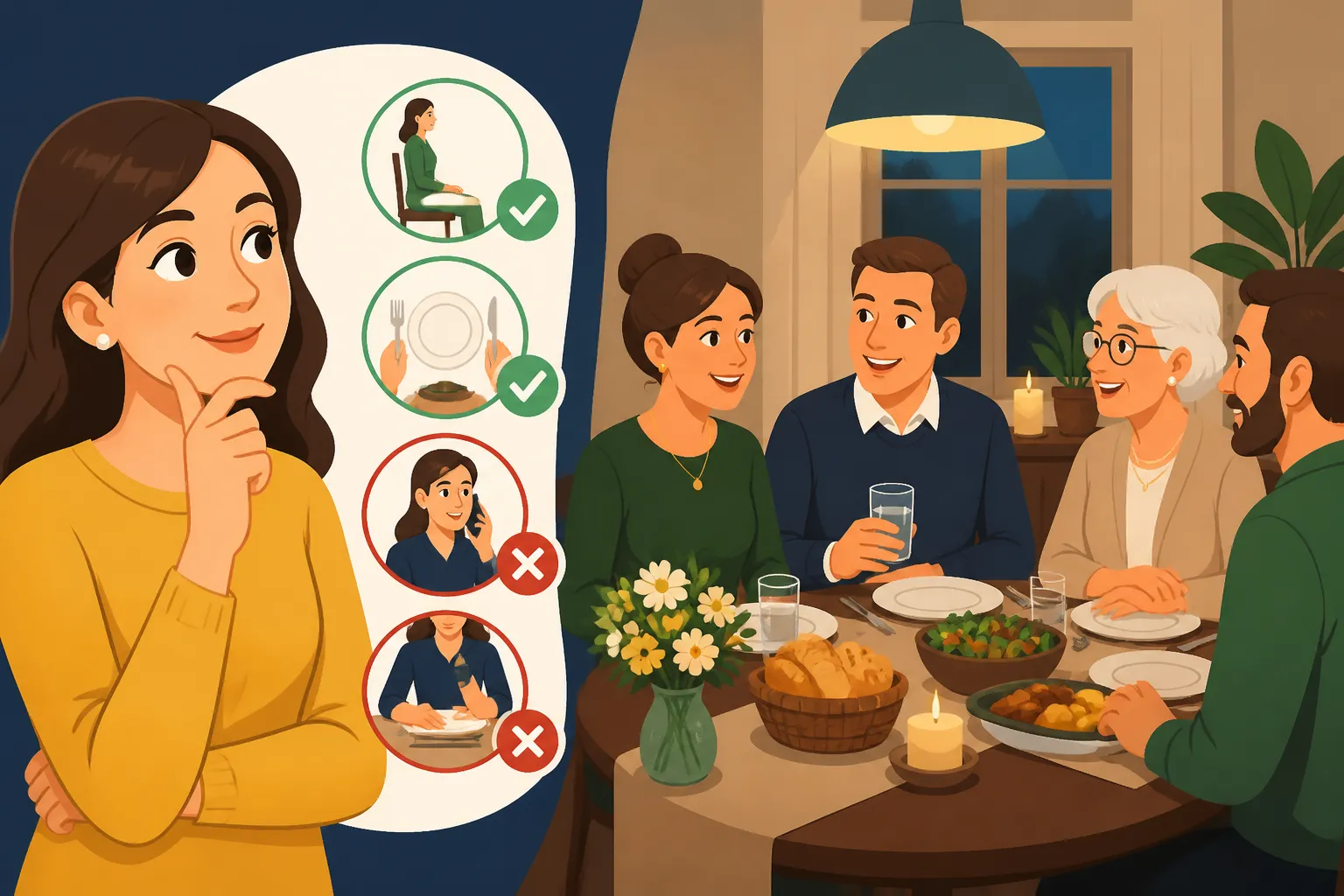
How to Behave at a German Dinner Invitation
Getting invited to a German home for dinner is a significant milestone in any expat’s journey, signaling that you have moved beyond the "acquaintance" phase. However, for many newcomers, this invitation triggers a wave of anxiety: What time should I actually arrive? Is a bottle of wine enough? Why is everyone staring into my eyes during a toast? This guide solves the mystery of German social etiquette, providing a step-by-step roadmap to navigating a dinner invitation with grace and confidence.
Disclosure: This post may contain affiliate links. We may earn a commission at no extra cost to you if you make a purchase through these links. Read full disclosure.
Preparation and Arrival: The Golden Rules of Punctuality and Gifts
The evening begins long before you ring the doorbell. In many cultures, showing up thirty minutes late is considered polite to give the host extra time. In Germany, this is a social catastrophe. If you are invited for 19:00, the expectation is that you are standing at the door between 18:58 and 19:05. Arriving at 19:15 without a phone call or text message is often perceived as a sign of disrespect toward the host’s effort and the carefully timed preparation of the meal.
Punctuality is a Form of Respect
When a German host says dinner is at seven, they usually mean the food will be ready to serve shortly after your arrival. Unlike a casual "open house" in the US or UK, a dinner invitation is a structured event. If you are traveling from another city or a distant neighborhood, use tools like Omio to check train schedules and ensure you have a buffer for the inevitable Deutsche Bahn delays. If you do find yourself running ten minutes late due to traffic or transit issues, send a quick message as soon as possible. It is always better to over-communicate than to let the host wonder if you are coming at all. This cultural emphasis on time is not about being rigid; it is about valuing the labor the host has put into the evening.
The Art of the Guest Gift
Walking into a home empty-handed is a major faux pas. However, the gift should be thoughtful rather than extravagant. A bottle of mid-range wine, a high-quality box of chocolates from a local Konditorei, or a bouquet of flowers are the standard "entry tickets." If you choose flowers, there is a specific bit of German Etiquette and Social Life for Visitors to keep in mind: always unwrap the flowers from their paper before handing them to the host. The paper is seen as protection for transport, not part of the presentation. Furthermore, avoid bringing red roses (reserved for romantic intentions) or lilies and chrysanthemums (often associated with funerals).
The Doorstep Ritual and the Slipper Culture
As you cross the threshold, be prepared for the "shoe question." Most German households are "no-shoe" zones to keep the floors clean, especially during the rainy or snowy months. Don't be surprised if your host offers you a pair of Gästeschlappen (guest slippers). These are often oversized, felt-bottomed slippers designed to keep your feet warm. It might feel a bit silly to wear giant felt clogs with your dinner outfit, but embracing this ritual shows you respect the home. If you are particularly self-conscious about your socks, it is a veteran expat move to bring a clean pair of indoor shoes or stylish "house shoes" in your bag.
| Category | Recommended | Avoid |
|---|---|---|
| Arrival Time | Exactly on time or 2-5 mins late | 15+ minutes late without notice |
| Flowers | Odd numbers, unwrapped, mixed colors | Red roses (romance), Lilies (funerals) |
| Footwear | Stocking feet or provided slippers | Walking through the house in outdoor boots |
| Alcohol | A decent Riesling or a regional red | Cheap, mass-produced supermarket spirits |
Navigating the Table: Etiquette from "Guten Appetit" to "Prost"
Once you are seated at the table, the atmosphere may feel slightly more formal than what you are used to back home. There is a specific flow to a German meal, and following the lead of your host is the safest bet. Before anyone takes a bite, it is customary to wait until the host says "Guten Appetit" (Enjoy your meal). Everyone will respond in kind, and then—and only then—does the eating commence.
The Toasting Ritual and the Eye Contact Rule
Before the first course is even touched, there is almost always a toast. Whether it is wine or a local beer, you must wait for the host to raise their glass. When you clink glasses, there is one rule that is more important than all others: you must make direct eye contact with the person you are clinking with. Germans take this very seriously. Failing to look someone in the eye during a toast is considered rude and, according to local superstition, brings seven years of bad luck in the bedroom. To get a deeper sense of what you might be drinking, you might want to read about Beer, Wine, and German Drinking Culture before your big night out.
Table Manners and the "Hands on Table" Rule
One of the most common cultural shocks for North Americans is the placement of hands. While many are taught to keep their hands in their lap when not eating, German etiquette dictates that your hands (but not your elbows!) should remain visible on the table at all times. This is an old tradition rooted in the idea of showing you have no hidden weapons, but today it is simply the standard for Dining Etiquette in Germany for Visitors. Additionally, Germans use the "continental style" of cutlery: the fork stays in the left hand and the knife in the right throughout the entire meal. Switching the fork to the right hand to eat after cutting is a tell-tale sign of a foreigner.
Conversation Style: Directness over Small Talk
Be prepared for the conversation to get "real" quite quickly. Germans generally find superficial small talk about the weather or "what do you do for a living" to be a bit boring. They would much rather discuss politics, travel, or a recent documentary. Don't mistake their directness for rudeness. If a host asks you a question, they genuinely want an honest answer, not a "polite" one. If you want to brush up on your conversational skills, looking into German Language and Everyday Communication for Visitors can provide some useful "icebreaker" phrases that go beyond the basics.
Cultural Nuances and the Post-Dinner Protocol
As the evening winds down, you’ll encounter a few more administrative and social hurdles. One of the most complex is the transition from the formal "Sie" to the informal "Du." If you have been speaking German with your hosts, do not assume you can use "Du" just because you’ve had a few glasses of wine. It is always the prerogative of the older person or the person of higher social standing (in this case, the host) to offer the "Du." Until they say, "Wir können uns duzen" (We can use 'Du'), stick to the formal address.
The "Sie" vs. "Du" Dilemma
Even if the conversation is flowing and everyone is laughing, the formal barrier remains until it is explicitly broken. This can feel stiff to those from more casual cultures, but it actually provides a comfortable level of clarity in social interactions. If the host is significantly younger than you or if you are all roughly the same age, the "Du" might be offered almost immediately. If you're unsure, just observe how they address you. For more context on these social layers, check out our guide on German Culture & Etiquette: A Guide to Social Life and Customs.
Leaving Gracefully and the Follow-Up
Knowing when to leave is an art form. In Germany, dinner parties don't usually drag on until 3:00 AM unless it’s a specific celebration like a birthday. A good rule of thumb is to start looking for your coat about an hour after the final course (or coffee and cake) has been finished. If you notice the host starting to clear the table or offering a "last drink," that is your cue. If you’ve traveled from afar and are staying in a hotel nearby—perhaps one you found via Booking.com—you might mention that you have a bit of a walk or a tram ride ahead of you to signal your departure.
The Thank You Note
The final step is the follow-up. While a formal handwritten thank-you note isn't strictly required for a casual dinner, a thoughtful text message or email the following morning is highly appreciated. Mention a specific dish you enjoyed or a part of the conversation that stayed with you. This cements the relationship and increases the chances of a return invitation. If you enjoyed the food and want to learn more about the regional specialties you were served, you might enjoy exploring German Food Culture: Eating and Drinking as a Visitor to understand the history behind the dishes.
Handling Common Social Hiccups
Even with the best intentions, mistakes happen. Maybe you accidentally used the wrong fork, or you forgot the "eye contact" rule during the third round of drinks. Don't panic. Germans are well aware that their social rules can be intricate for outsiders. Most hosts will be charmed by your effort to follow their customs, even if you don't get them 100% right.
If you find yourself in a situation where the conversation turns to a topic you're uncomfortable with, or if you're served a dish you really don't like, the best policy is polite honesty. A simple, "It's not quite to my taste, but I'm glad I tried it," is far better than pushing food around your plate for an hour. To prepare yourself for any other cultural surprises, you might want to browse through Common Cultural Surprises for First-Time Visitors to Germany.
Finally, if you want to really impress your hosts, show some interest in their local area. Asking for recommendations on Germany's Most Beautiful Small Towns to Visit or sharing your experiences from a recent trip to one of Germany's Great Cities: Berlin, Munich, Hamburg, and Beyond shows that you are actively engaging with their culture. If you're looking for more ways to explore the country, checking out tours on GetYourGuide can give you plenty of stories to share at your next dinner party.
Disclaimer
This guide is intended for informational purposes and reflects general cultural trends and personal experiences within Germany. Social norms can vary significantly by region (e.g., Bavaria vs. Hamburg), age group, and individual household. Always observe your specific hosts and follow their lead when in doubt. This article does not constitute legal or professional advice.