Europe Regional eSIM Plans: Worth It for a Multi-Country Trip From Germany
Oh, the joys and headaches of traveling through Europe! One minute you're sipping coffee in a Berlin café, the next you're planning your route to a quaint village in France, and suddenly, the looming question of how to stay connected pops up. For us expats in Germany, navigating multi-country trips can be a bit of a dance, especially when it comes to avoiding those dreaded roaming charges or the hassle of buying a new local SIM in every country. This comprehensive guide is here to shed light on a real game-changer: Europe Regional eSIM plans, focusing on why they're not just a convenience, but often the smartest financial choice for your next grand European adventure, especially with a fantastic option like Airalo leading the pack.
Disclosure: This post may contain affiliate links. We may earn a commission at no extra cost to you if you make a purchase through these links. Read full disclosure.
What are eSIMs and Why They're a Game-Changer for Travelers?
Remember those tiny little physical SIM cards? The anxiety of losing them, the fumbling with a paperclip in a tiny airport kiosk? We've all been there, especially those of us who arrived in Germany needing a local number ASAP for our Getting Your Tax ID (Steuer-ID) and Tax Class (Steuerklasse) in Germany application or simply to register our address. Luckily, those days are fading into the past, thanks to eSIMs.
Goodbye Physical SIMs: The Digital Revolution
An eSIM, or embedded SIM, is essentially a digital SIM card that's built right into your phone. Instead of swapping out physical plastic, you simply download a profile to your device. This isn't just a techy gimmick; it's a profound shift in how we manage mobile connectivity. It means no more hunting for local phone shops, no more wondering if your new SIM will actually fit, and definitely no more juggling multiple tiny cards in your wallet. It's truly a breath of fresh air, particularly when you're just trying to enjoy your hard-earned vacation time away from the usual German bureaucracy.
Imagine landing in Rome after a flight from Frankfurt, and before you even collect your luggage, your phone is already connected to a local network, ready for your Uber, Google Maps, or to share that first "I've arrived!" photo. That's the power of eSIMs. They cut out so many layers of travel stress, making your arrival in a new country genuinely smoother. The digital revolution here isn't just for convenience; it's about reclaiming your precious travel time and mental bandwidth.
Instant Activation & Seamless Switching
One of the biggest perks of an eSIM, especially a regional one for Europe, is the sheer speed and ease of activation. You purchase a plan online, often through an app, and within minutes, you're guided through a simple setup process. There's no waiting for delivery, no queuing at a store, and no trying to explain your data needs in a foreign language. It's often as simple as scanning a QR code or following a few prompts in your phone settings. It's truly a marvel compared to the old ways of getting connected abroad.
What's even better is that most modern smartphones allow you to store multiple eSIM profiles. This means you can keep your primary German number active for calls and texts (hello, WhatsApp!), while using a dedicated eSIM for data when you're traveling. When you cross borders from, say, Austria into Switzerland, your regional eSIM automatically connects to a partner network in the new country, without you lifting a finger. This is pure magic compared to the old days when you'd constantly be checking for network availability or cursing the sudden loss of data.
Device Compatibility: Checking If Your Phone is Ready
While eSIMs are becoming the norm and are widely supported by newer devices, it's a critical step to ensure your phone is actually compatible. Generally, most newer smartphones released in the last few years – think iPhone XS/XR and later, Samsung Galaxy S20 and later, Google Pixel 3 and later – support eSIM technology. However, there are regional variations and some older models, even recent ones, might not. So, it's always, always a good idea to double-check your specific phone model before you buy any plan.
A quick online search for "eSIM compatibility [your phone model]" should give you the answer. You can also often find this information in your phone's settings under "Mobile Data" or "SIM Card Manager" depending on your device's operating system. Don't make the mistake of buying a plan only to find your phone isn't up to snuff – that's a German-level efficiency faux pas we want to avoid! This quick check will save you immense frustration down the line, ensuring a smooth transition to a hassle-free travel experience.
The Allure of Europe Regional eSIM Plans: Convenience vs. Cost
Traveling across Europe often means hopping between countries like Switzerland, France, Belgium, and back to Germany, sometimes all within a week! Each border used to represent a potential connectivity nightmare – either expensive roaming or the tedious task of getting a local SIM. Regional eSIMs, like the excellent options from Airalo, solve this problem beautifully, offering a fantastic balance of convenience and cost-effectiveness.
Beyond Border Hassles: Staying Connected Across Countries
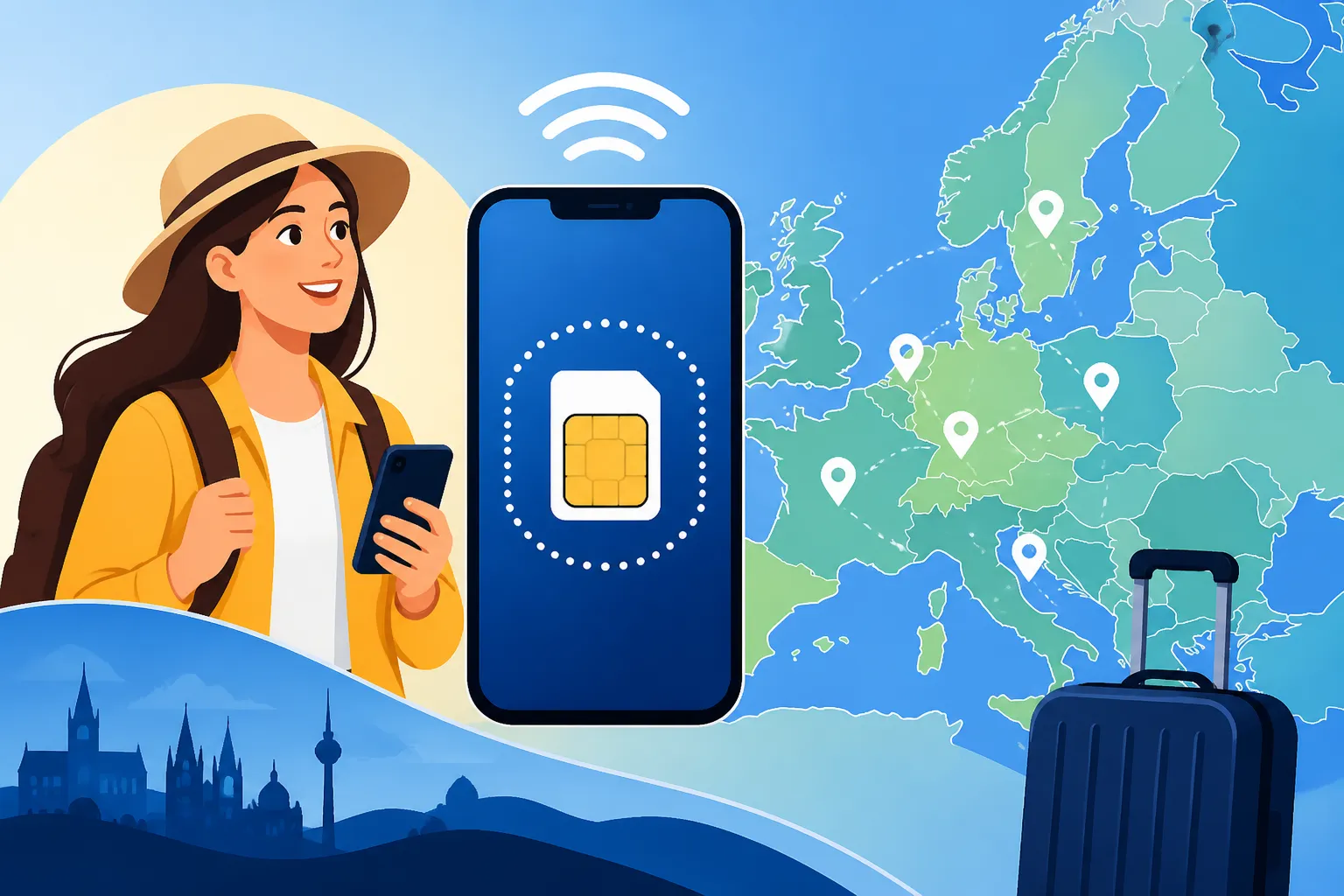
Imagine having a data plan that covers Germany, France, Italy, Spain, and a dozen other countries, all under one umbrella. That's what a Europe Regional eSIM delivers. You activate it once, and it just works wherever you go within its coverage area. No more fumbling with settings, no more worrying about which country you're in, no more shocking messages about data overages when you cross a border. It's designed for the true European wanderer, giving you the freedom to explore without interruption.
This unified approach to data is a huge relief for anyone planning a multi-stop European itinerary. For instance, if you're taking a scenic train journey across several countries, you won't experience any service interruptions or need to juggle different providers. Your phone just stays connected, allowing you to use Using Translation Apps in Germany: What Works Best or Google Maps without a second thought. It truly transforms the cross-border travel experience from a logistical challenge into a seamless adventure.
Data Packages and Validity Periods: What to Look For
Just like traditional SIMs, regional eSIMs come in a range of data packages and validity periods. You'll find everything from a small 1GB plan for a quick weekend getaway from Munich to Vienna, to a generous 20GB or 30GB plan for an extended month-long exploration of the continent. The validity can range from 7 days to 30 days or even longer, depending on your needs. This flexibility means you can tailor your connectivity to your exact trip, rather than being forced into a one-size-fits-all solution.
The trick here is to be realistic about your data consumption. Are you a heavy streamer and constant map-checker, or do you mostly rely on Wi-Fi and just need data for emergencies and quick look-ups? Overestimating might lead to paying for data you don't use, while underestimating leaves you scrambling for Wi-Fi or buying a top-up. Many providers, like Airalo, offer flexible top-up options, which is a lifesaver if you find yourself running low mid-trip. This flexibility is what makes them so much more user-friendly than trying to get a new local SIM in some tiny town where your German language skills might not quite cut it.
Potential Cost Savings Compared to Roaming
Let's be honest, traditional international roaming with your German provider, while convenient, can be astronomically expensive if you're not careful. Those surprise bills after a fantastic trip can really sour the memories. While EU roaming within the bloc is generally "free" (meaning you use your home plan at domestic rates), once you venture outside the EU/EEA – think Switzerland, the UK, or even some Balkan countries – those charges can hit you hard and fast. I’ve known expats who’ve had significant bill shock just from a weekend trip to a non-EU country!
Regional eSIM plans are specifically designed to offer competitive rates for international data. Because they're pre-paid, you know exactly what you're spending upfront, eliminating any nasty surprises. For anyone who has ever stared at a phone bill thinking, "How did that happen?!" after a trip, the transparency of an eSIM is a huge relief. Providers like Airalo leverage partnerships with local networks to offer these rates, making them a much more budget-friendly option than relying on your home network's roaming bundles, especially for those trickier non-EU European destinations. This makes budgeting for your Cost of Living in Germany: Budgeting Guide for Expats much easier, as you have one less variable expense to worry about.
Deep Dive into Airalo's Europe Regional Offerings
As someone who's spent years navigating the digital landscape here in Germany and across Europe, I've seen a lot of services come and go. When it comes to eSIMs, Airalo has consistently impressed me. They've essentially pioneered the global eSIM marketplace, making it incredibly easy to find and activate data plans for almost anywhere in the world, including, crucially, comprehensive regional plans for Europe. Airalo truly shines as the hero solution for hassle-free connectivity on your European escapades.
Why Airalo Stands Out for European Travel
What truly sets Airalo apart is its commitment to simplifying international connectivity. Instead of hunting for individual country eSIMs, their "Eurolink" plans, for example, cover dozens of European nations with a single purchase. This means whether you're starting your journey from Hamburg, crossing into Denmark, then flying to Spain, your data is seamlessly covered. They've built a robust network of local partnerships that ensure you're always getting strong, reliable service, which is essential for navigation, communication, and sharing your travel highlights. It removes a significant layer of logistical stress for the multi-country explorer.
Their user interface is intuitive, their app is reliable, and their customer support (which, let's face it, is a huge deal when you're stressed and abroad!) is generally responsive. I've personally found their system to be incredibly user-friendly, even when dealing with unexpected hiccups. The peace of mind that comes with knowing you have reliable data from a single provider across multiple countries is invaluable, making Airalo a top recommendation for any expat venturing beyond German borders.
Navigating Airalo's Plan Options for Europe
Airalo offers a variety of Europe-wide plans tailored to different travel needs. These usually fall under names like "Eurolink" or "Europe 39 Countries," covering a vast geographical area. The plans differ primarily in data allowance (e.g., 1GB, 3GB, 5GB, 10GB, 20GB, 50GB) and validity period (e.g., 7 days, 15 days, 30 days, 60 days, 90 days). The key is to find the sweet spot for your specific trip.
Before heading off from Germany, think about your trip duration and estimated data usage:
- For a short city break (e.g., a long weekend in Prague or Amsterdam): A 1GB or 3GB plan for 7-15 days might be perfectly sufficient if you're primarily using Wi-Fi at your accommodation.
- For a two-week road trip across several countries (e.g., through France, Italy, and Austria): A 5GB or 10GB plan for 30 days would likely offer enough buffer for navigation, social media, and communication without constant worry.
- For an extended backpacking adventure or remote work trip for a month or more: Consider their larger 20GB or even 50GB plans for longer validity, ensuring you don't run out of data at an inconvenient moment.
One of the best features is the ability to easily top up your data through the Airalo app if you find yourself needing more, which is far easier than trying to buy a new local SIM in some tiny town. This flexibility is a huge advantage, letting you start with a conservative plan and add more if needed.
Step-by-Step: Purchasing and Activating an Airalo eSIM
It's simpler than German bureaucracy, I promise! Here’s how you get connected with Airalo:
- Download the Airalo App: Get it from your app store (iOS or Android). This is your command center for all things Airalo.
- Choose Your Destination (Europe): In the app, select "Europe" as your region. You'll then see a list of available "Eurolink" or similar regional plans, detailing data, validity, and price.
- Select Your Plan: Pick the plan that best suits your travel duration and data needs.
- Purchase: Follow the prompts to pay securely within the app. Airalo accepts various payment methods, making the process smooth.
- Install the eSIM: This is where the magic happens. Airalo provides super clear, step-by-step instructions. You'll typically get an option to "Direct Install" (the easiest method), or to manually install via a QR code or by entering details.
- Direct Install: Just tap a few buttons within the app, and your phone will do the heavy lifting of installing the profile.
- QR Code: You'll need another device (a tablet, laptop, or another phone) to display the QR code, which your phone will then scan.
- Manual: This involves copying and pasting some details into your phone's settings – a bit more fiddly, but still straightforward.
- Activate and Connect: Once installed, go to your phone's "Mobile Data" settings. You'll see the new eSIM profile. Turn it on, ensure "Data Roaming" is enabled for this specific eSIM (don't worry, it's not traditional roaming fees with an eSIM!), and set it as your primary source for mobile data. You can keep your primary German SIM active for calls and SMS.
Pro Tip: I always recommend installing and activating your Airalo eSIM before you leave Germany, ideally while you're still connected to Wi-Fi. That way, any kinks can be ironed out easily, and you land in your destination already connected. This saves you so much stress, especially if you're trying to figure out how to get from the airport to your hotel with Getting Around German Cities: U-Bahn, S-Bahn, Trams, and Buses immediately! Airalo's seamless process makes it genuinely easy, cutting out the typical frustrations of getting connected abroad.
Alternative Connectivity Options and Their Downsides
Before eSIMs became widely available, travelers had a limited set of options, each with its own set of frustrations. While these methods still exist, understanding their drawbacks compared to the convenience and cost-effectiveness of a regional eSIM can highlight just how far we've come.
Local SIM Cards: The Old-School Approach
For a long time, this was the go-to solution for travelers. You land in a new country, find a mobile phone store, show your passport, pick a plan, and get a new physical SIM card. It works, certainly, but it's becoming increasingly outdated, especially for multi-country trips starting from Germany.
The pain points are numerous:
- Time-consuming: Hunting for a store, navigating language barriers (even if they speak some English, discussing data plans can be tricky!), and filling out paperwork eats into precious travel time. Imagine doing that in Italy, then France, then Spain! It's a logistical nightmare that quickly detracts from the joys of travel.
- Inconvenience: You have a new phone number for each country, making it harder for people to reach you consistently. Plus, you have to keep track of those tiny physical SIM cards, which are notoriously easy to lose.
- Coverage inconsistencies: A local SIM from one country won't necessarily offer good or cheap roaming rates in another. You're back to the border-crossing data anxiety all over again.
- Activation headaches: Sometimes, local SIMs require registration that can be complex for foreigners, like the German Anmeldung: Registering Your Address in Germany for a long-term phone contract.
International Roaming: The Bill Shock Hazard
Your German mobile provider likely offers international roaming bundles. It's certainly convenient because your phone just works when you land, but this convenience often comes at a steep price, especially outside the EU/EEA where "Roam Like Home" doesn't apply.
The hidden costs are significant. While roaming within the EU is regulated and usually lets you use your home plan data, step even one toe into Switzerland or the UK, and suddenly those megabytes become diamonds. I've heard countless horror stories from fellow expats who thought they were covered, only to return to a phone bill that looked like a small mortgage payment. Even within the EU, if you have a very limited German data plan, using it extensively abroad can lead to overage charges. This lack of control and transparency is precisely what makes it such a risky option for budget-conscious travelers. Using a service like Airalo gives you direct control and clarity over your expenses, something your German phone provider might not always offer for non-EU destinations.
Pocket Wi-Fi Devices: Another Gadget to Carry
These small, portable devices create a personal Wi-Fi hotspot, allowing you to connect multiple devices (your phone, laptop, tablet) to the internet simultaneously. You typically rent or buy them and then purchase data plans. While they offer a solution, they introduce their own set of inconveniences.
The drawbacks often outweigh the benefits:
- Extra baggage: It's yet another gadget to charge, carry, and worry about losing or breaking. When you're trying to travel light across Europe, every extra item counts.
- Battery life: The battery life can be limited, and if it dies, so does your internet connection. You'll be tied to finding power outlets, a common struggle for anyone traveling extensively.
- Cost: Rental fees, data plan costs, and potential insurance for the device can quickly add up, often making them more expensive than a dedicated eSIM, especially for solo travelers.
- Reliance on a single point: If the device malfunctions or you leave it behind somewhere, your entire group is out of internet access. With an Airalo eSIM on your phone, your connectivity is literally in your hand, decentralizing the risk.
Making the Smart Choice: When a Regional eSIM is Right for Your Trip
Deciding on the best connectivity option for your European adventure from Germany really boils down to your specific travel style, duration, and budget. While a regional eSIM like Airalo offers unparalleled convenience and value for many, it’s worth considering your unique circumstances to ensure it’s the perfect fit.
Solo Traveler vs. Family Adventures: Different Needs
For us lone adventurers, a regional eSIM like Airalo is almost always the superior choice. You're solely responsible for your own data usage, and the cost-effectiveness and sheer convenience of having data automatically connect across borders are invaluable. Whether you're navigating new cities, booking tickets, or just keeping in touch, it's streamlined and hassle-free. Plus, the ability to top up if you unexpectedly need more data provides immense peace of mind.
If you're traveling as a family or with a group, the decision can be a bit more nuanced. Each person could get their own individual Airalo eSIM, ensuring everyone has independent connectivity, which is great for safety and individual exploration. This can be more expensive upfront, but offers maximum flexibility. Alternatively, one person could get a larger data eSIM plan on their phone, and then use their phone's personal hotspot feature to share data with other devices or family members. This can be a cost-effective strategy, but it does mean that person needs to be present and have battery power for everyone else to connect. It also means you need to monitor data usage closely so one person doesn't accidentally burn through it all! For families especially, having a reliable connection is crucial for safety and coordination, making a dedicated plan for each device or a robust shared plan vital. It helps you stay connected even when you need to quickly check Emergency Numbers in Germany: Calling 112, Poison Control, and More (or the equivalent local number) in a foreign country.
Short Trips vs. Extended Journeys: Duration Matters
For quick jaunts from Germany – a weekend in Paris, a week exploring the Austrian Alps – a regional eSIM is incredibly convenient. The minimal setup time, instant connectivity, and defined data packages (like Airalo's 7-day or 15-day options) mean you hit the ground running without wasting precious travel moments. The cost is often comparable to or better than a single local SIM, without the faff of acquiring one. This is about maximizing your enjoyment and minimizing administrative tasks on a brief escape.
For longer adventures, say a month or more exploring various European countries, regional eSIMs still shine. While a local SIM might offer slightly better per-GB rates if you commit to a long-term plan in a single country, the moment you cross a border, that advantage often vanishes, and you're back to square one. With a regional eSIM from Airalo, you pay a predictable price for reliable service across the entire continent for the duration of your trip. The larger data bundles (20GB, 50GB, etc.) and longer validity periods (30-90 days) cater perfectly to long-term explorers or those on working holidays. It really takes the administrative burden off your plate so you can focus on enjoying the rich tapestry of Europe, whether you're taking Day Trips and Weekend Getaways Across Germany or going further afield.
Budget Considerations: Finding the Sweet Spot
The true cost of "cheap" connectivity often isn't just the price tag. While a local SIM might appear cheaper initially for a single country, factor in the time spent acquiring it, the potential language barriers, the risk of hidden charges, and the loss of your home number, and the true cost often outweighs the perceived savings. These hidden costs and inconveniences are exactly what we, as expats, learn to dread when dealing with unfamiliar systems.
Regional eSIMs, particularly from reputable providers like Airalo, offer excellent value through predictability. You pay a set amount for a set amount of data and coverage across many countries. There are no hidden fees, no surprise roaming charges, and no wasted time. For those of us who appreciate clarity and efficiency – a trait we've certainly learned living in Germany – this transparency is a huge selling point. It's about buying peace of mind alongside your data, ensuring that your Money for Travel in Germany: Cash, Cards, and ATMs is spent wisely and predictably.
| Feature/Option | Europe Regional eSIM (e.g., Airalo) | Local Physical SIM | International Roaming (German Provider) | Pocket Wi-Fi Device |
|---|---|---|---|---|
| Ease of Setup | Very easy (online, QR code) | Moderate (find store, paperwork) | Zero (auto-connects) | Moderate (rent/buy, activate) |
| Multi-Country | Excellent (seamless across region) | Poor (new SIM per country) | Varies (EU good, non-EU expensive) | Good (covers many countries) |
| Cost Predictability | Excellent (pre-paid, no surprises) | Moderate (can have hidden fees) | Poor (high potential for bill shock) | Moderate (rental + data fees) |
| Data Cost per GB | Good (competitive rates) | Good (best for single country) | Very poor (especially non-EU) | Moderate to Good |
| Device Required | eSIM-compatible phone | Unlocked phone | Any phone | Extra device |
| Own Phone Number | Keep primary number + eSIM data | New number per country | Keep primary number | Keep primary number (data only) |
| Convenience | High (instant, no swaps) | Low (time-consuming) | High (but risky financially) | Medium (extra gadget) |
| Best For | Multi-country trips, short to long | Single-country, long stay | Emergencies (short, small data) | Groups, multiple devices |
Practical Steps to Getting Connected with an eSIM
Alright, you've made the smart choice and decided to go with an eSIM, perhaps an Airalo Europe Regional plan! Now let's walk through the practical steps to ensure you're fully prepared and connected, turning potential tech headaches into smooth sailing. Preparation truly is key, especially when you're leaving the structured comfort of Germany for the varied landscapes of Europe.
Before You Go: Preparation is Key
- Check compatibility: Reiterate the importance of ensuring your phone supports eSIMs. Don't assume! A quick check in your phone settings or on the manufacturer's website will confirm. This simple step prevents a lot of frustration.
- Download the app: Make sure the Airalo app is on your phone and you've created an account. This app will be your command center for purchasing, installing, managing, and topping up your eSIM, making Mobile Data and eSIMs for Travel in Germany a breeze even for someone new to the tech.
- Purchase and install: Buy your chosen Europe Regional eSIM plan and install it before you leave Germany. You can install it over Wi-Fi, which is much less stressful than trying to do it at an airport in a foreign country. This way, you can test it, ensure it's showing up in your settings, and feel confident that you'll have data the moment you land. This pre-trip ritual is a game-changer for reducing travel stress.
- Understand your plan: Know how much data you have and its validity period. Set reminders if you need to, or use the Airalo app to track your usage in real-time. Knowing your limits helps prevent any unexpected data shortages and helps you manage your Cost of Living in Germany: Budgeting Guide for Expats more effectively.
During Your Trip: Managing Your eSIM Data
- Monitor usage: The Airalo app is excellent for this. It gives you a clear overview of how much data you've used and how much you have left. Regularly check it, especially if you're streaming or doing video calls. Being proactive helps you avoid running out of data unexpectedly.
- Use Wi-Fi where available: Maximize your eSIM data by connecting to free Wi-Fi in hotels, cafes, and public spaces whenever possible. This is just good practice, no matter what kind of data plan you have, and is particularly useful for larger downloads or uploads.
- Disable background refresh: Many apps consume data even when not actively in use. Go into your phone's settings and turn off "Background App Refresh" for apps that aren't critical for real-time updates. This can significantly extend your data allowance. For example, your photos don't need to upload to the cloud instantly when you're traveling.
- Top-ups: If you're running low, don't panic! You can easily purchase a top-up directly through the Airalo app, usually with various data and validity options. This often takes just a few clicks and is instant, keeping you connected without interruption.
Troubleshooting Common eSIM Issues
Even with the most streamlined tech, sometimes things go sideways. Here are common issues and how to troubleshoot them with your Airalo eSIM:
- "My eSIM isn't connecting!":
- Check data roaming: This is the most common oversight! Ensure data roaming is turned ON for your eSIM profile in your phone's settings. Remember, with an eSIM from Airalo, it's not incurring extra roaming charges, it's just telling your phone to use the eSIM's included international data allowance.
- Select network manually: Sometimes your phone might be slow to pick up the best local network. In your mobile data settings, look for "Network Selection" or "Carrier" and try to manually select one of the partner networks listed by Airalo for that country (this info is usually in the eSIM details in the app).
- Restart your phone: The classic IT fix often works wonders. A quick restart can help your phone register the new network and resolve minor glitches.
- Contact support: If all else fails, reach out to Airalo's customer support. They are generally quite responsive and can help diagnose the issue remotely. Having access to some Wi-Fi for this communication is always a good backup.
- "I'm out of data!":
- Top up: As mentioned, the simplest solution is to purchase a data top-up through the Airalo app.
- Find Wi-Fi: Head to a cafe or public hotspot to get connected temporarily while you decide on your top-up.
- "I can't make calls or send regular SMS!":
- Remember, data only: Most eSIM plans, including Airalo's regional data plans, are data-only. They don't include a local phone number for traditional calls or SMS.
- Use VoIP/messaging apps: Rely on apps like WhatsApp, Signal, Telegram, FaceTime, or Skype for calls and messages using your data connection. Most of us expats already live by WhatsApp anyway, so this is usually no big deal! You can always keep your primary German SIM active for receiving calls/SMS if you need it, as long as you're not incurring expensive roaming charges for that specific SIM.
This kind of seamless digital communication is truly a blessing, allowing you to focus on your trip, whether you're navigating Best Day Trips From Berlin or exploring the far reaches of Europe, all while staying safe and connected with your Airalo eSIM. Consider combining this with Travel Insurance for Trips to and Within Germany to ensure you're covered for every eventuality.
Important Disclaimer
Please remember that while I strive to provide the most accurate and up-to-date information based on my personal experience as an expat in Germany and available data, rules and offerings for mobile connectivity, especially for international travel, can change rapidly. Always verify the latest details directly with service providers like Airalo, and check your specific device compatibility before making any purchases. This guide is for informational purposes and should not be considered legal or professional advice. Happy travels!