Why You Still Need a German Number: Banks, Deliveries, and Verification Codes
You've just arrived in Germany, full of excitement and a little bit of trepidation, and your foreign phone number feels like a lifeline. But then the reality hits: nearly every single interaction, from trying to open a bank account to ordering food online, demands a German phone number. This isn't just a suggestion; it's a fundamental hurdle that can bring your entire settling-in process to a grinding halt. This guide will walk you through exactly why you desperately need a local number, the frustrations you'll face without one, and how to snag one with minimal hassle.
Disclosure: This post may contain affiliate links. We may earn a commission at no extra cost to you if you make a purchase through these links. Read full disclosure.
The German Obsession with Phone Numbers: Why It's Not Just for Calls
It might seem quaint in this age of instant messaging and international roaming, but Germany still operates with a surprising reliance on local phone numbers for virtually everything. Your trusty home country SIM card might work for a while for basic communication, but it will quickly become a roadblock in a myriad of situations you hadn't even considered.
Bureaucracy and Official Communication
Let's be honest, German bureaucracy is legendary, and it loves a good phone number. When you're trying to get set up here, your phone number isn't just a contact detail; it's often a key identifier.
Imagine trying to book your all-important Anmeldung (address registration) appointment at the Bürgeramt. Many city registration offices now require a local German number for confirmation texts or for them to call you back if there's an issue. If they can't reach you, your appointment could be cancelled, or you might miss crucial updates. The same goes for dealing with the Finanzamt (tax office) or even your local immigration office (Ausländerbehörde) when you're trying to sort out your residence permit. They operate on the assumption that you have a German number, and trying to explain why you don't can turn a simple inquiry into a multi-day ordeal. Your foreign number, if it even works for their system, often just won't cut it. It’s one of those silent frustrations that can creep up on you when you're least expecting it, adding stress to an already complex process of Moving to Germany: Comprehensive Visa & Immigration Guide.
Banking and Financial Services
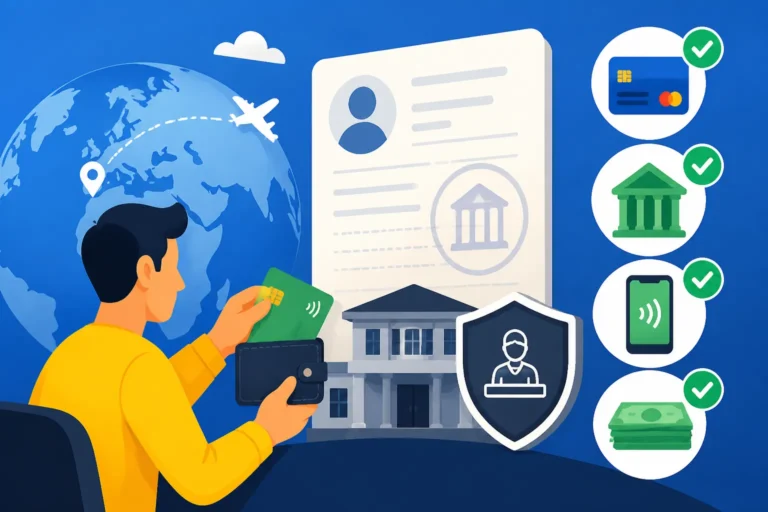
This is probably where the lack of a German phone number will hit you hardest. You simply cannot navigate the German financial landscape without one. Trying to open a bank account in Germany is nearly impossible if you only have a foreign number. Banks like Sparkasse, Commerzbank, or even challenger banks like N26 and Revolut, will require a German mobile number during the application process. It’s not just for initial setup either; think about the daily operations.
For example, when you use online banking or make a transaction, German banks heavily rely on two-factor authentication (2FA) via SMS to your registered mobile number. This is often called TAN-Verfahren (Transaction Authentication Number procedure). If your number is foreign, these SMS messages might not arrive, or they could come with significant international roaming charges. You could find yourself locked out of your own account, unable to pay bills or transfer money, simply because your phone number isn't local. It's a security measure, yes, but it’s a pain point for newcomers. For a deeper dive into this, check out our guide on Opening a Bank Account in Germany: Step-by-Step for Newcomers. Even if you're exploring options like Wise, TransferWise and Revolut: Fintech Solutions for Expats, a local number still smooths out many processes.
Everyday Conveniences: Deliveries, Shopping, and Appointments
Beyond the serious bureaucratic stuff, daily life in Germany will quickly remind you of the need for a local number.
- Deliveries: Ordering anything online – be it from Amazon.de, Lieferando for food, or even a local florist – almost always requires a German mobile number. Delivery drivers often call or text if they can't find your address, if you're not home, or to confirm a drop-off point. If they can't reach you on a local number, your package might be sent back, or your dinner could go cold. This is particularly true for logistics giants like DHL or Hermes.
- Online Shopping Accounts: Creating accounts on German e-commerce sites or even just signing up for newsletters often asks for a German number. While sometimes optional, providing it makes the whole experience much smoother, especially when it comes to order updates and delivery notifications.
- Appointments: Whether it's a doctor's appointment (even with English-speaking doctors), a hairdresser, or getting your car serviced, many businesses will want to call or text you to confirm, remind you, or notify you of changes. This includes services you might take for granted, like your electricity provider when you're doing your Utilities Setup: How to Get Electricity, Gas, and Water in Your New Home. You don't want to miss that crucial doctor's call because you're using an expensive, unreliable foreign number.
The Headache of Verification Codes (Two-Factor Authentication)
Let's dedicate a whole section to this because it's arguably the biggest daily pain point without a German number. The world has moved towards two-factor authentication (2FA) for security, and Germany is no exception. In fact, due to stringent data protection laws and a general cautious approach to online security, it's even more prevalent here.
Securing Your Digital Life (German Style)
Almost every major online service in Germany that deals with your personal data or finances will use your phone number for 2FA. This means:
- Online Banking: As mentioned, this is huge. Without receiving TANs via SMS to a reliable German number, you're essentially locked out of your money.
- Online Shopping: Many platforms, especially when you're making a significant purchase or setting up a new payment method, will send a verification code to your phone.
- Utility Providers: Managing your Internet and Mobile Phone Plans in Germany, electricity, or gas accounts online often requires 2FA for logging in or making changes.
- Government Portals: Even some official government services, if you can access them online, might use your phone number for identity verification.
The problem with a foreign SIM card isn't just the potential cost of receiving international SMS (though that can be exorbitant); it's the reliability. International SMS delivery can be flaky, delayed, or simply fail. There’s nothing quite like the panic of trying to pay your rent or access an urgent medical record, only for the verification code to never arrive.
What Happens Without a German Number? Hypothetical Horrors
Let me paint a picture for you:
- Scenario 1: The Bank Lockout. You need to pay your rent, but your German bank's app demands a TAN from your German number for every transfer. You're using your old UK number, and the SMS just isn't coming through. You try repeatedly, get locked out, and now your landlord is sending you reminders. Stress levels? Sky-high.
- Scenario 2: The Missed Delivery. You ordered that special item you needed for your new unfurnished apartment. The delivery driver calls your U.S. number, it goes straight to voicemail or costs a fortune to answer, and they just leave a note saying "recipient not available." Now you have to trek to some remote post office depot, if you even get the notification.
- Scenario 3: The Lost Appointment. You finally found an English-speaking doctor in Germany, booked an appointment weeks in advance. The day before, they try to call to confirm or inform you of a slight time change. Your foreign number doesn't work, they move on to the next patient, and you miss your crucial check-up.
These aren't exaggerated; these are real-life scenarios that expats face daily without a reliable local number. It’s a frustrating cycle of being almost set up, but not quite.
Your Options for Getting a German Number (and Why Airalo is a Game-Changer)
Okay, now that you're thoroughly convinced you need a German number (and you do!), let's talk about how to get one. There are traditional routes, and then there's the modern, expat-friendly solution that I swear by.
Traditional SIM Cards: Prepaid vs. Contract
For decades, getting a traditional physical SIM card was the only way. You still have these options:
- Prepaid SIM Cards (Prepaid-Karten):
- How it works: You buy a SIM card (usually from a supermarket, electronics store like MediaMarkt or Saturn, or directly from providers like ALDI TALK, LIDL CONNECT, or Congstar). You then top it up with credit as needed for calls, texts, and data.
- Pros: No long-term commitment, good for short stays or if you're unsure about your usage. You usually just need your passport for registration.
- Cons: The registration process can be a pain. Due to German anti-terrorism laws, all SIM cards must be registered to a valid ID. This often involves an "Ident-Verfahren" (identity verification procedure) that can be done online via video call (sometimes with German-speaking agents only) or in person at a post office. It can take time, and for a new arrival, it's just another bureaucratic hoop. Plus, you need a physical SIM slot in your phone.
- Contract SIM Cards (Vertrag):
- How it works: You sign a contract, typically for 12 or 24 months, with a provider like Telekom, Vodafone, or O2. You get a set amount of data, calls, and texts for a monthly fee.
- Pros: Often better value for money if you stay long-term, more data, and better network coverage.
- Cons: Requires a German bank account, a SCHUFA credit score (which you won't have as a newcomer), and proof of address. Getting a contract as a fresh expat is notoriously difficult. Many providers simply won't approve you. This isn't usually an option for your first German number.
The eSIM Revolution for Expats (Hello, Airalo!)
This is where technology really steps up to solve an expat problem. For those with compatible phones, an eSIM (embedded SIM) is a total game-changer, and my top recommendation, especially for immediate needs or short-term solutions, is Airalo.
What is an eSIM? An eSIM is a digital SIM card that's built into your phone. Instead of swapping physical cards, you simply download a digital profile from a provider. Many newer phones (iPhones from XS/XR onwards, most recent Android flagships) support eSIM.
Why Airalo is the Hero for Expats:
- Instant Activation: You can buy an Airalo eSIM plan online, download it, and activate it before you even land in Germany. This means you have a working data connection the moment your plane touches down. No searching for stores, no confusing registration processes.
- No Bureaucracy: Seriously, none. No passport scanning, no Ident-Verfahren, no credit checks. Just purchase, download, and connect. This alone makes Airalo invaluable for settling in.
- Flexibility: Airalo offers a variety of plans, from short-term data packages (e.g., 1 GB for 7 days) to longer-term options across different countries or even regional Europe bundles. This is perfect for those initial weeks when you're still figuring things out or if you travel frequently.
- Dual SIM Capability: If your phone supports both a physical SIM and an eSIM (or even dual eSIMs), you can keep your home country SIM active for calls/texts from friends and family while using your Airalo eSIM for local data and services in Germany. You can choose which line to use for data, calls, or texts, offering unparalleled convenience. This allows you to smoothly transition and not feel completely cut off from your old connections.
- Cost-Effective: For data, Airalo can be incredibly competitive, often cheaper than international roaming and sometimes even traditional prepaid options, especially for shorter periods.
Let's be clear, Airalo primarily focuses on data. While you often get a local German data plan, for a truly native German phone number that receives SMS for banking and official communication, you might still need a traditional prepaid SIM like ALDI TALK eventually, or a provider like Telekom or Vodafone that offers eSIM with a specific German number. However, Airalo is the perfect bridge. It gets you connected immediately, allows you to navigate the first hurdles (like using Google Maps to find your Anmeldung appointment, or booking an Uber) and gives you breathing room to sort out a more permanent German number without feeling stranded.
Key Considerations When Choosing
When you're trying to figure out which German phone plan to get, whether it's an Airalo eSIM or a physical SIM, consider these factors:
- Data Needs: How much internet do you really need? Are you a heavy streamer, or just checking emails and WhatsApp? German data plans can vary wildly.
- Call/Text Needs: Do you primarily use messaging apps, or do you anticipate making many local calls? Most modern plans include unlimited calls and texts within Germany.
- Flexibility: Are you here for a short trip, or are you moving long-term? Prepaid and eSIMs (like Airalo) offer flexibility; contracts offer stability.
- Network Coverage: While all major German networks are generally good, coverage can vary in rural areas. Telekom (D1) usually has the best reputation, followed by Vodafone (D2) and O2 (E-Netz).
- Language Support: Some providers have better English customer support than others. This can be a godsend when you're wrestling with activation or billing issues.
Making the Switch: Practical Steps for Setting Up Your German Number
Once you’ve decided on your approach, getting your German number up and running is the next step.
Choosing Your Plan
If you’re going the eSIM route with Airalo, you simply visit their website or app. Select Germany as your destination, and browse the available packages. You’ll see options like "1GB for 7 days," "5GB for 30 days," etc. Pick one that suits your initial needs. For those needing a longer-term solution or a dedicated German number for banking, a prepaid SIM like ALDI TALK, LIDL CONNECT, or Congstar will be your first step. These usually offer bundles with data, calls, and SMS. Compare their current offers online before heading to the store.
Activating Your Number
- For Airalo eSIM: After purchase, you'll receive instructions on how to install the eSIM profile on your phone. This usually involves scanning a QR code or entering some details in your phone's settings. It's surprisingly straightforward. Once installed, simply turn on the eSIM line in your phone settings, and you're good to go. You’ll be connected instantly.
- For Traditional Prepaid SIM: You buy the SIM card (often in a starter pack). Then comes the Ident-Verfahren. You'll usually have a link or instructions in the SIM package. For video identification, you'll need a good internet connection (which Airalo can provide!), your passport, and an English-speaking agent if available. For PostIdent, you take your passport and the SIM card package to a Deutsche Post office, and they verify your identity. This process can take anywhere from a few minutes to a few hours for activation, and sometimes even up to a day.
Updating Your Information
Once your German number is active, the real work begins: updating all your essential contacts and accounts.
- Banks: This is critical. Immediately contact your German bank (or update it in their online portal if possible) with your new German number to ensure you receive all security verification codes. This will alleviate immense stress when you need to use online banking. Remember to consult our guide on Best Banks in Germany for Expats: Low Fees and English Support for more information.
- Official Registrations: When you do your Anmeldung, use your new German number. If you've already registered with a foreign number, consider updating it at the Bürgeramt at your next opportunity.
- Utility Providers: Inform your electricity, gas, and internet providers of your new number. This ensures smooth communication for billing, service appointments, and account management.
- Work/Study: If you're working or studying, update your employer or university with your new contact details.
- Online Accounts: Change your phone number on any German online shopping sites, delivery services, and other digital platforms you use.
Don't underestimate the power of a working German phone number. It’s not just about making calls; it’s about unlocking essential services and making your daily life in Germany significantly smoother.
Final Thoughts: Embrace the Local Connection
Settling into a new country like Germany is a marathon, not a sprint, and every small victory helps. Getting a German phone number, even if it feels like just another piece of bureaucracy, is truly one of the most foundational steps you can take to make your life easier. Without it, you’ll constantly hit roadblocks – from frustrating banking issues to missed deliveries and communication breakdowns with vital services.
The good news is that solutions like Airalo have made this initial hurdle far less daunting. You can arrive with connectivity and ease your way into the German system, then decide on a longer-term solution when you're ready. Don't delay in sorting this out; it will save you headaches, time, and potentially a lot of money in the long run. Embrace the local connection, and enjoy the peace of mind that comes with being properly plugged into your new home.
Disclaimer
The information provided in this guide is for general informational purposes only and does not constitute legal, financial, or immigration advice. While we strive to keep the information up-to-date and accurate, laws, regulations, and service offerings in Germany can change frequently. Always consult with official government sources, a qualified professional, or the respective service providers for the most current and specific information regarding your personal situation.