eSIM for Road Trips in Germany: Autobahn Navigation and Offline Backup
Ah, the open road in Germany! The promise of cruising the Autobahn, discovering charming villages, and marveling at majestic castles. It’s a dream many of us expats and tourists share. But let's be honest, that dream can quickly turn into a bureaucratic nightmare or a frustrating game of "where's my signal?" especially when you’re relying on your phone for navigation, information, and staying connected. Losing your GPS signal mid-Autobahn exit or struggling to book a last-minute B&B because your data fizzled out is a uniquely stressful experience. This comprehensive guide will show you how an eSIM, specifically one from a reliable provider like Airalo, can be your ultimate travel companion, ensuring you stay connected and stress-free on your next German road trip.
Disclosure: This post may contain affiliate links. We may earn a commission at no extra cost to you if you make a purchase through these links. Read full disclosure.
The Unique Challenges of Road-Tripping in Germany as an Expat
You might think Germany, being such a technologically advanced nation, would have seamless connectivity everywhere. And for the most part, it does. But when you venture onto the legendary Autobahn, or even more so, into the picturesque but often remote German countryside, your perception of "always connected" can be sorely tested.
Navigating the Autobahn Maze with Confidence
The Autobahn is an experience in itself – high speeds, multiple lanes, and often complex interchanges that demand your full attention. Missing an exit at 180 km/h isn't just an inconvenience; it can be downright dangerous and can add a significant amount of time and frustration to your journey. Relying solely on physical road signs, especially when they're flying by and often in German, can be daunting, even for experienced drivers. You need real-time, turn-by-turn navigation that is consistently reliable.
Imagine this: You’re zipping along near Stuttgart, the GPS confidently guiding you, when suddenly the little blue dot freezes. Your navigation app loses signal, and you’re left scrambling to read signs as you approach a major Knoten (interchange) with five different exits. Panic sets in, you might take the wrong turn, adding an hour to your journey, or worse, finding yourself in an unexpected industrial park when you were meant to be admiring vineyards. This isn't an exaggeration; it's a common expat horror story. Reliable data isn't just a luxury here; it's a safety and sanity imperative.
The Dreaded "No Signal" Zone: Rural Roads and Scenic Detours
Germany is far more than just its major cities. The real magic often lies in the hidden gems: the quaint villages along the Romantic Road, the dense forests of the Black Forest, or the rolling hills of Bavaria. These are the places you want to explore, the detours that make a road trip unforgettable. However, these charming, off-the-beaten-path locations are precisely where mobile network coverage can become…spotty, to say the least.
You’ve just pulled off a beautiful scenic route, eager to upload a stunning photo of a medieval castle, only to find you have no bars. Or perhaps you’re looking for the opening hours of a local museum, trying to find a highly-rated local restaurant, or even just need to call your hotel to confirm your late arrival, and your phone mocks you with "No Service." It's incredibly frustrating. These dead zones aren't limited to deep valleys; even between smaller towns, you can find yourself in a mobile data desert, completely cut off from your digital lifeline. For those who need to stay connected for work or family, this can transform a relaxing getaway into a source of constant anxiety.
Why Traditional SIM Cards Just Don't Cut It for Expats on the Go
Before eSIMs came along, our options for staying connected in Germany were usually limited to either a physical local SIM card or relying on expensive international roaming. Both have their significant drawbacks, especially for the transient nature of road trips.
The Hassle of Physical SIM Cards: Finding, Buying, and Swapping
Getting a traditional physical SIM card in Germany can be a surprising amount of effort. First, you need to find a store, often a specific mobile provider's shop or a supermarket that sells prepaid cards. Then comes the registration process. German law requires all prepaid SIM cards to be registered with valid identification – often your passport or residence permit – and this process can be surprisingly cumbersome. You might need to show proof of address, and if you don't speak German fluently, explaining your needs and navigating the paperwork can be a real headache. I’ve spent what felt like an entire afternoon trying to activate a SIM, only to discover a crucial piece of paper was missing or that the assistant didn't quite grasp my accent.
Once you actually have the SIM, you have to physically swap it. This means carefully removing your home country’s SIM card, putting it somewhere safe (and inevitably forgetting where that safe place is), and inserting the new German one. If you frequently travel between countries or have a primary number you need to keep active for banking or two-factor authentication, this swapping game becomes tedious and risky. There's always that niggling fear of losing your tiny, vital home SIM. For short trips or quick transitions, this administrative burden often feels disproportionate to the benefit.
Roaming Charges and Limited Data Plans for European Travel
Ah, the infamous roaming charges. While EU regulations have largely curbed these within the European Economic Area, many expats and tourists come from outside the EU. For them, using their home network's roaming services in Germany can lead to eye-watering bills. Even if you're from an EU country, if you exceed fair usage policies or travel outside the EU frequently, those "free roaming" benefits can quickly disappear.
Let's say you're on a long road trip, maybe planning to drive through Germany, then hop into Austria, and finally enjoy the Swiss Alps. Your standard local German SIM might not offer favorable roaming rates in non-EU countries like Switzerland, and your home country's plan might not cover extensive data usage across multiple European nations. You're constantly checking your data usage, rationing your Instagram posts, and debating whether that quick map check is worth the potential cost. This constant worry about data limits and hidden charges completely detracts from the joy of exploring. You end up seeking out unreliable public Wi-Fi or avoiding data use altogether, which defeats the purpose of having a smartphone as your travel assistant.
Enter the Game Changer: eSIM Technology for Seamless Connectivity
It's clear that the old ways of getting mobile data for travel have their drawbacks. This is where eSIM technology steps in, offering a modern, flexible, and far more convenient alternative, especially for those of us navigating the winding roads and diverse landscapes of Germany.
What Exactly is an eSIM and How Does It Work?
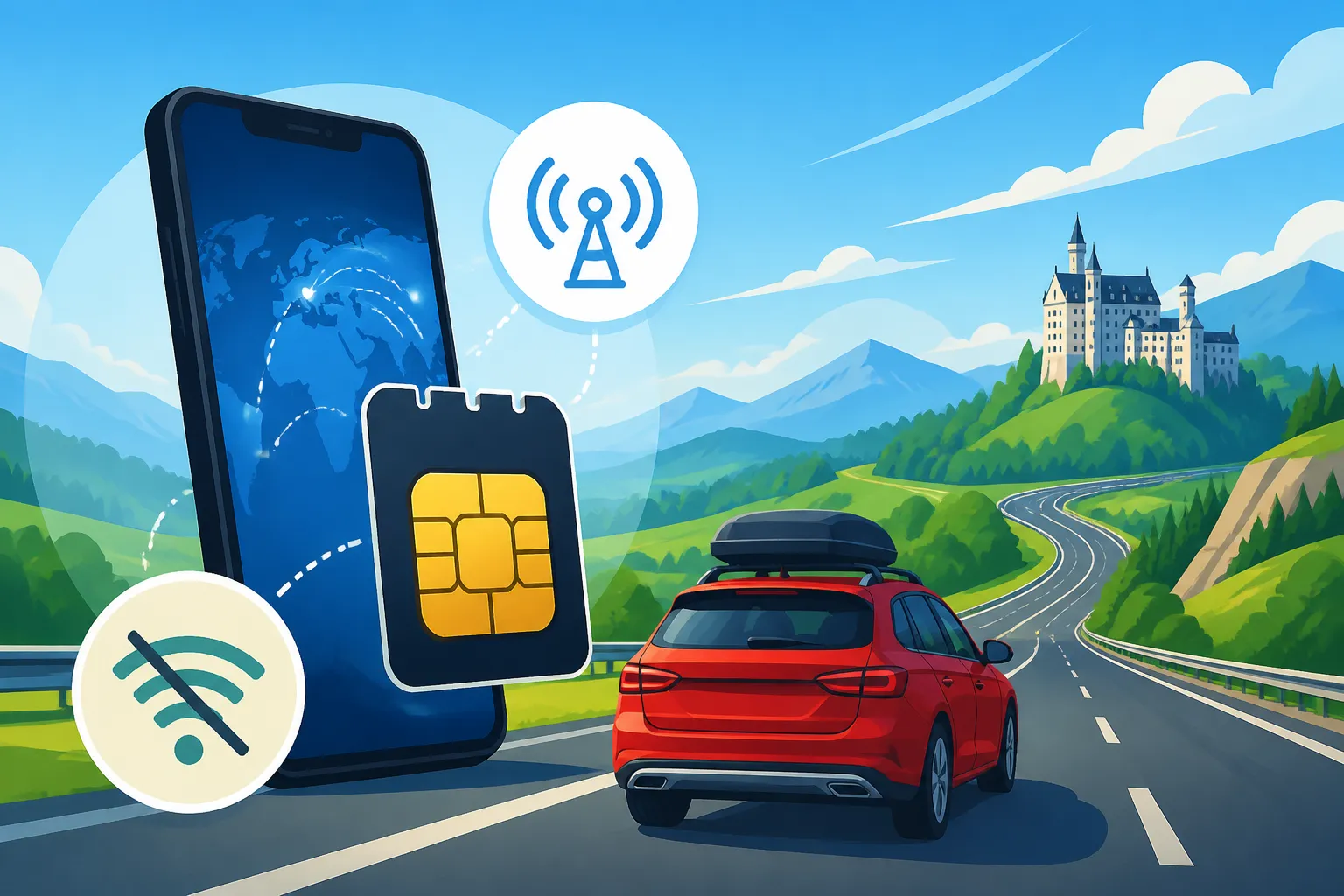
Think of an eSIM as a digital SIM card. Instead of a tiny, physical chip that you insert into your phone, the 'SIM' is embedded directly into your device's hardware. This means you don't need to swap anything. When you purchase an eSIM plan, you receive a QR code or a manual activation code. You simply scan or enter this into your phone's settings, and boom – you have a new data plan active on your device.
Most modern smartphones, tablets, and even some smartwatches are eSIM compatible. Your phone essentially becomes a multi-SIM device, capable of holding several eSIM profiles simultaneously, though usually only one can be active for data at a time (you can typically keep your physical SIM active for calls and texts while using an eSIM for data). This technology eliminates the physical hassle, the risk of losing your original SIM, and the wait times associated with traditional card purchases. It's truly a leap forward for international travelers.
The Freedom and Flexibility an eSIM Offers Travelers
The beauty of an eSIM lies in its unparalleled flexibility. Imagine this: you're planning your German road trip. A week before you even pack your bags, you can browse available data plans from the comfort of your home, pick one that suits your itinerary and data needs, and purchase it instantly. No searching for stores, no language barriers, no paperwork upon arrival. It's ready to go the moment you land or even cross the border.
Furthermore, an eSIM allows you to keep your primary physical SIM card active. This is a massive benefit for expats who need to receive calls or texts on their home number for banking, work, or family, without incurring huge roaming data charges. You can use your physical SIM for calls and texts (paying your usual rates) while your eSIM handles all your data needs, like navigation, streaming, and social media. This dual-SIM capability ensures you’re always connected on your terms, providing both convenience and peace of mind, whether you're driving through a bustling city or a quiet village in Bavaria. It's the ultimate tool for truly understanding Travel Logistics in Germany: Money, Safety, and Connectivity.
Airalo: Your Ultimate Companion for German Road Trips
When it comes to reliable and convenient eSIM providers for international travel, Airalo stands out. As an expat who’s navigated countless administrative hurdles in Germany, I can tell you that anything that simplifies life is a godsend. Airalo does precisely that for your connectivity on the road.
Airalo Germany: Data Plans Tailored for Your Adventures
Airalo offers a fantastic range of eSIM plans specifically for Germany, designed to cater to different travel styles and data appetites. Whether you're just popping over for a long weekend or embarking on an epic multi-week journey through the country, there's an Airalo package for you. For instance, you could grab a smaller plan like 1 GB for 7 days if you’re only visiting for a short stint and primarily need data for navigation and essential communication. If you're planning a longer, more extensive German road trip, perhaps a 5 GB plan for 30 days would be more suitable, giving you plenty of data for streaming music, video calls, and sharing all those breathtaking castle photos. For the truly data-hungry adventurer or a prolonged stay, there are even larger options, like 10 GB or 20 GB for extended periods.
The beauty of Airalo is the transparency. You know exactly what you’re getting, how long it lasts, and how much it costs upfront. No hidden fees, no nasty surprises when you get home. This clarity is a breath of fresh air compared to traditional roaming or the often-confusing world of local prepaid SIM top-ups. You can even top up your data directly from the Airalo app if you find yourself needing more mid-trip, without any extra hassle.
Easy Installation and Activation: Get Connected in Minutes
One of the biggest selling points of Airalo is its incredibly straightforward installation process. It's truly revolutionary compared to the old way of doing things. Here’s a simple breakdown of how easy it is to get your Airalo eSIM up and running for your German road trip:
- Download the Airalo App: Get it from your app store before you even leave home.
- Choose Your Destination: Select "Germany" from the list of countries.
- Pick Your Plan: Browse the available Germany plans and choose the one that fits your data needs and trip duration. Pay securely within the app.
- Install the eSIM: Once purchased, the app provides simple, step-by-step instructions. You'll usually scan a QR code with your phone's camera (found in your settings under "Mobile Data" or "SIM Card Manager"), or you can manually enter the details. It takes less than two minutes.
- Activate: Follow the prompts to activate your new eSIM. It’s usually just a matter of turning on the line and setting it as your data default.
That’s it! You're connected. You don't need to visit a shop, show your passport, or struggle with a foreign language. This seamless setup allows you to focus on the exciting parts of your German adventure, like planning your route along the Rhine Valley or mapping out your visit to Neuschwanstein Castle, rather than worrying about connectivity.
Reliability and Coverage: Staying Online Where It Matters Most
Reliability is paramount when you're navigating unfamiliar roads, especially on the Autobahn where precision and speed are key. Airalo leverages the networks of local German providers, meaning you get the same quality coverage that residents enjoy. This is a crucial factor, particularly when considering the patchy coverage that can plague rural areas.
With an Airalo eSIM, you can trust that your GPS will generally work without interruption, providing real-time traffic updates and ensuring you don't miss that crucial exit ramp. For those moments when you do venture off the main highways and into the picturesque but sometimes signal-challenged countryside, having a strong network backbone means you’re far more likely to retain connectivity for emergencies, communication, or simply pulling up information about a local sight. No more guessing games about which country your data plan will work in, or if it will suddenly cut out when you most need it. This dependability is what makes Airalo a true game-changer for anyone exploring Germany by car.
Practical Applications: How Your Airalo eSIM Enhances Your German Road Trip
An Airalo eSIM isn't just about having data; it's about enabling a smoother, safer, and more enjoyable German road trip experience. It turns your smartphone into a truly reliable travel assistant, eliminating common stresses.
Flawless Autobahn Navigation and Real-Time Traffic Updates
Imagine cruising on the Autobahn, the scenic route unwinding before you. With a robust data connection from your Airalo eSIM, your navigation app – be it Google Maps, Waze, or Apple Maps – works flawlessly. You'll get instant, accurate turn-by-turn directions, real-time traffic updates, and even rerouting suggestions if there's an accident or Stau (traffic jam) ahead. This isn't just a convenience; it's a safety feature. Missing an exit or suddenly losing your GPS signal at high speeds can be disorienting and dangerous.
I remember once, before I discovered eSIMs, getting stuck in an unexpected Stau near Frankfurt. My prepaid SIM ran out of data, and I couldn't get real-time rerouting information. I was stuck in traffic for an extra two hours, simply because I couldn't access alternative routes. With Airalo, you have that peace of mind. Your navigation remains responsive, keeping you informed and allowing you to make quick, informed decisions, ensuring you arrive at your destination refreshed, not frazzled. This reliability also extends to navigating complex city centers, helping you find parking garages, or locating that specific restaurant you bookmarked earlier.
Emergency Backup and Staying Connected Off-Grid
While no one wants to think about emergencies, they can happen, especially when you're far from home in an unfamiliar country. A reliable data connection is a critical safety net. What if your car breaks down on a quiet country road? With your Airalo eSIM, you can call for roadside assistance, search for nearby mechanics, or simply let someone know your location. You can also use it to access critical information like Emergency Numbers in Germany: Calling 112, Poison Control, and More without delay.
Even less dramatic scenarios benefit from this "always-on" capability. Maybe you've taken a detour to a remote hiking trail in the Harz Mountains and need to check a weather update, or you’ve decided to spontaneously spend the night in a small town and need to find a last-minute hotel. Your Airalo eSIM provides that lifeline. It allows you to stay connected to loved ones, access translation apps if you encounter a language barrier, or pull up essential information about the area, even when you're seemingly "off-grid."
Sharing Your Journey: Instant Uploads and Video Calls Home
Let’s be honest, a huge part of the travel experience these days is sharing it! Whether it’s uploading stunning photos of the Bavarian Alps to Instagram, sending a quick video message to family back home, or having a relaxed video call with friends, a reliable data connection makes it all possible.
With Airalo, you don’t have to wait until you find a café with Wi-Fi or limit your sharing to conserve data. Capture that perfect moment, and share it instantly. This freedom allows you to fully immerse yourself in your German road trip, knowing you can easily keep your friends and family updated on your incredible journey. No more delayed posts or grainy video calls – just seamless, high-quality sharing from wherever your travels take you. You'll find it incredibly useful for finding local insights, checking out German Food Culture: Eating and Drinking as a Visitor, or even navigating German Language and Everyday Communication for Visitors by using translation apps on the fly.
Comparing eSIMs to Other Options for German Travel
When you're planning your connectivity for a German road trip, it's wise to weigh your options. While physical SIM cards and international roaming have been the go-to for years, eSIMs present a compelling alternative that often trumps the others in terms of convenience and cost.
eSIM vs. Local Physical SIM: Convenience vs. Cost
Let's look at a quick comparison between using an eSIM like Airalo and going for a traditional, local physical SIM card once you're in Germany.
| Feature | eSIM (e.g., Airalo) | Local Physical SIM Card (e.g., Telekom, Vodafone) |
|---|---|---|
| Purchase & Setup | Online, instant digital delivery, QR code activation. Can be done before arrival. | Must visit a physical store, often requiring ID, paperwork, and German language skills. |
| Physical Card | No physical card; embedded in your device. | Requires physical card insertion; risk of losing home SIM. |
| Home Number | Keep your original physical SIM active for calls/SMS; eSIM for data. | Must swap SIMs; home number might be inactive or incur roaming charges for calls. |
| Flexibility | Easy to switch plans, add new countries, top-up digitally. | Limited to one provider per trip; top-ups can be manual/complex. |
| Cost | Competitive, transparent pricing. Often cheaper than roaming. | Varies, usually good value for long-term stays, but initial setup can be a hassle. |
| Coverage | Uses local networks, so coverage is generally excellent. | Uses local networks, so coverage is generally excellent. |
| Best For | Short to medium-term trips, road trips, multi-country travel, convenience. | Long-term stays, permanent residents, maximum local call/SMS benefits. |
As you can see, for the dynamic nature of a road trip, where time and ease of use are valuable, Airalo's eSIM solution typically comes out on top. The ability to activate before you even land, without dealing with bureaucratic processes, means you hit the ground running, completely connected.
eSIM vs. International Roaming: The Cost Savings are Real
For many non-EU travelers, sticking with their home network's international roaming is a common but often expensive default. While convenient, the costs can quickly spiral out of control, making an Airalo eSIM a financially savvy choice.
Consider this scenario: Your home provider charges €10 for 100MB of data per day, or a flat fee of €15 per day for unlimited data up to a certain speed, after which it throttles. A multi-day road trip could easily cost you hundreds of Euros just for data. Compare that to an Airalo plan like 5GB for 30 days, which might cost around €15-€20 (prices vary but this is a common ballpark). The savings are undeniable and substantial.
International roaming plans can also be notoriously restrictive, with hidden caps or slower speeds once you exceed a certain threshold. With an Airalo eSIM, you're buying a specific amount of data at a clear, upfront price, giving you full control over your spending and usage. You avoid bill shock upon returning home, freeing up your travel budget for more enjoyable things, like delicious German food or souvenirs. It’s about smart spending and peace of mind on the go, allowing you to easily manage your Money for Travel in Germany: Cash, Cards, and ATMs.
Tips for Maximizing Your eSIM Experience on the Road
Getting an Airalo eSIM is a fantastic first step, but a little planning goes a long way to ensure you get the most out of your digital connectivity during your German road trip.
Choosing the Right Airalo Plan for Your Trip Duration and Data Needs
Don't just grab the cheapest or largest plan; think strategically about your travel habits. Consider these questions:
- How long is your road trip? Airalo offers plans ranging from 7 days to 30 days or even longer. Match the validity period to your trip length.
- How much data do you typically use? If you're a heavy streamer, constantly uploading videos, or relying on video calls, a larger plan (like 10GB or 20GB) might be wise. If you primarily need data for navigation, light browsing, and occasional social media, a smaller plan (3GB or 5GB) could suffice. Remember, you can always top up if needed.
- Are you traveling to other countries? While this article focuses on Germany, if your road trip takes you into neighboring countries like France, Belgium, or Austria, Airalo also offers regional Europe plans (e.g., "Eurolink" or "Go Europe") that cover multiple countries. This could be even more convenient than buying individual country eSIMs, ensuring seamless connectivity across borders without fiddling with different plans.
- What's your budget? While Airalo is cost-effective, comparing the different data/duration combinations can help you find the sweet spot between value and your expected usage.
My advice? Err slightly on the side of more data if you're unsure. Running out of data in the middle of nowhere is far more inconvenient than having a bit left over.
Managing Data Usage and Staying Within Your Limits
Even with a generous Airalo plan, smart data management can extend its life and prevent unexpected top-ups.
- Download Offline Maps: Before you set off each day, or while you have Wi-Fi, download offline maps for your route and destination areas. Google Maps, for example, allows you to save entire regions for offline navigation. This dramatically reduces the amount of data your navigation app consumes while driving.
- Utilize Wi-Fi When Available: Whenever you stop at a hotel, restaurant, or a public Wi-Fi hotspot (e.g., in major train stations or city centers), use it for data-heavy tasks. This includes uploading photos, downloading updates, or streaming videos. This is a great way to conserve your Airalo eSIM data for when you truly need it – out on the open road.
- Adjust App Settings: Many apps consume data in the background. Go into your phone settings and limit background app refresh for apps that aren't critical. Also, consider setting video quality to standard definition on streaming services when using mobile data.
- Monitor Your Usage: The Airalo app makes it easy to track your data consumption. Regularly check your remaining data to avoid surprises. This allows you to adjust your usage patterns if you notice you’re burning through data faster than expected.
- Consider a Multi-Device Hotspot: If you're traveling with multiple devices or people, and your phone allows it, you can use your Airalo-enabled phone as a mobile hotspot. Just be mindful that sharing data will deplete your plan faster, so ensure you have a large enough package.
By following these tips, your Airalo eSIM will be a reliable and efficient companion throughout your entire German road trip, from the adrenaline of the Autobahn to the tranquility of its hidden gems. And don't forget to leverage other tools, like Top 10 Apps for Living in Germany: Navigating Daily Life with Your Smartphone, which can also help you manage your digital life effectively.
Disclaimer
Please note that while this guide provides comprehensive information based on current knowledge and typical experiences, telecommunications services, visa regulations, and other administrative procedures in Germany can change. Always verify the latest requirements and offerings directly with official sources and providers before making any decisions. This content is for informational purposes only and does not constitute professional advice.